
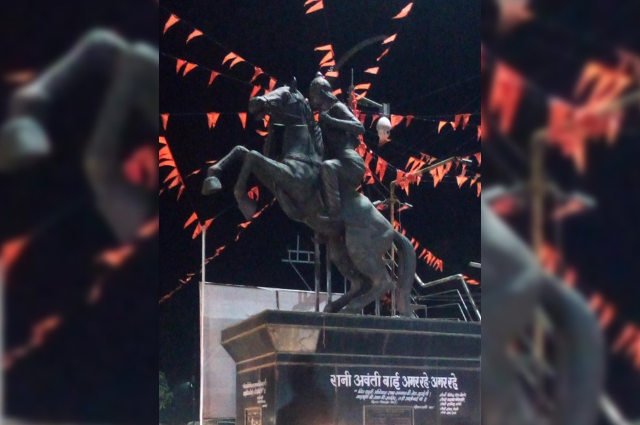
For many in Central India, history is not confined to textbooks but lives through local memory and cultural identity. Being from Chhattisgarh, belonging to the Verma community, and growing up near a statue of Rani Avanti Bai Lodhi, her story feels deeply rooted in lived experience. The Verma surname, connected through gotra traditions to the Lodhi lineage, reflects a shared heritage of courage and resistance. Rani Avanti Bai Lodhi’s rebellion during the Revolt of 1857, therefore, represents not only a forgotten chapter of India’s freedom struggle but also a continuing source of regional pride and inspiration in Madhya Pradesh and Chhattisgarh.
History Failed to Remember
History often celebrates victories, but it frequently forgets resistance. The story of India’s freedom struggle has long been narrated through a narrow lens, highlighting a few iconic figures while ignoring numerous regional leaders whose sacrifices were equally meaningful. Among these forgotten voices stands Rani Avanti Bai Lodhi of Ramgarh, a courageous woman whose rebellion during the Revolt of 1857 challenges both colonial domination and the limitations of mainstream historiography. Local rebellions and grassroots freedom fighters were forgotten largely because history was written from elite and colonial perspectives, not from below. Ranajit Guha, the founder of Subaltern Studies, clearly argued that Indian historiography suffers from “elitism,” where the actions of peasants, tribals, and local leaders were treated as spontaneous or irrational rather than political acts (Elementary Aspects of Peasant Insurgency in Colonial India). Similarly, historian E. P. Thompson emphasised that ignoring popular resistance turns history into a record of rulers alone, not of people’s lived struggles (The Making of the English Working Class). Romila Thapar has also noted that dependence on colonial archives led historians to repeat British categories that labelled rebellions as “disturbances” instead of resistance. Political thinker Antonio Gramsci’s idea of “cultural hegemony” helps explain how dominant groups control narratives, ensuring that local voices remain unheard. Together, these historians and thinkers show that the absence of local freedom fighters from textbooks is not accidental but the result of selective remembrance, where power decides whose sacrifices are worthy of history and whose are erased. Rani Avanti Bai was not merely reacting to British policies. She was consciously defending political autonomy, social dignity, and indigenous authority. Her struggle reminds us that resistance against colonialism did not always emerge from grand capitals or powerful empires; it often arose from forests, villages, and small kingdoms led by individuals history chose not to glorify.
Colonial Expansion and the Crisis of Sovereignty in Central India
By the early nineteenth century, the British East India Company had transformed itself from a trading body into a political power. Through treaties, wars, and administrative strategies, it steadily expanded its territorial control. Central India, consisting of several small princely states, occupied a strategically important position in this expansion.
Although these states retained nominal autonomy, British interference in their internal affairs steadily increased. The most controversial instrument of this interference was the Doctrine of Lapse, introduced by Governor-General Lord Dalhousie. Under this policy, the British refused to recognise adopted heirs and annexed states lacking a direct biological successor.
For Indian rulers, this doctrine symbolised a direct assault on sovereignty and traditional political systems. Ramgarh, ruled by the Lodhi dynasty, soon became a victim of this policy after the death of Raja Vikramaditya Lodhi.
Ramgarh under Threat: The Turning Point
The death of Raja Vikramaditya Lodhi left Ramgarh politically vulnerable. His heir was a minor, and the British authorities quickly moved to exploit the situation. They rejected the legitimacy of the young successor and proposed direct Company administration over the state.
This decision was not merely administrative; it represented the dismantling of indigenous authority and the imposition of colonial rule. The British assumption that resistance would be minimal proved disastrously wrong.
Standing firmly against this encroachment was Rani Avanti Bai Lodhi, the widowed queen of Ramgarh.
Rani Avanti Bai’s Assertion of Authority
In a society where women were rarely acknowledged as political actors, Rani Avanti Bai’s response was extraordinary. Instead of accepting British supervision or retreating into seclusion, she asserted her authority openly. She proclaimed her son as the rightful ruler and assumed the role of regent. Her refusal to cooperate with British officials marked a decisive break from diplomatic negotiation. This act transformed her from a regional queen into a political rebel in colonial eyes.
What distinguished Avanti Bai’s leadership was her ability to connect royal authority with popular support. She understood that resistance could not succeed without the participation of the local population.
Alliance with Tribal and Rural Communities
One of the most significant aspects of Rani Avanti Bai’s rebellion was her alliance with tribal communities, particularly the Gonds. These communities were deeply affected by British land policies, forest laws, and revenue demands. For them, British rule threatened not only political autonomy but also economic survival. Avanti Bai’s leadership resonated with their grievances, allowing her to mobilise warriors, peasants, and local leaders.
This alliance transformed the rebellion into a grassroots movement, making it difficult for British forces to suppress through conventional military strategies.
The Revolt of 1857 and Regional Resistance
When the Revolt of 1857 erupted, Rani Avanti Bai was already prepared. She expelled British officials from Ramgarh and established an independent administration. Unlike centralised uprisings in cities like Delhi or Kanpur, her resistance was decentralised and flexible. She adopted guerrilla warfare, using dense forests and uneven terrain to her advantage. British supply routes were disrupted, camps were attacked unexpectedly, and communication lines were damaged.
Colonial records repeatedly acknowledged the seriousness of the threat posed by Avanti Bai, describing her as one of the most troublesome rebel leaders in Central India.
Colonial Anxiety and British Perception
British officials were deeply unsettled by Avanti Bai’s leadership. A woman commanding forces, organising rebellion, and challenging imperial authority directly contradicted colonial stereotypes of Indian society.
Administrative reports referred to her actions with concern, recognising her influence over local populations. However, these same records deliberately framed her as a “rebel” rather than acknowledging her political legitimacy.
This labelling was part of a broader colonial strategy to delegitimise indigenous resistance.
Gender and the Politics of Memory
Rani Avanti Bai’s marginalisation in historical narratives cannot be separated from gender bias. Indian history, like many global histories, has been dominated by male perspectives. Women leaders who did not fit elite or imperial frameworks were often excluded.
While figures like Rani Lakshmibai were later incorporated into nationalist symbolism, Avanti Bai’s association with rural and tribal resistance made her less visible to historians writing from urban and elite backgrounds.
Her story reveals how gender, region, and class intersect to shape historical memory.
Final Resistance and Martyrdom
By 1858, British forces intensified their military operations in Central India. Facing superior weaponry and manpower, Rani Avanti Bai continued her resistance with determination. Historical accounts suggest that when capture became unavoidable, she chose death over surrender. She reportedly ended her life with a sword, an act symbolising refusal to accept colonial humiliation.
Her martyrdom was not an act of defeat but a final assertion of agency and dignity.
Why Was Rani Avanti Bai Forgotten?
Local rebellions and grassroots freedom fighters have largely been pushed to the margins of mainstream history because historians and political narratives have preferred to focus on a few pan-Indian leaders who fit a unified national story. Colonial historians deliberately ignored local uprisings to project the idea that British rule faced only scattered and insignificant resistance, while post-independence textbooks continued this trend to maintain a simplified, centralised narrative of the freedom struggle. Many tribal revolts, peasant movements, and regional leaders did not leave behind written records in English or Sanskrit, and their struggles survived mainly through oral traditions, folk songs, and local memory, which academic history often dismisses as unreliable. As a result, the sacrifices of countless local fighters were reduced to footnotes or erased altogether, creating a distorted understanding of India’s freedom movement that overlooks its truly mass-based, diverse, and deeply regional character.
- Her struggle was regional and lacked centralised coordination.
- Tribal participation was often dismissed by elite historians.
- Colonial narratives portrayed her as illegitimate.
- Nationalist histories prioritised urban revolts and male leadership.
- As historian Ranajit Guha argues, Indian historiography has long marginalised subaltern voices, particularly those operating outside elite political structures.
Reassessing Her Historical Importance
- Resistance rooted in local sovereignty.
- Women’s leadership in armed rebellion.
- Tribal participation in anti-colonial movements.
- The limits of traditional nationalist narratives.
- Her life compels historians to reconsider how resistance is defined and remembered.
Conclusion
Rani Avanti Bai Lodhi’s story is not merely about a queen defending her throne; it is about a woman asserting political agency in the face of colonial domination. Her courage, leadership, and sacrifice challenge the selective memory of history.
Recovering her narrative is essential to building a more inclusive understanding of India’s freedom struggle, one that acknowledges the contributions of women, rural communities, and regional leaders whose resistance shaped the foundations of independence. In the 21st century, the legacy of Rani Avanti Bai Lodhi has gained renewed significance in central India, particularly in Madhya Pradesh and Chhattisgarh, where her courage and martyrdom are increasingly celebrated as symbols of regional pride and women’s empowerment. In Madhya Pradesh, her birth anniversary and martyrdom day are officially commemorated by the state government, with the Chief Minister participating in tribute programs that honour her bravery and reaffirm her place in the freedom movement. This remembrance is not only ceremonial; the state cabinet has also introduced awards and academic fellowships in her name aimed at recognising women who make extraordinary contributions under adverse conditions and encouraging scholarly study of her life and similar figures — a move that integrates her narrative into educational curricula and public discourse. Additionally, Madhya Pradesh has seen new institutions, such as a university named after Rani Avanti Bai Lodhi, established to promote education and regional history, further embedding her legacy in the state’s cultural and academic infrastructure. In Chhattisgarh, her memory is kept alive by local communities and social groups who regularly organise statue-garlanding ceremonies and cultural tributes, reflecting grassroots reverence for her sacrifice as part of broader efforts to acknowledge tribal and rural contributions to India’s struggle for independence. Her story thus serves not only as a historical remembrance but also as a living source of inspiration for community identity, women’s leadership, and regional heritage across both states. Moreover, among members of communities such as those using the surname “Verma”, many of whom identify culturally with warrior or Kshatriya traditions, Avanti Bai’s example resonates as a shared symbol of courage and resistance against oppression, reaffirming collective pride in ancestral valour and motivating contemporary social activism and cultural remembrance.
Remembering Rani Avanti Bai is an act of historical justice.
References
- Majumdar, R. C., The Sepoy Mutiny and the Revolt of 1857, Firma K. L. Mukhopadhyay.
- Chandra, Bipan et al., India’s Struggle for Independence, Penguin Books.
- Guha, Ranajit, Elementary Aspects of Peasant Insurgency in Colonial India, Oxford University Press.
- Singh, Harish Chandra, Freedom Movement in Central India, National Book Trust.
- Central India Agency Records (1857–1858), British Colonial Archives.
- Government of Madhya Pradesh, Department of Culture publications on Rani Avanti Bai Lodhi.