
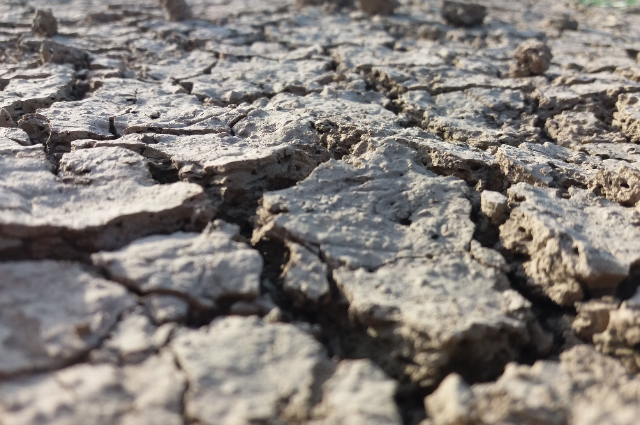
Photo by Simon Waititu on Pexels.com
A Weather System That Governs a Nation
In the summer of 2023, something imperceptible happened in the vast, silent depths of the central Pacific Ocean. Water temperatures began to rise — not in India's rivers, not in its coastal seas, but thousands of kilometres away, along the equatorial belt between Peru and the International Date Line. That warming, a periodic atmospheric anomaly scientists call El Niño, set in motion a chain of consequences that would ripple across continents, disrupt monsoon patterns over South Asia, push food prices to record highs, and ultimately cost one of the world's fastest-growing economies nearly a full percentage point of GDP growth.
This is not an isolated story. El Niño has haunted India for centuries. But in an era of intensifying climate volatility, rising global temperatures, and a nation of 1.4 billion people striving to lift itself out of poverty, the stakes of the next El Niño event have never been higher. As of June 2026, the United States National Oceanic and Atmospheric Administration (NOAA) has confirmed that El Niño conditions are once again underway in the tropical Pacific — with forecasters flagging a 63 percent chance of sea surface temperatures exceeding 2 degrees Celsius above normal. The Indian government has placed between 150 and 200 districts on priority agricultural watch. A multi-ministry task force is already preparing crop contingency plans.
India is bracing. And the world should be watching.
Understanding the Beast — What El Niño Is and Why India Is Its Favourite Target
El Niño — Spanish for "The Little Boy," originally named by Peruvian fishermen after the Christ child because it typically arrives around Christmas — refers to the warm phase of the El Niño-Southern Oscillation (ENSO), a cyclical climate pattern driven by variations in sea surface temperatures across the central and eastern equatorial Pacific. In a normal year, trade winds blow westward across the Pacific, pushing warm water toward Southeast Asia and Australia and allowing cold, nutrient-rich water to upwell along South America's coast. During an El Niño event, those trade winds weaken or reverse, allowing a vast pool of anomalously warm water to spread eastward — fundamentally altering atmospheric circulation patterns across the entire planet.
For India, this distant oceanic heartbeat has an outsized consequence: it disrupts the Indian summer monsoon, the seasonal wind system that delivers roughly 70 to 80 percent of the country's annual rainfall between June and September. The mechanism is atmospheric. El Niño shifts convection patterns over the Indian Ocean and suppresses the moisture-laden winds that drive the monsoon northward from the Arabian Sea and Bay of Bengal. The result is often delayed onset, uneven distribution, and overall deficits in rainfall — the precise opposite of what India's rain-fed heartland desperately needs.
History bears this out with uncomfortable regularity. Of the ten most severe droughts India experienced in the twentieth century, the majority coincided with El Niño years: 1877, 1899, 1918, 1965, 1972, 1987, 1997, 2002, 2009, and 2015–16. Each left scars on India's agricultural landscape. The 2015–16 super El Niño event — one of the most powerful on record — caused consecutive drought years, devastating kharif harvests and triggering rural distress that an RBI paper later documented in sobering detail, noting that rural wages remained subdued even after agricultural growth eventually resumed.
The 2023 monsoon provides the most recent and instructive case study. That season ended with a 6 percent overall deficit, but the damage was far more severe than that aggregate figure suggests. Approximately 31 percent of India — covering 221 out of 718 districts — received below-normal rainfall. Six states recorded major deficits: Assam, Manipur, Mizoram, Jharkhand, Bihar, and Kerala. Agricultural consequences were immediate and severe. Pulses were sown on 5.41 lakh hectares, less area compared to 2022. Oilseeds dropped by 3.16 lakh hectares. India's agriculture growth rate fell to just 1.4 percent in FY24, the lowest in eight years. Foodgrain production declined by 6.1 percent in the 2023–24 crop year.
What is most alarming about El Niño's relationship with India is not just its historical frequency but its projected intensification under climate change. A warming planet raises baseline sea surface temperatures, making extreme El Niño events more likely and more severe. The 2026 event — which NOAA has now confirmed, and which analysts at Plutus IAS are already calling a potential "Super El Niño" — is unfolding against a background of already-elevated global temperatures, drought-stressed aquifers, and a rural India where tens of millions of additional people entered agricultural dependency after COVID-19. The vulnerabilities are compounding.
Agriculture — The First Domino to Fall
To understand El Niño's economic impact on India, one must first appreciate the extraordinary centrality of agriculture to the country's social and economic fabric — not merely as a sector, but as the foundation upon which everything else is built.
Agriculture contributes roughly 14 to 16 percent of India's GDP in direct terms. But this number is profoundly misleading if taken in isolation. The sector employs approximately 45 percent of the country's total workforce — over 600 million people whose livelihoods, purchasing power, and economic well-being rise and fall with the monsoon. In a country where food expenditure constitutes more than 40 percent of average household spending, the agrarian economy is not a peripheral sector but the bedrock of domestic consumption itself.
El Niño destabilises this foundation through multiple pathways simultaneously.
Kharif crops bear the first blow. India's monsoon-dependent kharif season — sown between June and August and harvested in October–November — is the most climatically exposed agricultural window of the year. Rice, pulses, oilseeds, coarse cereals, and sugarcane are the major kharif crops, and they collectively account for the majority of India's foodgrain production. When the southwest monsoon fails or arrives late, sowing is delayed or abandoned. When rains are uneven, soil moisture deficits at critical crop stages cause yields to plummet. A poor kharif season has been estimated to reduce agricultural GDP growth by 2 to 4 percentage points — a collapse that then transmits across the entire rural economy with terrifying efficiency.
Heat stress arrives even before the monsoon deficit. Most analyses of El Niño focus on its impact on monsoon rainfall, but the phenomenon begins affecting India's weather months earlier. El Niño years are systematically associated with anomalously hot summers, and these heatwaves impose their own agricultural toll. Heat stress at critical grain-filling stages can be catastrophic — as India witnessed in February–March 2022, when an unprecedented temperature spike caused wheat to shrivel in the fields of Punjab and Haryana, leading to a reduction in the country's wheat output. Agricultural workers face a related but often overlooked crisis: they are disproportionately exposed to occupational heat, with studies showing they are 35 times more likely to die from heat exposure than workers in other sectors. These deaths and productivity losses compound the economic damage of El Niño long before a single monsoon cloud forms.
The livestock and dairy cascade. India's livestock sector — which now accounts for nearly 45 percent of total agricultural gross value added — is not spared. Extreme heat reduces milk yields, impairs livestock health, and decimates the supply of eggs, milk, and dairy products that serve as crucial fallback income for marginal farmers during difficult years. When fodder crops are damaged by drought and water troughs run dry, livestock mortality spikes. For India's 100 million-plus smallholder farmers who rely on a cow or a buffalo as their primary financial buffer, this is not merely an agricultural statistic — it is a catastrophe.
Historically, the macroeconomic numbers corroborate this damage with precision. Economists estimate that agriculture contracts by approximately 1 percent in El Niño years compared to growth of around 4.5 percent in non-El Niño years — a swing that translates into roughly 0.9 percentage points of lost GDP growth nationwide. For a $3.5 trillion economy striving to grow at 6.5 to 7 percent, that represents tens of billions of dollars in foregone output.
The Inflation Wildfire — When Food Prices Spiral Out of Control
If agriculture is El Niño's first casualty, inflation is its most dangerous weapon. And in India, food inflation is not merely an economic indicator — it is a political flashpoint, a public health crisis, and a monetary policy nightmare rolled into one.
Food carries close to 37 percent of the weight in India's Consumer Price Index (CPI) basket. This means that when rice, pulses, vegetables, or edible oils become scarce, headline inflation rises sharply and persistently — affecting not just rural households but every urban family, every working-class budget, every small business that feeds its employees. Historical data from drought years reveals a correlation of -0.8 between monsoon deviation and food inflation in the following year — meaning deficient rains almost inevitably produce surging food prices six to twelve months later, precisely when the political and humanitarian costs are hardest to manage.
The transmission mechanism is straightforward but brutal. When kharif production falls short, wholesale prices of foodgrains, pulses, and oilseeds rise immediately as traders anticipate scarcity. Supply chain disruptions — poor rural road conditions, damaged crops, reduced cold storage activity — amplify the price signal. Government intervention through buffer stocks and open market sales can moderate but rarely eliminate the price spike. By the time food inflation peaks, typically in the third quarter of the fiscal year (October to December), every household in India feels its bite.
The 2023 experience demonstrated this vividly. The monsoon deficit triggered food price surges that pushed headline CPI inflation well above the Reserve Bank of India's comfort zone. Tomato prices briefly crossed ₹200 per kilogram in several cities. Pulse prices rose by 20 to 30 percent over their year-prior levels. The RBI, torn between the need to support economic growth and the imperative to tame inflation, found its policy space severely constrained.
Financial institutions like ICRA estimate that a major agricultural disruption driven by El Niño can push CPI food inflation up by an additional 0.4 percentage points or more — a figure that may appear modest in isolation but, when compounded across months and applied to a country of 1.4 billion people, represents enormous cumulative suffering. Markets are already pricing in the possibility of interest rate adjustments of up to 50 basis points in FY27. Food has an outsized role in India's price dynamics: it shapes household expectations, influences wage demands in both formal and informal sectors, and narrows the space for accommodative monetary policy precisely when the economy most needs support.
This is the cruel paradox El Niño creates for India's policymakers. An economy weakened by lower agricultural output and reduced rural incomes needs lower interest rates and fiscal stimulus. But the food inflation generated by the same agricultural shock forces the RBI to maintain or raise rates to anchor price expectations. The result is a monetary policy straitjacket — unable to stimulate the economy precisely because El Niño has simultaneously depressed growth and ignited inflation.
Rural India — The Economy Within the Economy
India's rural economy is not merely the agricultural sector by another name. It is a vast, interconnected ecosystem of 600,000 villages, hundreds of millions of households, tens of millions of small enterprises, and an intricate web of credit, labour, and consumption relationships that sustains more than half of the nation's people.
El Niño does not merely reduce crop yields. It systematically dismantles this ecosystem's financial resilience in a sequence that economists have documented with increasing precision.
Stage one: Farm income collapses. When monsoon rains fail, yields fall and farm incomes contract. This is the most visible impact, captured in GDP statistics and agricultural ministry data. But its consequences extend far beyond the farm.
Stage two: Rural consumption crumbles. Farmers with lower incomes buy fewer consumer goods — fewer motorcycles, fewer televisions, fewer packaged foods, fewer garments, fewer school supplies. The rural consumption slowdown is felt within weeks of a weak harvest and typically persists for two to four quarters. FMCG companies, automobile manufacturers (especially two-wheelers and tractors), and consumer durable companies have historically reported sharp rural sales declines in El Niño years. Sales of two-wheelers, a proxy for rural income health, often fall 10 to 20 percent following significant monsoon deficits.
Stage three: Non-farm MSMEs are squeezed. Perhaps the least understood but most economically significant impact of El Niño is on the non-farm micro, small, and medium enterprises that are deeply embedded in the rural agricultural ecosystem. Local traders, input suppliers, repair shops, cold storage operators, rural transport providers, and agri-processing units all depend on harvest income flowing through the local economy. When harvests fail, the working capital that entrepreneurs spent all year building up is wiped out in a single season. The entrepreneur loses not just income but the accumulated savings and credit standing required to rebuild the business. This is what economists call "a reset of progress" — and it is devastating for rural economic resilience.
Stage four: Migration and labour market disruption. Severe El Niño events historically trigger rural-to-urban migration as agricultural labourers and marginal farmers seek wage employment in cities. This migration, while economically rational at the individual level, creates pressure on urban infrastructure, housing, and informal labour markets. It also depopulates rural areas of their most mobile and productive workers, further weakening the agricultural workforce for subsequent seasons.
The 2015–16 super El Niño's aftermath illustrated these dynamics painfully. RBI data showed that rural wages remained suppressed for years even after agricultural growth resumed — indicating that the economic shock had disrupted rural credit and labour markets in ways that required sustained recovery periods. Given that more people moved into agricultural dependency during and after COVID-19, the risk pool for the next major El Niño event is larger than at any point in recent memory.
Water, Power, and the Infrastructure of Growth
El Niño's economic impact extends beyond the farm and the rural marketplace into the basic physical infrastructure that powers India's growth.
Water scarcity as an economic multiplier. India's major reservoirs — which store water for irrigation, drinking, and industrial use — depend on monsoon replenishment. When El Niño reduces rainfall, reservoir levels fall sharply. The Central Water Commission's reservoir monitoring data consistently shows that below-normal monsoon years lead to water storage levels falling to 60 to 70 percent of capacity by the end of the season, with consequences that extend across the following year's rabi (winter) crop season, urban water supply, and industrial operations. Water-intensive industries — paper, textiles, chemicals, food processing, steel — face production constraints and higher operational costs. The economic multiplier of water stress is rarely fully captured in standard sectoral analyses.
The hydropower deficit. India's hydroelectric power plants, which account for approximately 9 percent of total electricity generation, depend on sustained river flows and reservoir levels. When El Niño suppresses rainfall and reduces water storage, hydropower generation falls sharply — often precisely during the summer months when electricity demand peaks due to heat waves. The resulting power deficit forces greater reliance on thermal power generation, increasing coal consumption, fuel costs, and carbon emissions simultaneously. Industries that operate on thin energy cost margins — cement, aluminium, steel, fertilisers — experience significant margin compression during El Niño years, adding to the broader economic headwinds.
Agricultural input costs spiral upward. A weaker monsoon places additional pressure on groundwater, as farmers resort to deeper tube well irrigation to compensate for reduced rainfall. Groundwater-dependent irrigation is vastly more energy-intensive than surface irrigation, and it accelerates the depletion of aquifers that are already under severe stress in states like Punjab, Haryana, Rajasthan, and parts of Gujarat. The cascading effects include higher electricity subsidies that state governments must fund, increased diesel costs for pump operation, and accelerating water table declines that make future drought years progressively more damaging.
Monetary Policy and the Macroeconomic Squeeze
The RBI's monetary policy framework is built on a 4 percent inflation target, with a tolerance band of plus or minus 2 percentage points. El Niño threatens to push inflation beyond this band at precisely the moment when monetary authorities would prefer to support growth through accommodative policy.
The inflation-growth trade-off created by El Niño is among the most analytically challenging scenarios that India's monetary authorities face. GDP growth for FY27 has been estimated at 6.9 percent, down from 7.6 percent in FY26. A serious El Niño event would further reduce growth through its agricultural, rural consumption, and infrastructure channels. But the simultaneous surge in food prices would make rate cuts politically and technically untenable. The RBI's Monetary Policy Committee has already flagged El Niño as an upside risk to its 4 percent inflation target.
The government's fiscal response options are similarly constrained. Providing meaningful income support to hundreds of millions of affected farmers and rural workers requires substantial fiscal outlays that compete with infrastructure investment, defence spending, and social welfare programmes. Export restrictions on rice, wheat, and sugar — a standard policy response to domestic food inflation — generate diplomatic tensions with trading partners and can destabilise global commodity markets. The 2023 experience, during which India restricted rice exports to protect domestic supplies, triggered significant price increases in global rice markets, demonstrating how a single El Niño event in India can have cascading effects on food security worldwide.
What makes the 2026 El Niño event particularly worrying from a macroeconomic perspective is its timing. India enters this El Niño cycle at a moment of significant global uncertainty — ongoing commodity price volatility, geopolitical tensions disrupting supply chains, and a global monetary tightening cycle that has already slowed capital flows to emerging markets. For India, where economic momentum and the aspiration to reach a $5 trillion GDP depend on sustained high growth, a severe El Niño shock threatens not just one fiscal year but could disrupt the longer investment and consumption cycles necessary for structural economic transformation.
The Sectoral Ripple — Who Else Suffers When the Monsoon Fails
El Niño's economic tentacles reach well beyond agriculture, rural incomes, and food prices. Its sectoral impacts traverse the full breadth of India's modern diversified economy.
Fast-Moving Consumer Goods (FMCG). India's FMCG sector depends critically on rural India, which contributes 40 to 45 percent of total FMCG revenue. A monsoon failure simultaneously reduces rural purchasing power and increases raw material costs for companies that use agricultural commodities — edible oils, sugar, wheat, dairy — as inputs. FMCG companies in El Niño years typically face a dual squeeze: falling rural volumes and rising input costs, a combination that destroys margins and compresses earnings across the sector.
Automobile and two-wheeler manufacturers. Rural India is the engine of two-wheeler demand — the segment most sensitive to agricultural income cycles. Tractor demand, another reliable indicator of rural health, consistently declines in drought years. Major manufacturers have historically guided down rural growth expectations for periods following significant monsoon deficits, with volume declines of 10 to 20 percent in rural markets.
Banking and financial services. Agricultural loan defaults historically spike in drought years, creating non-performing asset pressure on public sector banks that carry large agricultural loan portfolios. Microfinance institutions serving rural borrowers experience increased delinquency rates. Insurance claims for crop losses rise, testing the solvency of state-run agricultural insurance schemes like PM Fasal Bima Yojana. Rural credit offtake declines as farmers and rural entrepreneurs reduce investment in the face of income uncertainty.
Textile and apparel. Cotton, a key kharif crop, is acutely vulnerable to monsoon deficits. Below-normal rainfall in Maharashtra, Gujarat, Telangana, and Andhra Pradesh — India's major cotton belts — can reduce cotton output by 15 to 25 percent, driving up fibre costs for spinners, mills, and garment manufacturers. India is one of the world's largest cotton exporters, and supply disruptions ripple into global textile markets.
Sugar and ethanol. India's sugarcane belt — concentrated in Maharashtra and Uttar Pradesh — depends on a reliable water supply during the growing season. El Niño-driven deficits reduce sugarcane yields and mill crushing capacity, affecting not just sugar production but India's ambitious ethanol blending programme, which has strategic importance for energy security and the government's net-zero transition commitments.
Resilience and Response — What India Is Doing, and What It Must Do
The narrative of El Niño and India need not be one of helpless vulnerability. India has made meaningful progress in reducing its weather-dependent economic fragility, and the tools for further resilience are available — if the will to deploy them is sustained.
Irrigation expansion has reduced but not eliminated rain-fed dependency. Irrigated land in India has expanded from approximately 40 percent to 55 percent of cultivated area over the past two decades — a significant structural improvement. Where farmers have access to canal irrigation, groundwater, or micro-irrigation systems, El Niño's agricultural impact is meaningfully moderated. However, nearly half of India's cultivated land remains rain-fed, meaning the vulnerability is far from eliminated.
Diversification into allied sectors provides partial buffers. Livestock, poultry, fisheries, and horticulture now contribute nearly 45 percent of agricultural GVA — a diversification that provides some income stability during crop failures. Farmers who can shift between crops, or supplement farm income with livestock and dairy, are more resilient to a single bad monsoon than pure grain farmers.
Government response mechanisms have become more sophisticated. India's National Food Security Act, its large buffer stock reserves, and improved early warning systems for food price management give the government more tools to moderate El Niño's consumer impact than it possessed in previous decades. The 2026 government task force preparing crop contingency plans, alternative crop recommendations, and import strategies represents an improvement over the reactive responses that characterised earlier drought years.
Yet the structural work remains incomplete. India still lacks the comprehensive water management infrastructure — large-scale inter-basin transfers, modern canal networks with drip and sprinkler endpoints, functioning groundwater regulation — that would truly insulate its agriculture from El Niño's worst impacts. Crop insurance penetration remains inadequate, leaving the majority of farmers without meaningful financial protection against yield losses. Agricultural research and the adoption of drought-tolerant, heat-resistant crop varieties have progressed but not reached the scale needed to protect hundreds of millions of farmers.
The path to genuine El Niño resilience requires not incremental reform but structural transformation — of water governance, of agricultural risk management, of rural credit systems, and of the income diversification options available to India's rural poor. This is not primarily a meteorological challenge. It is a governance, investment, and equity challenge.
The Global Dimension — India's El Niño Problem Is the World's Food Problem
In a world of deeply interconnected food systems, India's El Niño vulnerability is not a domestic issue contained within its national borders. It is a global food security concern of the first order.
India is the world's largest exporter of rice, accounting for 40 percent of global rice exports. It is among the top five exporters of wheat, sugar, cotton, and spices. When El Niño damages India's crops and triggers domestic food price surges, the Indian government's instinctive response — export restrictions — sends shockwaves through global commodity markets. The 2023 rice export ban pushed global rice prices to 15-year highs, triggering food insecurity concerns in West Africa, Southeast Asia, and parts of the Middle East that depend on Indian rice.
The 2026 Super El Niño, if it unfolds as NOAA's models suggest, will compound pressures on global food systems already stressed by conflict, climate change, and ongoing supply chain fragilities. Price shocks of 10 to 50 percent across core commodities have been flagged by analysts as a plausible scenario for the period between late 2026 and 2027. Because demand for staples is price-inelastic — people will pay nearly any price to feed their families — even modest supply deficits produce outsized and regressive price increases that fall hardest on the world's poorest and most food-insecure populations.
India's El Niño story, therefore, is ultimately a story about global justice. The warming of Pacific Ocean temperatures — driven in significant part by the cumulative carbon emissions of wealthy industrialised nations — triggers a cascade of consequences that falls disproportionately on India's subsistence farmers, its rural poor, and the food-insecure populations of developing nations that depend on Indian agricultural exports. The climate crisis does not simply threaten economic growth in India. It systematically reverses hard-won developmental gains in the world's most densely populated and deeply vulnerable rural landscapes.
Conclusion: Rain is Not Just Weather — It Is Economics, It Is Justice, It Is the Future
India has always understood, at the most visceral level, that rain is not merely weather. It is economics. It is politics. It is dignity. The monsoon is woven into the country's literature, its festivals, its folk songs, and its collective psyche in ways that no statistical analysis can fully capture. When the rains fail, it is not just crops that wilt. It is hope.
El Niño is a reminder — recurring, intensifying, and increasingly costly — that the relationship between the climate and the economy is not incidental but foundational. In India, where 600 million people still depend on monsoon-fed agriculture for their livelihoods, where food inflation can tip a family from subsistence to hunger, and where a single bad monsoon can set back years of rural development gains, El Niño is not a background risk. It is the foreground challenge.
The 2026 El Niño is not yet written. Modelling uncertainties remain. The Indian Ocean Dipole may partially offset its worst effects, as it did in 2023. India's improved preparedness — the task forces, the contingency plans, the expanding irrigation infrastructure — may moderate the damage. Monsoon science is advancing, and so is India's capacity to respond.
But preparation and response are not substitutes for prevention and transformation. As long as El Niño's disruptions are treated as episodic weather shocks to be managed rather than structural vulnerabilities to be eliminated, India's rural economy will remain hostage to the Pacific. And as long as carbon emissions continue to warm the planet and intensify ENSO cycles, the frequency, severity, and economic cost of El Niño events will only grow.
India's future — its ambition to be a $10 trillion economy, its promise to lift hundreds of millions out of poverty, its aspiration to lead the global South — will be won or lost not only in its boardrooms, its technology campuses, and its export corridors, but in its fields, its villages, and its relationship with the sky above.
When the Pacific warms, India must not merely brace. It must build an economy, an agricultural system, and a governance architecture resilient enough to turn the oldest threat in its history into the proving ground of its potential.
References:
1. https://www.ey.com/en_in/insights/tax/economy-watch/how-el-nino-can-impact-indias-economic-growth-prospects-for-fy-2024
2. https://www.business-standard.com/economy/news/el-nino-india-monsoon-impact-economic-growth-inflation-gdp-imd-weather-126061900767_1.html
3. https://www.downtoearth.org.in/agriculture/around-200-districts-flagged-for-el-nino-impact
4. https://www.businesstoday.in/india/story/imd-announces-el-nino-onset-536638-2026-06-12
5. https://www.wrightresearch.in/blog/how-a-weak-monsoon-and-the-strait-of-hormuz-crisis-could-reshape-indias-economic-outlook-in-2026/
6. https://shop.investyadnya.in/blogs/financial-education/el-nino-2026-the-indian-monsoon-economic-impact-investment-risks-analysis
7. https://plutusias.com/super-el-nino-2026-science-global-impacts-indias-monsoon-under-threat/
8. https://theecovanguard.com/power-energy/el-nino-2026-india-monsoon-crop-production-systemic-risk
9. https://gfm.akshayakalpa.org/explainer-article/super-el-nino-kharif-crops-suffer-food-prices-increase
10. https://asianews.network/el-nino-and-indias-monsoon-question/
11. https://businessmodelanalyst.com/super-el-nino-economic-impact/
12. https://www.ncbi.nlm.nih.gov/pmc/articles/PMC12004400/
13. Reserve Bank of India. (2016). Assessment of El Niño impact on agricultural output and rural wages in India. RBI Working Paper Series.
14. India Meteorological Department. (2026). Long range forecast for the southwest monsoon 2026. Government of India, Ministry of Earth Sciences.
15. Ministry of Statistics and Programme Implementation. (2024). Agricultural GDP growth and foodgrain production report FY2023–24. Government of India.
16. Mohanty, S. K. (2014). Droughts, food prices, and inflation in India: Historical analysis 1956–2010. Journal of Agricultural Economics.
17. National Oceanic and Atmospheric Administration. (2026, June 11). El Niño declaration for the tropical Pacific. NOAA Climate Prediction Centre.
18. ICRA Limited. (2026). Monsoon watch 2026: Agricultural risk assessment and inflation implications. ICRA Research Report.
19. https://www.ncbi.nlm.nih.gov/pmc/articles/PMC10794699/
20. Brickwork Ratings. (2026). El Niño transmission channels: Food inflation, rural incomes, and private consumption in India. Research Commentary, June 2026.