
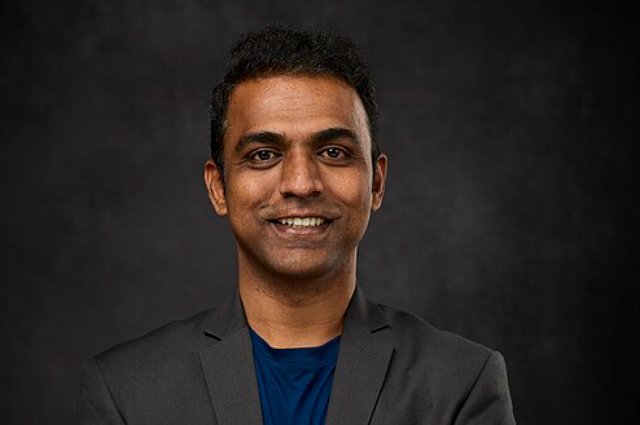
Image Source: wikipedia.org
The moment his name was announced, the world seemed to pause—if only for a breath. Screens glowed across continents, applause rose from distant halls, and somewhere between disbelief and gratitude stood Ranjitsinh Disale, a teacher from rural Maharashtra, receiving the Global Teacher Prize Award 2020—the international teacher’s award of one million dollars. It was not merely an announcement; it was an atmosphere, a maahol charged with awe. The air carried the pride, tears, silence, and sudden recognition—for a profession that rarely stands under such bright light.
That evening, the world felt unusually still—yet deeply alert. Screens glowed across continents, time zones collapsed into a single breath, and an invisible hush settled over classrooms, living rooms, and quiet villages alike. When the announcement came, it did not arrive like thunder; it arrived like a pause—heavy with meaning. Applause followed, but before that, there was disbelief, then pride, then a collective warmth that travelled far beyond the stage. Somewhere, teachers sat a little straighter. Somewhere, students smiled without knowing why. Somewhere in rural India, a village name was spoken aloud by the world, wrapped in respect.
The mahol was not just celebratory—it was reflective. It carried gratitude, humility, and something rarer: recognition of patience. The cameras captured a moment, but what they could not capture were the years behind it—the quiet mornings, the unanswered doubts, the long walks back home after school hours, the decisions to stay when leaving would have been easier. In that moment of global acknowledgement, it felt as though chalk-stained hands everywhere were being applauded, as though unseen classrooms were finally being seen.
And yet, even as the world stood watching, the story itself did not begin there.
Every life begins long before it is noticed.
Before applause. Before awards. Before the world learns a name.
Some stories begin loudly, demanding attention.
Others begin quietly, like a breath held for years.
Ranjitsinh Disale’s story belongs to the second kind.
It began in rural Maharashtra, where childhood does not rush, and dreams often learn to wait. In villages where mornings rise with the sun and responsibilities arrive early, childhood is shaped as much by restraint as by hope. He grew up watching life closely—observing how effort was constant but rewards uncertain, how education was respected yet fragile, how circumstances could interrupt even the brightest curiosity.
As a boy, he did not grow up surrounded by abundance or assurance. His world was simple, measured by routines, expectations, and the silent understanding that survival often came before aspiration. Still, within that simplicity lived an attentive mind. He studied sincerely, believing—perhaps instinctively—that learning was a bridge, even if he did not yet know where it led.
Like many young minds of his generation, his early dreams leaned toward technology. Computers represented structure, progress, and escape from limitation. Teaching did not figure in those dreams. It appeared modest, almost restrictive, when compared to the vast possibilities he imagined beyond the village. Education, at that point, was a means—not yet a mission.
Then came a gentle nudge from his father. Not a command. Not a sermon. Just a suggestion—to consider teacher training. At first, the idea felt like a compromise with destiny. But life often introduces purpose quietly, disguising it as obligation. And so, almost reluctantly, Disale stepped into the world of teaching, unaware that it would slowly reshape not only his future, but the futures of many others.
During his training, something began to shift. In classrooms and corridors, he observed the subtle power a teacher holds—the ability to steady confusion, to restore dignity, to plant courage where doubt had settled. He began to understand that teaching was not about instruction alone; it was about presence. Somewhere between lesson plans and student faces, the boy who once wanted to leave the village was learning why he needed to return.
Every story has a turning point.
Some arrive as storms.
Others arrive quietly, asking to be noticed.
In a small village called Paritewadi in Maharashtra, mornings once arrived quietly. The school bell rang more out of routine than anticipation. The Zilla Parishad school stood tired, pressed between a cattle shed and a storeroom, as if education itself had been pushed to the margins. Its walls carried neglect, its classrooms echoed with lowered expectations. Inside sat children—bright, curious, yet cautious—especially the girls, whose futures were often shortened by customs older than their dreams. Into this ordinary setting walked an ordinary man carrying extraordinary patience.

Image Source: Pexels.com by Atlantic Ambience
He did not arrive, declaring change. He did not wear the confidence of a reformer. Teaching had not been his first ambition, and perhaps that made his presence more sincere. He stood before his students not as someone with all the answers, but as someone willing to understand their questions.
As he looked at the classroom, he saw more than desks and blackboards. He saw silence—silence shaped by generations of acceptance. He saw children who had learned, too early, where their dreams were supposed to end. And somewhere within him, a quiet resistance grew. A refusal to believe that this was all education could offer them.
Stories do not always begin with rebellion.
Sometimes, they begin with listening.
Disale listened carefully—to the language spoken at home, to the pauses in conversation, to the fears parents carried without naming them. He realised that textbooks written in unfamiliar languages created distance instead of discovery. Knowledge, he understood, must feel familiar before it can feel powerful. So, he learned the local language. He made learning accessible not by demanding attention, but by respecting context.
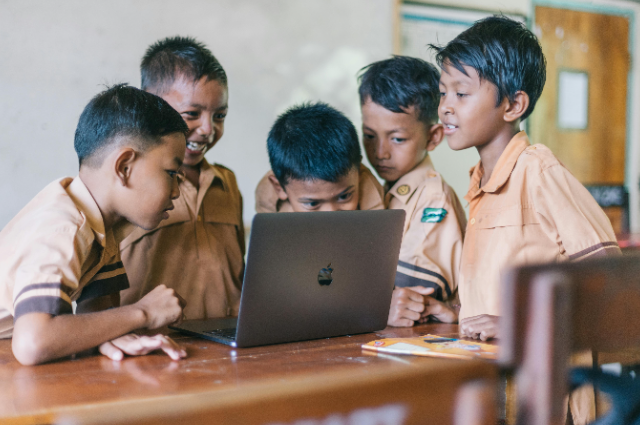
Innovation followed, not as ambition, but as necessity. He introduced QR codes into textbooks, transforming static pages into gateways of sound, visuals, stories, and explanation. Lessons no longer ended with the bell. Learning travelled home, entered kitchens and courtyards, and slowly rewrote the relationship between children and education. The technology he once dreamed of using for success has now become a tool for inclusion.
Yet the hardest lesson was not academic—it was social.
As girls grew older, they vanished from classrooms, pulled away by early marriages and inherited expectations. Disale chose to confront this reality patiently. He spoke to families, engaged with communities, and questioned traditions without confrontation. He did not accuse; he explained. He did not shame; he persisted. And persistence, when rooted in care, becomes transformative.
One by one, the girls returned.
Attendance rose steadily.
Confidence followed quietly.
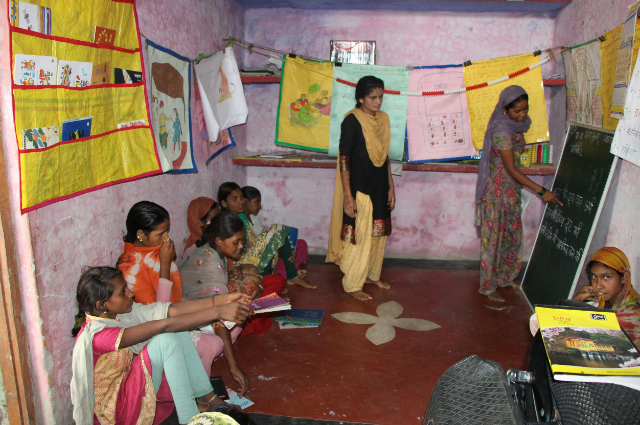
And then, something extraordinary happened—100% enrolment of girls.
Not as a statistic, but as a statement.
The school changed.
But more importantly, the village changed.
When the world finally noticed him in 2020, it felt sudden only to those unfamiliar with slow revolutions. The Global Teacher Prize arrived not as a miracle, but as recognition of years spent choosing empathy over ease. And when Disale chose to share half of his prize money with fellow finalists, it affirmed what his journey had always suggested—that success, when shared, multiplies.
Because some people win awards.
Others redefine what winning means.
Ranjitsinh Disale’s story is not about a teacher who became famous. It is about a human being who stayed where he was needed. It is about classrooms that learned to hope again, about girls who learned to imagine longer futures, about a village that realised education is not escape—it is empowerment.
Everyone has a story.
Some are loud.
Some are painful.
Some unfold quietly, reshaping the world without announcement.
Disale’s story reminds us that the deepest revolutions arrive softly. They carry chalk dust on their sleeves and courage in their hearts. They write hope on blackboards, and when the lesson ends, they leave behind something far greater than knowledge.
They leave behind belief.
References:
Ranjitsinh Disale – Global Teacher Prize 2020 Winner.
Varkey Foundation.
Indian teacher Ranjitsinh Disale wins Global Teacher Prize.
UNESCO News, 2020.
Indian teacher who shared $1m prize hailed worldwide.
BBC News, December 2020.
From rural classroom to global recognition: The journey of Ranjitsinh Disale.
Ranjitsinh Disale and the power of inclusive education.
Ranjitsinh Disale.
Use of QR codes in textbooks to improve learning outcomes.