
On a calm winter evening in Dehradun’s Selaqui neighbourhood, a young student’s life was shattered in a way that shook the conscience of an entire region. Anjel Chakma, a 24-year-old MBA student from Tripura, stepped out to buy groceries with his younger brother on December 9, 2025. That evening changed everything — for him, for his family, and for millions of Indians who watched in horror as a routine evening turned into a brutal tragedy.
Anjel was not just another face in the crowd. He was among the brightest in his class, placed in a multinational company and filled with hope for the future. A treasured son, he had spoken just days before the attack about his drive to support his family and give them a life of security and dignity.
Yet, in that crowded street, whispers of who he was — how he looked — spiralled into a confrontation that left one man dead and many others asking the same painful question: How could this happen in India?
What Happened That Day
According to police records and multiple eyewitness accounts, Anjel and his brother Michael — both from Tripura’s Unakoti district — were heading to a shop when a group of six young men engaged them in an altercation. What began as comments about their appearance reportedly escalated quickly. In the ensuing chaos, Michael was struck on the head with a metal bracelet (a kada), and Anjel was stabbed multiple times, including in the abdomen and head.
Seriously injured, Anjel fought for his life in a Dehradun hospital for 17 days. On December 26, 2025, he succumbed to severe head and spinal injuries. His final words — shared widely on social media and quoted by many close to the family — were a plea for belonging: “We are not Chinese… we are Indians.”
Five accused — including adults and juveniles — have been arrested. One main suspect, Yagya Awasthi, remains on the run near the India-Nepal border, with a reward offered for his capture.
Nationwide Shock and Growing Outrage
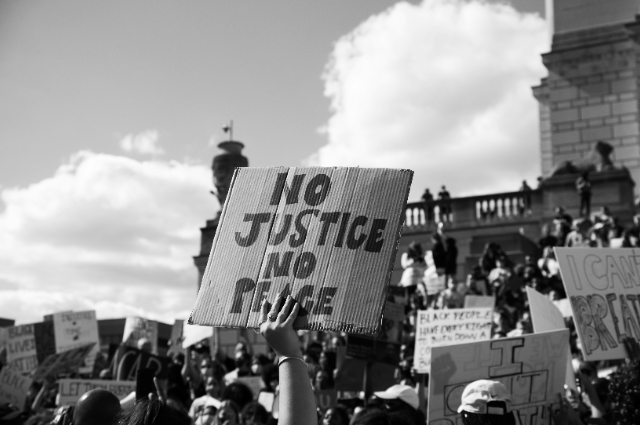
Anjel’s death was not confined to local headlines — it ignited protests from Assam to Agartala and student demonstrations at New Delhi’s Jantar Mantar, where hundreds of students from Northeast India demanded justice and stronger protections against racial violence.
For many, the tragedy rekindled a haunting memory from more than a decade earlier: the murder of Nido Taniam in Delhi in 2014. Like Anjel, Taniam was a Northeastern student — beaten to death in a racially charged confrontation in Lajpat Nagar. That death triggered nationwide protests and led the Government of India to form the M.P. Bezbaruah Committee to address discrimination against people from Northeast India.
But the promise of that committee — its recommendations and the hope of meaningful legal reform — now feels like a promise unfulfilled.
The Bezbaruah Committee and Its Unfinished Mandate
In the wake of the Nido Taniam killing, the Bezbaruah Committee was tasked with listening to the concerns of Northeastern communities living outside their home states. Its report, submitted in July 2014, documented widespread racial discrimination, derogatory treatment, and social exclusion. It recommended amendments to the Indian Penal Code to explicitly criminalise racial discrimination and hate speech, the creation of fast-track courts for such cases, dedicated police units, helplines, and educational reforms to improve cultural sensitivity.
Yet, more than a decade later, many of these recommendations remain unimplemented or only partially realised. While helplines and specialised police units exist in some cities, India still does not have a national anti-racism law that explicitly recognises racially motivated violence as a distinct crime — unlike laws against caste or gender discrimination. This legislative gap has left prosecutors with blunt tools that often fail to capture the specific harm caused by racial hate.
Why the Lack of Legal Clarity Matters
Without clear legal definitions and hate crime protections, incidents like Anjel’s are often labelled as common assaults, or — as Dehradun police initially described — as moments of “heat-of-the-moment” altercation rather than racially charged attacks. Uttarakhand police officials have argued that early investigations showed no clear evidence of racial motives, though the victim’s family and many rights activists dispute this interpretation.
That analytical gap — between lived experiences of racial discrimination and how law enforcement categorises them — is at the heart of the problem.
For people from the Northeast, everyday interactions can include derogatory slurs like “Chinese,” “Chinki,” or “momos” — words that carry racial undertones and diminish their sense of belonging in their own country. As one commentator observed, these forms of discrimination aren’t just isolated incidents — they are symptoms of a broader societal blind spot that still treats Indians from certain regions as outsiders.
From Pain to Protest — and Public Interest Litigation
In response to Anjel’s killing, student organisations and civil liberties groups have filed a Public Interest Litigation (PIL) in the Supreme Court, urging the court to recognise racial slurs and racially motivated violence as specific categories of hate crime. The PIL seeks to compel the government to enact comprehensive anti-racism guidelines and legal protections that were spoken about after Nido Taniam’s death but never fully realised.
The National Human Rights Commission (NHRC) has also issued notices to the Uttarakhand government to investigate the matter and report on measures to protect students from Northeast India.
A Nation at a Crossroads
Anjel’s death represents a personal tragedy and a national reckoning. It forces India to ask difficult questions about how it defines citizenship, identity, and equality in a nation that proudly proclaims “Unity in Diversity.” When a 24-year-old young man must fight in a hospital bed and remind others that he is Indian too, it exposes how far society still has to go in recognising and protecting the dignity of all its citizens.
The failure to fully implement the Bezbaruah Committee’s recommendations — once seen as a landmark step towards legal protections — shows that good intentions are not enough without the political will and cultural investment to back them. As Anjel’s story continues to inspire protests and calls for change across the country, the hope now is that India will finally listen — not just to what was written in 2014, but to the voices of those who have lived its consequences.
References & Links
- Incident & Aftermath
- Lynching of Anjel Chakma, Wikipedia summary with timeline and details. Lynching of Anjel Chakma – Wikipedia
- Tripura student’s killing in Dehradun: heat-of-moment assault or racial attack? The Indian Express. Tripura student’s killing in Dehradun (Indian Express)
- ‘They called him Chinese and momo…’: story on Anjel Chakma’s attack. ‘They called him Chinese and Momo’ – Indian Express.
- NHRC issues notice to Uttarakhand govt after Chakma’s death. NHRC notice in Chakma case – Indian Express
- Historical Context: Nido Tania
- Murder of Nido Taniam, Wikipedia. Murder of Nido Taniam – Wikipedia
- From Nido Tania to Anjel Chakma: India still dodging the question of racism. From Nido Tania to Anjel Chakma – Newslaundry
- Discrimination against Northeastern Indians (Wikipedia overview of causes and recommendations). Discrimination against Northeastern Indians – Wikipedia