
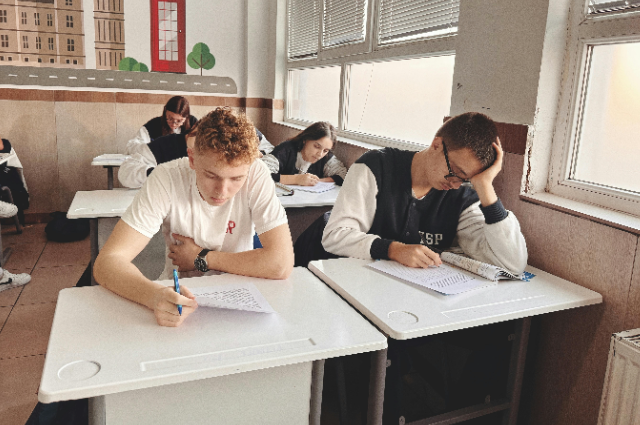
Education was never meant to feel like a transaction. At its core, it was a shared responsibility—teachers passing on knowledge, students learning to think, question, and grow into thoughtful members of society. Over time, however, this idea has slowly faded. Classrooms have begun to resemble marketplaces, students are treated like customers, and learning is increasingly viewed as something to be purchased rather than developed. Today, education is often judged not by what students can understand or apply, but by what they can present on paper. This shift has created a growing gap between real skills and formal certificates—a gap that continues to widen as education becomes more commercialised.
This transformation did not happen suddenly. It crept in quietly through systems that prioritise visible outcomes over meaningful learning. Grades, rankings, and placement statistics have become the primary measures of success. To meet these expectations, many schools and universities design their curricula around what can be easily quantified. As a result, critical thinking, creativity, and curiosity are often pushed aside. Students learn how to perform well in exams rather than how to think independently. Learning becomes strategic and mechanical, focused on completing syllabi and scoring marks instead of understanding ideas. Over time, education turns into a checklist, and students become passive receivers of information rather than active thinkers.
One of the clearest consequences of this shift is credentialism—the growing obsession with degrees and certifications as markers of ability. This has led to degree inflation, where qualifications that once provided an advantage now merely allow entry. Jobs that previously required experience or basic education now demand advanced degrees, not because the work itself has become more complex, but because the market is crowded with certified candidates. Students respond by accumulating more and more qualifications to remain competitive. Certificates gain symbolic power, while the actual skills they are meant to represent become secondary. The result is a generation of graduates who appear well-qualified on paper but often struggle to apply their knowledge in real-world situations.
Alongside formal education, a parallel system has emerged. Private coaching centres, test-preparation institutes, and digital learning platforms promise efficiency, shortcuts, and guaranteed success. These systems thrive on anxiety and competition. In many households, especially middle-income ones, spending on private coaching exceeds school fees. Education becomes layered: formal schooling provides the foundation, while real competitiveness is sold as an additional product. Students who can afford constant tutoring, personalised mentorship, and advanced learning tools gain a clear advantage. Those who cannot are left trying to compete in a system that was never designed to be equal.
This parallel structure deepens inequality in subtle but powerful ways. Even when students from low-income backgrounds gain access to good schools, they often lack the extra resources their peers rely on. Success becomes less about effort or ability and more about access. Education, once seen as a pathway to social mobility, begins to reinforce the very divisions it was meant to reduce. Commercialisation turns learning into a race where not everyone starts at the same point.
Market logic is also increasingly visible in how educational institutions are run. Many schools and universities now adopt corporate models, focusing on branding, visibility, enrollment numbers, and profitability. Decisions about which subjects to offer or promote are often shaped by market demand rather than educational value. Disciplines such as philosophy, arts, ethics, and social sciences are gradually sidelined because they do not promise immediate economic returns. Yet these subjects are essential for developing empathy, moral reasoning, and civic awareness. Their decline reflects a narrow understanding of education as merely workforce training, rather than a foundation for an informed and responsible society.
This approach also affects teachers. Educators are under pressure to deliver results that can be measured and compared. This often limits experimentation, creativity, and intellectual freedom in the classroom. Teaching becomes standardised and risk-averse. Even innovation is frequently driven by what looks attractive or marketable, not by what genuinely improves learning. In such an environment, education loses its human element. Classrooms begin to resemble production lines, shaping students to fit predefined standards instead of encouraging them to explore their own ideas and identities.
At the centre of these changes lies the widening gap between skills and certification. Employers increasingly report that graduates lack essential abilities such as problem-solving, communication, adaptability, and independent thinking. This is not because students lack potential, but because the system rewards compliance over competence. When success is measured by marks and certificates, students learn how to pass exams rather than how to learn. This is especially concerning in a world facing rapid technological change, global uncertainty, and complex social challenges—conditions that demand flexible, creative, and thoughtful individuals.
Commercialisation also reshapes how students view themselves. When education is framed as an investment, failure feels like a financial loss rather than a learning opportunity. Curiosity becomes risky, and exploration feels inefficient. Students are encouraged to choose “safe” paths with predictable returns instead of pursuing genuine interests. Over time, this erodes intrinsic motivation and replaces it with constant pressure, comparison, and fear of falling behind. Education becomes a means of survival rather than a space for growth.
Addressing this crisis does not require rejecting certificates or professional training altogether. Credentials still have value when they genuinely reflect understanding and competence. The problem arises when they become the only measure of worth. Reclaiming education requires a shift in values—one that prioritises learning over profit, equity over competition, and human development over branding. Greater public investment, recognition of diverse forms of skill, and teaching models that emphasise depth rather than speed are essential steps toward restoring balance.
Ultimately, the question is not whether education should prepare students for employment, but whether it should reduce them to market units. When education is treated purely as a commodity, society loses thinkers, not just workers. Bridging the gap between skill and certificate is not only an educational challenge—it is a moral one. If education is to remain meaningful, it must resist being reduced to a product and reaffirm its role as a public good that serves both individuals and society.
. . .
References:
- Credentialism and degree inflation – Wikipedia https://en.wikipedia.org
- The Commercialisation of Education: Implications and Concerns – Sociology Institute https://sociology.institute
- Private education and inequality in the knowledge economy – Oxford Academic https://academic.oup.com
- How the commercialisation of higher education impacts sustainable development goals – Higher Education Digest https://www.highereducationdigest.com
- Commercialisation of education and its impact on fundamental rights – Legal Service India https://www.legalserviceindia.com