
Image by David Olive from Pixabay
There are festivals in India that draw millions: Kumbh Melas, Rath Yatras, Pushkar fairs, and temple carnivals that glow across travel brochures. And then there is Mukka Sendra, also known as Jani Shikar, a tribal celebration so rare, so localised, and so deeply rooted in ancestral memory that it isn’t promoted, televised, or advertised. It doesn’t appear in glossy tourism calendars or state-sponsored heritage itineraries. It doesn’t need to. This is a festival that exists because the community remembers — and remembering is their resistance.
Mukka Sendra is celebrated by the Oraon (Kurukh) tribe across Jharkhand, Odisha, and Chhattisgarh. Unlike most festivals that mark annual cycles of harvest or monsoon, this one returns only once every twelve years, echoing rhythms of time that feel almost cosmic, like the Mahakumbh. When the cycle approaches, villages begin to awaken with a peculiar mixture of anticipation, responsibility, and ancestral weight, because when the festival arrives, the world flips: women become warriors, men become caretakers of the home, and the memory of an old war is relived through ritual.
The festival traces its origin to a moment of crisis at Rohtasgarh Fort in Bihar roughly five centuries ago. Legend says the attack came after Sarhul, the spring festival, a night of celebration where the Oraon men drank hadia (rice beer) until they collapsed into sleep. Invaders — described in oral history as Mughal or Turk forces — planned their assault knowing the village would be defenceless. And they would have succeeded, if not for three women. Princess Sinagi Dai and her companions, Kaili Dai and Champa Dai, refused to accept defeat as destiny. They dressed themselves as men, tied turbans, and gathered every able woman in the community. The women lifted spears, daos, bows, arrows, and anything that could function as a weapon. They filled the fort walls like an army and fooled the enemy into believing the men were awake and ready for war.
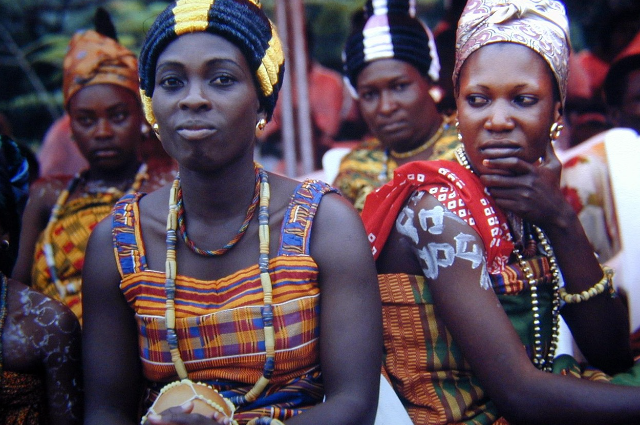
The first attack failed. The second attack failed. It was only on the third attempt, when a spy saw the “soldiers” washing their faces and noticed the delicate, feminine movement of their hands tracing their foreheads, that the disguise was revealed and Rohtasgarh eventually fell. But defeat did not erase what happened. If anything, memory made it larger. The invaders branded captured women with three dots on the forehead — a mark meant to shame them as rebels. The Oraon community chose to carry it as an honour. Even today, the three-dot tattoo lives on like a small, permanent flame of remembrance: part mourning, part pride, part unbreakable identity.
This is not a performance for outsiders. It is not reenacted for cameras, tourists, or cultural festivals curated for applause. Mukka Sendra is a vow passed from mother to daughter. And every twelve years, when it arrives again, the women step into their roles. They dress in clothing traditionally worn by men — karea in older times, shirts and trousers now — and take up weapons. They march from one village to another in a relay that is more ritual than journey. The host village must wash the feet of the arriving women, honour them with a feast, and then release their own women to continue the march forward. Along the way, animals such as goats, pigs, or hens are hunted, though in recent times the act has shifted from necessity to symbolism. Wildlife is protected; specific livestock is set aside for ritual; the essence of the hunt remains intact.
Throughout this time, the men remain inside. They cook, wash utensils, clean the house, and stay away from the path of the warriors. Not as punishment or humiliation, but as remembrance: this is what it felt like when women held a kingdom on their shoulders. When the day ends, the feast belongs to the women alone. The men are forbidden to touch the food made from the “hunt,” because the victory is not theirs to share. The world outside continues as usual; markets open, roads rattle with buses, and city calendars ignore what just happened. But inside these tribal districts, something ancient breathes again.
This festival survives because the Oraon people choose memory over erasure. It survives because a story told around fires and kitchens can be stronger than any written record. It survives because this community has no interest in turning its grief and courage into an attraction for tourists. That is why no travel magazine lists it, no influencer documents it, and no billboard advertises it next to the temples of Varanasi or the beaches of Goa. You won’t book a seat to watch it. You won’t find a ticketed arena or curated entry point. Mukka Sendra refuses the audience. It belongs to those who inherited it.
Tourism celebrates spectacle; this festival protects history. Tourism looks outward; this one looks backwards, to the people who refused to surrender. In every tattooed forehead, in every woman marching with a weapon, in every man silently stirring a pot at home, the fort of Rohtasgarh rises again. Not in stone, but in memory.
This is why you won’t find this festival on a tourist map.
It was never meant to be seen.
It was meant to be remembered.
. . .
References:
- Overview of Mukka Sendra / Jani Shikar festival and its connection to the Oraon tribe: Oraon Tribe: Lifestyle, Culture, and Traditions — Hindusanatanvahini.com
https://hindusanatanvahini.com - Detailed history of Jani Shikar and women’s warrior legend from tribal communities: Jani Shikar: The Powerful History Of Adivasi Women Warriors — Feminism in India https://www.adivasilivesmatter.com
- Festival practices, attire, hunting traditions, and evolution: Jani Shikar Festival: Celebrating Adivasi Women’s Valour in Odisha — Swadesi.com https://swadesi.com
- Symbolism, relay and gender roles in the tribal hunt: Six lesser-known tribal rituals still practised — Media India https://mediaindia.eu