
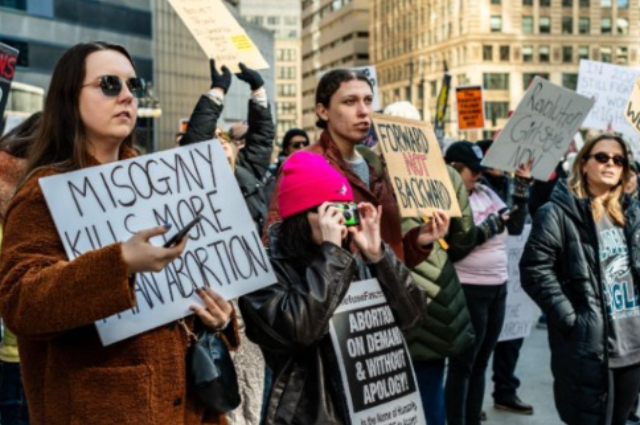
For thousands of years, misogyny has been a common practice. Art, literature, human society, historical events, mythology, philosophy, and religion throughout the world all reflect it.
Violence against women, including domestic abuse and, at its most severe, misogynist terrorism and femicide, is an example of sexism. Additionally, misogyny frequently takes the form of social or legal exclusion of women from full citizenship, as well as sexual harassment, coercion, and psychological tactics meant to control women. Misogyny sometimes encourages women to accept a lower status.
Misogyny can be viewed as a pervasive cultural practice or system as well as an attitude held by individuals, mainly men. Misogyny can appear overtly and boldly at times, or it can be more subtle or concealed in ways that make it difficult to deny.
According to feminist theory, femmephobia - the rejection of feminine traits - is linked to misogyny. It despises organisations, occupations, pastimes, or behaviours that are connected to women. Any characteristics of men that are viewed as feminine or unmanly are rejected. Misogyny may be reinforced and overlapped by racism and other prejudices. The deliberate death of women or girls due to their sex is known as femicide. In certain instances, it may also be an instance of domestic violence, but it is an ideological, misogynistic murder.
Terrorism aimed at punishing women is known as misogynist terrorism. Since 2018, counterterrorism experts like ICCT and START have monitored the ideology of male dominance and misogyny as motivators for terrorism. A "rising threat" is how they characterise this type of terror. The 2018 Toronto van attack and the 2014 Isla Vista murders are two examples of acts classified as sexist terrorism.
Some of the attackers connected with the incel movement and were driven to murder because they believed they had a right to have sex with women. Even when it is not the main driving force, misogyny is prevalent among mass murderers. The ideas of "good" and "bad" women are placed on women to control them, according to numerous feminist writings. It is possible to tell women who support their own subjugation or who are easy to manipulate that they are good. According to Helen Lewis, the "long tradition of regulating female behaviour by defining women in opposition to one another" is the architecture of sexism. The categories of good and bad also lead to conflict among women.
The idea that women are either good and chaste or wicked and promiscuous is known as the Madonna–whore dichotomy or virgin/whore dichotomy. According to the feminist viewpoint, belief in this duality leads to misogyny because it seems to justify regulating women's behaviour. Misogynists aim to punish "bad" women because of their sexual orientation. According to author Chimamanda Ngozi Adichie, women who report being harassed or assaulted (as in the #MeToo movement) are only seen as deserving of sympathy if they are "good" women - that is, non-sexual and possibly defenceless.
Second-wave feminist thinkers of the late 20th century contended that patriarchal societal institutions both cause and result in misogyny. According to economist Deniz Kandiyoti, colonists in the Middle East, Africa, and Asia maintained control over captured armies of men by granting them total authority over women. The "patriarchal bargain" is what she refers to. Colonial powers elevated men who were willing to take the deal to positions of leadership, which made the colonised countries more sexist. Misogyny has been added to the list of aggravating elements that the media frequently refers to as "hate crimes" in England and Wales in recent years. Currently, animosity toward a victim because of traits like sexual orientation, race, or disability is considered an aggravating element in a criminal sentence.
Nottinghamshire Police started a test program in 2016 to classify acts of misogyny as either hate crimes or hate incidents, depending on whether they were crimes. 174 reports were filed over two years (April 2016 - March 2018), of which 101 were categorised as occurrences and 73 as crimes. It was stated in September 2018 that the Law Commission would investigate whether misogynistic behaviour and animosity toward groups, including goths, ageism, and misandry, should be considered hate crimes.
Two senior police officers, Cressida Dick, Commissioner of the Metropolitan Police, and Sara Thornton, chair of the National Police Chiefs' Council, said in October 2018 that police should concentrate on more serious crimes like violent offences and burglaries rather than documenting non-crimes. Police agencies "do not have the resources to do everything," according to Thornton, but "treating misogyny as a hate crime is a concern for some well-organised campaigning organisations."
The Law Commission suggested adding gender or sex to the list of protected traits in September 2020. Although misogyny was classified as a hate crime by seven police forces in England and Wales at the time of the Law Commission's proposals, this definition had not been widely accepted. In October 2021, a Home Office official said that police had been asked to document any crime the victim knew was motivated by animosity towards their sex.
Every religion has its own perspective, as mythology reveals its vices about women. Hinduism offers a variety of perspectives on women's roles. According to Manusmriti, some texts elevate women to the status of the highest deity, while others limit them to the roles of wife, mother, and daughter. According to Tertullian, the founder of Latin Christianity, women are the Devil's Gateway and are cursed by God. An-Nisa, which means "women," is the fourth chapter of the Quran, the sacred book of Islam.
One of the most important verses in feminist criticism of Islam is verse 34, which says: Because of what Allah has given them and the money they spend [for maintenance] from their riches, men are in charge of women. Thus, virtuous women are fervently submissive. However, you should [first] counsel those [women] from whom you dread arrogance, [then] abandon them in bed if they continue, and [lastly] strike them. But if they obey you [again], don't try to stop them.
The advancements made by women over the ages are admirable, and the struggle will go on until the causes of misogyny are eradicated. It was anticipated that conservative and religious countries would become more gender aware and offer equal access to jobs and education as a result of the globalisation wave of liberalisation. However, the development of religious fanaticism has undermined these ambitions in some locations. It is crucial to remember that even "liberal" Christian societies have not yet achieved full gender equality, so one should not be discouraged by our nation's slow progress. Gender equality will remain a pipe dream without equal access to economic freedom, equitable opportunity, and education.