
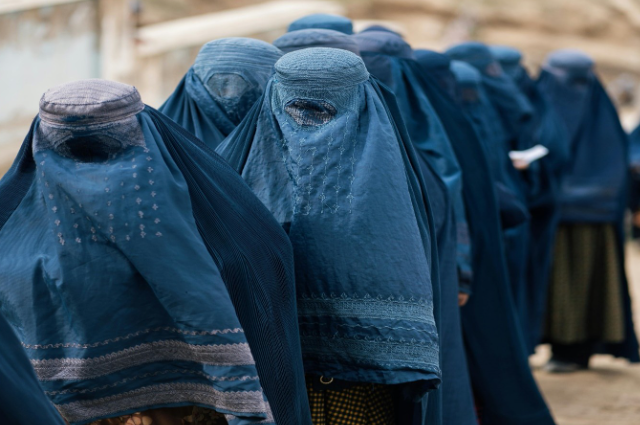
Four years have passed since the Taliban took control of Afghanistan for the second time. Since August 2021, numerous directives have been published by the de facto authorities (DFA) that have deprived women and girls of their rights, including those related to education, employment, mobility, and public decision-making. Secondary school is off-limits to girls. Universities, the majority of occupations, and public areas like parks, gyms, and sports clubs are all off-limits to women. Poverty and concurrent humanitarian crises are making life more difficult for everyone, particularly for women and girls.
However, this goes beyond personal suffering. According to UN Women's 2024 Afghanistan Gender Index, the country's fall is being accelerated by the worsening women's rights issue, which is expanding disparities in health, education, employment, safety, and decision-making.
Can Afghan women access healthcare in 2025?
For Afghan women, getting healthcare has become more challenging. Fear, limitations on travel, prohibitions on education, and institutionalised prejudice have prevented women and girls from receiving the care they require since the Taliban takeover. Many ladies are afraid to leave their houses at all. If they do, they might have to travel far to a clinic just to be turned away because they are female.
There are fewer female health professionals, and several areas prohibit male doctors from treating women. One of the final avenues for women to become healthcare professionals was closed in December 2024 when the DFA banned them from pursuing degrees in midwifery or medicine.
The outcomes are concerning. Women are living shorter, less healthy lives. The chances of maternal death are increasing, particularly given the high numbers of adolescent births brought on by child marriage. Furthermore, the majority of women are unable to make decisions regarding their own health; instead, male relatives are frequently in charge. There are significant negative effects on mental health from being confined to one's house. Women and girls are experiencing a mental health crisis as a result of limited access to community, physical activity, and emotional support. They report feeling more anxious, hopeless, and depressed. Afghan women, like women everywhere, are more prone to prioritise their families and children over their own health during hard times.
Why can’t girls go to school in Afghanistan?
Afghan girls' formal education ends when they leave the school on the final day of sixth grade. The Taliban has prohibited girls from attending secondary schools since September 2021.
However, the problem starts much earlier: poverty, constrictive gender norms, and safety concerns prevent over 30% of Afghan girls from attending elementary school. To support the home or be ready for child marriage, which has become more common as families struggle to deal with the financial crisis, families frequently pull both boys and girls from school.
There are a few online or informal learning choices, but they only cover a small percentage of girls and cannot replace official, full-time education. It's also not a route to a job or high school.
The effects are catastrophic:
- The percentage of young Afghan women without formal education, work, or training is 78%, which is almost four times higher than that of young men.
- Early childbearing is expected to increase by 45% by 2026.
- Maternal mortality may rise by over fifty per cent.
- Afghanistan loses 2.5% of its GDP annually due to the denial of secondary education to girls.
- Schools are not the only issue here. It's about communities caught in poverty, lost livelihoods, and lost futures.
Are Afghan women allowed to have jobs?
Afghanistan currently has one of the biggest gender disparities in the workforce worldwide. Compared to nearly 90% of men, only one in four women is employed or looking for work.
This is not a coincidence. The Taliban have imposed broad prohibitions that prevent women from working in industries that previously provided economic opportunities, including beauty salons, national and international NGOs, and government service.
The majority of working women are compelled to take low-wage, precarious occupations in the unorganised sector. Less than 7% of Afghan women utilise mobile money services or have bank accounts, so even getting money is difficult.
There has also been a lot of pressure on women's civil society organizations. The Taliban have barred women from working for non-governmental organisations and removed them from positions of leadership. They have even forced NGOs to substitute the word "men" for "women" in project documents. Many women's organizations have been compelled to shut down or drastically reduce their operations as a result of these restrictions, while others are finding it difficult to continue.
Can women participate in politics in Afghanistan?
In Afghanistan, women are totally shut out of formal political life. Afghan women could run for president and held more than 25% of the seats in Parliament in 2020. They are no longer members of the de facto cabinet. The Taliban is getting closer than ever to realising their goal of a society in which women are totally excluded from public life.
In order to fight for their organisations and communities, some women continue to find alternative means of participation, including informal meetings with the DFA. Although they are important, even subtle acts of persuasion cannot replace equitable representation.
There are no pictures of women holding public office, appearing on television, or attending official functions. The message to women and girls is very clear: you are not cut out for leadership.
Women are becoming less influential, even in their personal life. According to UN Women data, the percentage of women who believe they can make decisions even in their own homes—the only place they are still "allowed" to be—has decreased by 60%
Is it safe to be a woman in Afghanistan?
The short answer is no, and the dangers are growing.
Although it is no longer feasible to securely and consistently gather national data on gender-based violence in Afghanistan, the statistics that are currently available depict a grim situation. In 2018, over one-third of Afghan women reported having been sexually or physically abused by an intimate partner in the previous year.
Violence has probably gotten worse after the Taliban took back control in 2021. Gender-based violence has been allowed to spread unchecked due to economic hardship, limitations on girls' education, and the deconstruction of laws and institutions to prevent and respond to abuse.
For women and girls, movement restrictions can make everyday living hazardous. Women are required to travel with a male relative when they leave their houses in various parts of the nation, sometimes even for brief trips. To purchase food or receive medical care, widows or women without close male relatives must jeopardise their safety.
Early, forced, and child marriage rates are still high and continue to rise. Ten percent of Afghan females under the age of fifteen were married in 2023, making up approximately thirty per cent of all Afghan girls under the age of eighteen. To survive, some impoverished families marry off their daughters.
Can women still influence Afghanistan?
Afghan women and girls are still figuring out how to deal with and overcome the increasing restrictions placed on their lives. They continue to operate enterprises and serve on the front lines as journalists, community leaders, and humanitarian workers despite almost complete restrictions. They are still fighting for their rights as well as the rights of other Afghans.
How does UN Women work with women and girls in Afghanistan?
In Afghanistan, UN Women continues to provide for the current needs of Afghan women and girls while also protecting their future. Our assistance consists of:
- By women, for women programming, collaborating with over 200 women's organisations, including human rights advocates, journalists, and female leaders;
- collaborating with the DFA to identify strategies for protecting, empowering, and supporting those women's organisations;
- Increasing funding, training, and market access for female entrepreneurs;
- providing comprehensive services to the most disadvantaged and marginalised women and girls, such as livelihood activities, humanitarian aid, and psychosocial assistance;
- documenting the effects of the women's rights crisis locally and elevating Afghan women's voices in international decision-making forums.
How can the international community support women in Afghanistan?
UN Women calls on international partners to:
- Provide flexible, long-term funding: Provide consistent, flexible funding to women's civil society organizations.
- Make sure that gender equality is supported by at least 30% of Afghanistan's funding: Steer clear of programming that does not specifically address the needs of boys and girls as well as men and women. Put women's rights at the centre of all you do.
- Don't normalise discrimination: Avoid doing anything or forming alliances that can inadvertently encourage or normalise the discriminatory practices of the Taliban.
- Include women's rights in all humanitarian endeavors: Aid and development measures must be based on human rights, including women's rights.
Afghan women deserve a future.
Afghan women and girls continue to exhibit bravery, resiliency, and strength in spite of everything. However, they shouldn't have to deal with those difficulties on their own.
The world needs to take action right now to safeguard a generation's future as well as to address pressing issues. You cannot choose to remain silent. Being united is not a choice.