
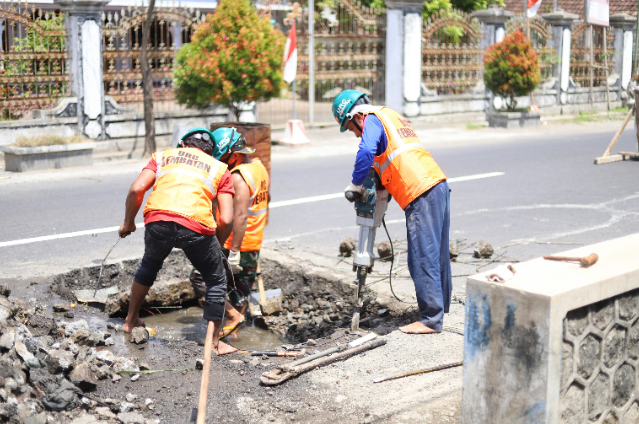
The Viksit Bharat Guarantee For Rozgar and Ajeevika Mission (Gramin) or VB-G Ram G Act, 2025, happens to be the successor of the Mahatma Gandhi National Rural Employment Guarantee Act, 2005 (MGNREGA). On 18 December, three days after the Bill was circulated by the government, Parliament passed the Bill despite protests raised by the Opposition parties and the members of civil society. The significant point of the passing of this Bill in Parliament was that neither the Prime Minister nor the Leader of the Opposition was present when the Bill was passed in both Houses of Parliament: both were abroad. Also, the Bill was not sent to the Standing Committee for detailed scrutiny and for inviting public/expert opinion before its final passage. On 21 December, the Bill received assent of the President and was duly published in the official gazette.
The Necessity to Replace MGNREGA
The National Rural Employment Guarantee Act or NREGA was passed in 2005, and by 2008, it was extended to all districts in India. After 2009, it was officially renamed the Mahatma Gandhi National Rural Employment Guarantee Act (MGNREGA). By 2011-12, the performance indicators of this scheme had been quite satisfactory. According to the renowned economist, Jean Dreze, “Six years later, in 2011-12, important evidence emerged that the programme was doing quite well. At that time, MGNREGA (as it was then renamed) officially generated more than 200 crore person-days of employment per year for 50 million rural households. Nearly half of the workers were women, and more than 40 per cent belonged to a Scheduled Caste or a Scheduled Tribe. These official figures were largely corroborated by independent household surveys, including the 68th round of the National Sample Survey and especially the second Indian Human Development Survey. Rural wages were rising at an unprecedented rate. Some studies also suggest that MGNREGA, far from displacing productive work, had positive effects on economic efficiency and aggregate output. These achievements built on the energy and enthusiasm of the early years of the programme.” However, the rot began to set in afterwards. He further observes, “Later, implementation hurdles and blunders multiplied. Centralisation, technocracy, underfunding, delays in wage payments, failure to act on corrupt elements, and other problems took a heavy toll. Today, MGNREGA is a pale shadow of its former self, despite a sterling role during the Covid crisis.”1
In a study conducted by Karthik Murlidharan and Sandip Sukhtankar, the Tata Chancellor's Professor at the University of California and Professor of Economics at the University of Virginia, the findings are the same as mentioned above: “Over the past decade, credible research has delivered a clear lesson. When implementation improves by making work more readily available, reducing leakages, and ensuring timely wage payments, the gains are substantial. In a large-scale randomised evaluation of improving MGNREGS implementation, covering around 19 million people in Andhra Pradesh and Telangana, we found sharp income increases and meaningful poverty reduction. Crucially, these gains mostly came from higher private labour market earnings.”2 Thus, the key to obtaining the benefits of MGNREGS is effective implementation, which makes it a credible option for workers outside the ambit of their routine sources of income. Thus, implementation flaws, incidents of pilferage, misuse of funds by State governments, increasing corruption, and the slow pace of fund flow are the main features that seem to spur the government on to bring a new enactment. At this juncture, it would be worthwhile to have a look at the new changes introduced in the new Act of 2025.
Key Changes in the New Act
Guaranteed Work Days
Section 5(1) of the new VB-G Ram G Act proposes 125 days of guaranteed employment to every household whose adult members volunteer to do unskilled manual work. In MGNREGA, this limit is only 100 days.
Here, it may be pointed out that in 2024-25, the average number of days of employment was just about 50, and the number of households completing 100 days amounted to 40.70 lakh in the same year. In the current financial year, only 6.74 lakh families have achieved the ceiling of 100 days. The total number of job cards stands at 8.61 crore, covering 12.16 crore active workers.
The Act, however, envisages an additional 50 days of wage employment beyond the stipulated quota. For example, every Scheduled Tribe household in a forest area is entitled to get 150 days of work, provided that such families have no other private property except the land rights granted under the Forest Rights Act, 2016.3
Shift in Fund-sharing Burden
There is a major shift in the fund-sharing burden between the Centre and States. Under MGNREGA, the Union government was responsible for 100% of the labour wages and 75% of the material wages. Practically, this amounted to a 90:10 cost share between the Centre and the States. However, in the new Act, under Section 22(c), “the fund-sharing pattern between the Union government and the State governments shall be 90:10 for the north-eastern States, Himalayan States/Union Territories (Uttarakhand, Himachal Pradesh, and Jammu and Kashmir), and 60:40 for all other States and Union Territories with legislature.” This provision will certainly increase the financial burden of the States, which are already facing a financial crunch. The Union Ministry of Rural Development estimates that the annual expenditure on the new scheme would be around Rs.1,51,282 crore. The Central share would be Rs.95,692.31 crore, with the remaining amount of Rs.55,589.69 crore to be released by the States. A calculation of last year's expenditure data shows that the additional fiscal impact on States may be over Rs.30,000 crore annually.
The Centre is expected to face various challenges in the course of transition to the new scheme. It will have to clear up all the existing liabilities pending under the old scheme. The Central government believes that its annual estimated share of Rs 95,692.31 crore for the new scheme would cover liabilities too.4
Normative Allocation - A Top-down Approach
In the new Act, the formula of “normative allocation” has been introduced, which will transform the method of allocation of resources into a top-down process. It has been mentioned there as “the allocation of the fund made by the Central Government to the State.” Section 4(5) of the new Act states: “The Central Government shall determine the state-wise normative allocation for each financial year, based on objective parameters as may be prescribed by the Central Government.
Section 4(6) states: “Any expenditure incurred by a State in excess of its normative allocation shall be borne by the State Government in such manner and by such procedure as may be prescribed by the Central Government.”
In this context, it may be pointed out that normative allocation would be a departure from the previous provisions of the labour budget of MGNREGA. In this scheme, all States are required to present their annual work plan and labour budget to the Ministry of Rural Development before the beginning of each financial year (on or before January 31). The labour budget is prepared at the district level on the basis of anticipated demand for unskilled manual work. It is presented to the Central Government in cumulative form, which then finalises the allocation. The new provision in the Act of 2025 will certainly affect States with higher demands, such as Tamil Nadu, Uttar Pradesh, Rajasthan, Bihar, and Andhra Pradesh.5
Pause in Agricultural Peak Seasons
The VB GRG Act introduces a pause in the employment guarantee scheme of 60 days during sowing and harvesting seasons to ensure “adequate agricultural labour availability". Section 6 (1) sub-section (2) stipulates: “Notwithstanding anything contained in this Act or rules made thereunder, and to facilitate adequate availability of agricultural labour during peak agricultural seasons, no work shall be commenced or executed under this Act, during such peak seasons as may be notified under sub-section (2)”.
States are required to notify these 60 days in advance, which may be distinct based on different agro-climatic zones, local patterns of agricultural activities, or other factors. This provision is bound to reflect in a shorter window to avail of the 125-day scheme.6
Viksit Gram Panchayat Plans
All work to be executed in a village will be consolidated in the shape of Viksit Gram Panchayat plan, which will be further consolidated at the block, district, and State levels. That will be further aggregated into the Viksit Bharat Rural Infrastructure Stack. The Stack shall comprise four core areas: water security through water-related work; core rural infrastructure; livelihood-related infrastructure; and work for the mitigation of current weather events. These plans will be integrated with the PM Gati Shakti National Master Plan.7
Replacement of Job Cards
The new Act provides for the issuance of Gramin Rozgar Guarantee Cards to adult members of every rural household willing to undertake unskilled manual work. Such a person may submit the names, ages, and address of the household to the Gram Panchayat within whose jurisdiction they reside, for registration under the new scheme.
What the Critics Say
According to the renowned economist Jean Dreze, the points of concern are as such: 8
- "Under this Bill (now Act), the central government has full powers and no serious obligations. All the obligations-providing employment, paying the unemployment allowance, compensating workers for delayed payments, and even ensuring adequate funding-have been palmed off to state governments.
- “The Centre's discretionary powers begin with the power to decide where and when the scheme is to be implemented. The ' switch-off clause' defeats the purpose of the employment guarantee. It is like providing a work guarantee without any guarantee that it applies.”9
- “The central government also has discretionary power over financial allocations. Until now, MGNREGA has been based on the principle of open-ended funding from the Centre. States only had to pay a percentage of the material costs (about 10 per cent of total costs). Under the new scheme, the Centre is free to set “state-wise normative allocations”. Within those allocations, there will be 60/40 cost-sharing between the Centre and states. Beyond that, all the funding is supposed to come from the states…... The new financial pattern, like the switch-off clause, pulls the teeth out of MGNREGA.”
- “Far from revamping India's employment guarantee, the Bill (now Act) sinks it by demotivating the states and disempowering the workers. This is the end of an era.”10
According to Karthik Muralidharan and Sandip Sukhtankar, “The concern is that the new law introduces changes that risk weakening the programme’s core function as a credible employment guarantee. It replaces a rights-based guarantee that can be demanded by citizens with a centrally designed scheme and moves from full central financing of wages to a 60:40 Centre-state cost-sharing model (90:10 for some states) with normative allocations. This risks constraining the programme precisely where it is needed most. Poorer states with weaker fiscal capacity and administrative systems may now use it less, not because need has fallen, but because their costs have risen. Finally, mandating a 60-day pause adds little efficiency, because MGNREGS work already drops naturally in peak seasons through worker self-selection. Yet, it introduces uncertainty about work availability that can weaken the programme's border-market and demand effects.”11
One of the architects of NREGA, Nikhil Dey and Aruna Roy opine: “The MGNREGA was the result of a people's movement with the call, 'Har haath kaam do, kaam ka poora daam do'-every hand wants work, every work demands a just wage. VB GRAM G may well become a scheme that ensures cheap labour for farmers, contractors, the corporate sector, and agencies of the state, and deepens inequality across India. Political accountability for this Act will lie with its architects.”12
According to the well-known social and political commentator Pratap Bhanu Mehta, “On the surface, extending the employment guarantee to 125 days appears progressive. In practice, however, this is likely to be nullified by seasonal pauses, by converting a demand-driven entitlement into a budget-capped, supply-driven programme, and by shifting a greater financial burden onto states.
The MGNREGA, for all its limitations, was also a significant instrument of decentralisation, empowering gram panchayats in meaningful ways. Although the new Bill (now Act) formally involves panchayats in planning, the requirement that these plans align with centrally determined priorities will, in practice, hollow out their legacy."13 Needless to say, all these concerns about the new Act are genuine and based on solid facts.
The new VB GRG Act, 2025, is a replacement of the old MGNREGA, which was introduced in 2005 after due deliberations from all the stakeholders. Its basic purpose was the entitlement of the rural labour class, apart from guaranteeing them a work opportunity in their own villages for a full hundred days every year by the government. The Act was passed after undergoing wide scrutiny by the standing committee of Parliament under the chairmanship of the late Kalyan Singh, a BJP stalwart. Unfortunately, this time the VB GRG Act has been passed in a ‘tearing hurry’ by the present central government without any consultation with either the opposition parties or with civil society. MGNREGA has served its purpose with distinction during the time of COVID-19 pandemic. It is true that during the last decade, so many nagging problems or malaise had crept into the body fabric of MGNREGA, such as rampant corruption, poor implementation, and lack of proper interest and supervision by the authorities. But that demanded the redressal of the malaise only. A thorough revamping of the scheme with a well-laid foundation would have served the purpose. But the present government has brought an entirely new scheme in place of MGNREGA, which appears to be a clear-cut deviation from the objectives and the purpose of the old scheme. It is now totally controlled by the Centre's diktat and has now assumed the shape of a rural employment scheme run by the central government as per their whims and fancies. It is not the old demand-driven scheme where the rural labour class played the central role. Though the period for providing work has been raised from 100 to 125, the period of pause encompassing the peak agricultural season has been fixed for sixty days a year. Moreover, the fiscal burden has been majorly shifted to the States which are currently in a state of financial crunch. So, their interest in carrying out the new scheme would be drastically lessened due to financial problems. Maybe the old MGNREGA philosophy will soon vanish in thin air, and the status of the rural poor will be back to square one. Now, this is a litmus test for the present government to carry forward the legacy of the successful MGNREGA scheme because ultimately, it is the implementation strategy that carries the day for the central government. Overall, it seems that instead of taking remedial measures, the government at the Centre has made surgical strikes without thinking about its dangerous effects.
. . .
Reference:
- Jean Dreze, This Overhaul of MGNREGA disempowers workers, demotivates states, The Indian Express, Dec 20, 2025.
- Karthik Murlidharan and Sandip Sukhtankar, Reform jobs scheme, but build on its gains, Hindustan Times, Dec 23, 2025.
- Harikishan Sharma, 20 yrs on, a radical revamp of the rural jobs framework, The Indian Express, Dec 16, 2025.
- Harikishan Sharma, In MGNREGA shadow, why GRAMG Act may face a bumpy road ahead, The Indian Express, Dec 24, 2025.
- Harikishan Sharma, 20 yrs on, a radical revamp of the rural jobs framework, The Indian Express, Dec 16, 2025.
- Ibid.
- Ibid.
- Jean Dreze, This overhaul of MGNREGA disempowers, demotivates states, The Indian Express, Dec 12, 2025.
- Ibid.
- Ibid.
- Karthik Muralidharan and Sandip Sukhtankar, Reform jobs scheme, but build on its gains, Hindustan Times, Dec 23, 2025.
- Nikhil Dey and Aruna Roy, New jobs law reverses gains on rural equality, The Indian Express, Dec 24, 2025.
- Pratap Bhanu Mehta, MGNREGA was the ground beneath our feet. It's slipping away, The Indian Express, The Indian Express, Dec 19, 2025.