
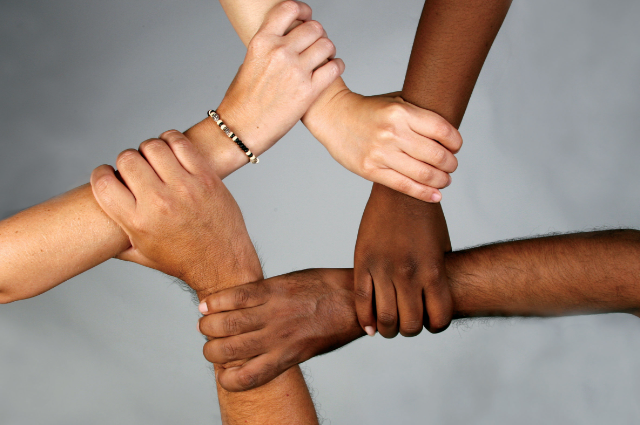
International Human Solidarity Day, observed annually on December 20, transcends the ceremonial function of a typical United Nations observance to serve as a rigorous audit of the international community's moral and operational capacity to navigate the poly-crisis defining the twenty-first century. Proclaimed by the UN General Assembly in 2005 through Resolution 60/209, this day was established to remind member states that in an era of intense globalization, national interest is inextricably bound to global welfare. The central thesis of this observance, and indeed of this entire report, is that solidarity is not merely a sentiment of empathy or a discretionary act of charity, but rather a functional prerequisite for the survival and prosperity of modern civilization.
The concept of solidarity has evolved significantly from a philosophical abstraction to a hard security necessity. The challenges of the current epoch, which include anthropogenic climate change, zoonotic pandemics, mass displacement, and systemic economic inequality, are uncontainable by national borders and demand a unified response. As outlined in the United Nations Millennium Declaration, solidarity is identified as one of the fundamental values essential to international relations, explicitly stating that global challenges must be managed in a way that distributes the costs and burdens fairly in accordance with basic principles of equity and social justice. This principle dictates that those who suffer or who benefit least deserve help from those who benefit most, establishing a framework where mutual responsibility is the cornerstone of global stability.
This report provides an exhaustive analysis of solidarity, moving from its sociological and historical roots to its institutionalization in international law, and finally to its stress-testing in contemporary crises. It draws upon extensive data regarding vaccine equity, climate adaptation in the Pacific, migration integration in Latin America, and grassroots poverty reduction in Central Asia to demonstrate that solidarity is the only viable mechanism for sustainable development. By examining these diverse areas, we can see that the failure to act in solidarity leads to catastrophic economic and social consequences, while embracing it unlocks resilience and growth.
Theoretical and Historical Foundations: The Sociology of Interdependence
To understand the failures and successes of modern international cooperation, one must first deconstruct the sociological mechanisms that bind societies together. The intellectual history of solidarity reveals a tension between cohesion based on similarity and cohesion based on difference, a tension that continues to plague global governance today.
Durkheim’s Legacy: Mechanical vs. Organic Solidarity
The most enduring framework for understanding social cohesion comes from the French sociologist Émile Durkheim. In his seminal 1893 work, The Division of Labour in Society, Durkheim introduced a dichotomy that remains profoundly relevant to the analysis of globalization: the distinction between Mechanical Solidarity and Organic Solidarity. Mechanical Solidarity characterizes traditional, small-scale societies where social cohesion arises from homogeneity. In these contexts, individuals share the same work, such as subsistence farming, the same religious rituals, and the same daily experiences. The collective conscience, or the set of shared beliefs and moral attitudes, is overpowering in these settings. Solidarity is automatic because everyone is fundamentally alike, and deviation is viewed as a threat to the group's existence, often met with repressive punishment.
Conversely, Organic Solidarity emerges in complex, industrial societies marked by a high division of labour. Here, individuals are highly specialized, meaning the baker, the engineer, the surgeon, and the sanitation worker lead vastly different lives with distinct values and experiences. The collective conscience is weaker, and individualism is stronger, yet the society is held together by interdependence. The surgeon cannot survive without the farmer, and the engineer relies on the sanitation worker. Durkheim termed this "organic" because it resembles a biological organism where distinct organs like the heart, lungs, and liver must cooperate for the body to survive.
The crisis of twenty-first-century international relations can be diagnosed as a failure to transition fully to global organic solidarity. Economically and ecologically, the world has achieved organic solidarity because the supply chains of the Global North are dependent on the labour of the Global South, and the atmospheric stability of the planet depends on the emissions of all nations. However, the political and psychological structures of the world often revert to Mechanical Solidarity. When crises strike, such as the COVID-19 pandemic or the refugee crisis, nations often retreat into the sameness of nationalism, erecting borders and hoarding resources, which effectively denies the functional interdependence that sustains them.
The Colonial Shadow and the Evolution of the Concept
It is critical to acknowledge that the deployment of solidarity in international discourse is not historically neutral. Political theorists have noted that during the late nineteenth and early twentieth centuries, the concept of solidarity was utilized to rationalize colonial governance. French colonial administrators, influenced by Durkheimian sociology, employed solidarity to promote developmentalist reforms that sought to integrate colonies into imperial economic orders. In this historical context, solidarity was often used as a tool for managing the interdependence between the metropole and the colony in a way that entrenched exploitation under the guise of mutual benefit.
This historical baggage informs contemporary scepticism in the Global South regarding calls for global solidarity that originate in the Global North. If solidarity is framed merely as the integration of developing economies into markets dominated by wealthy nations, it risks replicating colonial dynamics. Genuine solidarity in the post-colonial era requires a shift from integration to justice, specifically the recognition of common but differentiated responsibilities, a principle now central to climate negotiations. This shift is essential for rebuilding trust and ensuring that international cooperation is based on equity rather than dominance.
The Institutional Architecture of Solidarity
The translation of solidarity from a sociological concept to a diplomatic norm began in earnest with the formation of the United Nations, but it accelerated significantly at the turn of the millennium.
The Millennium Declaration and Resolution 60/209
The adoption of the United Nations Millennium Declaration in 2000 was a watershed moment that elevated solidarity to the status of a fundamental value for the twenty-first century, placing it alongside freedom, equality, tolerance, respect for nature, and shared responsibility. This was not merely rhetorical, as it provided the normative basis for the Millennium Development Goals and later the Sustainable Development Goals.
Building on this foundation, the General Assembly adopted Resolution 60/209 on December 22, 2005. This resolution formally proclaimed International Human Solidarity Day and linked solidarity directly to the eradication of poverty, recognizing that the persistence of extreme poverty in a world of abundance was a violation of the principle of solidarity. It called for the promotion of a culture of solidarity and the spirit of sharing, emphasizing that global problems require collective solutions.
The World Solidarity Fund: Ambition vs. Reality
One of the most concrete attempts to institutionalize this value was the creation of the World Solidarity Fund. Established by Resolution 57/265 in December 2002 and set up in February 2003 as a trust fund of the United Nations Development Programme (UNDP), the WSF was designed to finance poverty alleviation projects through voluntary contributions. The objective was to support community-based initiatives and small private sector entities in developing countries to improve the living standards of the poorest populations.
However, the trajectory of the World Solidarity Fund illustrates the limitations of voluntary mechanisms in the absence of binding commitments. While the fund exists as a mechanism, high-income nations have generally preferred bilateral aid or targeted vertical funds over the generalized World Solidarity Fund. Consequently, the operationalization of solidarity has largely occurred through the broader programming of the UNDP rather than the specific channel of the WSF. Despite these financial limitations, the UNDP has effectively carried the torch of the WSF's mandate. Working in 170 countries, the UNDP has supported 132 countries in multidimensional poverty reduction and helped 100 million people access sustainable energy between 2022 and 2024. These figures represent the de facto application of the solidarity principle, even if the specific de jure mechanism of the WSF remains undercapitalized.
Global Health Solidarity: The Stress Test of the Pandemic
The COVID-19 pandemic provided the most immediate and quantifiable test of international solidarity in generations. The virus, recognizing no borders, presented a textbook case of Durkheimian organic interdependence, where no country could be safe until every country was safe. However, the global response was characterized by a catastrophic reversion to mechanical solidarity, manifested as tribalism and nationalism.
Vaccine Nationalism and the Moral Failure
As vaccines became available in late 2020 and 2021, high-income countries leveraged their financial power to pre-purchase the vast majority of the global supply. This phenomenon, termed Vaccine Nationalism, resulted in a staggered recovery where wealthy nations vaccinated their populations multiple times over while frontline health workers in low-income countries died waiting for their first dose. WHO Director-General Dr. Tedros Adhanom Ghebreyesus famously described this situation as a catastrophic moral failure, highlighting the deep inequities embedded in the global health architecture.
The failure was systemic and profound. The COVAX facility, designed to ensure equitable access, was undermined by bilateral deals that bypassed the multilateral mechanism. By hoarding vaccines, high-income nations not only abandoned the Global South but also prolonged the pandemic, allowing variants to emerge that eventually returned to plague their own populations. This short-sighted approach demonstrated a fundamental misunderstanding of the nature of global risk in an interconnected world.
The Economic Cost of Non-Solidarity
The argument for solidarity is often framed in ethical terms, but the data reveal that the economic argument is equally potent. A comprehensive study commissioned by the ICC Research Foundation demonstrated that the refusal to practice vaccine solidarity was an act of economic self-sabotage by the developed world. The study modelled the economic interconnectedness of the global economy, including sectors, supply chains, and demand shocks, and found that if advanced economies vaccinated their populations while leaving developing economies behind, the global economy stood to lose as much as 9.2 trillion dollars.
Crucially, up to half of this cost would fall on the advanced economies themselves due to disrupted supply chains and the collapse of export markets in the developing world. For instance, the United States stood to lose between 45 billion and 1.38 trillion dollars, while the United Kingdom faced potential losses ranging from 8.5 billion to 146 billion dollars. Germany also faced significant exposure, with potential losses between 14 billion and 248 billion dollars. This data provides empirical validation for the concept of organic solidarity, proving that in a globalized system, the poverty or illness of the periphery directly reduces the wealth of the core. Solidarity, therefore, is an investment in self-preservation rather than a cost.
Climate Justice: The Existential Frontier of Solidarity
If the pandemic was a stress test, the climate crisis is the ultimate determinant of the international order's viability. Climate change introduces a temporal dimension to solidarity, known as intergenerational equity, and exacerbates the double inequality where those who contributed least to the crisis suffer its worst impacts.
The Loss and Damage Fund
For decades, Small Island Developing States and the Least Developed Countries have argued that adaptation funds were insufficient. They demanded recognition of Loss and Damage, which refers to impacts that cannot be adapted to, such as the permanent loss of territory to sea-level rise or the destruction of cultural heritage. In a historic victory for climate solidarity, the Loss and Damage Fund was agreed upon at COP27 and operationalized at COP28. This fund acknowledges the liability of carbon-intensive economies and represents a shift from charity to obligation.
As of April 2025, the fund has received pledges totalling approximately 786 million dollars from 27 contributors. While the establishment of the fund is a triumph of diplomatic solidarity, the capitalization remains woefully inadequate. Developing countries require an estimated 400 billion dollars annually to address loss and damage, meaning the current pledges represent less than one percent of the need. This persistent gap between the principle of solidarity and the payment of climate debt highlights the ongoing struggle for true climate justice.
Case Study: The Tuvalu Coastal Adaptation Project (TCAP)
Nowhere is the need for tangible solidarity more urgent than in Tuvalu, a Pacific atoll nation where the highest point is merely 4.5 meters above sea level. Projections indicate that without intervention, half of the capital, Funafuti, could be flooded by daily tides by 2050. The Tuvalu Coastal Adaptation Project represents a best-case scenario of engineering solidarity. Implemented by the UNDP with 36 million dollars from the Green Climate Fund and additional support from Australia, New Zealand, and the US, the project has moved beyond theory to physical reconstruction.
In 2025, Tuvalu celebrated the completion of eight hectares of new land on the Fongafale islet. This reclaimed land is elevated to remain safe from sea-level rise beyond the year 2100, effectively buying a century for the nation. Prime Minister Feleti Teo emphasized that this project is a defence of Tuvalu's right to exist, countering the defeatist narrative that evacuation is inevitable. Furthermore, Tuvalu has engaged in a ground-breaking treaty with Australia, the Falepili Union, which allows Tuvaluan citizens to migrate to Australia with dignity if displacement becomes necessary. This migration with dignity model is a pioneering form of legal solidarity, acknowledging that climate displacement requires new frameworks beyond the 1951 Refugee Convention.
Feminist Climate Justice
Solidarity must also be intersectional to be effective. The UN Women framework on Feminist Climate Justice argues that climate change amplifies existing gender inequalities. Women in the Global South often bear the primary responsibility for water and fuel collection, tasks that become more arduous and dangerous as resources deplete. Effective solidarity requires directing resources to women who are often the primary agents of community resilience.
In Uzbekistan, for example, UNDP programs funded by the Japanese government have targeted rural women entrepreneurs. By training them in Kaizen business practices and the One Village One Product model, these programs have enabled women to transition from subsistence labour to sustainable businesses. This builds economic resilience against climate shocks and demonstrates that empowering women is a critical component of climate adaptation strategies.
Migration and Human Mobility: Solidarity as Economic Integration
Migration is perhaps the most politically sensitive aspect of international solidarity. In 2024, the displacement of millions from Venezuela tested the social fabric of Latin America. The response, coordinated through the R4V Regional Inter-Agency Coordination Platform, offers a model of regional solidarity that contrasts sharply with the restrictive policies seen in other parts of the world.
The Venezuelan Exodus: A Regional Challenge
Since 2015, over 7.7 million Venezuelans have fled their country, with the vast majority settling in Colombia, Peru, Ecuador, and Chile. This mass exodus overwhelmed public services, yet the host countries maintained largely open borders, a testament to a deep-seated cultural and political solidarity. However, solidarity is not without its tensions. In Peru, while legal frameworks theoretically allow migrants to work, bureaucratic hurdles often force highly educated Venezuelans into the informal sector. A 2025 study noted that while Peru hosts 1.66 million Venezuelans, many struggle to validate their professional degrees, leading to a phenomenon known as brain waste, where skilled individuals are unable to contribute their full potential.
The Economic Dividends of Integration
Contrary to the nativist narrative that migrants are a drain on public resources, economic data from the region confirms that migration is a driver of growth if accompanied by integration policies. The IMF projects that the prompt integration of Venezuelan migrants could increase the GDP of host countries like Colombia, Chile, Peru, and Ecuador by 2.5 to 4.5 percentage points by 2030.
A study in Colombia found that in 2022 alone, Venezuelan migrants contributed over 529 million dollars to the economy, accounting for nearly two percent of total tax revenue. This figure is projected to rise to over 800 million dollars as regularization efforts proceed. In Peru, analysis shows that 96 percent of migrant income is spent within the host country, stimulating local demand for goods and services. This data provides empirical evidence that solidarity with migrants is not just a humanitarian act but a sound economic policy that benefits the host society.
The R4V Platform and the 2025-2026 Strategy
To manage this crisis, the R4V platform launched a comprehensive strategy for 2025-2026. The plan requires 1.4 billion dollars to support 2.3 million people. Crucially, the strategy has shifted from humanitarian aid, such as blankets and food, to socioeconomic stabilization. This involves working with governments to recognize professional credentials, ensuring access to banking, and supporting entrepreneurship. A compelling example of this is the UNESCO Qualifications Passport, which allows refugees who have lost their documents to prove their educational background through rigorous interviews. This mechanism enables professionals like doctors or engineers to practice their profession in their new home, representing a form of solidarity that restores dignity and utility.
Grassroots Solidarity: Livelihoods and Resilience in Central Asia
While high-level diplomatic solidarity is essential, the lived experience of solidarity often occurs at the micro-economic level. UNDP projects in Uzbekistan illustrate how international funds translate into individual resilience and community strength.
Mukaddas: The Entrepreneur of Ferghana
In the Ferghana Valley, Mukaddas, a local woman, faced systemic barriers to entry in the business world. Banks were reluctant to loan to women, and social norms discouraged female entrepreneurship. Through a UNDP project funded by the Japanese government, she received training in continuous improvement methodologies and the One Village One Product strategy. Mukaddas transformed a small agricultural operation into a thriving export business producing sesame cookies.
She now employs sixteen staff members, prioritizing women from vulnerable households. Her business creates a multiplier effect by supporting local farmers through the purchase of sesame crops at fair prices. Furthermore, the business serves as a community hub, providing a support network for women in the village. This demonstrates how targeted aid can catalyse a self-sustaining ecosystem of local solidarity, where economic success is shared among the community.
Sadokat and Bahtiyor: Cooperatives and Innovation
Similarly, Sadokat in the Tashkent region utilized a cooperative model to unite dairy farmers. By aggregating their milk production, they could negotiate better prices and access processing equipment that no single farmer could afford. This is a classic example of mechanical solidarity evolving into organic solidarity through market integration. Meanwhile, Bahtiyor in Karakalpakstan utilized the OVOP initiative to expand honey production in the arid Aral Sea region, adapting his livelihood to the ecological disaster zone. These stories highlight that poverty eradication, the core goal of International Human Solidarity Day, is best achieved not by handouts but by empowering individuals to build networks of mutual support.
The Future of Solidarity: Intergenerational Equity
As we move deeper into the 2020s, the concept of solidarity is undergoing a temporal expansion. It is no longer sufficient to practice solidarity only with the living; we must now practice solidarity with the unborn.
The Summit of the Future and the Pact for the Future
In September 2024, world leaders convened in New York for the Summit of the Future, a high-stakes attempt to reboot the multilateral system. The outcome was the adoption of the Pact for the Future, Resolution A/RES/79/1. Annexed to this Pact was the landmark Declaration on Future Generations. This Declaration formalizes the concept of Intergenerational Solidarity, recognizing that the decisions, actions, and inactions of present generations have an intergenerational multiplier effect. Whether in the accumulation of national debt, the degradation of the biosphere, or the development of artificial intelligence, the current generation holds the power of trusteeship over the future.
Institutionalizing the Long Term
The Declaration calls for specific mechanisms to ensure this solidarity is enacted. Governments are committed to using science and foresight in policymaking to assess long-term impacts. Discussions also advanced regarding the appointment of a High Commissioner for Future Generations, an ombudsperson who would advocate for the interests of future citizens within the UN system. Furthermore, youth leadership initiatives like the Once Upon a Future campaign highlight that youth are not merely beneficiaries but active agents of solidarity. In 2024, youth-led projects focused on LGBTQI+ inclusion, disability rights, and climate action, effectively bridging the gap between present activism and future stability.
On International Human Solidarity Day, the evidence presents a clear choice between two divergent paths for the global order. The first path is the Zero-Sum mentality, characterized by the vaccine nationalism of 2021 and the rising tide of xenophobia against migrants. The data is unequivocal that this path leads to economic contraction, social instability, and the acceleration of existential threats like climate change. It is a retreat into a fractured form of mechanical solidarity that cannot sustain a globalized world.
The second path is the Positive-Sum mentality of true organic solidarity. This is the path exemplified by the Tuvalu Coastal Adaptation Project, which proves that we can engineer our way out of climate despair through partnership. It is the path of migration integration in Colombia, which proves that welcoming the stranger enriches the host. It is the path of the Pact for the Future, which recognizes our duty to the generations to come. Solidarity, in this analysis, sheds its reputation as a soft, idealistic aspiration and is revealed instead as the hard infrastructure of global survival. As we reflect on the mandate of Resolution 60/209, the lesson of the 2020s is that in an interconnected world, there is no such thing as an isolated crisis, and therefore, there can be no such thing as an isolated solution. We are, by necessity and by design, bound to one another.
. . .
Reference
- ICC Research Foundation. (2021). The Economic Case for Global Vaccinations: An Epidemiological and Economic Analysis.
- Regional Inter-Agency Coordination Platform for Refugees and Migrants from Venezuela (R4V). (2024). Regional Refugee and Migrant Response Plan 2025-2026.
- United Nations. (2024). The Pact for the Future. A/RES/79/1.
- United Nations Development Programme. (2025). Tuvalu and Partners Deliver Landmark Coastal Adaptation Project Creating New Land for The Future.
- United Nations General Assembly. (2005). Resolution 60/209: International Human Solidarity Day. A/RES/60/209.