
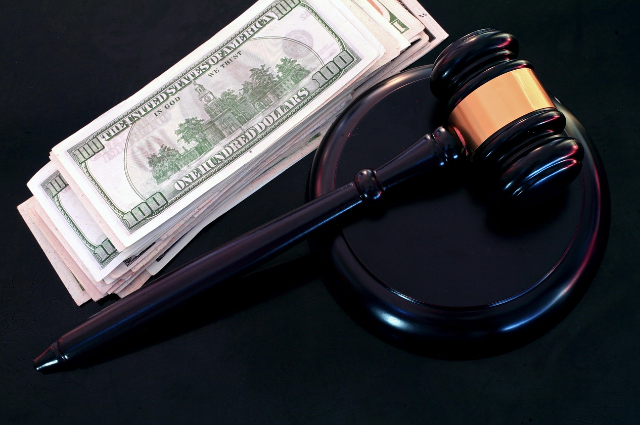
On December 9, 2025, the sun rose over a world that was simultaneously more transparent and more opaque than ever before. International Anti-Corruption Day (IACD) on December 9 has been observed annually since the passage of the United Nations Convention against Corruption in 2003, but this year feels decidedly different. For decades, the global fight against corruption was the domain of conferences, sterile boardrooms, and complex legal frameworks discussed by men in suits. However, the theme for the 2024-2025 campaign, "Uniting with Youth Against Corruption: Shaping Tomorrow's Integrity," signals a profound shift in the centre of gravity. We are witnessing a transition from policy papers to pavement, from bureaucratic oversight to digital uprising.
As dignitaries and diplomats gather in Doha, Qatar, for the eleventh session of the Conference of the States Parties (CoSP11) this December, the atmosphere is charged with the electricity of a generation that has had enough. The fight for integrity is no longer just about bribery or embezzlement; it has become a fight for survival. In a world grappling with climate collapse, economic inequality, and the erosion of democratic norms, corruption is the invisible cancer metastasizing through every crisis we face. This article explores the state of the world on this pivotal day, diving deep into the youth-led revolutions of 2025, the massive "greenwashing" scandals that rocked the environmental movement, the theft of public health resources, and the technological arms race between those who hide the truth and those determined to expose it.
The Stagnation of Trust and the Architecture of Fear
To understand the urgency of this moment, one must look at the psychological toll corruption takes on the average citizen. It is easy to view corruption as a victimless crime or a cost of doing business, but the data tells a different story. The 2024 Corruption Perceptions Index (CPI), released by Transparency International in early 2025, painted a sobering picture of global stagnation. For yet another year, the global average score remained stuck at 43 out of 100, a failing grade by any standard. While nations like Denmark, Finland, and Singapore continued to hold the high ground of integrity, more than two-thirds of the world’s countries scored below 50.
This statistical stagnation has bled into the human psyche. A striking survey conducted by Chapman University in 2025 revealed that the "fear of corrupt government officials" had become the single greatest fear among the American population, with nearly 70 percent of respondents reporting being "afraid" or "very afraid." This fear now outstrips the fear of nuclear war, terrorism, or the death of a loved one. It is a profound indictment of modern governance when citizens are more terrified of the people elected to protect them than they are of catastrophic external threats. This pervasive anxiety creates a state of "corruption fatigue," where the constant barrage of scandals leads to cynicism and disengagement. However, in 2025, that fatigue finally ignited into fury.
The Youth Quake: When Generation Z Took the Streets
If the old guard was resigned to the status quo, the youth were not. The defining image of the anti-corruption movement in 2025 was not a gavel striking a desk, but a student in a school uniform holding a book in one hand and a smartphone in the other. The United Nations Office on Drugs and Crime (UNODC) correctly identified that with 1.9 billion young people globally, the demographic tide had turned. These digital natives, often dismissed as apathetic or obsessed with vanity, proved to be the most effective organizers in history.
The most dramatic manifestation of this power occurred in Nepal in September 2025. The unrest began innocuously enough with a government ban on twenty-six social media platforms, including TikTok, Facebook, and WhatsApp. Government officials cited "social harmony" and regulatory compliance as the reasons, but the youth saw it for what it was: a digital blackout designed to silence dissent and hide incompetence. This triggered the "Gen Z Protests," a movement that would shake the Himalayas.
Driven by deep resentment toward the "Nepo Kid" phenomenon, where children of the political elite flaunted lavish lifestyles online while the average youth faced crippling unemployment, students mobilized with lightning speed. They bypassed traditional political parties, organizing instead on Discord servers and Instagram channels. Leaders like Sudan Gurung, of the youth group Hami Nepal, urged protesters to march peacefully, wearing their school uniforms to symbolize their desire for a functional future. The state responded with force, leading to the tragic loss of seventy-six lives. Yet, the students prevailed. Prime Minister K.P. Sharma Oli was forced to resign, and the digital ban was reversed. This was not an isolated incident. From the tax protests in Kenya to the demonstrations against parliamentary allowances in Indonesia, 2025 became the year when the youth realized that corruption was stealing their inheritance, and they decided to take it back.
The Great Green Betrayal
While students fought for democracy in the streets, a different kind of corruption was unravelling in the corporate world, one that threatened the planet itself. For years, the "green economy" had been touted as the solution to climate change. Corporations promised to reach "net zero" emissions not by stopping pollution, but by purchasing "carbon credits," financial instruments meant to fund forest preservation or renewable energy projects elsewhere. In 2024 and 2025, this facade crumbled, revealing a landscape of systemic fraud.
The scandal centred on the Voluntary Carbon Market (VCM), a multi-billion-dollar industry that effectively allowed major polluters to buy their way out of guilt. Investigations revealed that millions of these credits were "phantom"; they existed on paper but represented no real reduction in carbon emissions. The fraud often relied on "baseline manipulation," where project developers would grossly exaggerate the amount of deforestation that would have happened without their intervention, thereby inflating the number of credits they could sell.
Shell, one of the world's largest buyers of these credits, found itself at the centre of the storm. In 2024 alone, the energy giant used over 14 million credits to claim its operations were "carbon neutral." However, scrutiny of the projects backed by these credits, particularly those certified by the registry Verra, showed that many were worthless. In China, rice cultivation projects that claimed to reduce methane emissions were found to have fabricated their data. Verra was forced to cancel millions of credits, and Shell quietly abandoned its "Drive Carbon Neutral" branding in several markets.
Even more shocking was the case of CQC Impact Investors. In late 2024, U.S. regulators charged the company and its executives with running a massive fraudulent scheme. CQC had claimed to be distributing efficient cookstoves to women in Africa and Asia to reduce smoke and deforestation. In fact, they had falsified data on millions of devices to generate fake credits, which were then sold to well-meaning investors. This was not just financial fraud; it was a betrayal of the environmental movement. It allowed corporations to pump millions of tons of real carbon dioxide into the atmosphere while hiding behind a shield of lies, effectively accelerating the climate crisis for profit.
The Theft of Health and Opportunity
Corruption strikes hardest where people are most vulnerable. In the healthcare and education sectors, the diversion of resources is not a matter of lost profits but of lost lives and lost futures. The scale of this theft was laid bare in June 2025, when the U.S. Department of Justice announced the results of a massive nationwide operation.
The "2025 National Health Care Fraud Takedown" resulted in criminal charges against 324 defendants for schemes involving a staggering $14.6 billion in false billings. This was not petty theft. It involved organized criminal networks infiltrating the medical system. One particularly egregious scheme involved the billing of billions of dollars for urinary catheters that were never needed and never delivered. Criminals used the stolen identities of elderly patients to bill Medicare for these devices, draining the trust fund meant for the nation's seniors. Other cases involved doctors prescribing unnecessary opioids, fuelling the addiction crisis that has devastated communities across North America.
Meanwhile, in South Africa, a different kind of theft was robbing children of their potential. A sweeping investigation launched in August 2025 exposed the "ghost teacher" scandal across 22,000 schools. Corrupt officials and syndicates were selling teaching posts to the highest bidder, regardless of their qualifications. Even worse, the payrolls were padded with thousands of "ghost" employees’ names of people who did not exist or did not work, whose salaries were siphoned off by administrative mafias. This corruption turned the education system into a marketplace for graft, leaving classrooms overcrowded and under-resourced.
Adding a gendered dimension to this educational crisis is the pervasive issue of "sextortion." Research highlighted by the UNODC and academic institutions in Sweden pointed to a growing crisis where grades were exchanged for sexual favours. This abuse of power, often falling between the cracks of bribery laws and sexual assault legislation, creates a hostile environment for young women, teaching them that their bodies, rather than their minds, are the currency of success.
The Algorithms of Justice: Tech as a Double-Edged Sword
As the methods of corruption evolved, so too did the tools of detection. In the digital age, the fight against graft has moved into the realm of data science. Governments and activists are increasingly deploying Artificial Intelligence (AI) to act as "digital detectives," capable of spotting patterns that no human auditor could ever see.
Brazil has emerged as a global leader in this high-tech integrity war. The Office of the Comptroller General deployed an AI system named "Alice" (Analysis of Licitations and Edicts). Alice reads through thousands of public procurement documents every single day. She looks for suspicious language, such as requirements tailored so narrowly that only one specific company could win the bid, or prices that deviate statistically from the market average. When Alice spots a red flag, she alerts human auditors, effectively stopping fraud before the money leaves the treasury. Another tool, "Mara," analyses the relationships between civil servants and contractors, mapping out hidden networks of nepotism and conflict of interest.
Ukraine, despite the immense pressures of war, continued to set the gold standard for transparency with its ProZorro system. By digitizing all government procurement and making the data open to the public, Ukraine ensured that funds meant for reconstruction were not siphoned off by oligarchs. The integration of AI into ProZorro allowed for real-time monitoring of "donor procurement," reassuring international partners that their aid was reaching the front lines and the rebuilding efforts.
However, technology is a tool, not a saviour, and it cuts both ways. The same AI that detects fraud can be used to generate it. In 2025, authorities saw a rise in "deepfake" scams, where AI-generated audio and video of CEOs or government ministers were used to authorize fraudulent wire transfers. Furthermore, there is a growing concern about algorithmic bias. If AI tools like Brazil's Mara are trained on historical data from a corrupt justice system, they may unfairly flag individuals from marginalized groups as "high risk," automating the very prejudices the law is supposed to prevent.
The Psychology of Compliance
Why does corruption persist despite these technologies and protests? The answer lies in the human mind. Behavioural economists and sociologists have spent 2025 unravelling the "social norms trap." We often think of corruption as a decision made by a "rational actor" weighing risks and rewards. But research shows that we are herd animals. If a person believes that "everyone else is doing it," they are significantly more likely to engage in corrupt behaviour, regardless of the penalty.
This "contagion effect" creates a self-fulfilling prophecy. When citizens see leaders acting with impunity, whether it is a "Nepo Kid" in Kathmandu or a corporate executive in New York, they internalize corruption as the survival strategy of the smart. This is why the visual impact of the 2025 protests was so critical. By flooding the streets and the internet with images of integrity and resistance, the youth movements shattered the illusion of consensus. They showed that the majority did not accept corruption, thereby rewriting the social norm in real-time.
The Road from Doha
As the sun sets on International Anti-Corruption Day 2025, the world stands at a crossroads. The Conference of the States Parties in Doha will produce declarations and resolutions, but the real history is being written outside the conference halls. The events of the past year have proven that the traditional silos of anti-corruption work, legal, corporate, and civil society, are collapsing. The fight for integrity is now an integrated battle involving climate action, human rights, and digital sovereignty.
The "Green Corruption" scandals have taught us that we cannot save the planet without first saving the truth. The healthcare fraud takedowns have shown us that corruption is a matter of life and death. And the youth uprisings have demonstrated that the most powerful anti-corruption weapon is not a law, but a mobilized generation that refuses to compromise on its future.
The path forward requires "radical transparency." It requires protecting the whistleblowers who exposed the carbon credit fraud and the phantom teachers. It demands that we use AI to illuminate the dark corners of government spending while vigilantly guarding against its misuse. Most importantly, it requires that we listen to the fear expressed by the Chapman University survey and answer it not with platitudes, but with proof that justice is possible, that theft has consequences, and that integrity is not a relic of the past, but the only viable foundation for tomorrow.
On December 9, we do not just observe a date on the calendar. We acknowledge a global awakening. The machinery of corruption is vast and entrenched, fuelled by trillions of dollars and shielded by powerful interests. But as 2025 has shown, it is not invincible. It can be dismantled, credit by credit, protest by protest, and line of code by line of code. The youth have united. The question now is whether the rest of the world dares to join them.
. . .
Bibliography:
- United Nations Office on Drugs and Crime (UNODC). (2025). Uniting with Youth Against Corruption: Shaping Tomorrow's Integrity. UNODC.
- Transparency International. (2025). Corruption Perceptions Index 2024: Corruption is Blocking Progress Towards a Sustainable World. Transparency International.
- United States Department of Justice. (2025, June 30). 2025 National Health Care Fraud Takedown Results in Charges Against 324 Defendants. Office of Public Affairs.
- Mongabay. (2025, September). Independent Auditors Overvalue Credits of Carbon Projects. Mongabay News.
- Chapman University. (2025, October 24). The Chapman University Survey of American Fears 2025. Wilkinson College of Arts, Humanities, and Social Sciences.