
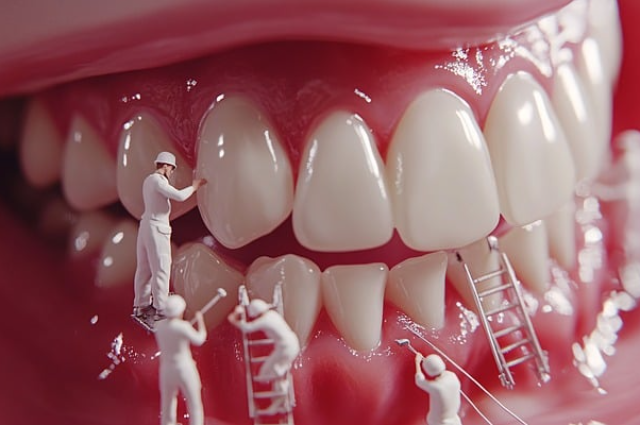
Image by Vilius Kukanauskas from Pixabay
Dentistry has always stood at the intersection of science, art, and human compassion. Over the years, it has evolved from a purely curative profession into a comprehensive discipline that embraces prevention, aesthetics, technology, and holistic well-being. As we look toward the future, dental care faces a spectrum of challenges ranging from demographic shifts and economic disparities to emerging diseases and technological disruptions. Yet, alongside these hurdles lie profound opportunities that can redefine the way oral health is delivered, experienced, and sustained across societies.
The landscape of dentistry is changing rapidly as oral health gains recognition as a fundamental component of overall well-being. The World Health Organisation has emphasised the staggering burden of oral diseases, with untreated dental caries affecting billions worldwide. In many developing nations, accessibility and affordability remain significant barriers, while in more advanced countries, the concerns are shifting toward lifestyle-driven conditions such as dental erosion, peri-implantitis, and increasing demand for aesthetic treatments. Simultaneously, advancements in biotechnology, digital dentistry, and personalised medicine are transforming the dental chair into a hub of artificial intelligence, three-dimensional imaging, regenerative therapies, and precision-guided procedures. This evolving tension between unmet needs and groundbreaking innovations paints the canvas on which the future of dental care will unfold.
One of the most pressing challenges in shaping the future of dentistry is the inequity in access to care. Rural populations, marginalised groups, and economically disadvantaged communities often experience limited access to dental services. High treatment costs, lack of insurance coverage, and scarcity of trained professionals widen this divide, leaving millions without essential oral healthcare. In addition, an ageing population presents new complexities, as older adults frequently suffer from multiple oral conditions such as root caries, tooth loss, xerostomia linked to polypharmacy, and complications arising from systemic diseases. Dentistry must, therefore, evolve to address geriatric needs through interdisciplinary collaboration and compassionate care that recognises the vulnerabilities of this demographic.
Lifestyle-linked conditions also pose significant challenges for the profession. Modern dietary habits, excessive sugar consumption, acidic beverages, tobacco use, and stress-induced bruxism contribute to worsening oral health. The growing popularity of implants has also brought with it an increase in peri-implant diseases, adding another dimension to the burden. Moreover, while digital innovations promise precision and efficiency, they also introduce ethical and economic dilemmas. Small clinics in developing regions may struggle to adopt costly technologies such as cone-beam computed tomography or advanced AI diagnostic software, creating a divide between technologically advanced centres and resource-limited practices. Questions of equity, data privacy, over-reliance on algorithms, and commercialisation of care demand careful and thoughtful solutions. Environmental sustainability also cannot be ignored, as dentistry contributes to biomedical waste and carbon emissions. The use of disposables, energy-intensive equipment, and chemical-based materials must be reimagined to align with a greener and more sustainable future.
Yet, alongside these challenges lie remarkable opportunities for transformation. The digital revolution is already redefining how dentists practice, with artificial intelligence enhancing diagnostic accuracy and treatment planning. Intraoral scanners and CAD/CAM systems are replacing conventional impressions and restorations, providing comfort and efficiency for both patients and practitioners. Machine learning tools are beginning to predict treatment outcomes, enabling more personalised approaches to care. Beyond technology, the horizon of regenerative and biomimetic dentistry is opening exciting possibilities, where stem cell therapy and tissue engineering may one day regenerate lost pulp tissue or even entire teeth. Biomimetic materials that imitate the natural structure of enamel and dentin are already transforming restorative outcomes, shifting dentistry from the notion of repair toward regeneration.
The rise of tele-dentistry further enhances accessibility, particularly in remote or underserved regions. Accelerated by the COVID-19 pandemic, virtual consultations, follow-up visits, and oral hygiene counselling are now becoming viable options for maintaining continuity of care. Combined with the growing use of salivary diagnostics and genomic profiling, dentistry is moving toward preventive and personalised models that identify risks before disease manifests, tailoring interventions to each patient’s biological makeup. This integration aligns oral healthcare with the broader movement of precision medicine, placing prevention at the forefront rather than cure.
Equally important is the strengthening of interdisciplinary collaboration. Oral health professionals are no longer isolated from the broader healthcare system. Instead, they are increasingly working alongside physicians, nutritionists, psychologists, and technologists. Such collaboration is crucial in conditions like diabetes, cardiovascular disease, and sleep apnea, where oral health plays a direct role in systemic health. This integration ensures that dentistry contributes actively to holistic patient well-being, reinforcing the vital mouth–body connection. Parallel to these developments, the shift toward eco-conscious dentistry presents an opportunity to build environmentally sustainable practices. By adopting biodegradable materials, water-saving devices, and digital workflows that reduce waste, dentists can embrace a greener future while meeting the expectations of an environmentally conscious generation.
Despite the excitement around technology, it is essential to emphasize that the true essence of dentistry lies in its humanity. Machines may offer precision, but they cannot replace empathy. Patients seek not only technical excellence but also reassurance, understanding, and dignity. The dentist’s ability to listen, comfort, and connect will remain central to the profession. Accordingly, dental education must adapt to balance clinical skill development with digital literacy, ethical awareness, communication skills, and adaptability. The next generation of dentists must be trained not only to master modern tools but also to embody compassion and integrity, ensuring that technology serves as an enabler rather than a replacement for human touch.
The road ahead for dentistry is both daunting and inspiring. Inequalities in care, growing disease burdens, and environmental sustainability present formidable challenges. Yet, at the same time, the promise of artificial intelligence, regenerative medicine, tele-dentistry, preventive strategies, and interdisciplinary collaboration provides unprecedented opportunities. The future of dental care will be defined by how effectively the profession can balance these opposing forces, ensuring that innovation is harnessed in a manner that is ethical, equitable, and centred on patient well-being.
Ultimately, the vision for the future is clear. It is a world in which every individual, regardless of geography or economic standing, has access to affordable and sustainable dental care. It is a future where dentistry extends beyond the treatment of disease to the empowerment of smiles, enhancing confidence and quality of life. If the profession can navigate these challenges with foresight and seize the opportunities with responsibility, dentistry will not only preserve oral health but also contribute profoundly to the health and happiness of humanity. In shaping this future, every smile will reflect not just scientific progress, but also the enduring values of compassion, equity, and service that lie at the heart of dental care.
References
- World Health Organisation. Global Oral Health Status Report: Towards Universal Health Coverage for Oral Health by 2030. Geneva: WHO, 2022.
- Pitts NB, Zero DT, Marsh PD, Ekstrand K, Weintraub JA, Ramos-Gomez F. Dental caries. Nat Rev Dis Primers. 2017;3:17030.
- Peres MA, Macpherson LMD, Weyant RJ, et al. Oral diseases: a global public health challenge. Lancet. 2019;394(10194):249–260.
- Frencken JE, Sharma P, Stenhouse L, Green D, Laverty D, Dietrich T. Global epidemiology of dental caries and severe periodontitis – a comprehensive review. J Clin Periodontol. 2017;44(Suppl 18):S94–S105.
- Innes NP, Frencken JE, Schwendicke F. Don’t let’s go waste: rethinking dental care. Br Dent J. 2020;229(3):153–155.
- Kassebaum NJ, Bernabé E, Dahiya M, Bhandari B, Murray CJL, Marcenes W. Global burden of severe tooth loss: a systematic review and meta-analysis. J Dent Res. 2014;93(7 Suppl):20S–28S.
- Preshaw PM, Bissett SM. Periodontitis: oral complication of diabetes. Endocrinol Metab Clin North Am. 2013;42(4):849–867.
- Schwendicke F, Samek W, Krois J. Artificial intelligence in dentistry: chances and challenges. J Dent Res. 2020;99(7):769–774.
- Revilla-León M, Özcan M. Additive manufacturing technologies used for processing polymers: current status and potential application in prosthetic dentistry. J Prosthodont. 2019;28(2):146–158.
- Tadinada A, Mahdian M, Schincaglia GP. Cone beam computed tomography in implant dentistry: review of the literature, part 1. Implant Dent. 2015;24(4):389–398.
- Campelo P, Camara JR. Flapless implant surgery: a 10-year clinical retrospective analysis. Int J Oral Maxillofac Implants. 2002;17(2):271–276.
- Durand R, Botsali MS, Sauro S. Biomimetic dental materials: what’s new? Dent Mater. 2023;39(1):1–17.
- Tatullo M, Marrelli M, Paduano F. Regenerative potential of dental pulp stem cells: state of the art and future perspectives. Front Cell Dev Biol. 2015;3:56.
- Giraudeau N, Inquimbert C, Dupuis V, et al. Teledentistry, new oral care tool for prisoners. Int J Prison Health. 2017;13(2):124–134.
- Estai M, Kruger E, Tennant M. Challenges in the uptake of tele-dentistry: a global perspective. J Telemed Telecare. 2016;22(6):341–349.
- Giudice A, Barone S, Muraca D, et al. Can teledentistry improve the monitoring of patients during the COVID-19 dissemination? A descriptive pilot study. Int J Environ Res Public Health. 2020;17(10):3399.
- Neel EAA, Aljabo A, Strange A, et al. Demineralisation–remineralisation dynamics in teeth and bone. Int J Nanomedicine. 2016;11:4743–4763.
- Rada RE. Environmental considerations in dentistry. Dent Clin North Am. 2007;51(4):821–829.
- Klineberg I, Eckert S. Functional rehabilitation for the elderly patient: new solutions for old challenges. Int J Prosthodont. 2016;29(2):125–127.
- Marsh PD. Dental plaque as a biofilm and a microbial community — implications for health and disease. BMC Oral Health. 2006;6(Suppl 1):S14.