
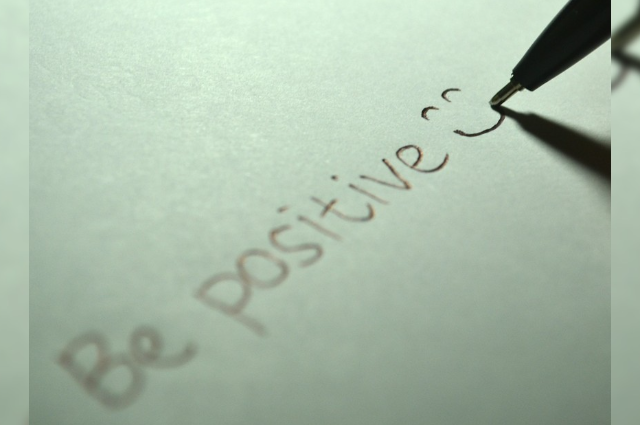
Image by Fathromi Ramdlon from Pixabay
There is a common misunderstanding about what a positive attitude really means.
For some, it looks like constant optimism—always smiling, always hopeful, always seeing the “bright side.” But real positivity is not that simple. It is not about ignoring reality or pretending that everything is fine when it clearly isn’t.
In fact, a positive attitude has very little to do with forcing yourself to feel good. It has more to do with how you choose to respond when things don’t feel good at all.
Positivity Is Not Denial
One of the biggest mistakes people make is equating positivity with denial. You lose something important, and someone says, “Stay positive.” You feel overwhelmed, and you hear, “Just think good thoughts.” But emotions are not switches that can be turned on and off.
A positive attitude does not mean you avoid difficult feelings. It means you acknowledge them without letting them take control of your entire mindset. You allow yourself to feel disappointment, frustration, even sadness—but you don’t let those feelings decide your direction.
There is a quiet strength in that balance.
The Way You Talk to Yourself Matters
If there is one place where attitude truly takes shape, it is in your inner dialogue. Most people underestimate how often they are quietly critical of themselves.
“I should have done better.”
“Why do I always mess things up?”
“Maybe I’m just not good enough.”
These thoughts don’t always feel loud, but they are consistent. And over time, they begin to shape how you see yourself. A positive attitude doesn’t mean you suddenly become overly confident or unrealistic. It simply means you become more aware of your self-talk—and a little more intentional with it. Instead of saying, “I failed,” you might say, “That didn’t work, but I can learn from it.” It’s a small shift. But small shifts, repeated often, create significant change.
Positivity Is a Practice, Not a Personality
Some people seem naturally positive. They are calm, optimistic, and resilient. It’s easy to assume that they were just “born that way.” But in most cases, positivity is not a personality trait—it’s a practice. It is built through small, consistent habits:
- choosing not to react immediately in moments of stress,
- taking a pause before assuming the worst,
- focusing on what can be controlled instead of what cannot.
These are not dramatic actions. They are subtle choices made repeatedly. And over time, they shape your overall attitude.
The Influence of Perspective
Two people can go through the same situation and walk away with completely different experiences.
One sees failure. The other sees feedback.
One sees rejection. The other sees redirection.
The difference is not the situation—it is the perspective.
A positive attitude does not change reality, but it changes how you interpret it. And that interpretation influences your next step. This doesn’t mean you should force a “lesson” out of every difficult situation. But it does mean you give yourself the option to see more than just the negative outcome. Sometimes, that option is enough to keep you moving forward.
Why Positivity Feels Difficult Sometimes
If being positive is so beneficial, why does it feel so difficult? Because negativity is often more immediate and more convincing. Our minds are naturally wired to notice problems. It’s a survival instinct. We pay more attention to what could go wrong than what is going right. So when you try to adopt a more positive attitude, it can feel unnatural at first. Not because it’s wrong—but because it’s unfamiliar.
And unfamiliar things take effort.
This is where patience becomes important. You are not trying to erase negative thinking overnight. You are simply trying to create a little more balance.
The Role of Environment
Your attitude is not shaped in isolation.
The people you spend time with, the content you consume, and the conversations you engage in—all of these influence how you think. If you are constantly surrounded by negativity, criticism, or comparison, maintaining a positive attitude becomes harder.
This doesn’t mean you need to cut people off or completely change your environment overnight. But it does mean being mindful of what you allow into your mental space. Sometimes, positivity begins with protecting your energy.
Positivity and Real-Life Challenges
A positive attitude is often tested not in comfortable moments, but in difficult ones. When things are going well, it is easy to feel hopeful. But when things fall apart—when plans fail, when expectations are not met—that is when your attitude truly matters.
Positivity, in those moments, does not look like excitement or enthusiasm.
It looks like quiet persistence.
It looks like choosing to try again, even when you are unsure.
It looks like not giving up on yourself, even when progress is slow.
And sometimes, it simply looks like getting through the day.
That, too, is a form of strength.
The Difference Between Positivity and Perfection
Another important distinction is that a positive attitude does not mean a perfect mindset.
You will still have bad days.
You will still feel frustrated, tired, and uncertain.
Positivity does not remove these experiences. It changes how long you stay stuck in them. Instead of being consumed by one negative moment, you begin to recover a little faster. You learn to step back, reflect, and move forward without carrying unnecessary weight.
It’s not about avoiding mistakes or emotions.
It’s about not letting them define your entire story.
Small Habits That Strengthen a Positive Attitude
While there is no single formula, a few small habits can make a noticeable difference:
- Taking a moment each day to recognise something that went right, even if it’s small.
- Limiting how often you replay negative situations in your mind.
- Permitting yourself to rest without guilt.
- Speak to yourself with the same understanding you offer others.
These habits don’t require drastic effort. But they gradually shift your mental patterns. And that shift is what builds a positive attitude over time.
A More Realistic Way to Be Positive
- Maybe positivity is not about always seeing the good.
- Maybe it is about not losing sight of it completely.
It is about holding both realities at the same time—the challenges and the possibilities. The discomfort and the hope. It is about recognising that things may not be perfect, but they are not entirely hopeless either. And sometimes, that middle ground is where real growth happens.
Closing Thought
A positive attitude is not loud. It does not need to prove itself. It is quiet, steady, and often invisible to others. It shows up in the way you keep going, even when things are uncertain. In the way you choose understanding over harsh judgment. In the way you give yourself another chance. And over time, these small, quiet choices create something powerful.
A mindset that doesn’t break easily—no matter what life brings.