
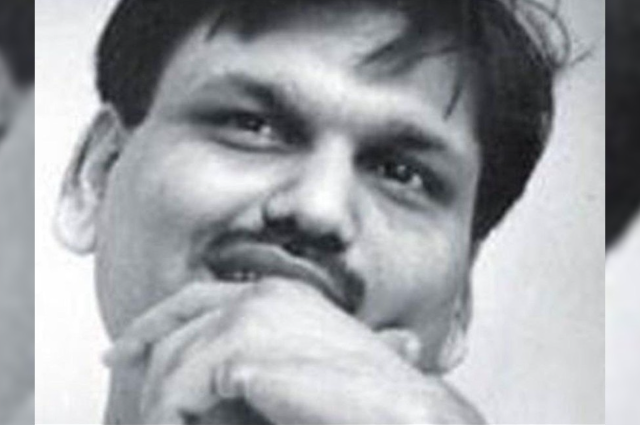
When dreams met the Stock Market:
The early 1990s in India felt like the beginning of something new. The economy had just started opening up, and suddenly, people who had never thought about investing were hearing stories of the stock market making ordinary individuals rich overnight. Newspapers were filled with rising share prices, and there was a growing belief that wealth creation was now within everyone’s reach. It was an exciting, almost emotional time, especially for the middle class, who saw the stock market as a doorway to a better life.
In the middle of this growing enthusiasm, one name began to stand out everywhere- Harshad Mehta. He was not just another broker; he was seen as someone who understood the market better than anyone else. His confidence, bold predictions, and rapid wealth creation made him a public sensation. Television interviews, newspaper features, and investor gossip all painted him as a financial genius. But what made this period truly unusual was how emotionally driven the market had become. People were not just investing based on company performance; they were investing based on belief, trust, and sometimes pure excitement. Harshad Mehta became the symbol of that belief system. If he bought a stock, it was assumed to be a guaranteed success. That kind of blind trust created a dangerous environment where logic slowly took a back seat.
What the public did not realize was that this rising wave of confidence was not entirely natural. It was being artificially supported through financial manipulation that was quietly building beneath the surface. The same market that looked like a dream opportunity was actually becoming fragile. And when reality finally caught up, it would shake the entire country.
How was Harshad Mehta? The Man Behind the Image
Harshad Mehta’s story did not begin with wealth or privilege. He came from a simple middle-class Gujarati family and spent his early years living a fairly ordinary life. Like many young Indians of his generation, he wanted success, not just financial stability, but something bigger that would separate him from the crowd. He was ambitious, observant, and curious about how money systems worked.
Before entering the world of high finance, Harshad worked several small jobs. None of these roles hinted at what he would eventually become. His real transformation began when he entered the stock market environment in Mumbai, which was then known as the Bombay Stock Exchange. At that time, trading was fast-paced but largely unregulated in comparison to today. Deals were often based on trust, relationships, and verbal commitments rather than strict digital verification.
This environment fascinated Harshad. He spent time understanding not just how stocks moved, but how people behaved when prices changed. Over time, he realized something important - the stock market was not just about numbers; it was about psychology. Fear and greed often influenced decisions more than actual financial data.
As he gained experience, Harshad began building connections with brokers, traders, and even banking professionals. His confidence grew rapidly, and so did his reputation. When he started investing, people noticed that stock prices often moved in the direction he acted. This created a powerful perception that he had extraordinary insight into the market.
What truly made him a public figure, however, was his lifestyle. He lived lavishly, drove expensive imported cars, and wore high-end clothing at a time when such displays of wealth were rare in India. To many, he became a symbol of success; someone who had “made it” in a big way. But the most important part of his rise was not just what he achieved, but how strongly people believed in him. Society was so fascinated by his success that very few questioned whether it was completely genuine. That blind trust played a major role in what came next.
How the Scam worked:
The financial manipulation behind the Harshad Mehta case was not based on hacking systems or stealing money directly in the traditional sense. Instead, it was built on exploiting weaknesses within India’s banking structure at the time. The system was slow, paper-based, and heavily dependent on trust between institutions. This created gaps that could be misused if someone understood how the flow of money worked. At the center of the scam were transactions known as “Ready Forward Deals.” These were short-term lending arrangements between banks, where government securities were used as collateral. Since banks did not always deal directly with each other, brokers acted as intermediaries to facilitate these transactions. Harshad Mehta positioned himself right in the middle of this system.
The key instrument used in the scam was something called fake Bank Receipts (BRs). These receipts were supposed to confirm that a bank had received government securities in exchange for money. However, in many cases, the securities did not actually exist. Harshad used these fake documents to convince banks to release large amounts of funds. Once he gained access to this money, he did not return it to the banking system. Instead, he diverted it into the stock market. With massive liquidity suddenly entering specific stocks, prices began rising rapidly. This rise was not based on company performance but on artificial demand created by injected money.
As stock prices climbed, more investors entered the market. People assumed that rising prices meant strong business fundamentals. This created a chain reaction; higher prices attracted more buyers, and more buyers pushed prices even higher. It became a cycle fueled by belief rather than reality.
One of the most famous examples was ACC, whose price reportedly rose from a few hundred rupees to nearly ₹9,000 at its peak. To ordinary investors, this looked like a once-in-a-lifetime opportunity. To Harshad Mehta, it was proof that the system could be influenced at scale.
The Lifestyle that made India obsessed with him:
One of the biggest reasons the Harshad Mehta story became so unforgettable was not just the scam itself, but the image he created around himself. In the early 1990s, India was still a country where extreme luxury was not commonly visible to the middle class. Most people lived modestly, saved carefully, and considered financial stability a major achievement. Against this backdrop, Harshad Mehta appeared almost unreal.
He did not hide his wealth quietly like many businessmen of that era. Instead, he displayed it confidently. He drove imported luxury cars, lived in an extravagant apartment, wore expensive clothes, and carried himself with the confidence of someone who believed he had conquered the financial world. To many Indians, this lifestyle was fascinating because they had rarely seen a stockbroker become a national celebrity.
The media played a huge role in building this image. Newspapers and magazines constantly covered his success stories, describing him as the “Big Bull” who could move markets with his decisions. Investors began viewing him less like a broker and more like a visionary. His luxurious lifestyle became proof, in people’s minds, that he truly understood the stock market better than everyone else.
But what made this dangerous was how quickly admiration turned into blind trust. People stopped questioning how his success was possible. Instead, they became emotionally invested in his image. Many investors entered the market not because they understood companies or financial statements, but because they believed Harshad Mehta could never fail.
This obsession reflected something deeper about society. People are often attracted to confidence, wealth, and visible success. When someone appears powerful and successful, society tends to assume that their methods must also be legitimate. Harshad Mehta understood this psychology very well. His image became one of his greatest strengths because it distracted people from asking difficult questions.
In many ways, the scam succeeded not only because of loopholes in the financial system, but also because people wanted to believe in the dream he represented. His rise showed how easily society can confuse appearance with credibility.
The Exposure- How the Truth Finally Came Out:
For a long time, Harshad Mehta’s success seemed unstoppable. Stock prices kept rising, investors kept making money, and his reputation continued growing stronger. Very few people imagined that something illegal could be happening on such a large scale. However, behind the scenes, certain financial irregularities had started attracting attention.
The turning point came when journalist Sucheta Dalal began investigating unusual movements of money within the banking system. She noticed transactions that did not make sense and started questioning how such enormous amounts of funds were entering the stock market. At a time when financial journalism was not as aggressive or investigative as it is today, this required courage and persistence.
In April 1992, Sucheta Dalal published a report exposing the connection between banking funds and stock market manipulation. Suddenly, the glamorous story surrounding Harshad Mehta began to crack. People realized that the booming market was not entirely driven by genuine economic growth. Huge amounts of money had been illegally diverted using fake Bank Receipts and loopholes within banks. Once the news spread, panic quickly replaced excitement. Investors who had once rushed to buy shares now rushed to sell them. Stock prices collapsed rapidly, wiping out the savings of thousands of ordinary people. Many investors who had trusted the market blindly suffered heavy financial losses.
The exposure of the scam shocked the entire country because it revealed how weak the financial system actually was. Banks that were expected to safeguard public money had failed to notice massive irregularities. Regulators had not detected the manipulation in time. Even experienced investors had been carried away by greed and optimism.
What made the situation even more dramatic was the emotional shift in public perception. The same man who had once been admired as a genius was now being viewed as the face of corruption and financial fraud. Media coverage changed completely. Questions were raised about ethics, accountability, and the culture of blindly worshipping financial success.
The exposure of the scam became more than just a news story. It became a national moment of realization - a reminder that unchecked ambition and weak systems can eventually damage public trust on a massive scale.
Impact of the Scam on India’s Financial System:
The Harshad Mehta scam not only affected investors who lost money in the stock market. Its impact was much deeper because it shook people’s confidence in the entire financial system. Banks, regulators, brokers, and investors - everyone was affected in some way.
When the scam came to light, thousands of ordinary investors suffered huge losses. Many people had invested their savings because they believed the market would continue rising forever. Some families lost money they had saved for years. Others became fearful of investing altogether. For many middle-class households, the stock market stopped feeling like an opportunity and started feeling like a dangerous gamble. The banking sector also faced serious embarrassment. Public trust in banks weakened because people realized that institutions responsible for protecting money had failed to detect fraud happening right under their noses. The scandal exposed how outdated and poorly monitored many banking processes were at that time.
However, despite the damage it caused, the scam also forced India to modernize its financial system. Before 1992, many transactions were paper-based, slow, and dependent on personal trust. After the scam, regulators understood that stronger systems were necessary to prevent similar frauds in the future.
The role became much more important after the scandal. SEBI received greater authority to monitor stock market activities, investigate irregularities, and protect investors. Electronic trading systems gradually replaced manual transactions, reducing opportunities for manipulation.
The scam also changed investor behavior. People became more cautious and aware of the risks involved in blindly following market trends. Financial journalism became stronger, and public discussions around ethics and regulation increased significantly. In many ways, the Harshad Mehta scam became a painful but necessary turning point for India. It exposed the weaknesses of the old system but also pushed the country toward greater transparency and modernization. Even today, many of the safeguards present in India’s financial markets exist because of lessons learned from this scandal.
Lessons from the Harshad Mehta Scam:
More than thirty years later, the Harshad Mehta scam continues to remain relevant because the lessons it taught are timeless. Although technology, regulations, and markets have changed significantly since 1992, human behavior has not changed much. Greed, fear, blind trust, and the desire for quick success still influence financial decisions today.
One of the biggest lessons from the scam is that rapid success should always be questioned. During Harshad Mehta’s rise, people were so impressed by rising stock prices and luxurious lifestyles that they stopped asking logical questions. Investors assumed that if everyone else was making money, the growth had to be genuine. This mentality still exists today during market bubbles, cryptocurrency booms, and speculative investment trends.
The scam also highlighted the importance of strong financial regulation. Systems based purely on trust are vulnerable to manipulation. Institutions need transparency, accountability, and proper monitoring mechanisms. After the scam, India realized that modern financial markets cannot function safely without strict oversight.
Another important lesson relates to media and public perception. Society often glorifies wealth without understanding the process behind it. Harshad Mehta became a hero because people admired his confidence and success. Very few cared about understanding whether his methods were ethical or sustainable. This tendency to celebrate visible success without deeper scrutiny remains common even today.
The scandal also teaches investors the importance of independent thinking. Blindly following market trends or influential personalities can be dangerous. Successful investing requires patience, analysis, and rational decision-making, not emotional excitement.
Perhaps the most human lesson of all is that ambition itself is not wrong. Harshad Mehta’s intelligence and determination were undeniable. The tragedy was that ambition crossed ethical boundaries. His story reminds us that success built without integrity may rise quickly, but it rarely lasts.
The scam remains one of India’s most important financial stories because it was never only about money. It was about human psychology, society’s obsession with success, and the consequences of ignoring ethics in the pursuit of power and wealth.