
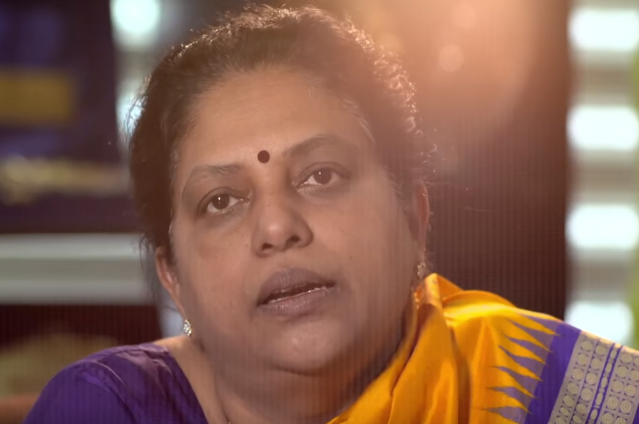
Dr. Tessy Thomas, popularly known as India’s “Missile Woman, is a distinguished aerospace engineer whose career has combined pioneering technical achievements with barrier-breaking leadership. Born in April 1963 in Alappuzha (Alleppey), Kerala, she cultivated a passion for science early on – “when I was young, I was captivated by science and math,” she recalls, fascinated even by aircraft contrails and the Moon. After completing schooling in Kerala, Thomas earned her B.Tech in Electrical Engineering (1985) and M.Tech in Guided Missiles (1986) from Pune’s defence technology institute. She later added an MBA (2007) and a Ph.D. in Missile Guidance (2014). In 1988, she joined India’s Defence Research and Development Organization (DRDO) as a scientist in the inertial-navigation group. There she came under the mentorship of Dr. A.P.J. Abdul Kalam, India’s eminent “missile man,” who “initiated me into the Agni project. Over the next decades, Thomas rose through the ranks by mastering missile guidance and control systems. She became the first Indian woman to lead a major missile development project, ultimately serving as Project Director for the Agni-IV and Agni-V ballistic missiles and later as Director General of DRDO’s Aeronautical Systems cluster. Her journey from a science-curious girl in Kerala to the leader of India’s strategic rocket programs exemplifies both personal achievement and the changing role of women in Indian science.
Early Life and Education
Tessy Thomas was born in 1963 into a middle-class family in Kerala. From childhood, she exhibited a strong aptitude for mathematics and physics. In her own words, she used to “gaze at the Moon and feel happy I brought it back with me” when returning home from school, evidence of her early fascination with the sky and space. Supported by her parents, Thomas pursued higher technical education: she earned a B.Tech in Electrical Engineering (1985) from Calicut University and an M.Tech in Guided Missiles (1986) from the Institute of Armament Technology in Pune (now Defence Institute of Advanced Technology). She later augmented her expertise with an MBA in Operations Management (2007) and, ultimately, a Ph.D. in Missile Guidance (2014). These credentials – from top engineering and defence institutions – prepared her for a career in aerospace. In 1988, Thomas joined DRDO’s Advanced Systems Laboratory (ASL) in Hyderabad as a young scientist, immediately becoming part of India’s Integrated Guided Missile Development Programme (IGMDP) under Dr. Kalam. Early on, she worked on guidance, control, and navigation components for the Agni missile family, laying the foundation for her later leadership.
Missile Programmes and Technical Contributions
Under Thomas’s leadership, India achieved major milestones in its long-range missile programme. She served as Project Director (Vehicles and Mission) for the two-stage Agni-IV missile (range ≈4,000 km), and later as Project Director (Mission) for Agni-V, India’s first true intercontinental ballistic missile (range >5,000 km). Both missiles were successfully flight-tested under her guidance, demonstrating advanced capability in solid-propellant rocketry. Technically, Thomas made crucial contributions to missile guidance and trajectory design: for example, she “designed the guidance scheme for long-range missile systems” used in the Agni series. Her work on control algorithms, inertial navigation, and re-entry vehicles helped ensure high accuracy and reliability. The successful launches of Agni-IV (2011) and Agni-V (2012) under her direction not only enhanced India’s strategic deterrent but also established India’s self-reliance in cutting-edge missile technology. In later years, Thomas continued innovating (for example, by exploring Multiple Independent Re-entry Vehicle systems) and took on broader leadership roles: she became Director of the Advanced Systems Lab (overseeing many missile projects) and, in 2018, was appointed Director General of Aeronautical Systems at DRDO. In these positions, she shaped India’s aerospace R&D agenda. Her achievements have earned her multiple honors, including the prestigious DRDO Agni Award (2001) and Lal Bahadur Shastri National Award (2012).
Barriers to Women in STEM in India
Despite progress, women in India have traditionally faced formidable barriers in science and engineering. Deep-rooted cultural norms have long steered girls away from technical fields. UNESCO notes that globally, women account for only about 35% of STEM graduates, and India has struggled with similar disparities. For instance, even though Indian women comprise roughly 41% of science and engineering Ph.D. students, their representation shrinks at each career stage. One analysis (smaller-scale) estimated that although Indian women make up ~43% of STEM graduates, only ~27% of them pursue STEM careers (suggesting a “leaky pipeline”). By the college level, women held only ~30.2% of engineering seats in 2020–21. These gaps arise from factors such as gender stereotypes in education, lack of female role models, and societal pressure. In many parts of the country, even as girls’ school enrollment has risen, by secondary school age, many girls “start to self-select out of advanced science courses,” sometimes believing “science isn’t for me. While government data show progress (e.g., girls are 41% of STEM doctoral students), the overall STEM workforce still skews male.
The defense R&D sector, in particular, was long considered a male bastion. When Thomas entered DRDO in 1988, women scientists were exceedingly rare. She recalls that back then, women made up only about 2–3% of DRDO’s research staff. By the early 2010s, this figure had climbed to roughly 12–15%, reflecting broader efforts to recruit more women. But 15% female representation remained low. Such institutional imbalances meant Thomas often had few (or no) female peers. In interviews, she observed that most of her colleagues in missile development were men, and that women engineers were often viewed as exceptions. These conditions – a skewed workforce and persistent stereotypes- exemplified the historical hurdles Indian women scientists have faced. Across India’s science agencies, similar patterns held: e.g., women were under 30% of the workforce in most technical services. Over time, policies and changing attitudes have begun to redress this. Government data show female leadership in R&D is rising (women led ~18.6% of government-funded R&D projects in 2022–23, up from 13% in 2000–01). But in Thomas’s early career, she often stood out as a rare woman in a primarily male environment.
Overcoming Stereotypes in the Defense Sector
In defiance of stereotypes, Dr. Thomas’s response to any doubt has been simple: “When I reach there for work, I am no more a woman. I am only the scientist,” she told reporters. Working in a sari rather than a formal lab coat, she preferred to let results speak for themselves. “Science does not know who is working for it,” she said, emphasizing that her gender was irrelevant to her technical role. When asked if it was paradoxical for a woman to develop missiles, she pointed out that there are women in all branches of the military and that missiles, in her view, are “weapons of peace, tools of national security. In other words, she reframed defense science as a patriotic mission open to anyone.
Thomas credits much to the support of her family. Her father, though stricken by illness, had encouraged her engineering studies early on, and her husband, an Indian Navy commodore, understood her professional commitments. Balancing a demanding career and family life was challenging, but Thomas often downplayed gender bias. She emphasizes teamwork and merit: “Every project is about teamwork,” she noted, and she maintained that “I expect maximum commitment from my employees… I do not get overly bossy with my junior colleagues. By focusing on collaboration and excellence, she gradually earned the respect of her teams. Over the years, her achievements did much to normalize the idea of a woman leading advanced defense projects. As one Hindu BusinessLine profile noted upon her later appointment as Director General, her elevation “proved that women can occupy positions in high technology sectors, breaking stereotypes”. In short, Thomas met biases with confidence and capability, demonstrating that in India’s defense labs, a woman can be as authoritative as any man.
India’s Gender Policy and Initiatives in Science & Technology
The Government of India has recognized the need to support women in science and has launched numerous initiatives under its S&T ministries. For example, the Department of Science & Technology (DST) notes the WISE-KIRAN program (Women in Science and Engineering – Knowledge Involvement in Research Advancement, introduced in 2018), which offers fellowship and re-entry schemes for women researchers. Under WISE-KIRAN, there are PhD fellowships (WISE-PhD) and postdoctoral fellowships (WISE-PDF) for women in basic and applied sciences. It also includes specialized programs such as WIDUSHI (allowing senior women scientists to return to research), WISE-IPR (internships in intellectual property for STEM professionals), and WINGS (overseas research visits). DST further sponsors CURIE (Consolidation of University Research for Innovation and Excellence) to improve infrastructure at women’s universities, and GATI (Gender Advancement for Transforming Institutions) to help create gender-equitable STEM workplaces. Other ministries have parallel schemes: for instance, DBT’s BioCARe fellowship and the Health Ministry’s Women Scientist Scheme support women returning from career breaks. In 2025, the government reported that under these programs, about 1,962 women scientists had benefited since 2018.
Such policies appear to be yielding results. According to the latest reports, women now lead 18.6% of all government-funded R&D projects (up from 13% in 2000–01). Moreover, educational statistics show women make up 41% of science and engineering PhD students nationwide. These figures, while still short of parity, suggest India is gradually increasing female participation in science. Government and institutions also highlight role models: Thomas herself has been invited to convocation ceremonies, science conferences, and award panels, to inspire younger women. In sum, a combination of fellowships, infrastructure support, and affirmative programs is in place to encourage women’s careers in S&T, underlining a policy commitment to narrowing gender gaps in innovation.
Women in STEM: Global Perspectives
Women’s underrepresentation in science is a global issue, and comparing India with other space and defense programs shows similar patterns. UNESCO reports that worldwide, women earn only about one-third of STEM degrees. In the United States, NASA has struggled with its own diversity gap: as of 2021, women made up ~35% of NASA’s overall workforce, but only about 25% of its science and technical staff. Similarly, Europe’s space agency (ESA) has implemented diversity initiatives; as of 2023, about 30% of ESA employees were women, with roughly 20% of senior leadership roles filled by women. These numbers show that even advanced organizations have not achieved gender balance. China’s space program has featured trailblazing women – for example, Liu Yang became the first Chinese woman in space (2012), and Wang Yaping was the first Chinese woman to operate on its Tiangong space station and perform a spacewalk – yet women there also remain a minority of astronauts and engineers. In this global context, Dr. Thomas’s rise is notable: by leading India’s missile projects, she joined a small international cohort of women heading strategic aerospace efforts. Her accomplishments stand alongside those of other women worldwide in inspiring broader change.
Legacy and Changing Narratives
Dr. Tessy Thomas’s legacy extends beyond her technical work: she has become a symbol of women’s leadership and innovation in India. In recognition of her trailblazing role, she was in 2014 inducted into the Aeronautical Society’s Space Pioneer Hall of Fame – the first Indian woman to receive that honor. Peers and officials frequently cite her as a role model. As one award citation put it, “Thomas has demonstrated to women, men, and people of all ages that with determination, one can reach any height.” By shattering the stereotype that women cannot lead defense technology programs, she has broadened the narrative of who can be a scientist in India. Today, her story is used in schools, media, and policy discussions to encourage girls toward STEM careers. In government and industry forums, her example is explicitly invoked whenever talking about gender diversity. In short, Dr. Thomas embodies how India’s science culture is changing: her presence in a top leadership role challenges old biases and provides a vivid success story. She proves that given equal opportunity, Indian women can achieve at the highest levels of scientific innovation – a powerful message as India strives to innovate inclusively.
. . .
Sources:
- Authoritative biographies and profiles of Dr. Tessy Thomas; interviews and news articles;
- Indian government reports on women in science; international data on women in STEM.