
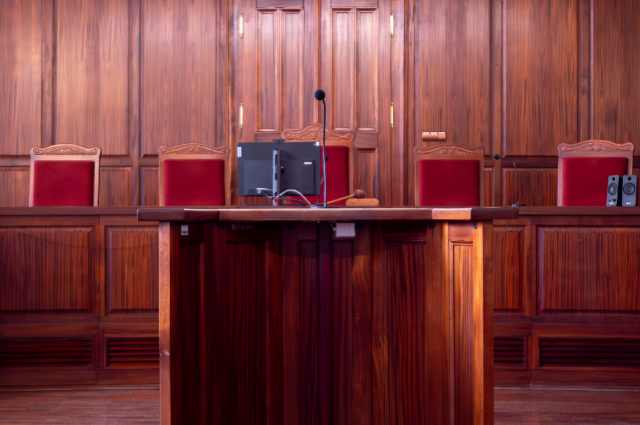
Imagine a short courtroom video appearing on a phone. A judge asks a pointed question. A lawyer pauses before answering. The caption declares that the court has concluded. Within hours, the clip is circulating as proof of a position that may never have been adopted. The hearing itself may have lasted several hours; the online version lasts less than a minute.
That is the difficulty at the centre of India’s debate over courtroom recordings. A judicial hearing is a public event in many circumstances, but a digital clip is not the hearing. It is a fragment selected, framed and distributed by someone. The fragment may be genuine and still be misleading. It may also be altered, falsely captioned or, with generative artificial intelligence, made to appear as though a judge or lawyer said words they never spoke.
The Supreme Court’s interim restrictions in Harshita Grover v. Union of India respond to a real problem. Yet a rule requiring prior permission for almost every digital use raises a second question: how should the public verify what actually happened in an open hearing? The answer cannot rest only on controlling circulation. It must also make the authentic source easier to find and check.
What the Court is trying to prevent
On 24 July 2026, in Harshita Grover v. Union of India, the Supreme Court issued interim directions prohibiting the extraction, dissemination, monetisation, posting, reposting, uploading, transmission, modification, storage or hosting of audio-video recordings of judicial proceedings on social media or other digital platforms without prior permission from the Secretary General of the Supreme Court or the Registrar General of the relevant High Court. The order was passed by a bench of Chief Justice Surya Kant and Justices Joymalya Bagchi and V. Mohana. [1]
The order did not prohibit recognised news organisations from reporting on court proceedings. But the wording initially left room for confusion about whether news reports could include audiovisual extracts. On 31 July, the Court clarified the position: recognised outlets could continue reporting on hearings and explaining legal developments, but they could not use the audio or video clips in that reporting. The permission requirement in the earlier direction continued to apply. [2]
The concern was not invented. During the July hearing, Solicitor General Tushar Mehta warned that artificial-intelligence tools could alter the words spoken by judges and lawyers while retaining their lip movements and voices. A clip could therefore look and sound authentic while carrying a fabricated exchange. He also warned that selective extracts could be circulated with a predetermined narrative. [3] The petition itself raised concerns about sensational editing, misleading captions, online harassment and the monetisation of courtroom moments.
The proceedings moved from the immediate restriction towards a possible policy framework. On 9 October, the Court recorded that the Union was preparing a proposal after receiving suggestions from High Courts and intervenors, and continued the interim directions. [4] On 30 October, the Court asked the Ministry of Electronics and Information Technology to include measures against violations in the proposed policy. The Solicitor General said suggestions had been sent to the Ministry and sought a listing after the Diwali break. [5]
Open justice is not unrestricted reproduction.
The strongest criticism of the restrictions would be that a public hearing should be freely shareable. That argument is incomplete. Access to an open courtroom, the right to record it, and the right to republish an edited recording are related questions, but they are not identical. The fact that a member of the public may attend a hearing does not automatically mean that every participant has agreed to have their image, voice, and most difficult moments circulated indefinitely online.
The Supreme Court addressed the value of technology-enabled access in Swapnil Tripathi v. Supreme Court of India (2018). It recognised that live-streaming can extend open justice beyond the physical courtroom. Citizens who cannot travel to Delhi, journalists, researchers, law students and people affected by important cases can follow proceedings and understand how judicial decisions are made. The judgment also stressed the need to balance transparency with the dignity and privacy of litigants and witnesses, and with the proper administration of justice. [6]
The Court’s Model Rules for Live-Streaming and Recording of Court Proceedings, circulated for adoption by High Courts, reflect that balance. They envisage court-controlled recording, a retained archive, encrypted storage with a hash value, and judicial control over what is streamed or published. They also exclude categories such as matrimonial matters, child custody, sexual-offence cases, POCSO matters, in-camera proceedings, recording of evidence and privileged communications. [7]
This existing framework matters. The policy debate is not taking place on an empty page, and it would be inaccurate to suggest that India has no rules for court recordings. The more difficult question is whether those rules are consistently implemented, whether the public can reliably identify the official source, and whether legitimate uses can be governed by clear conditions rather than case-by-case discretion.
The missing link is provenance.
Provenance is the traceable origin and history of a recording. It answers basic questions: which court produced the video, on what date, from which hearing, and whether the file presented online is the same as the official recording or has been altered. A watermark can help identify a source, but it is not enough by itself. A visible mark can be cropped, copied or imitated. A cryptographic signature, linked to an official source file and its metadata, offers a stronger method of checking integrity.
There is already a useful foundation in the Model Rules. They define archival data as audio and visual data recorded during proceedings and retained by the Court. They provide for encrypted storage with a specific hash value. They also state that archived data does not become the official record of proceedings unless the bench so directs. [7] That final distinction is essential: an authenticated video can establish the integrity of a recording, but it does not replace the court’s order, a certified transcript or the formal record where those are legally authoritative.
The risk of a misleading clip is not solved merely by labelling it ‘official’. A person may take a genuine ten-second extract, remove the exchange that came before it, and attach a caption that reverses its meaning. A different person may create synthetic audio or video that has no connection to the court feed at all. Authentication helps with the first question—whether the material came from the official source—but context is needed to assess whether the extract fairly represents the hearing.
That is why the proposal for an authenticated repository deserves serious attention. It was raised by intervenor Prashant Bhushan during the 30 October hearing, who suggested an official court repository with watermarking and cryptographic signing from which users could extract clips. The Supreme Court Observer had also reported an intervention proposing an accessible archive against which circulating clips could be checked. [5, 8] The important next step is to turn that general idea into a workable system.
Build a record people can verify.
The first reform should be a court-run repository for recordings that the court has decided may be made publicly available. It should not be a public dump of every courtroom recording. The repository should preserve an unedited master file, record its date and case details, and attach a cryptographic signature or equivalent integrity check. A user should be able to verify that a file originated from the court and whether it has changed since publication.
The repository should also offer a controlled extraction tool. A journalist, teacher or researcher should be able to select a portion of a public recording and receive a clip that carries a durable link to the complete hearing, the relevant time stamps and a transcript where one is available. The system could automatically attach a short context window before and after the selected passage. This would not prevent all misleading edits, but it would make it easier for viewers to check what preceded and followed the excerpt.
Every extract should carry a small provenance record: court, case identifier, hearing date, source recording, time range and verification status. Platforms could use that record to distinguish an extract derived from the official source from a file that has no verifiable origin. A mismatch should not automatically prove malicious fabrication; it should signal that the material is not authenticated by the court repository.
There is another practical point. The official recording should be treated as the authoritative audiovisual source, not casually described as the official judicial record. The Model Rules already preserve that distinction. Orders and judgments determine what the court has decided; transcripts and recordings may help explain what took place during oral proceedings, subject to the applicable rules. The archive must make those roles clearer, not blur them.
A public archive also needs dependable retention and access standards. The existing Model Rules provide for archival storage and a minimum ordinary retention period, but courts should set retention periods that reflect the importance of public hearings, appellate needs and preservation obligations. Users should not discover that the source against which a disputed clip could be checked has disappeared.
Define misuse without silencing criticism.
An authenticated archive will not settle the question of reuse. The second reform must be a clear set of rules that distinguishes legitimate reporting and criticism from deception and exploitation. ‘Commercial exploitation’ is too broad to work as a self-explanatory category. Many independent journalists, legal educators and commentators earn some income from their work. That does not mean every use of a court clip is an attempt to turn the judiciary into entertainment.
The policy should distinguish commercial use from abusive exploitation. A news report carrying advertising, a law lecture available through a paid course, or a documentary financed by a broadcaster may have a commercial dimension while still serving a public or educational purpose. The relevant factors should include the purpose of the use, the way the clip is presented, whether it is materially edited, whether the source is acknowledged, and whether the presentation misleads viewers or exposes protected information.
A ‘misleading edit’ should also be defined carefully. Ordinary editing for length is not the same as an edit that changes the apparent meaning of an exchange. A caption can mislead even when the video is untouched. A synthetic voice or fabricated statement is different again. The rule should focus on material deception: an alteration, omission, caption or fabricated element that is likely to make a reasonable viewer misunderstand what occurred or what the court decided.
Consequences should match the seriousness of the conduct. A minor attribution failure may call for correction. A materially misleading extract may require a visible correction, context link or removal. Deliberate fabrication, repeated non-compliance or the exposure of protected identities may justify stronger legal consequences under clearly applicable law. Any removal process should give reasons, notify the uploader where practicable and provide a route to challenge an erroneous takedown.
The Ministry of Electronics and Information Technology can help shape platform-facing compliance and technical mechanisms. But an administrative policy should not invent new criminal offences or penalties. If the State intends to create new legal liabilities, the definitions, defences, procedures and sanctions should have a clear statutory basis. The judiciary must retain authority over the treatment of its proceedings and records; platform enforcement should not become an indirect way to decide which criticism of a court may remain online.
The litigant is not public content.
The case for stronger privacy safeguards is not an argument against open justice. It is a reminder that a courtroom contains people, not just legal arguments. A person describing violence in a family dispute, a child giving evidence, or a witness recounting a traumatic event may have little control over how a recording is later circulated. A short clip can be copied, reposted and indexed long after the hearing has ended. For the person shown, the consequence may not be a temporary embarrassment but a lasting loss of privacy and safety.
Indian law already recognises that some proceedings require different treatment. Section 11 of the Family Courts Act, 1984, permits a Family Court to hold proceedings in camera and requires it to do so when either party desires it. Section 366 of the Bharatiya Nagarik Suraksha Sanhita, 2023, provides for in-camera trials in specified sexual-offence cases. Under Section 37 of the Protection of Children from Sexual Offences Act, 2012, POCSO trials are held in camera; Section 23 also restricts media disclosure of a child’s identity and requires authentic information in relevant reporting. [9, 10, 11]
The Model Rules go further in operational terms by excluding specified sensitive categories from live-streaming and by providing for masking or distortion of identifying details in certain recordings. [7] These safeguards should be applied before a recording becomes public. Once a sensitive video has been released, later redaction cannot reliably retrieve copies that have already spread across platforms.
A workable system should therefore have clear tiers. Proceedings legally or judicially excluded from public streaming should not enter the public clip repository. Recordings retained for the court or appellate use should remain under controlled access. Publicly released recordings should carry the reuse conditions and verification tools described above. Where a court permits limited public access with redactions, the public version should be generated and checked by the court, not left to individual users to guess which details should be obscured.
A public courtroom does not mean that every person in it has surrendered their privacy. The purpose of open justice is to make the administration of law visible and accountable. It is not to turn a litigant’s most vulnerable moment into permanent online material.
The public deserves the authentic record.
The debate in Harshita Grover is often presented as a choice between two unsatisfactory extremes: let every clip circulate without restraint, or require prior approval before any extract can be shared. Neither is a complete answer. Unrestricted circulation can reward distortion, harassment and fabricated material. A permission system that offers no clear standards, timelines or appeal can make ordinary public-interest communication dependent on administrative discretion.
India does not need to begin from zero. The Supreme Court has recognised the democratic value of open justice; the Model Rules already contain provisions on archiving, encryption, hashes, exclusions and authorised use; and stakeholders have placed the idea of an authenticated repository before the Court. What remains is to connect these pieces into a system that ordinary users and platforms can actually rely on.
That system should make the official source easy to locate, the integrity of a clip easy to verify, and the context of an extract easy to recover. It should permit legitimate reporting, teaching, research and criticism under stated conditions, while drawing firm boundaries around fabricated material, materially misleading edits and legally protected proceedings. It should also explain who decides, how quickly a complaint is handled and how an incorrect restriction can be challenged.
A court should not have to choose between allowing its proceedings to be distorted and keeping the public at a distance. Transparency needs more than a camera; it needs a record that can be checked. The clip may travel fast, but the source should remain traceable. That is how open justice can survive the age of the clip: not by dispensing with every safeguard, but by replacing uncertainty with provenance, context and rules that apply to everyone.
References:
- Supreme Court of India. (2026, July 24). Harshita Grover v. Union of India & Ors., W.P. (C) No. 751 of 2026, Order dated 24 July 2026. https://cdnbbsr.s3waas.gov.in
- Supreme Court of India. (2026, July 31). Harshita Grover v. Union of India & Ors., W.P. (C) No. 751 of 2026, Order dated 31 July 2026. https://indiankanoon.org/doc/39512736/
- LiveLaw. (2026, July 24). Supreme Court bans uploading and sharing audio-video recordings of court hearings without prior permission. https://www.livelaw.in
- Supreme Court of India. (2026, October 9). Harshita Grover v. Union of India & Ors., W.P. (C) No. 751 of 2026, Order dated 9 October 2026. https://indiankanoon.org/doc/178617220/
- Jain, D. (2026, October 30). Supreme Court asks MeitY to ensure action against unauthorised uploading of court hearing clips. LiveLaw. https://www.livelaw.in
- Supreme Court of India. (2018, September 26). Swapnil Tripathi v. Supreme Court of India, (2018) 10 SCC 639. https://indiankanoon.org/doc/43629806/
- e-Committee, Supreme Court of India. (2022). Model Rules for Live-Streaming and Recording of Court Proceedings (dated 13 September 2022). https://cdnbbsr.s3waas.gov.in
- Venkatesan, V. (2026, September 21). Clipped justice. Supreme Court Observer. https://www.scobserver.in
- Government of India. (1984). The Family Courts Act, 1984, Section 11. https://www.indiacode.nic.in
- Government of India. (2023). The Bharatiya Nagarik Suraksha Sanhita, 2023, Section 366. Final_BNSS.pdf
- Government of India. (2012). The Protection of Children from Sexual Offences Act, 2012, Sections 23 and 37.