
In May 2026, India’s youth were betrayed twice within the same fortnight. On 3 May, the NEET-UG examination — the only gateway to medical education for 2.27 million aspirants — was cancelled after a whistleblower chemistry teacher in Sikar, Rajasthan, exposed a multi-state paper leak network. Arrests reached 10 suspects, including a school headmistress who had memorised physics questions in her NTA-appointed role, a coaching institute owner in Latur, and CBI investigators confirmed the same network had compromised NEET 2025 as well. On 15 May, Chief Justice of India Surya Kant compared unemployed youth to “cockroaches” and “parasites of society” from the bench of India’s highest court. Within 24 hours, Abhijeet Dipke launched the Cockroach Janta Party (CJP), which amassed 22 million Instagram followers in under three weeks and held a full protest at Jantar Mantar on 6 June 2026, explicitly demanding the resignation of Union Education Minister Dharmendra Pradhan over NEET. This article examines both events as a single interconnected case study in institutional failure, and argues that India’s examination integrity crisis and its youth unemployment crisis are not parallel problems — they are two symptoms of the same broken social contract.
One Month, Two Wounds
There is a particular cruelty in failing someone twice in the same month. India’s generation of young, educated aspirants — the most qualified in the country’s history, and among the most unemployed — experienced precisely that in May 2026. The month opened with the cancellation of the NEET-UG examination, the sole national gateway to undergraduate medical education, after a paper leak network spanning Rajasthan, Maharashtra, and Haryana was exposed by a chemistry teacher with the honesty to report what he had found. It ended with the Chief Justice of India telling a courtroom that young people who cannot find employment are like cockroaches.
The Cockroach Janta Party, the 22 million Instagram followers, the Jantar Mantar protest, and the demand for a minister’s resignation were not a social media distraction. They were a generation responding, with the tools available to it, to a system that had first stolen its aspirations and then insulted its dignity in the same fortnight. This article treats both crises not as separate events but as a single case study: what happens when a state fails its youth systematically, and then tells them the failure is their own character.
The Examination That Was Sold: NEET 2026
The National Eligibility cum Entrance Test (NEET-UG) is the only examination through which students in India may seek admission to undergraduate medical and dental courses. There is no alternative route. For 2.27 million students who sat the examination on 3 May 2026, it represented years of focused preparation — in most cases, two to four years of coaching, sacrifice, and deferred ambition — compressed into a single day (Wikipedia, 2026a).
Within four days, a viral PDF was circulating through WhatsApp groups across coaching networks, purporting to contain questions that had appeared in the paper. Shashikant Suthar, a chemistry teacher in Sikar, Rajasthan, received the document on the evening of 7 May through his landlord. He compared it to the NEET paper his students had described. The chemistry questions were the same. Suthar chose not to file a police complaint, fearing public panic, and instead approached the NTA directly. His tip-off set the investigation in motion (India Tribune, 2026; Deccan Herald, 2026).
The Rajasthan Police Special Operations Group launched an inquiry within days. On 12 May, the NTA officially cancelled the examination, confirming the integrity of the paper had been compromised, and announced a re-examination for 21 June (Wikipedia, 2026a). The CBI registered an FIR on the same day and took over from the SOG. What emerged from the investigation was not an opportunistic breach but a network of deliberate, pre-planned betrayal embedded at multiple levels inside the system.
Manisha Sanjay Havaldar, headmistress of a Pune school, had been appointed as a subject expert by the NTA — a position granting her access to question papers before the exam date. CBI investigations found she had memorised the physics questions and shared them with a student, who circulated them via a messaging application. During raids on her home, investigators recovered NEET question papers, NTA identity card copies, and cash. She admitted printing the leaked material on her school computer and burning her handwritten notes afterwards (Wikipedia, 2026a). The 10th arrest in the case was Shivaraj Motegaonkar, founder of RCC Classes in Latur, Maharashtra, at whose coaching institute a chemistry question bank was recovered that matched the cancelled exam verbatim (India.com, 2026). CBI investigators separately confirmed that the NEET 2025 paper had been compromised by the same network (Wikipedia, 2026a). The fraud was not an aberration. It was a pattern.
The Judge’s Words: What the CJI Said and Why It Spread
On 15 May 2026, twelve days after 2.27 million students sat a paper that had already been sold in advance, Chief Justice of India Surya Kant, during a Supreme Court bench hearing on a contempt petition concerning fraudulent professional credentials, said: “There are youngsters like cockroaches, who don’t get any employment or have any place in the profession. Some of them become media, some of them become social media, RTI activists, and other activists, and they start attacking everyone” (Wikipedia, 2026b).
The CJI issued a clarification the following day — that his remarks had targeted individuals entering the legal profession through fraudulent degrees, not unemployed youth in general. The clarification was noted, but it did not undo the damage. The context had already made the words resonate: the guardian of India’s constitutional rights had, from the same bench tasked with hearing petitions over the NEET cancellation, described the generation most acutely bearing the consequences of systemic failure as parasites.
Abhijeet Dipke, a 30-year-old political communications strategist and Boston University student formerly serving as a Communications Fellow in the Delhi Chief Minister’s Office under Arvind Kejriwal, launched the Cockroach Janta Party on 16 May (NewsGram, 2026). Membership criteria: unemployed, lazy, chronically online, able to rant professionally. Tagline: “Voice of the Lazy and Unemployed.” The name deliberately mirrored the ruling Bharatiya Janata Party. Within 78 hours, the Instagram account had 3 million followers. By the end of the first week, it had exceeded 22 million — more than double the BJP’s audience. Over 350,000 people registered as members via an online form. The Cockroach Students’ Union of India was formally established four days later (Wikipedia, 2026b, 2026c).
The Convergence: When NEET and the Cockroach Met at Jantar Mantar
The CJP is widely described as a movement born from the CJI’s remark. That is accurate, but the movement’s actual demands clarified the deeper connection. By the time of the Jantar Mantar protest on 6 June 2026, the CJP’s central demand was not symbolic. It was the resignation of Union Education Minister Dharmendra Pradhan, specifically over the NEET 2026 paper leak and alleged irregularities in the CBSE’s on-screen marking system (Medical Dialogues, 2026).
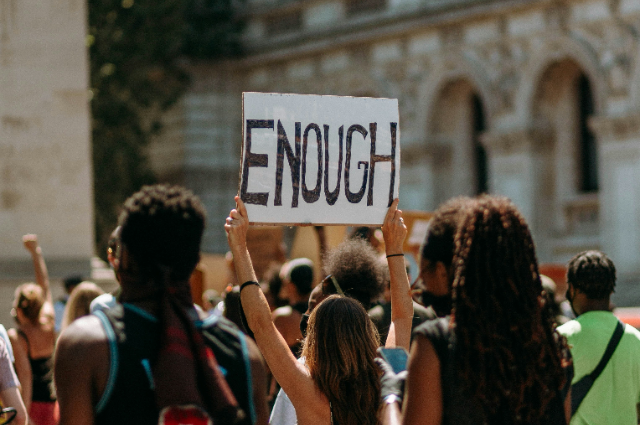
Dipke flew from Boston to Delhi to lead the protest, arriving at the airport holding a copy of Dr B.R. Ambedkar’s autobiography — a deliberate signal about the constitutional tradition this movement claimed. Thousands gathered at Jantar Mantar within Delhi Police’s permitted hours of 10 a.m. to 5 p.m. Protesters chanted: “Dharmendra Pradhan, istifa do.” They carried posters reading: “We asked for Make in India, you gave us Leak in India.” Sonam Wangchuk, the renowned scientist and social activist, addressed the crowd alongside Dipke. A second protest was announced for 13 June. Dipke stated at the venue: “Education Minister must resign. Five students have committed suicide” (Business Today, 2026b; The Statesman, 2026).
The reports of student suicides following the cancellation — aspirants who had prepared for years, taken financial loans, relocated to coaching cities, and now faced an indefinite delay — gave the protest a gravity that no amount of satirical memes could match independently. CNBC quoted a CJP spokesperson: “This party, this youth movement seeks accountability from the system. The rot in the system runs deep” (CNBC, 2026). The CJP, whatever its satirical origins, had found its real subject: the institutional betrayal of a generation.
The Data Behind the Rage
The anger at Jantar Mantar was not manufactured. It was documented in research before the first protester arrived. India has 367 million people between the ages of 15 and 29 — the world’s largest youth population, with a national median age of 29 (CBS News, 2026). A March 2026 report by Azim Premji University found that nearly 40% of graduates aged 15 to 25 are unemployed, and approximately 20% of those aged 25 to 29 remain without stable employment. The report concluded that “the rapid expansion in the number of graduates has not been matched by commensurate growth in graduate employment” (The Star, 2026). India’s official unemployment rate of 5.2% (Ministry of Statistics) understates the problem by excluding the underemployed; urban youth unemployment by the government’s own PLFS methodology stands at 13.6% (Deccan Herald, 2023).
Into this structural deficit, NEET functions as more than an examination. For millions of students from non-elite families who cannot afford private medical college fees — which can exceed ₹1 crore — NEET is the only route to a medical career. When the 2026 paper was cancelled, those 2.27 million students did not simply lose a test. They lost an entire year of viable progress toward a profession. The paper leak did not merely benefit those who had paid for the stolen questions. It imposed a cost on every student who had not.
The State’s Response: Arrests, Censorship, and Deferred Solutions
Both crises drew government responses that addressed the surface and deferred the structure. On NEET: 10 arrests, a committee briefing in Parliament, an acknowledgement of a “breach in the command chain,” and a commitment to computer-based testing from 2027 (Wikipedia, 2026a; Medical Dialogues, 2026). The arrests were real, and the investigation was serious. The underlying question — why the NTA continued to rely on human subject experts with physical access to question papers after the identical failure in 2024 — received procedural rather than structural answers.
On the CJP: the Ministry of Electronics and Information Technology directed X to withhold the CJP’s account under Section 69A of the IT Act on 21 May, after the Intelligence Bureau flagged it as a threat to national sovereignty. The CJP’s website was subsequently blocked. Both actions generated more attention for the movement than they suppressed (Business Today, 2026a). Congress MP Shashi Tharoor called the blocking “disastrous and deeply unwise,” arguing that democracies require outlets for dissent, humour, and frustration (Wikipedia, 2026b). Political commentator Rasheed Kidwai noted that the CJP was “not merely mocking those in power, it is exposing those who wish to replace them” — a recognition that the movement’s critique was systemic, not partisan (The Federal, 2026). What the state’s response to both crises shared was a preference for managing the symptom over addressing the disease.
The System That Bred the Cockroach
Chief Justice Surya Kant was right that people who feel failed by a system often turn to criticism of institutions. What the characterisation missed is the logic that precedes that turn. People do not become critics of a system because they lack character. They become critics of a system because the system they were asked to trust — and in many cases sacrificed years to qualify for — has repeatedly failed to keep its end of the bargain.
NEET paper leaks occurred in 2021, 2024, and 2026. Each cycle produced arrests and promises of reform. None prevented the next. The youth unemployment rate among graduates has remained above 40% for the 15–25 cohort for years. The CJP was not an invention. It was a measurement of how many people had been failed often enough, and publicly enough, to put on a costume and show up at Jantar Mantar with a book and a flower.
The slogan “We asked for Make in India, you gave us Leak in India” is simultaneously a pun and a precise policy summary. It describes a country that has successfully expanded higher education without expanding graduate employment, that has built a centralised examination system without securing it against internal betrayal, and that has, when confronted with the resulting anger, chosen to block Instagram accounts rather than examine the conditions that made 22 million people follow one. The CJP did not create this crisis. It made it impossible to look away. In a functioning democracy, that is not a threat. It is a public service.
References:
- Al Jazeera. (2026, June 6). Cockroach Janta Party rallies in New Delhi for youth protests.
https://www.aljazeera.com - Azim Premji University. (2026, March). State of Working India 2026.
https://azimpremjiuniversity.edu.in/ - Business Today. (2026a, May 23). Swatting the roaches: Now the Cockroach Janta Party website is blocked, after X & Insta handles ban.
https://www.businesstoday.in - Business Today. (2026b, June 6). Dharmendra Pradhan must resign: CJP’s big demand at Jantar Mantar. https://www.businesstoday.in
- CBS News. (2026, May 22). The rapid rise of the “Cockroach Janta Party” online protest movement appears to spook India’s leaders.
https://www.cbsnews.com - CNBC. (2026, June 4). India’s ‘Cockroach’ CJP party: What investors need to know.
https://www.cnbc.com - Deccan Herald. (2023). Youth unemployment crisis in India.
https://www.deccanherald.com - Deccan Herald. (2026, May 13). A ‘guess paper’, whistleblower tip-off and cancellation: How NEET-UG 2026 paper ‘leak’ unravelled.
https://www.deccanherald.com - India Tribune. (2026, May 19). NEET 2026 paper leak: Whistleblower Suthar praises NTA, probe agencies for taking swift action.
https://www.indiatribune.com - India.com. (2026, May 18). NEET-UG 2026 paper leak case: CBI arrests Latur coaching institute’s owner.
https://www.india.com - Medical Dialogues. (2026, June 6). NEET 2026 anger reaches Jantar Mantar, protesters demand the education minister’s resignation.
https://medicaldialogues.in - NewsGram. (2026, June 4). CJP demands the education minister’s resignation ahead of the June 6 protest.
https://www.newsgram.com - Outlook India. (2026, May 13). CBI arrests five as NEET 2026 paper leak probe expands.
https://www.outlookindia.com - The Federal. (2026, May 22). Cockroach Janta Party: Is the government wary of Gen Z’s protest power?
https://thefederal.com - The Star. (2026, May 23). How a ‘cockroach’ jibe united India’s disgruntled jobless youth.
https://www.thestar.com.my - The Statesman. (2026, June 6). ‘Resign or face nationwide protests’: CJP founder Dipke’s ultimatum to Dharmendra Pradhan over NEET paper leak row.
https://www.thestatesman.com - Wikipedia. (2026a). 2026 NEET controversy. https://en.wikipedia.org
- Wikipedia. (2026b). Cockroach Janta Party. https://en.wikipedia.org
- Wikipedia. (2026c). Cockroach Students’ Union of India.
https://en.wikipedia.org