
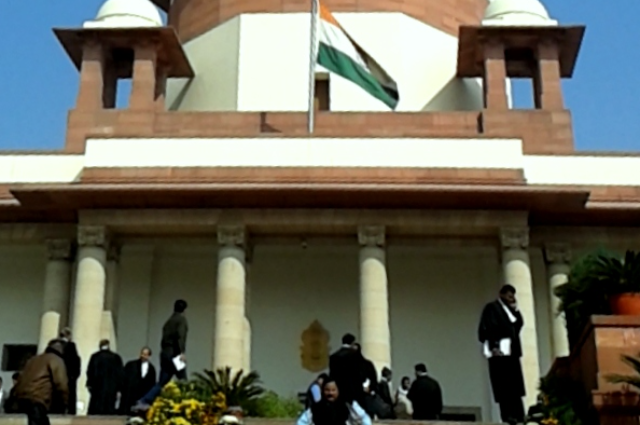
On 22 August 2025, the Promotion and Regulation of Online Gaming Act, 2025 (PROGA) received Presidential assent, marking the most consequential legislative intervention in India's digital entertainment economy in recent memory (Seth Associates, 2025). The Act, together with the Promotion and Regulation of Online Gaming Rules, 2026, came into force on 1 May 2026 and imposed a blanket prohibition on "online money games," a category that swept in not only games of pure chance but also games long recognised by Indian courts as games of skill, including rummy, poker, and paid fantasy sports (GaganLegal, 2026). The industry's response was immediate: constitutional petitions were transferred to the Supreme Court, arguing that Parliament had exceeded its legislative competence and had extinguished a fundamental right to trade recognised in decades of prior jurisprudence (Yogonet, 2025).
What makes the present moment unusual is that the PROGA constitutional challenge itself has made little independent progress. Hearings have been repeatedly deferred, and no bench has yet ruled on the substantive question of whether a total prohibition on skill-based real-money games survives scrutiny under Article 19(1)(g). Instead, the terrain has shifted beneath the petitioners' feet through two rulings delivered on an entirely different set of facts. This article argues that a tax dispute over Goods and Services Tax (GST) liability and a set of appeals concerning State gambling statutes have, between them, done more to determine the probable fate of PROGA than the PROGA litigation itself. The remainder of this article traces that sequence and considers its implications for constitutional adjudication in a federal system where taxation, criminal law, and trade regulation intersect.
The Legislative Architecture of PROGA
PROGA was framed by its drafters as a public health and public order measure rather than a fiscal one. The Statement of Objects accompanying the Bill cited concerns over gaming addiction, household indebtedness, and the exploitation of vulnerable users through manipulative design features, and it drew an explicit contrast between "online money games" and permitted categories such as e-sports and social gaming (Seth Associates, 2025). The Act created a National Online Gaming Authority empowered to classify games, issue compliance guidelines, and enforce the prohibition, and it attached severe penalties, including imprisonment of up to three years and fines of up to one crore rupees, alongside provisions for warrantless arrest and extraterritorial application to offshore operators (Outlook Respawn, 2025; TaxTMI, 2026).
Crucially, Parliament located its authority for PROGA not in the State List entry governing betting and gambling, but in Union List heads such as Entry 52, which permits regulation of industries declared to be in the public interest, and, according to some analyses, in the communications-related Entry 31 (Lexology, 2025; TaxTMI, 2026). This choice of constitutional anchor was deliberate: betting and gambling, as Entry 34 of the State List, has traditionally been treated as a subject reserved to the States, and a Union statute purporting to occupy that field risked an immediate challenge on grounds of legislative incompetence. The petitioners' core submission before the Supreme Court is that a law banning an activity that the Constitution assigns to the States cannot be rescued merely by re-labelling it as an exercise of Union public-interest powers.
The GST Ruling and the Erosion of the Skill Defence
On 27 May 2026, a two-judge bench comprising Justices J. B. Pardiwala and R. Mahadevan delivered its judgment in the long-running dispute between the Directorate General of GST Intelligence and Gameskraft Technologies and allied gaming companies, upholding the retrospective application of a twenty-eight per cent GST levy on the full face value of player deposits, rather than on the gross gaming revenue retained by platforms (GKToday, 2026; Outlook Respawn, 2026). The judgment validated tax demands reported to approach two and a half lakh crore rupees and rejected the industry's central doctrinal defence outright (Ease My Prep, 2026).
That defence rested on the distinction, developed over seven decades of case law, between games of skill and games of chance, with the former traditionally understood as legitimate commercial activity attracting the protection of Article 19(1)(g). The bench held that this distinction is simply irrelevant once money is staked on an uncertain outcome. As reporting on the judgment summarised the holding, the character of the underlying game, whether skill predominates or chance predominates, ceases to matter for tax purposes the moment a stake is placed (The Indian EYE, 2026; Sansa Legal, 2026). This reasoning did not, on its own terms, purport to resolve the constitutional question pending in the PROGA petitions. Yet its practical effect was to remove one leg from under the industry's broader argument. If the skill-versus-chance distinction can be dissolved for taxation purposes without offending the Constitution, petitioners challenging PROGA now face a bench, differently constituted or not, that has already shown a willingness to treat staked skill games as functionally indistinguishable from gambling.
The Federalism Verdict and the Entry 34 Problem
The second and, for present purposes, more consequential ruling arrived on the same day. In an appeal arising from the Madras and Karnataka High Courts, the Supreme Court considered whether Tamil Nadu and Karnataka possessed the legislative competence to prohibit online games played for stakes under their respective State gaming statutes (SCC Times, 2026). Both High Courts had earlier struck down the relevant State provisions, holding that games of skill retained constitutional protection under Article 19(1)(g) even when played for money, and that the States lacked competence under Entry 34 of the State List to prohibit such games outright.
The Supreme Court reversed both High Courts. It held that the phrase "betting and gambling" in Entry 34 could not be read down to mean only betting on games of chance, and that once a monetary stake is placed on an uncertain outcome, the activity falls within Entry 34 regardless of whether skill or chance predominates (TaxTMI, 2026; A2Z Taxcorp, 2026). The Court further held that such staked gaming activity is res extra commercium, meaning it falls outside the category of trade or business protected by Article 19(1)(g) altogether, so that a total prohibition does not even require the proportionality analysis that would ordinarily apply to a restriction on a fundamental right (SCC Times, 2026).
The ruling was, on one reading, a straightforward vindication of State authority. Yet several commentators immediately identified the awkward implication for PROGA. If betting and gambling, defined broadly to include staked skill games, is confirmed as a State subject under Entry 34, then a Union statute purporting to impose an identical, indeed a more sweeping, prohibition under Union List heads becomes constitutionally precarious for the opposite reason the industry had hoped for. As one analysis put it, there is now a direct tension: if online gaming is a State subject, the question becomes whether Parliament can legislate on it at all under Entry 52, and the validity of PROGA is likely to be challenged precisely on that ground (Vajiram & Ravi, 2026). The State-powers ruling therefore does not simply support the government's position; it complicates PROGA's own foundation by strengthening the case that regulation of staked gaming belongs constitutionally to the States rather than to Parliament.
This is the federalism trap referenced in the title of this article. The Union government secured, in a single day, two judgments that appeared to strengthen the case against the gaming industry on the merits of prohibition, while simultaneously reinforcing a jurisdictional argument that cuts against the particular statute it had enacted to achieve that prohibition. The petitioners challenging PROGA, having lost the skill-based trade argument, now have incentive to pivot toward a purely federalism-based challenge, arguing that Parliament trespassed on State legislative turf rather than arguing that gaming should remain an unregulated commercial activity at all.
Review Petitions and the Unsettled State of the Record
The industry has not accepted the 27 May rulings as final. Beginning in mid-July 2026, several major gaming companies, including Play Games24x7, Junglee Games, Sachiko Gaming, and Head Digital Works, the parent company of the platform A23, filed review petitions before the Supreme Court (ANI, 2026; CXO Digitalpulse, 2026). Head Digital Works' petition is notable for its scope: it seeks review not only of the GST judgment but also of the companion ruling on State legislative competence, arguing that the latter departs from binding Constitution Bench and three-judge Bench precedent recognising games of skill as protected business activity, and that it wrongly equates staking on skill games with staking on games of pure chance (The News Mill, 2026).
On the tax question specifically, the review petitions argue that GST should attach only when winnings are transferred to players rather than at the moment an entry fee is paid, and that the 2023 statutory amendments introducing the twenty-eight per cent slab should operate prospectively rather than retrospectively (ANI, 2026; Indian Television, 2026). Head Digital Works has additionally warned that, absent relief, the industry faces a risk of large-scale insolvency (Magzter, 2026). A review petition, however, is a narrow procedural instrument, confined to errors apparent on the face of the record rather than a fresh appeal on the merits, and its prospects of success are conventionally limited. Unless and until the review bench directs otherwise, the 27 May judgments remain binding law, and it is against that backdrop that the still-pending PROGA constitutional challenge must now be argued.
Implications for the Pending Constitutional Challenge
Three implications follow from this sequence for the PROGA litigation still awaiting a substantive hearing. First, the doctrinal ground on which the industry originally planned to resist PROGA, namely that skill-based real-money games are a constitutionally protected occupation, has been substantially weakened by a bench that has now twice held the skill-chance distinction to be irrelevant once stakes are involved. Petitioners arguing the PROGA case before a similarly constituted or persuaded bench will find it difficult to resurrect an argument that the Court has just rejected in two related contexts.
Second, the legislative-competence question has, somewhat paradoxically, become more rather than less prominent. Because the Supreme Court has now confirmed that betting and gambling, understood broadly, sits within Entry 34 of the State List, the strongest surviving argument against PROGA is not that Parliament may not prohibit staked gaming, since the Court has effectively said prohibition is permissible, but that Parliament specifically lacks the competence to be the one doing the prohibiting on a pan-India basis under Union List heads such as Entry 52. This reframes the PROGA case from a fundamental-rights dispute into a federalism dispute, a shift with significant consequences for remedy: a successful Article 19(1)(g) challenge might have preserved a regulated real-money gaming market, whereas a successful federalism challenge to PROGA would likely leave the underlying prohibition intact at the State level while merely displacing which legislature enforces it.
Third, the timing of these developments illustrates a structural feature of adjudication in federal, multi-forum legal systems, namely that constitutional outcomes can be substantially pre-determined by rulings in adjacent, procedurally distinct litigation before the principal case is even heard on its merits. The GST bench was not asked to decide, and did not purport to decide, whether PROGA itself was constitutional. Yet its reasoning on the irrelevance of the skill-chance distinction, combined with the State-powers ruling's characterisation of staked gaming as res extra commercium, has narrowed the interpretive space available to whichever bench eventually hears the PROGA petitions on their merits, expected, according to some reports, no earlier than January 2027 (Cryptomaniaks, 2026).
The constitutional fate of India's real-money gaming industry is being decided in instalments, and not always in the forum one would expect. PROGA's own hearing calendar has moved slowly, but the substantive questions it raises, whether staked skill gaming is protected trade, and whether the Union or the States hold competence to regulate it, have already been substantially answered by the Supreme Court in the course of resolving a tax dispute and a set of State-law appeals. The result is a peculiar form of doctrinal spillover in which litigation strategy in one case is rewritten by outcomes in another. For the gaming industry, the practical effect has been to close off the fundamental-rights argument while inadvertently reopening a federalism argument that could yet complicate the Union's own prohibition. Whether the pending review petitions or the eventual PROGA verdict will alter this trajectory remains uncertain, but the sequence to date offers a useful illustration of how, in India's constitutional practice, adjacent rulings on taxation and State power can quietly do the work that a headline constitutional case has not yet been permitted to do.
References:
- A2Z Taxcorp LLP. (2026, June 1). Supreme Court: Banning the online money gaming is within the States' power. https://a2ztaxcorp.net
- ANI. (2026, July 14). Online gaming firms move Supreme Court seeking review of verdict upholding 28% GST levy. https://aninews.in
- Cryptomaniaks. (2026, August 5). India's online gaming ban and 28% GST, explained. https://cryptomaniaks.com
- CXO Digitalpulse. (2026, July 15). Online gaming firms seek Supreme Court review of 28% GST verdict. https://www.cxodigitalpulse.com
- Ease My Prep. (2026, May 29). Supreme Court upholds 28% retrospective GST on online gaming. https://easemyprep.in
- GaganLegal. (2026, May 6). Online gaming in India under PROGA 2025: how the Gaming Rules 2026 actually work. https://gaganlegal.com
- GKToday. (2026, May 27). Supreme Court upholds 28% GST on online gaming. https://www.gktoday.in
- Indian Television. (2026, July 15). Online gaming firms seek Supreme Court review of 28 per cent GST verdict. https://indiantelevision.com
- Lexology. (2025, October 14). The Promotion and Regulation of Online Gaming Act, 2025, a constitutional and economic crossroad. https://www.lexology.com
- Magzter. (2026, July 15). Online gaming cos move SC for review of 28% GST verdict. https://www.magzter.com
- Outlook Respawn. (2025, October 10). India bans real-money gaming under PROGA 2025, promoting esports and social gaming. https://respawn.outlookindia.com
- Outlook Respawn. (2026, May 30). India's Supreme Court delivered the final blow to real-money gaming. https://respawn.outlookindia.com
- Sansa Legal. (2026, May 28). Supreme Court upholds 28% GST on online gaming, skill vs chance irrelevant when money is staked. https://www.sansalegal.com
- SCC Times. (2026, July 8). Supreme Court upholds States' power to ban online games with stakes. https://www.scconline.com
- Seth Associates. (2025, October 4). Promotion and Regulation of Online Gaming Act, 2025. https://www.sethassociates.com
- TaxTMI. (2026, June 15). Supreme Court: banning the online money gaming is within the States' power. https://www.taxtmi.com/article/detailed?id=16658
- The Indian EYE. (2026, May 28). Supreme Court upholds 28% GST on online gaming. https://theindianeye.com/2026/05/28/supreme-court-upholds-28-gst-on-online-gaming/
- The News Mill. (2026, August 1). Online gaming firms seek Supreme Court review of 28% GST ruling. https://thenewsmill.com
- Vajiram & Ravi. (2026, June 7). Online gaming, SC upholds 28% GST, state bans. https://vajiramandravi.com
- Yogonet International. (2025, December 24). India's complete ban on real-money skill gaming is unlikely to withstand constitutional scrutiny. https://www.yogonet.com
. . .