
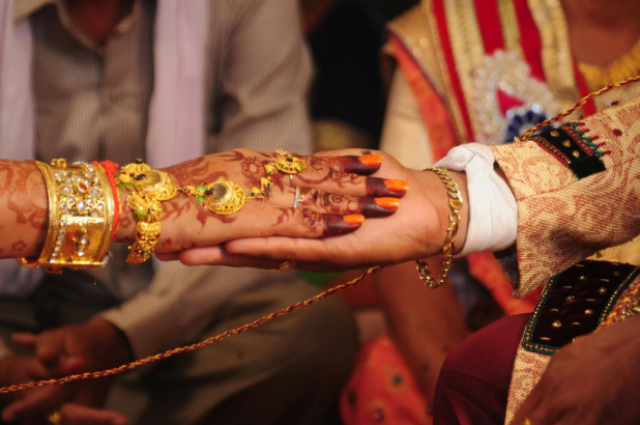
On May 12, 2026, inside a residential flat in the Katara Hills area of Bhopal, the hypocrisy of a matrimonial arrangement became the literal metaphor of India's enduring systemic fallacies. Twisha Sharma, a former model and actor, holding a Bachelor of Business Administration (BBA) degree from Savitribai Phule Pune University, and a Master of Business Administration (MBA) degree from NMIMS, was found unresponsive under deeply suspicious circumstances just five months after her wedding. The subsequent investigation, marked by allegations of severe financial extortion, missing security footage, and an emergency intervention by the Supreme Court, revealed a horrifying truth about her primary tormentors being those who should have been her primary protectors: her husband, an independent litigator, and her mother-in-law, a retired district judge.
Now, upon learning about this case, my first thought was ‘this is not just an isolated case’ and ‘this is not the only marriage-related crime’, therefore, the question remained: have we really moved past our institutionalised patriarchal mindsets? And what did this case once again expose about our society that praises toxic masculinity and practices enabling it?
It exposed that the modern narrative of Indian progress exists in a state of deep schizophrenia. While the nation projects itself globally as a techno-economic powerhouse driven by rapid urbanisation and institutional modernisation, its domestic sphere is still rigidly tied to archaic, transactional systems of marital extortion, by expansion, misogyny, sexism, and patriarchy.
The severe public outrage following the tragedy led to immediate demands for institutional accountability, culminating in the State government recommending an intensive federal investigation. This hugely suggests that domestic violence cannot and should not have ever been treated as merely ‘family disputes’, but must be approached as a systemic crime enabled by institutional inertia.
This article, therefore, does not just scratch the surface of domestic distress; it rather exposes the deeply institutionalised social practices and structures that contemporary society fails to recognise as harmful. It reveals the routine, day-to-day behaviours within families, the hidden economic calculations of the marriage market, the psychological conditioning of young girls, the digital radicalisation of young men, and the deliberate delays within the legal apparatus that collectively maintain a loop of marital crimes.
And the most pertinent role played in the continuation of this evil is by society.
ROLE OF THE SOCIETY
When we look deeper into society, one of its fundamental obsessions is figured to be ‘weddings’. We, as a society, are obsessed with weddings, yet deeply indifferent to ‘marriages.’ From the moment a girl is born, her community implicitly treats her as someone who is merely passing through her natal home, preparing for her ‘real’ life that begins only after she is given away. This collective mindset creates a quiet but heavy pressure that surrounds women long before she ever walks into a matrimonial home.
Neighbours, relatives, and even lifelong acquaintances quietly track her age, her appearance, and her compliance, viewing her marital status as the ultimate measure of her family's honour. But when things go wrong behind closed doors, this same community shifts from celebratory to policing. The immediate response to a woman's distress is seldom an offer of rescue; instead, it's more often than not a chorus of voices telling her to adjust, to compromise, and to bear the burden silently so that both the family's social standings remain intact. By treating a woman's endurance as a moral virtue and her return home as an absolute social catastrophe, our collective social fabric acts as the primary enabler for abusers, ensuring they can operate with confidence that their victim has nowhere to run.
The Structural Scaffolding of Gender Asymmetry
The power imbalance inside a marriage is not accidental; it is cultural and systematic. And this structure depends entirely on the unequal, almost ‘godlike’ value placed on men, and the ‘submissive’, ‘weaker’, ‘follower-like ' value placed on women, reducing human lives to variables in a financial and social negotiation.
The ‘mentality’
From early childhood, young women are conditioned to believe that their personal achievements, talents, and desires are secondary to their ultimate roles as wives. This socialisation fundamentally weakens their bargaining position from the start.
For centuries, some of the world's most celebrated thinkers explicitly stated that women exist primarily to serve men within the household. The French philosopher Jean-Jacques Rousseau, whose writings on freedom and education shaped modern democratic thought, argued that a woman's development should entirely revolve around her future husband. In his 1762 treatise, ‘Emile, or On Education’, Rousseau wrote:
“The whole education of women ought to be relative to men. To please them, to be useful to them, to make themselves loved and honoured by them, to educate them when young, to care for them when grown, to counsel them, to console them, and to make life agreeable and sweet to them— these are the duties of women at all times, and what should be taught them from their infancy.”
This perspective is not confined to just the old philosophies; it regularly appears in modern political and popular cultures. For instance, global business icons and political leaders have frequently faced backlash for reinforcing domestic stereotypes under the guise of traditional values. A prominent example occurred when the former PepsiCo CEO, Indra Nooyi, frequently celebrated as one of the most powerful women in global business, recounted a story from the night she was named president of the Company. Upon arriving home to share the monumental news, her mother immediately interrupted her to send her out for milk, saying,
“Leave the damn crown in the garage. When you walk into this house, you are a wife and a mother.”
When often repeated as a heartwarming anecdote about staying humble, stories like this highlight the rigid social truth that no matter how much a woman achieves on a global stage, her community will always view domestic caretaking, nurturing, and housekeeping as her primary and most essential duty. And in return, she will receive security, whether financial or physical, safety, protection and company, therefore rendering the entire act of marriage as ‘transactional’.
The ‘marriage-as-market’ model
Apart from the ‘transactional’ nature of marriages in every context, there is also a literal monetary or assets ‘transaction’ involved before a woman could be married off, known as ‘dowry’.
In a comprehensive historical study analysing over 76,000 marriages in India alone, over a century, economists Amartya Chiplunkar and Jeffrey Weaver verified that dowry operates explicitly as an equilibrium price to clear the marriage market. Their research reveals that as modernisation occurred, an expansion in educational and economic opportunities for men created a highly stratified distribution of ‘groom quality’. Because women are culturally socialised to prioritise marriage above all else, families actively compete for high-earning grooms. The groom's education is treated as a capital asset, and the dowry functions as a literal ‘groom price’ paid by the bride's family to secure a match, rendering human beings commodified units within a supply-and-demand framework.
Traditional economic matching theory, building upon Gary Becker's seminal economic models of marriage, treats the domestic unit as a site of resource maximisation. In the Indian context, this model is fundamentally warped by gender roles. Because systemic barriers and social norms restrict women from participating equally in the market economy, a bride is frequently treated by the groom's family as a financial dependent whom they must support. Consequently, researchers have shown that dowry acts as a form of upfront compensation given to the groom's family to offset the lifetime economic burden of taking in a non-earning member, firmly strengthening the patriarchal view that a woman's societal utility is restricted to unpaid domestic labour and childbearing.
The structural expectation that a woman must be married off with a massive transfer of wealth has devastating demographic consequences long before a woman reaches a marriageable age. In the research paper titled ‘The Price of Gold: Dowry and Death in India’, researchers investigated the direct correlation between international gold market fluctuations and the survival rates of female infants. Because a traditional conventional dowry basket contains a culturally mandated minimum quantity of gold jewellery, an increase in gold prices dramatically spikes the anticipated future dowry burden for parents of daughters. The study proved that unexpected spikes in gold prices directly led to an increase in female foeticide and post-natal neglect of girl children. Families perceived the birth of a daughter as an impending financial crisis, reinforcing the cultural axiom that women are born to fulfil a transactional marital contract at the cost of their very survival.
Hypergamy and the price of mobility
Society strictly enforces the practice of hypergamy, the rule that a woman must marry ‘up’ into a family of higher or equal economic and social status. This creates a steep hierarchy where the groom's family automatically holds a position of authority. Because the bride's family feels they have gained status through the alliance, they enter the arrangement from a place of perpetual debt and gratitude. This structural inequality ensures that any subsequent demands for cash, vehicles, or property are treated not as the criminal extortion they are, but as the mandatory costs of maintaining a valuable social connection.
This practice is not a modern individual preference; it has been present, spanning across decades, as a design to preserve male dominance when women begin to acquire independent resources. It has been found in empirical analyses published by the Institute of Labour Economics (IZA) that hypergamy acts as a primary driver of the lifelong gender wealth gap. The study demonstrates that because a husband's earning potential systematically exceeds his wife's in a hypergamous setup, households face a clear economic incentive to prioritise the man's career over the woman's. This bias fetters women to domestic specialisation and unpaid labour, meaning that even if labour market discrimination were to vanish entirely, the procedure of hypergamy would continue to depress female financial independence across their life cycle.
It has also been found in a long-term demographic study by the United Nations Population Fund (UNFPA) that even as female literacy rates catch up to or surpass male education levels, traditional marriage markets experience intense structural strain because of the persistent refusal to abandon hypergamous norms. The research remarks that when families fiercely compete for a limited pool of highly educated or highly earning men, it ‘inflates’ the groom price.
Sociologists emphasise that hypergamy persists precisely because it makes systemic inequality a personal achievement for women. It had been found in a sociological survey published via DergiPark analysing mate selection dynamics that, despite significant formal strides toward legal gender equality, younger populations still heavily perceive marriage as an instrument for social and economic mobility. The findings reveal that women are and have always been structurally pressured to prioritise a prospective partner's property ownership and career prestige to compensate for the invisible financial glass ceilings they expect to face in their own professional lives.
The isolation blueprint
The most effective piece of this structure is the practice of patrilocality, where a woman must uproot her entire life to live with her husband's family. This geographical and emotional relocation serves as a literal isolation blueprint. By removing a woman from her family surroundings, her friends, her comfort zone, and the immediate protection of her parents, the structure strips away her primary support networks. She enters a household where everyone else shares a history among themselves, the surname, and a common interest in protecting their own. In this environment, cut off from immediate help and surrounded by structural loyalties that exclude her, a woman is left entirely vulnerable to psychological manipulation and physical control.
Societal and Familial Complicity
The violence that occurs within a marriage is never strictly private; it is sustained by a wider network of social compliance that begins with the woman's own natal family. When a married woman attempts to report physical violence, emotional isolation, or institutional control, the initial resistance she faces comes not from the legal system, but from her own people, her own loved or dear ones. This familial complicity operates under a heavy cultural fixation on family honour, where a woman's endurance is treated as a collective moral obligation. Parents routinely pressure their daughters to tolerate abusive conditions because the alternative of hosting a returned or divorced daughter is viewed as a severe social failure that devalues the family's status and compromises the marriage prospects of her siblings, if any.
This domestic pressure is deeply reflected in national public health data. It has been found in the Accidental Deaths and Suicides in India (ADSI) report published by the National Crime Records Bureau (NCRB) that ‘family problems’ and ‘marriage-related issues’ consistently serve as the primary drivers for female suicide in the country. Out of the 1,70,746 suicides recorded in the 2024 data, homemakers constituted a staggering 22,113 deaths, averaging roughly 60 women per day.
Furthermore, communities actively protect abusers by normalising early indicators of violence and participating in the public character assassination of any woman who seeks to leave. When a woman speaks out about her treatment in her matrimonial home, the community's defensive reaction is to scrutinise her behaviour, her housekeeping, her mental health, her character, or her career choices. This social mechanism shifts the blame completely onto the victim, framing her refusal to submit as a personal and personality defect rather than a causal reaction to cruelty. By treating a woman's suffering as virtue and her self-preservation as a scandal, the social ecosystem functions as the primary shield for abusive partners, ensuring they can enforce total control without facing any collective consequences or loss of social standing.
Legal Inefficiencies and Enforcement Lapses
While the Indian state has built an extensive array of formal laws to protect women within the domestic sphere, the actual execution of these statutes is crippled by deep institutional apathy, procedural delays, and corruption at the grassroots level. A woman who seeks legal guidance faces a complex maze of bureaucratic hurdles that often seem designed to exhaust her resources and patience. The primary point of failure usually and very frequently occurs at the local police station, where officers routinely treat domestic violence complaints not as serious criminal offences, but as private family matters that should be resolved through informal counselling or compromise. This initial pushback actively discourages filing formal First Interest Reports (FIRs), effectively burying active abuse under the category of underreported crime.
Even when an FIR is successfully registered under specialised sections like Section 498 A of the Indian Penal Code, or its modern equivalent, Section 85 of the Bharatiya Nyaya Sanhita, 2023, which penalises cruelty by a husband or his relatives, the path to actual justice remains blocked. According to data from the National Crime Records Bureau, despite cases of ‘cruelty by husband or relatives’ consistently making up the largest share of reported crimes against women, hovering around 4.41 lakh cases in recent annual counts, the actual conviction rate for these offences remains abysmally low, often dropping below 20%. This massive statistical gap between arrests and convictions is driven by extended trial delays that can span over a decade. During these years of litigation, victims are subjected to intense economic pressure, social isolation, and relentless counter litigation by the abuser's family, which forces many women to abandon their legal battles out of sheer exhaustion.
The legal system's fundamental failure to understand the lived reality of domestic abuse is further complicated by judicial mechanisms that value the preservation of the marriage over the physical safety of the woman. For years, family courts have heavily relied on provisions like the Restitution of Conjugal Rights (RCR), which allows a husband to legally petition the court to order his estranged wife to return to the matrimonial home. Although the Supreme Court of India settled a major loophole in January 2025 by ruling that a wife cannot be stripped of her right to maintenance under Section 125 CrPC simply because she refuses to comply with an RCR decree due to ill treatment, the very existence of such legal mechanisms shows how deeply the system is committed to enforcing cohabitation.
Additionally, when multiple cases are filed across civil and criminal courts, the resulting legal gridlock often freezes the victim in a state of perpetual vulnerability. In landmark cases tracking the limits of matrimonial litigation, such as the Supreme Court's observations in early 2026, the apex court noted that prolonged, bitter legal battles frequently turn into a ‘perpetuity of marriage on paper’, where spouses file dozens of cross-cases against each other, completely clogging the judicial system without providing any real relief. By allowing these abusive, multi-year litigation strategies to continue, the legal framework inadvertently helps the abuser weaponise the law itself, turning the statutory process into a secondary tool for harassment and financial control.
OTHER FACTORS CAUSING MARITAL EXTORTION AND DOMESTIC VIOLENCE
When we say the ‘society’ is responsible for anything, what are we referring to? What is ‘society’? Is it you, or me, or us? Do our actions not contribute to the formation of what we understand as a ‘society’? Do we not form the ‘society’ which we always seem to hold at gunpoint?
The cycle of marital abuse is not sustained by a single antagonist or a lone event; it is kept in motion by a complex, interlocking set of mechanisms that operate at every level. ‘Society’ and legal delays certainly provide the framework, but the actual nuances of this cycle are fueled by subtle day-to-day choices, deep-seated psychological conditioning, and intentional structural barriers.
Let's take a deeper look at which of our actions exactly or subtly influence what we are condemning in this article.
The Weaponisation of Financial Dependency
Probably one of the most effective tools used to trap a woman is the systematic erosion of her financial sovereignty. This often begins with subtle suggestions for her to quit her job to ‘focus on the family’ or the opening of joint accounts where all her earnings are diverted to the husband's control. By cutting off a woman's access to independent funds, the abuser ensures that the cost of an exit becomes prohibitively high. Research from the International Growth Centre has shown that domestic financial control is a primary predictor of abuse severity, as it forces the victim to choose between enduring harm and absolute destitution. When a woman has no personal savings, she cannot pay for legal counsel, emergency transport, or even basic living expenses, effectively imprisoning her in what is apparently supposed to be her own home.
At the heart of this lies a deeply flawed cultural narrative, which is the ‘Provider Complex’. This mindset rewards men with absolute authority in the household simply because they bring home a paycheck. The concept is fundamentally warped because it reduces the entire concept of ‘providing’ to a single, localised, financial transaction. It creates an environment where a patriarch feels total compliance and deference, viewing his income as a license to dictate terms, control behaviour, and dismiss his partner's or any woman's autonomy.
This narrow definition completely ignores the reality that women are, and always have been, the primary providers in every other meaningful sense. Within the household, conventionally, women have always been the ones to provide the invisible, unquantifiable structural support that keeps the family alive and running:
- The labour provision: Cooking, cleaning, and maintaining the relentless logistics of daily life, even though the house was shared among her and the others.
- The care provision: Nursing the sick, managing nutrition, and undertaking the foundational labour of birthing as well as raising children.
- The emotional provision: Acting as the family's unpaid therapist, nurse, maid, and as the psychological shock absorber for the entire family's stress. Not only that, but also as a problem solver and mediator within the family.
Society treats this massive, exhaustive output of energy not as a valuable service, but as an innate biological duty that requires no compensation or respect. Almost as if ‘providing financially’ acts as a free pass to entitlement.
This contradiction exposes the highly artificial, self-serving nature of the patriarchal marriage structure. By making financial contribution the single prerequisite for household authority, dominance and entitlement, the system created a rule that women could rarely successfully meet. This was because the very same system deliberately barred women from entering the workforce, restricted their access to higher education and legally or socially blocked their financial independence. A woman was thus trapped in a structural paradox of being denied the right to earn, and then penalised with a complete lack of household decision-making power because she did not earn. Conversely, if a woman did manage to break through these barriers and become the primary financial provider, the structure protected itself by shaming the husband for failing his ‘masculine’ duty, creating intense domestic friction that often escalated into abuse.
In sharp contrast to this rigid exclusion of women from the financial sphere, the domestic sphere operated with complete asymmetry. While women were strictly forbidden from crossing over into economic production, men faced no institutional or physical barriers to performing domestic labour or childcare. No law, corporate policy, or physical reality prevented a man from cooking, cleaning, or raising his own children. Instead, society relied on unscientific assertions about ‘natural biological duties’ to justify why these exhausting tasks belonged solely to women, and not only that, these tasks were even deemed as ‘menial’. These biological arguments were entirely baseless, used only to obscure a stark, economic truth that by labelling domestic work as an innate female duty rather than actual labour, the patriarchal structure secured a permanent, unpaid workforce to manage the home, ensuring that men could maximise their external economic power while retaining absolute dominance inside the house.
The hypocrisy of the provider complex becomes glaringly obvious in the modern era, where women are increasingly providing the financial capital, too. Today, an overwhelming number of women manage demanding full-time jobs, bringing home substantial salaries while simultaneously being expected to shoulder 100% of the domestic and emotional labour at home. Yet, despite contributing equally or more to the family's bank account, the lingering shadow of the traditional provider complex means that men often retain financial veto power. A woman's income is frequently absorbed into corporate family expenses, while her husband's income remains ‘his’ to leverage as a tool of authority. This ensures that even when a woman provides everything, the structural asymmetry of the marriage contract continues to work against her.
The Internalised ‘Good Wife’ Narrative
In many cases, the cycle is also recycled by the bride herself, through decades of Internalized conditioning. Many women are taught from childhood that their ability to keep a marriage intact is the ultimate proof of their character and success. This psychological burden makes it incredibly difficult for a woman to recognise early signs of abuse, as she is conditioned to interpret manipulation, isolation, and emotional cruelty as ‘growing pains’ of a new marriage.
When the victim believes that her primary duty is to remain silent, she inadvertently provides the abuser or abusers with the space to escalate this behaviour. This self-censorship acts as a silent contributor to the cycle, as the victim may hide the reality of her life even from her own parents, fearing that admitting to marital failure will disgrace her natal home.
The ‘Stonewalling’ Strategy of Groom's Families
Beyond the individual abuser or his immediate family, the groom's extended family often plays a crucial role in maintaining this cycle through active stonewalling. When a daughter-in-law voices a concern, the family unit often acts as a collective defence force, gaslighting the victim by claiming she is ‘oversensitive’ or ‘mentally unstable’. This is designed to shift the burden of proof entirely onto the woman. By framing her complaints as a sign of her own character flaws, the family ensures that no outside party, not even the bride's own parents, will take her grievances seriously. This collective gaslighting creates an environment where the victim begins to doubt her own perception of reality, making her far less likely to take definitive action to save herself.
The ‘Procedural Delay’ Industry
The legal cycle is further complicated by the emergence of a specialised ‘procedural delay’ industry. Highly skilled litigators often use every available loophole, such as filing for transfer petitions, requesting repeated adjournments on medical or personal grounds, or triggering cross-jurisdictional lawsuits to ensure that a case never reaches a final verdict. These legal manoeuvres are exhausting and expensive, designed specifically to drain the victim's emotional and financial reserves. In many cases, the goal is not to win the case on its merits, but to make the process so painful that the woman eventually settles for an unfavourable outcome or drops the charges entirely just to end the litigation.
The Fear of the ‘Returned Daughter’
Finally, the cycle is held in place by the profound fear felt by the bride's own family in many cases.
Parents often recognise signs of abuse, but choose to stay silent because they are terrified of the social ostracisation that comes with a failed marriage. They often view their daughter's return as a permanent mark of disgrace that will ruin the marriage prospects of her siblings or damage the family's social standing in their community. By prioritising the appearance of a successful marriage over the reality of their daughter's safety, the bride's own family becomes an unintentional but active participant in the cycle of abuse. This silence reinforces the message to the groom's family that they have total impunity, confirming that no one, not even those who love or should love her most, will ultimately challenge their behaviour.
The Manosphere
The cycle of domestic abuse is also increasingly fueled by a highly organised, digital subculture known globally as the ‘manosphere’. This online network, consisting of ‘Alpha Male’ influencers, men's rights activists (MRAs), and extreme anti-feminist forums, actively radicalises young men by turning their personal or financial anxieties into deep resentment toward women. It had been found in global digital tracking research published by the ‘International Journal for Crime, Justice and Social Demography’ that the manosphere acts as a modern pipeline for structural gender-based violence. The study reveals how these online networks weaponise algorithms to push extreme misogyny into mainstream social media feeds, training young men to view relationship dynamics not as partnerships, but as a zero-sum war for control and dominance.
DEMOCRATIC REDRESSAL
The institutional safeguards built into the state apparatus mean absolutely nothing if they are accessible only to the wealthy, the educated, or the digitally literate. For the vast majority of women, particularly those from impoverished rural backgrounds or urban informal labour sectors, the legal framework feels like a foreign territory protected by complex legalese, expensive gatekeepers, and digital barriers. True democratic redressal requires stripping away this complexity and presenting survival mechanisms that work directly within the immediate, non-literate reality of a woman in crisis.
A. Overcoming the Literacy and Access Barrier
When a woman cannot read or write, or when she doesn't own a smartphone, standard helpline apps and web portals are completely useless. The state and civil society must pivot to an oral, decentralised infrastructure that meets marginalised women exactly where they are.
- Redressal must rely on basic mobile networks and voice-based technology. Interactive Voice Response (IVR) systems, which require a user only to press a single number on a basic feature phone to connect with a live operator in their native dialect, bypass the literacy barrier entirely.
- The most reliable reporting nodes are the frontline community workers who already have daily access to women's homes. ‘Anganwadi’ workers, Accredited Social Health Activists (ASHAs), and local Women's Self-Help Groups (SHGs) must be trained as localised, trusted intervention units. A woman who is forbidden from leaving her house can still quietly disclose domestic terror to an ASHA worker during a routine health check. These workers must be legally empowered to bypass local police apathy and report cases directly to Protection Officers.
- Statutory rights must be translated into colloquial, localised speech. Community radio stations and grassroots street theatre (Nukkad Natak) are critical tools for breaking down complex sections of the law. By narrating real-world scenarios, explaining what constitutes cruelty and outlining how to get free help without using complex legal terminology, marginalised populations can learn to identify actionable offences.
B. National Toolkits
India possesses several centralised emergency systems designed to operate across states, bypassing local jurisdiction loops.
- 112 (Emergency Response Support System- ERSS). This is the singular, pan-India contact point for immediate police dispatch. It functions like 911 in the United States, utilising panic buttons and location tracking. It bypasses the need for a victim to know the specific jurisdiction of her local police station.
- 181 (Women Helpline). A 24/7, toll-free, highly confidential hotline dedicated exclusively to women facing violence or harassment. It links victims directly to police assistance, medical centres, and legal aid clinics.
- 14490 (National Commission for Women- NCW). A dedicated helpline launched to provide direct cell support for reporting violations of women's rights and severe domestic abuse.
- Sakhi One Stop Centres (OSCs). Administered under the Ministry of Women and Child Development, these physical centres are strategically located across districts. They are designed to support women affected by violence both in private and public spaces. A single Sakhi centre provides immediate access to an integrated suite of services such as temporary emergency shelter, medical aid, psychological counselling, legal advocacy, and video conferencing facilities to speak directly to magistrates.
- The District Legal Services Authority (DLSA). Under the Legal Services Authorities Act, 1987, ‘every single woman in India, regardless of her income, class, or caste, is entitled to completely free legal aid’. If a woman cannot afford an attorney to file for separation, protection, or maintenance, she can walk into any local magistrate's court and demand the DLSA desk. The state is legally mandated to provide her with a qualified lawyer free of charge, covering all litigation expenses.
C. Global Toolkits
When a marital crisis extends beyond borders, as is frequently the case with non-residential Indian (NRI) marriages or transnational partnerships, local police stations and domestic courts are often unable to act due to jurisdictional limitations. For women trapped in abusive marriages overseas, or abandoned by spouses who have fled across international borders, survival depends on navigating specialised networks or global consular frameworks, international treaties, and transnational legal advocacy networks.
For citizens living abroad as dependents on spousal visas (such as the H-4 visa in the United States or equivalent dependent streams in the UK, Canada, and the EU), the threat of deportation is frequently weaponised by abusers to enforce total submission. In these scenarios, the victim's home country consulate serves as an immediate sovereign sanctuary.
- Embassies and Consulates maintain dedicated welfare funds, such as the Indian Community Welfare Fund (ICWF). These funds are explicitly mandated to provide emergency humanitarian assistance to citizens in distress overseas. For women trapped in domestic households abroad, the ICWF can directly fund:
- Immediate boarding, lodging, and emergency shelter care.
- Legal counsel to contest local custody battles or stop retaliatory deportation proceedings.
- Emergency travel documents (such as an Emergency Certificate) and airfare for the victim and her children to return safely to their home country.
- The MADAD (Consular Services Management System) is a centralised online portal run by the Ministry of External Affairs (MEA). It allows women trapped abroad, or their families back home, to log direct grievances regarding marital desertion, physical confinement, or passport confiscation. These logs are routed directly to the high-ranking diplomatic officers in the relevant geographic mission for immediate local intervention.
- The NRI Cell of the National Commission for Women (NCW) is a specialised cell that processes complaints involving transnational marriages, coordinating directly with law enforcement agencies, regional passport offices, and foreign ministries to track down absconding spouses and initiate formal red-alert or look-out circulars.
- If a spouse commits several financial extortion or domestic crimes and flees abroad, international law enforcement cooperation can be triggered through bilateral ‘Extradition Treaties’ and ‘Mutual Legal Assistance Treaties’ (MLATs). Under these frameworks, domestic courts can order the impounding or revocation of the abuser's passport, forcing their return to face a criminal trial.
Because formal diplomatic channels can sometimes move slowly due to bureaucratic checks, grassroots non-governmental organisations (NGOs) operating globally provide the most rapid, day-to-day survival support for women navigating transnational marital abuse.
Traditional domestic violence shelters in Western nations often lack the cultural, linguistic and immigration expertise required to assist women from South Asian or immigrant backgrounds. Specialised global networks fill this structural gap.
- Organisations like Manavi (US), Southall Black Sisters (UK), and Sakhi for South Asian Women (US) provide bilingual counselling, transitional housing and culturally specific legal advocacy. They possess deep expertise in specific legal protections, such as filing for the ‘Violence Against Women Act (VAWA) self-petition’ in the United States, which allows an abused immigrant spouse to independently petition for a green card without the abuser's knowledge or cooperation.
- International Social Service (ISS) is a global network spanning over 120 countries that assists children and families confronted with complex social and legal problems as a result of international migration or a cross-border displacement.
In cross-border situations where an abuser may have access to sophisticated tracking tools or shared family data plans, a woman must maintain high digital security.
- Secure a secondary, prepaid mobile device kept entirely outside the matrimonial home to communicate with consulates and advocacy groups.
- Access global help portals only via secure, incognito browser settings, and use end-to-end encrypted messaging applications with disappearing text options enabled to prevent the abuser from discovering their exit strategy.
D. What Should and Should Not Be Done (Legal)
SHOULD:
- A woman must retain personal custody or clear documentation like photographs and receipts of her ‘Stri-Dhan’ (the jewellery, cash, and gifts given exclusively to her during the wedding). Legally, this is her absolute property; her husband and in-laws have no right to it.
- Keep a strict, hidden record of dates, times, and descriptions of abusive events. If physical violence occurs, go to a government hospital immediately for a Medico-Legal Case (MLC) report. A government-certified medical log is irrefutable evidence in a court of law.
- Instead of rushing into a lengthy criminal trial under Section 85 of the BNS (formerly 498A), a woman should look into filing a DIR through a Protection Officer under the Protection of Women from Domestic Violence Act, 2005 (PWDVA). This civil law moves significantly faster, granting immediate residential rights, monetary relief, and protection orders within days.
SHOULD NOT:
- Do not sign Settlement papers without independent counsel. Never sign any ‘compromise’ agreements, mutual consent diary entries, or blank pages presented by the husband's family or local community elders, or even by the husband, without a lawyer assigned directly and particularly for the woman.
- Stick strictly to verifiable truths. Adding fabricated claims against distant relatives of the groom who don't reside in the house can ruin the credibility of the entire case during cross-examination, giving the primary abuser an easy path to acquittal.
- If a woman must flee for her safety, she should immediately file a police diary entry stating she is leaving due to an active threat to her life. Leaving silently without this log might allow the husband to file a counter-suit for ‘desertion’, which can hurt her future claims for maintenance.
E. What Should and Should Not Be Done (Personal)
When dealing with a highly volatile domestic situation, day-to-day choices must prioritise physical safety and emotional survival over societal expectations.
SHOULD:
- Establish a ‘safe contact’ system. Memorise at least two phone numbers of trusted individuals outside the matrimonial home. Set up a code word or a blank call signal that means ‘Call the police to my address immediately’.
- Keep an emergency document pouch. Maintain a small, hidden bag containing essential original documents— Aadhar card, PAN card, bank passbooks, marriage certificate, educational degrees (especially the Madhyamik admit card), and her children's birth certificates, if any. If things escalate, this pouch must be easy to grab in seconds.
- Build a hidden financial reserve. Quietly set aside small amounts of cash completely outside the knowledge of the household. If cash is impossible to hide, ensure a personal, private bank account is active with digital access codes known only to you.
SHOULD NOT:
- Do not issue empty ultimatums. Avoid threatening the abuser with statements like ‘I am going to call the police’ or ‘My family will teach you a lesson’. This alerts the abuser, giving them time to hide evidence, confiscate your phone, lock you inside, or file a preemptive anticipatory bail application. Move silently until the safety net is secure.
- Never attempt to resolve severe arguments or financial disputes in secluded parts of the house, like the kitchen, where weapons or gas lines are accessible, or small rooms with no exits. Keep interactions near the main doors or windows if a conflict begins to escalate.
- Don't screen or sanitise the abuse when talking to your closest friends or family out of shame. Isolation is an abuser's greatest asset.
But the aforementioned advice is only for the possible victim. Any cycle of violence doesn't survive on only the victim's cooperation or conditioning, but also on the other enablers, who may or may not be aware of their participation and contribution. The cycle of marital violence survives because families on both sides routinely fail to act at the critical moments. Breaking this momentum requires defining strict boundaries of behaviour and concrete responsibilities for the bride's parents, the groom's parents and the groom himself.
The parents of the bride:
- Should NOT force mediation or send her back. When a daughter returns home detailing emotional cruelty, financial extortion, or physical violence, her parents must never organise informal community ‘reconciliation’ meetings to send her back. Forcing a woman back into a toxic household to protect social standing or to avoid the stigma of a failed marriage makes the parents direct accomplices in the escalation of her abuse.
- Should not pay ‘instalments’ to buy peace. If the groom or his family demands cash, vehicles, or property after the wedding under the guise of financial distress or business investment, the bride's parents must refuse immediately. Meeting these demands doesn't satisfy an abuser; it merely confirms that the bride can be used as a financial hostage, guaranteeing that extortion will increase in frequency and severity.
- The absolute priority of the bride's parents is to provide an unconditional, immediate physical and emotional safety net. They must make it clear to their daughter from day one that her life is infinitely more valuable than any societal perception of marital longevity, ensuring she knows she always has a home to return to.
The parents of the groom:
- Should not minimise or shield their son's behaviour. When a daughter-in-law voices distress about a husband's volatility, control, or cruelty, his parents must never dismiss it as routine marital friction, temper issues (though if either of the bride or groom, or anyone for that matter, has temper issues, that itself requires and deserves medical intervention), or a lack of domestic adjustment on her part. Gaslighting the victim or covering up a son's action to preserve the Illusion of a harmonious household grants him total domestic impunity.
- Should not act as financial facilitators or aggressors. The groom's parents ethically must never demand lifestyle upgrades, cash gifts or financial contributions from the bride's family, nor should they act as passive observers when their son makes these demands. Using a son's marriage as a tool for collective family enrichment is a criminal act that destabilises the marriage from the outset.
- The groom's parents have a strict responsibility to hold their son entirely accountable for his conduct. They must actively intervene to stop any abusive behaviour, refuse to participate in or benefit from any financial extortion from the bride's family, and cooperate fully with legal authorities if domestic violence occurs under their roof.
- Should not raise an entitled misogynistic son. Or what could be termed ‘nipping at the bud’, here the nipping would refer to harmful notions and beliefs. The most foundational failure of a groom's parents occurs long before the wedding takes place; it happens during his upbringing. Parents must not raise a son to believe that his gender grants him inherent superiority, domestic privilege, or the right to demand absolute submission from a partner. He must not grow up believing that simply his gender is a huge achievement for him. Where parents pamper a son, excuse his aggressive behaviours, or relegate them to a charming personality trait of being masculine, and raise him with an attitude of unearned entitlement, they are directly creating a future abuser. The core responsibility of the groom's parents is to intentionally dismantle misogynistic norms within their own household. They must raise a son who actively respects individual autonomy, understands how to manage emotional frustration without resorting to dominance, and views domestic labour as a shared human necessity and life skills rather than an innate female duty.
The groom:
- Should not delegate spousal protection to family loyalties. A groom must never remain passive or silent when his own parents or relatives subject his wife to isolation, financial demands, taunts, or emotional degradation. Treating parental overreach as an untouchable tradition or expecting a wife to silently endure familial bullying is a fundamental failure of the marital contract.
- Should not conflate marital partnership with absolute ownership. A husband must never assume that marriage grants him a veto over his wife's autonomy, career choices, financial assets, or external support systems. Weaponising his position to isolate her from her friends, police her movements, or control her income is structural abuse, far from anything remotely related to leadership.
- The groom holds the primary legal and moral responsibility to build an environment of absolute physical and psychological safety. He is mandated to treat his partner as an equal sovereign entity, protect her from any domestic overreach by his extended family, reject the transactional logic of dowry or marital extortion in all its forms, and understand that any resort to dominance or coercion voids the legitimacy of the union.
THE RADICAL NECESSITY OF DIVORCE
The cultural insistence on preserving marriage at all costs has turned the domestic sphere into a site of immense physical and psychological danger. Society routinely treats a ‘broken home’ as the ultimate moral failure, yet it remains completely blind to the far greater trauma of a home held together by terror, isolation and financial extortion. Now is the time to see ‘divorce’ through a different perspective. Reframing divorce is the recognition that a legal contract cannot demand the sacrifice of a human life. When a matrimonial home transforms into a space of chronic degradation, divorce must be understood not as a sin or a scandal, which it isn't to begin with, but as a radical, life-saving act of sovereignty. It is an essential exit strategy that allows a woman to reclaim her body, her mind, and her future from a system designed to consume her.
This structural shift is particularly critical when children are involved. The common justification to ‘stay for the sake of the children’ is gravely warped. It has been found in longitudinal studies tracking family dynamics that exposing children to chronic domestic hostility and maternal degradation creates deep generational trauma. Children who grow up watching abusive marriage do not learn the value of family values; they learn to normalise misogyny, violence, fear, dominance and control. They either become abusers themselves or accept abuse as their inevitable destiny. By choosing to dissolve a toxic marriage, this cycle could be broken, providing the children with a real model of self-respect and boundaries.
While divorce is a necessary path to liberation, executing it within a patriarchal legal and social ecosystem requires intense tactical caution. A woman must understand that filing for divorce will often cause the abuser and his family to escalate their tactics, shifting from quiet manipulation to aggressive legal and financial retaliation.
If an active threat of physical harm exists, a woman must secure an immediate, safe physical destination before serving divorce papers. Litigating from within the abuser's household is highly dangerous.
While a mutual consent divorce under Section 13B of the Hindu Marriage Act (or its equivalents in other personal laws) is the fastest path out, an abuser will often use this negotiation to force the woman to waive her rightful claims to alimony, maintenance, child custody, or her own Stri-Dhan.
A woman must secretly gather clear copies of all shared investments, property deeds, tax returns, and bank statements before announcing her intent to leave. In high-stakes separations, abusers routinely hide marital assets and deflate their reported income to escape financial obligations, leaving the woman under severe economic strain during the legal battle.
The tragic death of Twisha Sharma in May 2026 serves as a permanent indictment of a society that prioritises the longevity of a marriage over the survival of the woman inside it. Her tragedy proves that we cannot educate, polish, or buy a woman's way out of patriarchal violence if the foundational structure of marriage remains unchanged. When elite legal professionals can participate in the systemic destruction of a human life under the guise of domestic discipline, the entire institution loses its legitimacy. We must stop asking victims of domestic violence to be resilient, to adjust or to carry the burden of family honour. Resilience in the face of ongoing extortion is not a virtue; it is compliance.
Dismantling this requires a complete overhaul of how we value women both inside and outside the home. It means destroying the transactional logic of the ‘groom price’, treating domestic work as actual labour, and eliminating the social shame attached to a returned daughter or a divorced woman. The state must back its statutory promises with real, grassroots support that bypasses the digital divide and local corruption, ensuring that the poorest and least educated women have an immediate way out. True societal progress cannot be measured by a rising GDP or the number of expensive weddings hosted. It is and should be measured by the safety of a woman behind closed doors and her absolute, unquestioned freedom to leave a contract that threatens her life.
REFERENCES
- pmc.ncbi.nlm.nih.gov
- link.springer.com
- crimejusticejournal.com
- myscheme.gov.in
- india.gov.in
- theigc.org
- scobserver. in
- gojuris. in
- vajiramandravi.com
- cmhlp.org
- dergipark.org.tr
- india.unfpa.org
- docs.iza.org
- timesofindia.indiatimes.com
- ironline.american.edu
- xavier.edu
- promarket.org
- piketty.pse.ens.fr
- YouTube (channel name: @NDTV)
- sundaygurdianlive.com
- hindustantimes.com
- Personal surveys