
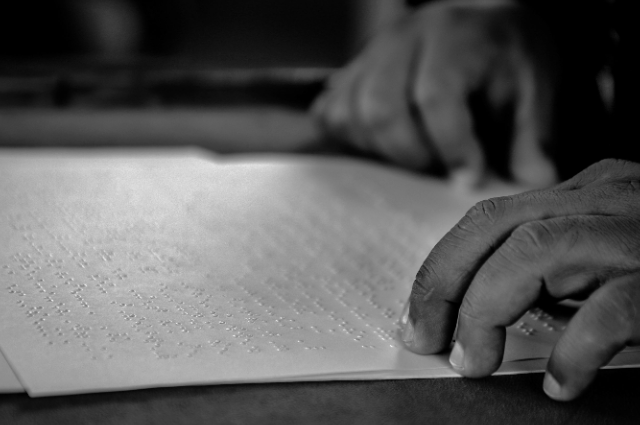
When Srikanth Bolla was born on 7 July 1991 in the village of Seetharamapuram, near Machilipatnam in Andhra Pradesh, the neighbours did not bring sweets. They brought advice. The child was blind, and the family was poor — his father tilled a small patch of land for a living. Well-meaning relatives told his parents, in the plain arithmetic of rural poverty, that a blind son was a burden with no return; better, they suggested, to let him go. His parents, Damodara Rao and Venkatamma, earned barely a few thousand rupees a year. They kept him anyway. That single refusal — to accept the verdict that a life had no value — is where this story begins.
Three decades later, that same child is the founder, chairman and chief executive of Bollant Industries, an eco-friendly packaging company with a turnover in the range of a hundred crore rupees, multiple manufacturing plants, and a workforce built substantially of people whom the rest of the economy had written off. He was the first blind international student admitted to the Massachusetts Institute of Technology. He shared a stage and a working friendship with a former President of India. And in 2024, his life reached the one place that certifies an Indian legend — the cinema screen. This is not a fable. Every load-bearing fact in it is documented. That is precisely what makes it worth telling.
A Childhood Measured in Refusals
Rural India in the early 1990s had almost no infrastructure for a blind child to be anything other than dependent. In his own village, Srikanth was bullied and left out of games. His parents, sensing that the local environment offered him nothing, made a decision that cost them dearly in daily labour: they sought out education for him instead of resigning him to it. He was eventually enrolled at the Devnar School for the Blind in Hyderabad, an institution that would give him the one thing poverty rarely affords — a runway.
At Devnar, a pattern emerged that would define the rest of his life. He was competitive, and he was good. He represented India at events abroad and reportedly excelled in academics and even in adaptive sports such as chess and cricket for the blind. But the deepest lesson of his childhood was not about winning. It was that every door he wanted to walk through had a sign on it that read, in effect, ‘not for people like you.’ The question that would come to define him was simple and stubborn: who decides that?
The Lawsuit of a Fifteen-Year-Old
The first door was science. After Class 10, Srikanth wanted to take the science stream — physics, chemistry, mathematics. The state education board refused. Their reasoning rested on an old assumption: subjects heavy with diagrams, graphs and geometry were deemed unsuitable, even unsafe, for a blind student. He was told to take the arts stream, which was considered the appropriate track for the visually impaired. For most students, that would have been the end of the conversation.
Srikanth did something almost nobody in his position had done. With the help of a teacher, he took the education board to court. He argued that the refusal was not protection — it was prejudice dressed as policy. The case took roughly six months. He waited it out. When the ruling came, it was historic: the court held that blind students could pursue science and mathematics in the senior grades of state board schools in Andhra Pradesh. He was permitted to study science at his own risk — a phrase that says everything about how the system viewed him. He then scored 98 per cent in his Class 12 board examinations, becoming the first visually impaired student in the state to study science.
“If IIT didn’t want me, I didn’t want IIT either.”
Next door was the Indian Institutes of Technology, the country’s most coveted engineering gateway. When he sought to sit the entrance process, he was, by his account, effectively denied the opportunity — the coaching and examination ecosystem was not built to accommodate a blind candidate, and no institution stepped forward to change that. His response has since become one of the most quoted lines of his life, delivered without bitterness and with a certain steel: if the IITs did not want him, he did not want them either. It is easy to read that as bravado. It is more accurate to read it as a redirection of energy — away from a system that had rejected him and toward one that would not.
The Institute That Said Yes
That system turned out to be halfway around the world. Srikanth applied abroad and was admitted to the Massachusetts Institute of Technology, entering the Management Science track at the MIT Sloan School of Management. He became the first blind international student the institution had ever admitted, and he attended on full financial aid — the university covering the entire cost, a decision that quietly reveals what a merit-based system can do when it stops treating blindness as a disqualification.
The contrast is the whole point of his story, and he has never been shy about drawing it. The country of his birth had told a brilliant student that he could not even attempt
its premier examinations. A foreign university, evaluating the same young man, offered him a place and paid for it. The difference was not his ability, which never changed. The difference was the assumption each institution made before it ever met him. One assumed limitation; the other assumed potential. Talent, his life argues, is distributed far more evenly than opportunity.
Coming Home to Build
The predictable ending would have been a comfortable career in the United States. Srikanth chose the harder and more interesting one: he came back. In 2012, while still connected to his MIT education, he set up Bollant Industries in Hyderabad — reportedly beginning in a modest residential setup before scaling into full manufacturing. The company makes eco-friendly, disposable and compostable products and packaging, including areca-leaf and recycled-paper goods that replace single-use plastic. It was, from the start, two ideas fused into one: a green business and a social mission.
The social mission was the radical part. Bollant was designed to employ and train differently-abled people — the very population that the labour market routinely dismisses as unemployable. Srikanth had lived the assumption that a disabled person is a cost rather than a contributor, and he built a profitable enterprise expressly to disprove it. The company grew to several hundred employees across multiple plants in Telangana and Karnataka, with a large share of its workforce drawn from people with disabilities and from disadvantaged backgrounds. Dignity, in his model, was not charity bolted onto a business. It was the business.
When Ratan Tata Picked Up the Phone
A social enterprise still has to survive as an enterprise, and Bollant did more than survive. Its most famous backer is one of the most respected names in Indian industry: Ratan Tata, who invested in the company in an early funding round. For a young, blind, first-generation entrepreneur, an endorsement from Tata was worth far more than the capital itself — it was a signal to the entire market that this was a serious company, not a feel-good project. Bollant went on to raise external funding and grew its turnover into the region of a hundred crore rupees, operating four manufacturing units.
It is important, in a research-based account, to be careful with numbers. Figures for turnover, valuation and headcount vary across sources and across years, as they do for any growing private company, and Bollant’s exact financials are not a matter of public quarterly filing. What is consistent across every credible account is the shape of the achievement: a company that reached nine-figure annual revenue while making the employment of people with disabilities central rather than incidental. The precise decimal matters less than the fact that a business built on that premise worked.
The Mentor and the Movie
Two threads complete the public portrait. The first is a mentorship that shaped him: as a teenager, Srikanth worked closely with Dr A. P. J. Abdul Kalam, the missile scientist who became President of India and, later, the country’s most beloved teacher of the young. For a boy who had been told what he could not do, a relationship with a man who insisted that dreams were an obligation rather than a luxury was formative. The second thread is recognition: Srikanth was named to Forbes Asia’s ‘30 Under 30’ list in 2017, and in 2024 his life was adapted into the Hindi biographical film Srikanth, with Rajkummar Rao in the title role. By 2025, he had joined the panel of judges on a leading Indian entrepreneurship television programme — a blind farmer’s son now sitting in judgement of the country’s aspiring founders.
Why This Story Matters — An Analysis
It would be a disservice to treat Srikanth Bolla’s life merely as inspiration. It is also evidence, and it argues three things worth taking seriously.
First, disability is largely a design failure, not a personal one. Srikanth’s ability never wavered between the school that barred him from science and the university that funded him. What changed was the environment. When a system was built to accommodate him — examinations he could take, aid he could access — he outperformed. This is the core insight of the modern social model of disability: people are disabled less by their bodies than by environments and rules designed without them in mind. His court victory did not give him intelligence; it gave him access. The rest was already there.
Second, inclusion is not charity — it can be a competitive advantage. Bollant Industries did not hire people with disabilities in spite of the business case. It found a workforce that was loyal, capable and overlooked, and it built a profitable company around them. That reframes a debate too often stuck in the language of sympathy. The question for any employer is no longer only ‘how do we help these people?’ but ‘how much talent are we leaving on the table by refusing to see it?’
Third, one person’s refusal can move a rule for everyone. When a fifteen-year-old took the education board to court, he was not only fighting for his own science stream. The ruling opened that door for every blind student in the state who came after him. This is how systemic change often actually happens — not through grand policy alone, but through a single stubborn individual who declines to accept that ‘the rules say no’ is the end of the sentence.
There is a temptation, with stories like this, to end on the safe note that Srikanth is exceptional — that his talent and grit make him a one-in-a-million case from which ordinary people can draw warmth but not lessons. That reading is comfortable, and it is wrong. The uncomfortable truth his life exposes is how many equally capable people never get a court to rule in their favour, never find a Devnar School, never meet a mentor like Kalam, and are quietly filed under ‘of no use’ exactly as his relatives once filed him. He is not proof that the system works. He is proof of how much talent the system wastes when it does not.
The Sentence He Rewrote
Return, at the end, to the beginning: a poor family in an Andhra village, holding a blind newborn, being told by people they loved that the kindest thing would be to give him up. Every institution the child would later meet — his village, his school board, the country’s top engineering system — would, at some point, repeat a version of that same verdict. He is of no use. He cannot. It is not for him.
Srikanth Bolla spent his life turning that verdict into a question, and then answering it. The answer is a hundred-crore company, hundreds of employees the economy had discarded, a place at MIT that had never been given to someone like him, and a door to science that now stands open for children he will never meet. “I look back at the world,” he has said, “and say, I can do anything.” The remarkable thing is not the confidence. It is that the record backs him up.
References
- Forbes India — “Srikanth Bolla: First overseas blind student at MIT, entrepreneur who employs the disabled…”
- Wikipedia — “Srikanth Bolla”
- The Better India — “Refused by IIT, This Blind Man Became an MIT Grad and CEO of a Rs 50 Crore Company”
- Business Today — “The inspirational journey of Srikanth Bolla”
- YourStory — “Hyderabad-based Bollant Industries raises funds from Ratan Tata”
- Forbes — Profile: Srikanth Bolla
- Business Today — “Who is Srikanth Bolla? Visually impaired industrialist and Shark Tank India 4 judge”
Note on sourcing: Financial figures such as turnover, funding and headcount are drawn from published journalism and company profiles and may vary by source and year; the narrative facts (birth, court case, MIT admission, founding of Bollant Industries, Ratan Tata’s investment, Forbes 30 Under 30, and the 2024 biopic) are consistently corroborated across the cited outlets.