
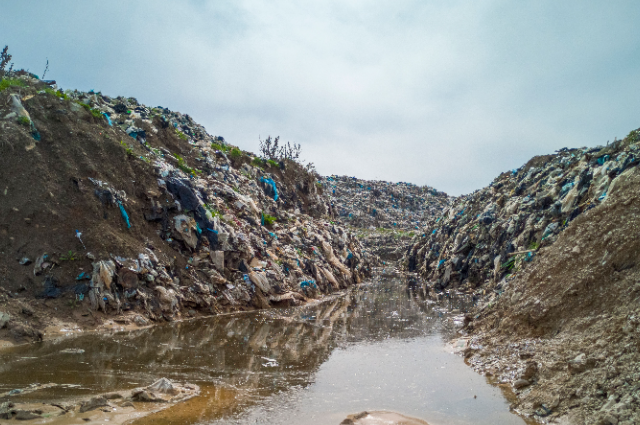
In 1967, Douglas Gowan, a consultant for the National Farming Union, was called to a farm in South Wales to investigate a series of incidents happening to their livestock. They reported aborted foetuses, malformed foetuses, dead crayfish and other such odd happenings. Gowan got deeply involved when he came across a calf that had only three legs, no genitalia and no tail. In his words, “It's there in my arms. And it was a life-changing moment.”
He decided to get to the bottom of it. His investigation of the nearby areas led him to the landfill site named Brofiscin Quarry, which had become the dumping site for polychlorinated biphenyls (PCBs), a forever chemical. “Forever chemicals” is the common nickname for a massive group of thousands of synthetic, man-made compounds that persist in the environment and do not break down naturally in the environment or the human body, allowing them to accumulate over decades, essentially existing “forever”. PCBs were produced widely in the 1920s and used as a fire retardant in paper and paints. A US chemical company called Monsanto, whose European factory was in Newport, South Wales, was the key perpetrator in dumping the PCBs in Brofiscin. This company doesn't exist today.
Gowan dedicated his life to investigating the effects of these chemicals on the people and animals that lived in that area. He ran tests and found that the leaching of the chemicals into the land and water was what was causing all the deformities and sickness in the livestock. He also claimed that he was affected by all the exposure to the toxicity, which led to issues in his pancreas and immune system. He worked on this story for several years, for he believed it to be important to highlight the case and that accountability and responsibility should be taken for it.
It was in the final months of Gowan’s life that Michael Sheen, the acclaimed Welsh actor best known for his roles in Good Omens (2019), The Queen (2006), The Deal (2003), and other productions, first came across his work. He stumbled across an entry on a Wikipedia site titled “Environmental controversy: Brofiscin quarry has been named as the most toxic place in Britain” and was immediately drawn to it. Upon contacting Gowan and expressing interest in meeting him, he told Sheen, “Yes, please come and see me, but come quickly, because I think I’ll be dead soon.”
Sheen conducted an intensive interview of Gowan, going over his life and findings. The things that came up felt extraordinary, even impossible, and it took further research for everyone to realise that they were true. He also connected with it on a deeper level when he realised that the ones at risk were often the poor and working class, living in places just like the one he belonged to. Six months after the interview, in 2018, Gowan passed away at the age of 74. He alleged that efforts were made to silence him, and he had even spent a period of time in witness protection.
In 2017, Michael Sheen delivered the 2017 Annual Raymond Williams Memorial Lecture, where he touched upon his learnings from Gowan. A few years later, in 2023, Lucy Taylor and Dan Ashby, the hosts of Buried, a BBC investigative documentary and podcast series, came across a recording of this Lecture and were intrigued. They met up with Sheen and started investigating Gowan’s claims. The second season of Buried and a two-part television documentary series hosted by Sheen were dedicated to their investigation.
They conducted multiple tests on different affected areas, guided by Dr Dave Megson from Manchester Metropolitan University, with the Royal Society of Chemistry, which claimed to be one of the world's experts on the topic, as well as the Open University, which supported them for the TV documentary. Their findings were beyond belief. Usually, quoting numbers is the chosen way to go for scientific inquiries like this. However, they are not simply understood by the local public. To better understand the sheer impact, Sheen, Lucy and Dan used instances that hit close to home.
One such instance is of people living in the nearby areas developing cancers and other such illnesses. On the podcast, Michael from Wrexham had developed such a rare cancer that the doctor told him it was like him winning the lottery, but in a negative. His best friend also developed the same type of cancer, which the doctor compared to winning the lottery every day for six whole months!
There were people whose relatives died of cancer, and they found PCBs in their bloodstream with levels that were roof-high. They found puddles that were so toxic that if a dog were to just walk through it, it would die of the poisoning. Podcast host Lucy also tested her blood and found the PCB levels to be concerning. It would do good to remember that this was happening in and around the year 2023, while PCBs had been banned in the UK since 1981 and their use in new production became illegal by 1987.
This issue goes beyond just this one dumping site in Wales. These forever chemicals leak into soil and water, and enter the food chain. Humans, at the top of the food chain, are directly affected through biomagnification, and they pass it on to their children, from the placenta to the foetus, as well as through breast milk. Long-term exposure is linked to cancers, birth defects, and damage to the immune, nervous, and reproductive systems.
In India, though we have historically never produced PCBs, we still feel their lingering effects. According to a study conducted by the SRM University (Tamil Nadu) in collaboration with international institutes, the average concentration of PCBs in Indian soil was almost twice more than the global average - 12 ng/g (nanogram per gram) dry weight as against 6ng/g. Chennai was found to have the highest soil contamination levels in terms of PCB concentrations, with the maximum concentration recorded at an informal e-waste shredding site. Delhi and Mumbai were recorded to have PCB contamination in the air.
There have been changes for the better. The biggest step was in the 2004 Stockholm Convention on Persistent Organic Pollutants that lists PCBs and calls for the complete identification and removal of active use of equipments that use PCBs and the ratified countries have until 2028 to achieve Environmentally Sound Management (ESM), meaning they must safely destroy or permanently dispose of all liquid PCBs and contaminated equipment. India ratified the convention in 2006 and implemented an official ban on the manufacture, import, and export of PCBs.
However, there is still a long way to go. According to the National Institutes of Health (NIH), more than 10 million tonnes of PCB-contaminated materials and equipment still remain globally. The United Nations Environment Programme (UNEP) reports that only about 17% to 30% of countries are actually on track to meet targets. According to a paper in the International Journal of Environmental Research 2025, while concentrations in India may remain below acute toxicity levels, prolonged exposure can often exceed safe limits, particularly among vulnerable groups such as children and informal-sector workers.
PCBs are not the only Forever Chemicals. Another looming threat also came to light through its effect on livestock. In 1998, West Virginia cattle farmer Earl Tennant sued DuPont, an American science and engineering corporation, alleging that contaminated water from a nearby landfill had caused the deaths of hundreds of his cattle. His attorney went through decades of the company’s documents and was able to point the cause to PFAS (per- and polyfluoroalkyl substances) that bind to proteins in human blood and accumulate.
The stories of Douglas Gowan and Earl Tennant serve as reminders that industrial pollution doesn't magically vanish when the dumping stops or a lawsuit is filed. It continues to have a very real and dangerous impact on the nature, animals and people around it. It stays invisible, silently accumulating in the bodies, causing irreparable harm to generations that come, even after it is banned and not in active production. This screams of both geographic and generational unfairness.
It leads one to wonder what a ban actually means when the contamination remains for years after. The people who inherit this damage had nothing to do with its production, yet they must bear the consequences of it. And though efforts to hold polluters accountable continue, these forever chemicals may outlast the very people responsible for the damage they leave behind.
References:
- House of Commons Welsh Affairs Committee. (2026, September 10). Oral evidence: Industrial legacy and contaminated land (HC 631). UK Parliament. https://committees.parliament.uk/oralevidence/18056/html
- Wray, D. D. (2024, June 24). ‘Please come and see me because I’ll be dead soon’: How Michael Sheen got sucked into a forever chemicals exposé. The Guardian. https://www.theguardian.com
- BBC News. (n.d.). [Article on Douglas Gowan and the Brofiscin Quarry case]. BBC News. https://www.bbc.com/news/articles/c066ydkm8pko
- United Nations Environment Programme (UNEP). (n.d.). PCBs – a forgotten legacy? https://www.unep.org
- Stockholm Convention. (n.d.). PCBs: Overview. Secretariat of the Basel, Rotterdam and Stockholm Conventions. https://chm.pops.int
- United Nations Environment Programme (UNEP). (n.d.). Toward elimination of PCBs. https://www.unep.org
- Kurian, R. R., Subramani, S., & Kumar, A. R. (2025). Polychlorinated biphenyls in India: Fading legacy or persistent threat? A review of environmental contamination, sources, exposure risks, and regulatory commitments. International Journal of Environmental Research, 19(6). https://doi.org/10.1007/s41742-025-00929-x
- Central Power Research Institute (CPRI). (n.d.). Reduction & elimination of polychlorinated biphenyls (PCBs): Prioritising the power sector in India. https://cpri.res.in/sites/default/files/PCB_English_FAQ.pdf
- Down To Earth. (2017, February 25). Chennai’s soil, Delhi’s air most contaminated due to high PCB concentration: Study. https://www.downtoearth.org.in
- Chakraborty, P., Selvaraj, S., Nakamura, M., Prithiviraj, B., Ko, S., & Loganathan, B. G. (2016). E-waste and associated environmental contamination in the Asia/Pacific region (Part 1): An overview. In Persistent Organic Chemicals in the Environment: Status and Trends in the Pacific Basin Countries (ACS Symposium Series, Vol. 1243, pp. 127–138). American Chemical Society. https://doi.org/10.1021/bk-2016-1243.ch00