
Image by Dimafe from Pixabay
Section 1: The Story That Sparked a Debate
A Class 10 student in Karnataka returned home carrying a result many fear most: failure in all board exam subjects. It was not just a report card; it was a moment heavy with expectation, pressure, and the silent weight of societal judgment. In a country where board exams are often seen as a turning point, such a result can feel like a door closing before life has even begun.
For most children, this moment would be the calm before a storm. The mind races ahead of reality, imagining anger, disappointment, comparisons, and perhaps even words that sting long after they are spoken. Homes, in such situations, can quickly become spaces of tension, where silence speaks louder than words and failure is treated not as an event but as a verdict. After all, as we already know, “Results speak louder than effort,” or at least, that is what many children are made to believe.
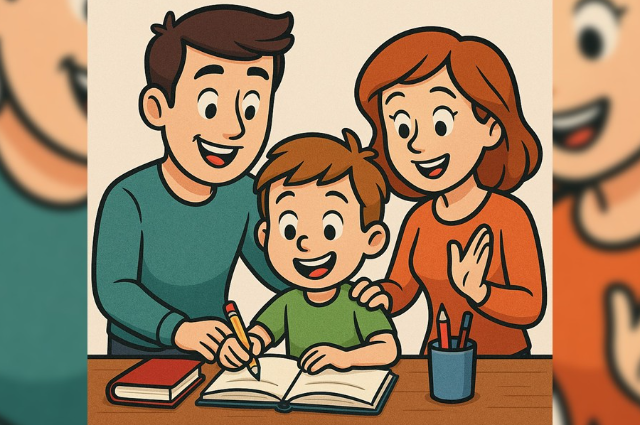
But this home was different. There were smiles instead of sighs, gentle words instead of judgment, and a quiet celebration that seemed almost out of place in such a situation. No lectures followed. No blame was assigned. No comparisons were drawn. In that moment, the focus shifted from marks to the child, from failure to feeling.
In a world obsessed with report cards, this one home chose to rewrite the definition of success. Perhaps that is why it matters, because surveys in India reveal that a majority of students experience intense stress during board exams, with anxiety and fear of failure emerging as major concerns.
Instead of scolding, the parents chose an unexpected response. They brought out a cake. A quiet celebration. A moment that, at first glance, seems almost contradictory: celebrating failure? It sounds like an oxymoron, doesn’t it? Through this simple yet powerful gesture, the parents conveyed something far deeper than words ever could:
“You are not defined by this one moment. This is not the end. This is just a step.”
It was not a celebration of failure, but a reassurance of worth. A reminder that one bad result does not define life, and that falling is not the same as staying down.
But this raises an important question:
When a child stumbles so significantly, should parents cushion the fall… or confront it head-on?
Yet, how a child learns to “get going” often depends on what awaits them at home. Sometimes, a single act, as simple as cutting a cake, can force an entire society to ask:
Have we been looking at failure the wrong way all along? Sometimes, what a child needs most after falling is not a lesson but a hand that refuses to let go.
Section 2: A Divided Internet - Encouragement or Carelessness?
As the story spread across social media platforms, what began as a quiet family moment quickly turned into a nationwide debate. Within hours, timelines were flooded with opinions, each reflecting a distinct belief about parenting, discipline, and the meaning of failure. It was as if one simple act had struck a nerve, exposing the deep divide in how society views success and setbacks.
On one side were those who applauded the parents wholeheartedly. For them, this was a kind gesture as well as a powerful statement against the toxic pressure surrounding academic performance. They saw it as a refreshing example of unconditional love, the kind that does not fluctuate with marks or achievements. Many praised the emotional maturity behind the decision, arguing that in a world where children are often burdened with expectations, such support could be life-changing. To them, this was parenting done right, choosing empathy over ego, understanding over anger.
But not everyone agreed.
On the other side were voices of concern, scepticism, and even criticism. Some questioned whether such actions might blur the line between encouragement and indulgence. They asked, “Are we rewarding failure?” - a question that echoed across comment sections. Others worried that this approach might send the wrong message to children, making them believe that outcomes do not matter. “Will this make children careless?” they wondered, fearing that removing consequences could weaken discipline and accountability. And perhaps most importantly, many asked, “Where is the sense of responsibility?”
These concerns are not entirely unfounded. After all, discipline has long been considered the backbone of success, and many believe that a certain level of seriousness is necessary to prepare children for real-world challenges. Caught between these two perspectives is a deeper, more complex question:
Should failure be comforted or corrected?
Is it better to shield a child from the emotional impact of failure, or to confront it head-on in the hope of building resilience? Should parents prioritise emotional well-being, or should they emphasise accountability and consequences?
Perhaps the real dilemma is not choosing one over the other, but finding the delicate balance between the two. While too much harshness can break a child’s spirit, too much leniency can weaken their sense of responsibility.
And yet, in this case, that is exactly what makes the situation so intriguing - a cake that has sparked a question far bigger than itself.
Section 3: Understanding Failure, A Full Stop or a Comma?
We often treat failure as the end of the road, a full stop that signals something is over, something is lost, something cannot be repaired. A poor result, a missed opportunity, an unsuccessful attempt, all too quickly, these are stamped with a harsh label: failure. But is it truly the end, or merely a pause in the sentence of life? Is it a full stop or just a comma?
The truth is, failure is far less final than we make it out to be. It is not a dead end; it is a detour. Not a collapse, but a correction. At its core, failure simply means that something did not go as planned and that, in itself, is part of every meaningful journey.
Failure can be understood as:
- A temporary setback, not a permanent condition
- A gap between effort and outcome, not a lack of ability
- A moment in time, not a lifelong identity
- And perhaps more importantly, failure is not:
- A definition of intelligence
- A judgment of personal worth
- A fixed label that determines one’s future
In essence, failure is feedback. And feedback, when heard with courage, becomes the first step towards change. It shows us where we fell short, what we misunderstood, and how we can enhance. It acts like a mirror, sometimes uncomfortable, but always honest. As the saying goes, “Failure is not falling, but refusing to get up.” The fall is natural; staying down is the real defeat.
Yet, the way failure is presented to children often transforms it into something far heavier than it should be. When children are repeatedly made to feel that failure defines them, when words like “You failed” quietly become “You are a failure”, the impact runs deep. It shifts from being an external event to an internal belief.
And that is where the real danger lies.
When failure becomes identity, children may:
Lose confidence in their abilities.
Begin to fear trying new things.
Avoid challenges to escape possible embarrassment.
Develop a mindset where effort feels pointless.
In such situations, failure no longer teaches; it discourages. Instead of becoming a stepping stone, it turns into a stumbling block. A child who associates failure with shame may choose safety over growth, comfort over courage.
But what if we changed the narrative?
What if failure were seen not as a verdict, but as a lesson? Not as a label, but as a guide?
In reality, every success story carries the shadow of multiple failures. Every achievement is built on attempts that did not work. Understanding failure in this light transforms it from something to fear into something to learn from. It becomes a comma, a pause that allows reflection, adjustment, and ultimately, advancement.
And perhaps that is the shift we need most, not in how often children fail, but in how we help them understand what failure truly means.
Section 4: Marks vs Meaning - What Are We Really Measuring?
Board examinations have, for decades, occupied a near-sacred space in the Indian education system. They are often treated as the ultimate benchmark of a student’s ability, a moment that seemingly determines future opportunities, career paths, and sometimes even self-worth. Report cards are not just documents; they become labels, comparisons, and, in many cases, silent judgments. But beneath this long-standing belief lies a critical question that is often overlooked:
What do marks actually measure, and what do they miss? A report by the World Economic Forum highlights that skills like critical thinking, problem-solving, and adaptability, not rote memory, are among the most essential abilities for future careers.
What Marks Measure: The Visible Side of Performance
At their core, exams are designed to evaluate certain academic skills within a limited timeframe. They primarily assess:
- Memory and recall - how accurately a student can reproduce learned information.
- Speed and time management - how efficiently they can complete tasks under pressure.
- Exam temperament - how well they perform in a structured, high-stakes environment.
These are undoubtedly important abilities. The capacity to retain information, think under pressure, and manage time are useful skills in both academic and professional settings. In this sense, marks do provide a snapshot, but only a partial one.
However, the problem arises when this snapshot is mistaken for the entire picture.
What Marks Fail to Capture: The Invisible Strengths
While exams measure what is easy to quantify, they often overlook qualities that are far more complex and far more crucial for real-life success. Marks do not fully capture:
- Creativity - the ability to think beyond textbooks and generate original ideas.
- Critical thinking - questioning, analysing, and interpreting information rather than memorising it.
- Emotional intelligence - managing stress, handling failure, and understanding others.
- Resilience and perseverance - the strength to keep going despite setbacks.
- Practical and real-world skills - adaptability, communication, and problem-solving.
These are not just “extra” qualities; they are essential life skills. Yet, they rarely find space on a mark sheet. As a result, a student who may struggle with exams could still possess immense potential that remains unrecognised.
This raises an important thought:
Are we overlooking diamonds simply because they don’t shine in the way we expect?
The Pressure of Numbers: When Marks Become Identity
Over time, marks have evolved from being indicators of performance to becoming measures of identity. Students are often categorised as topper, average and weak.
Such labels, repeated often enough, begin to shape how children see themselves. A high-scoring student may feel constant pressure to maintain perfection, while a low-scoring student may internalise a sense of inadequacy.
This creates a dangerous cycle:
- Fear of failure increases.
- Learning becomes secondary to scoring.
- Curiosity is replaced by caution.
We have taught children to fear failure more than we have taught them to learn from it. In many ways, we continue to judge students by a single number.
Exams vs Life: Two Very Different Tests
Exams are predictable. They come with:
- A syllabus
- A pattern
- A fixed time limit
Life, on the other hand, is anything but predictable. It presents:
- Uncertainty
- Unexpected challenges
- Situations with no clear answers
A student may excel in writing answers on paper, yet struggle when faced with real-world problems that require adaptability, communication, and emotional strength.
Which brings us to a crucial question: Are we preparing children to answer questions or to face challenges?
Life doesn’t hand out question papers; it throws situations. It doesn’t ask for memorised answers; it demands understanding, flexibility, and courage.
Towards a Thoughtful Perspective
This does not mean that marks are irrelevant. They do matter; they provide structure, discipline, and a way to evaluate academic progress. But they should not be treated as the only measure of a child’s ability or potential.
What is needed is a middle ground:
- Recognising academic performance without reducing a child to it.
- Encouraging learning beyond textbooks.
- Valuing effort, curiosity, and growth as much as results.
At the end of the day, education is not just about scoring marks; it is about shaping individuals. Perhaps the real question is not whether marks matter, but how much they should matter.
Are we raising children who know the right answer or those who can find them when life doesn’t provide a question paper? As the saying goes, “Education is not the filling of a bucket, but the lighting of a fire.” And that fire cannot be measured by marks alone.
Section 5: What Experts Say - The Psychology of Failure
Educational psychologists have long studied how children respond to failure, and their findings reveal something both powerful and reassuring: failure itself does not harm a child; the way it is handled does. The emotional environment surrounding a setback often determines whether a child grows stronger or withdraws in fear. In other words, failure is not just an academic event; it is a psychological experience that shapes mindset, confidence, and future behaviour.
Growth Mindset vs Fixed Mindset: The Way Children See Failure
One of the most influential concepts in modern psychology is the idea of the growth mindset. Research shows that children tend to develop one of two approaches:
- A fixed mindset, where they believe abilities are permanent.
- A growth mindset, where they believe abilities can be developed.
Children with a fixed mindset often interpret failure as proof that they are “not good enough.” As a result, they may:
- Avoid difficult tasks
- Give up easily
- Fear of being judged
On the other hand, children who are supported through failure begin to see it positively. They understand that effort, strategy, and persistence can lead to progress. This builds resilience, the ability to bounce back stronger after setbacks.
A growth mindset encourages a powerful internal belief:
“I can improve with effort.”
The difference between a child who perseveres and one who retreats often lies not in ability, but in the story they are told about their failure.
This simple shift in thinking can transform failure from a threat into an opportunity.
Emotional Safety Encourages Learning: The Role of Environment
Experts consistently emphasise that learning cannot thrive in an atmosphere of fear. When children associate failure with punishment, shame, or disappointment, their brains enter a defensive state. In such moments:
- Anxiety increases
- Confidence drops
- Learning ability decreases
Fear, quite literally, blocks learning. Studies suggest that high academic pressure is a significant contributor to student distress in India. Over 13,000 students die by suicide each year, with exam failure and pressure being among the leading causes, according to National Crime Records Bureau data.
In contrast, when children feel emotionally safe when they know they will not be humiliated or rejected for failing, their response changes. They become more open to:
- Reflecting on mistakes
- Asking questions
- Trying again without fear
A supportive environment tells the child, “It’s okay to fail - what matters is what you do next.”
Such children are more likely to:
- Reflect on their mistakes
- Retry with a smarter approach
- Gradually progress over time
Failure as a Learning Tool: Turning Setbacks into Strength
Experts also highlight that failure, when approached constructively, becomes one of the most effective teachers. It provides something success often cannot, clarity.
Failure acts as:
- A mirror, revealing weaknesses and gaps in understanding.
- A guide, pointing toward areas that need development.
- A motivator, pushing individuals to try again with greater awareness.
Unlike success, which can sometimes mask flaws, failure forces reflection. It encourages questions like:
What could I have improved?
What can I do differently next time?
This process builds not just knowledge, but wisdom. And often, it is failure that provides the most valuable experiences.
The Long-Term Impact: Building Resilience and Confidence
When children are allowed to experience failure in a supportive environment, they develop qualities that extend far beyond academics:
- Resilience - the ability to recover from setbacks.
- Self-belief - confidence in their ability to advance.
- Perseverance - the determination to keep going.
Instead of fearing failure, they begin to see it as part of growth. They become more willing to take risks, explore new opportunities, and step outside their comfort zones.
On the other hand, children who are constantly criticised for failing may:
- Develop a fear of trying
- Avoid challenges
- Tie their self-worth to the outcome.
“Failure is the stepping stone to success.” But it only becomes a stepping stone when children are taught how to step on it, not be crushed by it.
Experts do not suggest removing discipline or expectations. Instead, they advocate for a balanced approach, one that combines accountability with empathy, and correction with encouragement.
Ultimately, the goal is not just to help children succeed in exams, but to help them develop the strength to face life itself.
The real lesson is not in avoiding failure, but in learning how to rise after it.
Section 6: The Risk - When Support Turns into Indifference
While the parents’ gesture is undeniably heartwarming, it also opens the door to an equally important concern, one that cannot be ignored in the larger conversation about parenting and education.
Can too much comfort lead to complacency?
At first glance, responding to failure with kindness seems like the ideal approach. It protects the child’s emotions, preserves their confidence, and prevents fear from taking root. But when support is offered without direction, self-awareness, or expectations, it risks losing its purpose. What begins as encouragement can slowly turn into indifference.
If failure is met only with celebration, without any effort to understand why it happened, the message received by the child may become distorted. Instead of learning “It’s okay to fail, but I must move forward,” the takeaway might quietly shift to:
“Effort doesn’t really matter.”
“Results don’t have consequences.”
“I will be accepted no matter what I do or don’t do.”
And while unconditional love is essential, unconditional approval of inaction is not.
As we all know, “Too much of anything is good for nothing.”
Even something as positive as support can lose its value if it is not balanced with responsibility.
The Thin Line Between Encouragement and Enabling
There is a subtle but critical difference between:
Encouraging a child after failure
Excusing the reasons behind the failure
Encouragement says:
“You didn’t succeed this time, but you can do better.”
Enabling says:
“It doesn’t matter whether you try or not.”
When parents avoid difficult conversations in the name of kindness, they may unintentionally remove the child’s sense of accountability. Over time, this can lead to:
- Reduced motivation
- Lack of discipline
- A habit of avoiding effort
As the idiom goes, “Easy come, easy go.” When children are not taught the value of effort, they may not learn to value achievement either.
The Importance of Consequences in Learning
Consequences are often misunderstood as punishment, but in reality, they are teachers. They help children understand the connection between:
- Actions and outcomes
- Effort and results
Without consequences, this connection weakens.
For instance, if a child fails due to a lack of preparation but faces no expectation to improve, they may not feel the need to change their approach. In such cases, failure loses its role as feedback and becomes just another event.
Should children be shielded from discomfort, or should they learn to grow through it?
As a well-known phrase reminds us:
“No pain, no gain.”
Growth often requires a degree of discomfort, not harshness, but honest evaluation.
Support Needs Direction: The Role of Structured Guidance
Support is most effective when it is paired with structure. It should not stop at comforting the child; it should guide them forward.
This means:
- Acknowledging the failure without exaggerating it.
- Discussing the reasons behind it
- Helping the child identify areas for growth.
- Setting realistic goals for the future.
In this way, support becomes constructive, not passive.
Instead of saying:
“It’s okay, don’t worry about it,”
The message becomes:
“It’s okay - let’s figure out what we can strengthen and work on it together.”
This shift makes all the difference.
The Long-Term Impact: Habits and Mindsets
Children learn not just from what parents say, but from what they consistently do. If failure is repeatedly met with comfort but no expectation of effort, it may shape long-term habits such as:
- Procrastination
- Avoidance of responsibility
- Lack of perseverance
On the other hand, when support is balanced with accountability, children learn:
- That failure is acceptable.
- But stagnation is not.
What parents model in moments of failure becomes a blueprint for how children handle challenges in the future.
Striking the Right Note: Firmness with Empathy
The real challenge for parents is not choosing between strictness and softness, but finding the right harmony between the two.
Too much harshness can:
- Damage confidence
- Create fear
- Discourage effort
Too much leniency can:
- Reduce motivation
- Blur responsibility
- Encourage carelessness
The ideal approach lies in the middle - where:
- Empathy meets expectation
- Support meets structure
- Love meets accountability
Support, when given thoughtfully, can lift a child. But when given without direction, it can leave them standing still. Support without structure can become neglect in disguise. Because when nothing is expected, nothing is pursued.
The goal is not to make failure feel comfortable enough to ignore, but safe enough to confront.
In the end, parenting is not about protecting children from every fall; it is about teaching them how to rise, learn, and move forward with strength.
Section 7: The Ideal Approach - Balancing Love and Discipline
So what should parents actually do when a child fails? Between anger and indifference lies a narrow but powerful path, one that combines empathy with accountability. Parenting in such moments is not about choosing between being strict or supportive; it is about being both, in the right measure. How parents respond in this moment can shape how a child views failure for years to come.
Respond Calmly: The Power of the First Reaction
The first reaction matters more than we realise. A child returning home after failure is already carrying fear, shame and self- doubt. An immediate outburst of anger can amplify these emotions, shutting down communication completely. When parents react calmly, they send a powerful signal:
“You are safe here, no matter what.”
This does not mean ignoring the seriousness of the situation; it means choosing the right moment to address it. A calm response allows space for conversation, not confrontation. A soft answer turns away wrath.
Understand the Cause: Digging Deeper Than the Result
Not all failures are the same. Before jumping to conclusions, it is important to understand why the failure occurred.
Was it:
- Lack of effort? - procrastination, distraction, poor time management
- Lack of understanding? - difficulty grasping concepts, ineffective teaching methods
- External factors? - stress, health issues, emotional struggles
Each cause requires a different response. Treating all failures as laziness can lead to unfair judgment, while ignoring a genuine lack of effort can encourage carelessness.
The key question is not just “What happened?” but “Why did it happen?”
Encourage Reflection: Turning Failure into Awareness
Once emotions settle and causes are clearer, the next step is reflection. This is where real learning begins.
Parents can gently guide children by asking:
- What do you think went wrong?
- How could you approach this with a refined strategy?
- What will you change next time?
This approach shifts the responsibility onto the child, not as blame, but as ownership. It teaches them to analyse their own actions rather than depend on external judgment.
Reflection builds:
- Self-awareness
- Problem-solving skills
- A sense of responsibility
Create a Plan Forward: From Setback to Strategy
Failure should not end with reflection; it should lead to action. This is where parents and children can work together to create a clear, realistic plan. The goal is to transform failure into:
- Action - identifying specific steps to move forward.
- Strategy - adopting effective study methods or time management techniques.
- Growth - focusing on gradual, consistent progress.
For example:
- Setting a daily study schedule
- Breaking subjects into manageable portions
- Seeking help through teachers, tutors, or peers
A plan gives direction. It replaces helplessness with purpose. “Where there is a plan, there is progress.” Without this step, failure risks becoming a repeated pattern instead of a learning experience.
Set Clear Expectations: Love with Accountability
Perhaps the most crucial part of this approach is setting clear and honest expectations. Support should never be confused with the absence of discipline. Children need to understand that:
- Effort is non-negotiable
- Responsibility matters
- Improvement is expected
The message parents must convey is simple yet powerful:
“We are with you, but we expect effort.”
This approach ensures that:
- The child feels supported, not pressured
- Yet remains accountable for their actions
Actions have consequences. And learning this early prepares children for life beyond academics.
The Balance That Builds Character
When love and discipline work together, they create an environment where children can:
- Fail without fear
- Reflect without shame
- Improve without pressure
Too much discipline alone can break confidence. Too much leniency alone can weaken responsibility. But together, they create strength.
The goal of parenting is not to prevent failure, but to guide children through it. Not to shield them from reality, but to prepare them for it. Success is not built on never falling; it is built on learning how to rise, again and again, with courage and clarity.
Section 8: A Bigger Question - What Kind of Adults Are We Raising?
This incident is not just about one child, one result, or one parenting choice. It opens up a far deeper and more uncomfortable question, one that extends beyond classrooms and report cards into the very fabric of society.
Who are our children growing up to be?
Today’s reaction to failure becomes tomorrow’s response to life.
Fear-Based Upbringing: When Failure Becomes a Threat
When children grow up in environments where failure is met with anger, comparison and shame, they begin to associate mistakes with fear rather than learning. Over time, this creates a mindset where avoiding failure becomes more important than pursuing growth.
Such children may:
- Avoid risks, choosing safe paths over challenging opportunities.
- Lose confidence, doubting their abilities even before trying.
- Give up easily, fearing the consequences of not succeeding.
They may become individuals who play it safe, who hesitate before stepping out of their comfort zones, and who measure their worth by outcomes alone. A single negative experience can make them retreat from future challenges.
Growth-Oriented Upbringing: When Failure Becomes a Teacher
On the other hand, children who are taught to understand failure as part of growth develop a completely different outlook. When failure is met with guidance, encouragement and constructive feedback, it transforms from a threat into a tool.
Such children are more likely to:
- Build resilience, bouncing back from setbacks with greater strength.
- Adapt to challenges, understanding that change and difficulty are part of life.
- Grow stronger, both emotionally and mentally.
They learn that success is not about never failing, but about learning, improving, and persisting. They begin to think: “If I fall, I can rise again.”
Beyond Academics: Preparing for Real Life
The real world does not operate like an exam hall. There are no fixed syllabi, no guaranteed outcomes and no single correct answers. Life is unpredictable. It tests patience, adaptability and emotional strength. A child who has never been allowed to fail or has been punished harshly for it may struggle to cope with real-world uncertainties. On the other hand, a child who understands failure learns to navigate life with confidence and courage.
As the idiom beautifully captures -- “A smooth sea never made a skilled sailor.”
Challenges, setbacks, and failures are what shape capability.
The Long-Term Impact: Mindsets That Last a Lifetime
The lessons children learn about failure do not stay confined to school years; they follow them into adulthood.
A fear-driven mindset can lead to:
- Career choices based on safety, not passion.
- Difficulty handling rejection or criticism.
- Low tolerance for uncertainty.
- Whereas a growth-driven mindset can lead to:
- Willingness to take calculated risks.
- Confidence in facing setbacks.
- Continuous self-improvement.
In essence, the way we respond to a child’s failure today determines whether they grow into adults who avoid life or engage with it fully.
This brings us back to the heart of the matter, a question that quietly shapes the way children grow, think, and eventually live their lives:
Are we raising children who chase perfection or pursue progress?
Parenting is not just about helping children succeed in the next exam. It is about preparing them for a lifetime of challenges, uncertainties, and opportunities.
And perhaps the greatest gift a parent can give is not the assurance of success, but the confidence to face failure. In the end, it is not the absence of failure that defines a person, but their response to it.
Section 9: So, Should Parents Celebrate Failure?
At the heart of this entire debate lies a question that seems simple, yet carries immense complexity:
Should parents applaud failure?
The answer, quite clearly, is not black or white. It does not lie at the extremes of harsh discipline or unconditional indulgence. Instead, it rests in a nuanced, thoughtful space, one where intention matters more than action, and meaning matters more than the moment itself. The real issue is not the celebration, but what exactly is being celebrated.
Celebrate the Child, Not the Failure
When parents respond with warmth in moments of failure, they are not necessarily applauding the result; they are affirming the child’s worth beyond it.
This distinction is crucial.
Celebrating the child means:
- Reinforcing that their value is not tied to marks.
- Letting them know they are loved regardless of outcomes.
- Protecting their self-esteem during a vulnerable moment.
But celebrating the failure itself without context or reflection risks sending the wrong message.
“You matter, even if this result didn’t go well”, is very different from
“This result doesn’t matter at all.”
In trying to protect a child from emotional harm, we must not discard the importance of effort and development.
Support Emotions, Not Mistakes
Failure often brings with it a wave of emotions like disappointment, shame and fear. These feelings need acknowledgement, not dismissal. Parents play a critical role here. By offering support, they help the child process these emotions healthily. They create a safe space where the child can express, reflect, and recover.
However, supporting emotions does not mean justifying mistakes. It means saying: “I understand how you feel.” This approach ensures that the child feels heard, but also learns responsibility. Avoiding the truth does not help; understanding it does.
Encourage Effort, Not Carelessness
One of the biggest risks in overly soft responses is that they may unintentionally downplay the importance of effort.
Children need to learn that:
- Hard work matters
- Consistency matters
- Responsibility matters
Encouragement should focus on:
- Trying again
- Improving gradually
- Building better habits
It should not create a mindset where:
- Outcomes are ignored
- Effort becomes optional
- Carelessness is excused
Failure is acceptable. Lack of effort is not. Without effort, growth cannot happen.
The Role of Understanding: Building, Not Breaking
There is no doubt that anger can sometimes correct behaviour in the short term. A strict reaction may push a child to study harder out of fear.
Over time, it can:
- Damage confidence
- Create anxiety
- Reduce genuine interest in learning
Understanding, on the other hand, works in a more constructive way.
It builds:
- Trust between parent and child
- Internal motivation
- Long-term discipline
When a child feels supported, they are more likely to:
- Take responsibility
- Put in effort willingly
- Strive to grow
Anger may correct behaviour, but understanding builds character. And character, not marks, determines how a person navigates life.
Finding the Right Balance
So, should parents celebrate failure? Perhaps the meaningful way to look at it is this:
- Celebrate resilience - the courage to face setbacks.
- Acknowledge emotions - the reality of disappointment.
- Encourage responsibility - the need to evolve.
In doing so, parents create a balanced message:
“You are valued, but your effort matters.”
The goal is not to make failure feel insignificant, nor to make it feel devastating. It is to make it meaningful.
When handled with the right balance of empathy and expectation, failure stops being something to fear and becomes something to learn from.
And perhaps that is the real lesson behind the cake:
Not that failure should be celebrated blindly, but that it should be understood deeply.
Section 10: Conclusion - A Cake, A Choice, A Lesson
That cake in a Karnataka home was more than a simple celebration. It was not about sugar, candles, or a fleeting moment of comfort; it was a conscious choice, a quiet act of defiance against a system that often equates marks with worth. In that small, intimate gesture lay a powerful message, one that many children long to hear but rarely do:
“You are more than your marks.”
“This is not your end.”
It was a reminder that a report card, no matter how disappointing, cannot define a person’s future, potential, or identity. It told the child that failure, while painful, is not something to be ashamed of; it is something to be understood. And yet, the real lesson of this story does not lie in the cake itself. Celebration alone is not enough.
What truly matters is what comes next.
What follows that moment of comfort determines whether the experience becomes a turning point or just a passing phase. Does the child reflect on what went wrong? Do they learn, adapt, and try again? Do they rise with greater clarity and determination? Or does the moment fade without growth? This is where the balance becomes essential.
Failure, when met only with anger, can break a child, leaving behind fear, self-doubt, and hesitation. But when met only with comfort and no direction, it can also mislead, creating complacency and a lack of responsibility.
The real strength lies in combining both: love that reassures and accountability that guides.
When children are supported emotionally yet encouraged to take responsibility, something remarkable happens. They do not crumble under failure, nor do they ignore it. Instead, they begin to understand it.
“Every setback is a setup for a comeback.” But that comeback is not automatic; it is built through introspection, effort, and perseverance. We are not shaping children to avoid failure; we are raising them to survive it, understand it, and grow beyond it.
In the end, parenting is not about eliminating failure from a child’s life. That is neither possible nor desirable. It is about shaping how the child responds to it.
Does failure become a fear or a foundation?
That single choice of how we respond in moments of setback can influence not just a child’s academic journey, but their entire outlook on life. Failure, when handled with the right balance of love and accountability, does not weaken a child.
It shapes one into someone who can fall, rise, and keep moving forward with courage. Because long after marks are forgotten, what remains is how a child learned to face the world after falling.
References :
This article draws on general reporting and research on student stress, education systems, and learning psychology from sources such as India Today, NDTV, The Times of India, Hindustan Times, NCRB reports, and World Economic Forum publications.