
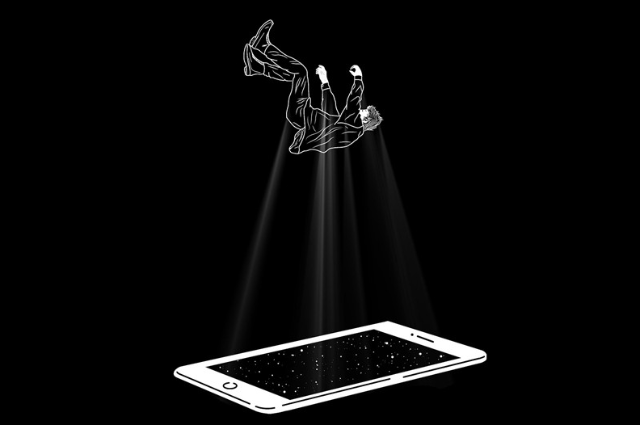
Image by Pheladi Shai from Pixabay
The Illusion of Togetherness
At 3:04 a.m., the room is silent, except for the faint glow of a phone screen. Aarav lies awake, his face lit by a stream of endless scrolling. One video fades into another, messages pile up, notifications blink insistently, each one demanding attention yet offering little in return. Just hours earlier, his phone had been alive with celebration. It was his birthday. Over 300 messages had poured in - friends, acquaintances, even people he barely spoke to, sending wishes, emojis, quick lines of affection. His name had appeared on dozens of stories, his pictures gathered hundreds of likes, and for a brief moment, it felt like he was surrounded, noticed, remembered. It felt like he mattered.
But now, in the stillness of the night, the noise has dissolved into an unsettling quiet. Aarav scrolls back through those same messages, pausing at a few, rereading them as if searching for something deeper hidden between the words. There is none. The conversations are short, surface-level, fleeting. He hesitates, opening one chat, then another, wondering if he should reach out, if he should call someone, if anyone would really understand why he feels this strange heaviness in his chest. But each time, he closes the window. There is not a single person he feels close enough to call at this hour. Not one conversation that feels real enough to continue beyond emojis and polite exchanges. His phone is full, yet his world feels empty.
As he places the phone beside him and stares into the darkness, a quiet, uncomfortable realization settles in, a feeling difficult to articulate, yet impossible to ignore. How can someone be surrounded by so many people, constantly connected, constantly in touch, and still feel so deeply, undeniably alone? This is the paradox of our time. We live in an age where distance has been erased, where communication is instant, where no one is ever truly out of reach. And yet, beneath this illusion of togetherness, a silent crisis unfolds. Nearly one in six people across the world experience loneliness today, not because they lack interaction, but because they lack connection that is genuine, meaningful, and real. This is not the absence of people; it is the absence of presence.
The Paradox of the Digital Age
Technology was meant to bridge distances, to make relationships easier to maintain, and to bring people closer than ever before. In many ways, it has succeeded. A message can cross continents in seconds, a video call can shrink oceans into screens, and entire communities can form without ever meeting face-to-face. Yet, somewhere within this remarkable progress, the nature of connection itself has quietly changed. What was once slow, meaningful, and deeply personal has become instant, frequent, and often superficial.
Conversations that once unfolded over time filled with pauses, emotions, and understanding are now reduced to quick replies and disappearing messages. Friendships that were once built on shared experiences and presence are increasingly measured in follower counts, likes, and online visibility. Even emotions have been simplified, compressed into symbols - hearts, thumbs-ups, and fleeting reactions that replace words we no longer take the time to say.
In this digital landscape, connection has become something we display rather than something we feel. We have not become more connected, we have become more accessible. And accessibility, no matter how constant, can never replace intimacy.
The more we engage, the more we seem connected. Yet studies reveal a troubling contradiction: those who spend the most time on social media often report feeling the most isolated. The constant exposure to curated lives highlight reels of happiness, success, and perfection creates an invisible pressure to compare, to measure, and to question one’s own reality. Gradually, connection turns into competition, and presence turns into performance.
What makes this paradox even more complex is that the very tools designed to reduce loneliness can sometimes deepen it. When interactions become frequent but shallow, they begin to lack the emotional depth that truly sustains relationships. A hundred small exchanges cannot replace one meaningful conversation. A constant stream of updates cannot substitute the comfort of being truly understood.
And so, we find ourselves in a strange contradiction: always communicating, yet rarely connecting; constantly visible, yet increasingly unseen. The digital age has not removed loneliness, it has simply given it a quieter, more socially acceptable form.
Key Contradictions of the Digital Age
- More Communication, Less Conversation - We talk more than ever before, yet say less that truly matters.
- More Followers, Fewer Real Friends - Social circles have expanded digitally, but emotional circles have shrunk.
- Constant Visibility, Minimal Understanding - People see our lives daily, yet rarely understand our inner world.
- Instant Interaction, Delayed Emotional Fulfillment - Replies are immediate, but meaningful connection takes time we no longer invest.
- Curated Lives, Hidden Realities - We share highlights, while struggles remain unseen and unspoken.
- Endless Connection, Growing Comparison - Instead of feeling connected, we often feel inadequate when comparing lives.
These contradictions define the modern experience where connection is everywhere, yet fulfillment remains elusive.
Performing Instead of Belonging
As the digital world expands, so does an unspoken shift in how we present ourselves. We are no longer just living our lives, we are curating them. Every post, every story, every caption becomes a careful selection of what is acceptable, admirable, or worthy of attention. Moments are no longer simply experienced; they are framed, filtered, and shared. Gradually, without realizing it, we begin to move away from authenticity and closer to performance.
This performance is subtle, almost invisible. It does not always feel forced. In fact, it often feels necessary.
There is an unspoken expectation to appear happy, confident, and successful. Struggles are softened or hidden, vulnerability is edited out, and imperfections are quietly erased. Over time, this creates a gap – a gap between who we truly are and who we present ourselves to be. And the wider this gap grows, the harder it becomes to feel genuinely connected to others.
Because real belonging does not come from being admired, it comes from being understood.
Yet, when everyone is performing, no one feels safe enough to be real. We begin to assume that others are doing better, feeling better, living better. And so, instead of opening up, we retreat further into carefully constructed versions of ourselves. The result is a world where people are constantly expressing but rarely revealing.
Even more concerning is how this affects our sense of self. When validation comes in the form of likes, comments, and shares, identity slowly becomes external. We begin to measure our worth based on reactions rather than reality. A post that performs well brings temporary satisfaction; one that doesn’t can quietly affect confidence. Without realizing it, we hand over our sense of belonging to an audience that only sees fragments of who we are.
And in this constant performance, something deeply human begins to fade, the comfort of being accepted without effort.
The Hidden Cost of Constant Performance
- Emotional Exhaustion - Maintaining a curated version of oneself requires constant effort, leaving little room for genuine emotional expression.
- Loss of Authentic Identity - Over time, the line between the real self and the presented self begins to blur.
- Dependence on External Validation - Self-worth becomes tied to likes, comments, and approval from others.
- Fear of Vulnerability - People hesitate to share real struggles, fearing judgment or rejection.
- Superficial Relationships - Interactions remain surface-level, preventing deeper emotional connections.
- Silent Comparison and Insecurity - Viewing others’ curated lives creates feelings of inadequacy and self-doubt.
In a world where everyone is trying to be seen, very few feel truly known.
And perhaps that is the quiet tragedy of our time, not that we are alone, but that we are surrounded by performances, searching for a place where we can simply belong.
The Fear of Real Connection
If performance is what we show the world, then fear is what quietly shapes it.
Beneath the curated posts and effortless conversations lies a deeper hesitation, the fear of being truly seen. Not the polished version, not the filtered image, but the unedited self with doubts, insecurities, and unfinished thoughts. Real connection asks for this honesty. It asks us to step out from behind the safety of screens and present ourselves as we are. And for many, that feels far more frightening than loneliness itself.
Because vulnerability comes with risk.
To open up is to risk being misunderstood.
To speak honestly is to risk being judged.
To show emotion is to risk being dismissed.
In a world that constantly rewards perfection and confidence, these risks feel too high. So instead of expressing what we truly feel, we soften it. We delay it. We hide it behind humor, distractions, or silence. Conversations remain comfortable, but they rarely become meaningful. Relationships stay intact, but they rarely deepen.
Over time, this creates a quiet distance, not just between people, but within ourselves. We begin to suppress parts of who we are, believing they are too much, too complicated, or too inconvenient to share. And when those parts remain unseen, a subtle loneliness begins to grow, not because no one is around, but because no one truly knows us.
What makes this even more complex is that the fear is often mutual. Everyone is waiting for someone else to go first. Everyone is hoping for a space where they can be real but no one wants to risk creating it. And so, conversations stay light, emotions stay guarded, and connections remain incomplete.
One night, a message is typed:
“Are you free to talk?”
It lingers on the screen for a few seconds.
Then… it is deleted. Not because there is nothing to say, but because there is no certainty that anyone will truly listen.
Yet, the irony is clear.
The very thing we are afraid to offer, our vulnerability is the exact thing that creates genuine connection.
A single honest conversation can do what hundreds of casual interactions cannot. A moment of openness can build a bridge where silence once stood. But until that first step is taken, the distance remains, quiet, invisible, and deeply felt.
Barriers That Prevent Real Connection
- Fear of Judgment - The worry that others will criticize or misunderstand our true feelings.
- Pressure to Appear Perfect - The need to maintain a composed, successful image at all times.
- Emotional Guarding - Avoiding deep conversations to protect oneself from discomfort or rejection.
- Lack of Safe Spaces - Few environments encourage honest, open dialogue without criticism.
- Habit of Superficial Interaction - Repeated casual conversations make deeper sharing feel unfamiliar and difficult.
- Mutual Hesitation - Everyone waits for someone else to be vulnerable first.
In the end, the greatest barrier to connection is not distance, time, or technology, it is the quiet fear of being known.
And until we learn to move beyond that fear, we may continue to be surrounded by people, yet separated by silence.
A Silent Epidemic
Unlike other crises, loneliness does not announce itself with urgency. It does not create visible scenes or immediate alarms. Instead, it spreads quietly, through crowded rooms, busy schedules, and seemingly normal lives. It hides behind routine conversations, polite smiles, and the constant hum of activity. And because it is not always visible, it is often overlooked.
Yet its impact is profound.
Loneliness today is linked to over 871,000 deaths every year, quietly claiming more lives than many crises we loudly fear.
Loneliness today has grown beyond a personal emotion; it has become a widespread social condition, one that affects people across age groups, professions, and lifestyles. It touches students navigating identity, professionals caught in relentless routines, parents balancing responsibilities, and even the elderly who find themselves surrounded by memories more than companionship. No one is entirely immune to it.
What makes this epidemic particularly complex is that it often exists in contradiction to what we see. A person may appear socially active, constantly engaged, and digitally present yet internally feel disconnected and unseen. This dual reality makes loneliness difficult to recognize, not only in others but even within ourselves.
And because it is so common, it has slowly become normalized.
People learn to live with it.
To dismiss it.
To tell themselves it is just a phase, a passing feeling, something not serious enough to acknowledge.
But loneliness, when prolonged, does not remain harmless. It begins to shape thoughts, influence emotions, and alter how individuals relate to the world around them. It can make people withdraw, hesitate to reach out, or believe that connection is either unavailable or undeserved. Over time, it creates a cycle where loneliness leads to isolation, and isolation deepens loneliness.
What is most concerning is not just its presence, but its silence.
People rarely talk about feeling lonely not because it is uncommon, but because it is difficult to admit. There is an unspoken belief that loneliness reflects weakness or failure, rather than a natural human need for connection. And so, many carry it quietly, without expression or support. This silence allows the epidemic to grow unnoticed.
It exists in conversations that never go beyond the surface. In relationships that lack depth. In moments where people are physically present but emotionally distant.
And perhaps the most unsettling reality is this: loneliness does not always come from being alone. It often comes from being surrounded by people who do not truly see or understand us.
Why Loneliness Remains Invisible
- It hides behind normalcy - People continue with daily life, making it difficult to detect.
- It is socially unspoken - Many hesitate to admit feeling lonely due to stigma.
- It exists alongside activity - A busy life can mask emotional emptiness.
- It is mistaken for temporary mood - Often dismissed as stress, fatigue, or a passing phase.
- It lacks visible symptoms - Unlike physical illnesses, its signs are internal and subtle.
- It is widely shared yet privately felt - Many experience it, but few openly discuss it.
Loneliness is not loud. It does not demand attention.
But its quiet persistence makes it one of the most significant emotional challenges of our time, a silent epidemic unfolding in plain sight.
Crowded Cities, Empty Lives
Stand at a busy junction in Mumbai during rush hour, and you will witness a sea of humanity in motion, trains arriving and departing, streets alive with voices, footsteps overlapping in urgency, lives brushing past one another every second. It is a city that never pauses, never empties, never truly feels alone.
And yet, within this constant movement, there exists a quieter reality, one that cannot be seen from the outside. Because loneliness does not disappear in a crowd. In fact, it often deepens within it.
Urban life, for all its opportunities and energy, has subtly reshaped the way people connect. Time has become fragmented, interactions have become functional, and relationships are often squeezed into already crowded schedules. Conversations happen in transit, between tasks, in fleeting moments that rarely allow depth. People meet, speak, and move on, rarely staying long enough to truly know one another.
In such an environment, proximity replaces intimacy.
We are physically closer than ever-sharing spaces, transport, workplaces, neighborhoods but emotionally, we often remain distant. Familiar faces become strangers over time. Neighbors live side by side without ever forming bonds. Colleagues interact daily without truly connecting beyond roles and responsibilities.
The city offers constant interaction, but not always meaningful connection.
Another subtle shift lies in the pace of life. Everything moves quickly, decisions, conversations, relationships. There is little room for stillness, for reflection, for the slow building of trust that real connection requires. And when life is lived in constant motion, emotional depth often becomes an unintended casualty.
At the same time, urban independence, often celebrated as freedom, can quietly turn into isolation. People learn to manage on their own, to rely less on others, to carry their struggles privately. While this independence builds strength, it can also create distance making it harder to reach out, and even harder to let someone in.
What makes this loneliness particularly complex is that it exists in contradiction to what surrounds it.
You can be in a crowded train and feel invisible. You can attend gatherings and still feel disconnected. You can interact with dozens of people daily and yet have no one who truly understands you.
Because loneliness is not about how many people are around us. It is about whether we feel seen, heard, and valued within those interactions.
Why Urban Life Intensifies Loneliness
- Fast-Paced Lifestyles - Limited time reduces opportunities for meaningful conversations.
- Transactional Interactions - Relationships often revolve around work, tasks, or convenience rather than emotional connection.
- Decline of Community Bonds - Traditional neighborhood interactions have weakened over time.
- Emotional Self-Reliance - People become used to handling struggles alone, reducing openness.
- Physical Proximity, Emotional Distance - Being surrounded by people does not guarantee connection.
- Constant Movement, Limited Reflection - The speed of city life leaves little room to build deeper relationships.
In the end, the irony of modern cities is striking, they bring millions of people together, yet often fail to bring them closer.
And within this crowd, many continue to search not for more people, but for one real connection that makes them feel less alone.
Redefining Connection
If loneliness has quietly reshaped modern life, then perhaps the deeper question we must ask is this: What does it truly mean to be connected?
For a long time, we have mistaken access for intimacy. The ability to reach someone instantly has been confused with the ability to understand them deeply. We equate constant interaction with closeness, visibility with value, and responsiveness with care. But real connection has never been about how quickly we reply or how often we interact, it has always been about the quality of what is shared.
To redefine connection, we must first unlearn what we have come to accept as normal.
Connection is not the number of conversations we have, but the depth of even one.
It is not how many people know our name, but how many truly know our story. It is not about being constantly available, but being genuinely present.
In a world driven by speed and visibility, choosing depth requires intention. It means slowing down conversations instead of rushing through them. It means listening not to respond, but to understand. It means allowing space for pauses, for silences, for thoughts that are not immediately articulated. Real connection does not demand perfection; it invites honesty.
It also requires a shift from performance to presence.
When we stop trying to impress and start trying to express, something changes. Conversations become more real. Relationships become more grounded. There is less pressure to appear a certain way and more freedom to simply be. And in that space, connection begins to feel less like effort and more like belonging.
Equally important is the courage to be intentional. In a world filled with passive interactions, meaningful connection often requires active choice. Reaching out without a reason. Checking in without an occasion. Sitting with someone without distraction. These small, deliberate acts may seem simple, but they carry a depth that no algorithm can replicate.
Redefining connection also means accepting that not all relationships need to be wide, they need to be deep. A few genuine connections can provide more comfort and strength than countless surface-level interactions. Depth creates trust, and trust creates a sense of safety, something essential for any meaningful relationship.
Ultimately, connection is not built in moments of perfection, but in moments of authenticity.
It is found in conversations where words are not carefully chosen, but honestly spoken. In silences that feel comfortable rather than awkward. In relationships where presence matters more than performance.
What Real Connection Truly Means
- Presence over Proximity - Being emotionally available matters more than being physically or digitally present.
- Depth over Frequency - Fewer meaningful conversations are more valuable than constant superficial interaction.
- Authenticity over Perfection - Genuine expression creates stronger bonds than curated impressions.
- Listening over Responding - Understanding someone matters more than simply replying.
- Intentional Effort over Passive Interaction - Real connection requires conscious, consistent effort.
- Quality over Quantity - A small circle of true relationships is more fulfilling than a large network of shallow ones.
In redefining connection, we are not rejecting the modern world, we are reclaiming what has always made us human. Connection is not something technology can create or replace. It is something we choose to build, moment by moment, conversation by conversation, truth by truth.
Conclusion: The Courage to Be Real
The question is not whether we are connected, it is whether we are truly present in the connections we already have.
The world we live in is not lacking in communication. It is overflowing with it. Messages are sent instantly, updates are shared constantly, and lives are displayed continuously. Yet, somewhere within this abundance, something essential has been lost, the depth, the stillness, the sincerity that makes connection meaningful.
And reclaiming that does not require a revolution. It requires courage.
The courage to step out from behind carefully constructed versions of ourselves.
The courage to speak honestly, even when words feel imperfect.
The courage to listen not out of obligation, but out of genuine care.
The courage to be present in a world that constantly pulls us away.
Because being real is not always comfortable.
It means admitting when we feel lost.
It means reaching out without knowing how the other person will respond.
It means allowing ourselves to be seen—not as we wish to appear, but as we truly are.
And yet, it is in these moments of honesty that connection begins to take shape.
A simple, sincere conversation can bridge distances that constant interaction cannot.
A moment of vulnerability can create trust where silence once existed. A willingness to be present can turn ordinary interactions into meaningful relationships.
Somewhere, another screen lights up at 3 a.m., and someone else wonders if anyone would understand.
The change we seek is not distant or complicated, it begins in the smallest choices.
Choosing to look up instead of scrolling.
Choosing to ask and truly listen.
Choosing to sit with someone without distraction.
Choosing depth in a world that celebrates speed.
These choices may seem small, but together, they have the power to transform how we experience connection.
Because loneliness is not something that disappears overnight. It fades slowly, in the presence of understanding, in the comfort of being heard, and in the quiet assurance that we do not have to navigate life alone.
And perhaps that is where hope lies—not in changing the world all at once, but in changing the way we show up within it. In choosing authenticity over approval. Presence over performance.
Connection over convenience.
Because in a world where we are constantly in touch, what we are truly searching for is not more interaction, it is meaning.
It is not about visibility, it is about understanding. And sometimes, all it takes to change someone’s world… is the courage to be real. In a world full of voices, the rarest thing is not someone who speaks—but someone who truly listens.