
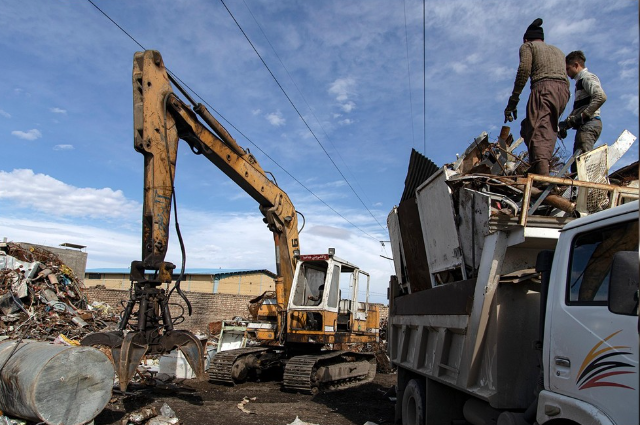
Image by mostafa meraji from Pixabay
Every day, Mumbai wakes up to the same invisible routine. Before the city’s first train leaves the platform and before the first cup of cutting chai is poured, thousands of tonnes of garbage begin their silent journey across the city.
Where does it all go?
For years, Mumbai has relied on a system that quietly moves garbage out of sight, transporting it away from homes and streets to distant corners of the city. There, it gathers, grows, and lingers far longer than most people imagine. The reality is uncomfortable: the city does not get rid of its waste; it merely relocates it.
Mumbai’s garbage story is as old as the city’s relentless growth. Every day, thousands of tonnes of waste travel across the city before ending up in massive dumping grounds. For decades, this system has functioned like a ticking time bomb, quietly growing into a crisis of pollution, health hazards, and environmental damage.
At the same time, another concern has begun to worry households across the country: the rising uncertainty around cooking fuel supplies. Global conflicts and geopolitical tensions have disrupted energy markets, and the ongoing war has strained international supply chains. LPG, which India imports in large quantities, has occasionally faced delays, price fluctuations, and fears of shortages. For many families dependent on LPG cylinders for their daily cooking, this uncertainty has raised uncomfortable questions.
What happens when the flame we depend on becomes unreliable?
But there is an even more unsettling question:
What happens if fuel supplies tighten further? Can cities find alternative sources of cooking gas closer to home?
It is against this backdrop that the Brihanmumbai Municipal Corporation (BMC) is attempting to rewrite Mumbai’s waste story. The civic body has decided to fast-track a Waste-to-Fuel (WTF) project at the Deonar landfill, aiming to convert the city’s daily waste into cooking gas and LPG-equivalent fuel.
The idea sounds almost poetic, turning garbage into flame. But the big question remains: Can Mumbai truly transform its trash into energy, or is this easier said than done?
Section I: Mumbai’s Mounting Waste Crisis
Mumbai, often described as the city that never sleeps, is also a city that never stops producing waste. From the first stirrings of breakfast in cramped kitchens at dawn to the last late-night meals served in bustling restaurants, the city generates staggering volumes of garbage every single day. Every household, street vendor, office, and marketplace contributes to this relentless cycle, turning daily life into an unending stream of discarded materials. What was once manageable has now grown into a looming crisis, stretching the city’s waste management systems to their limits. As Mumbai expands and consumption rises, the question becomes unavoidable: how long can the city sustain this mounting burden of waste?
Municipal estimates suggest that Mumbai produces between 7,000 and 7,500 tonnes of solid waste daily, of which nearly 60% is organic waste - the very material that could be converted into fuel. This waste comes from multiple sources, like households, vegetable markets, hotels, hospitals, construction sites, offices, and commercial establishments. As the population continues to grow and consumer lifestyles change, the volume of waste has also steadily increased. In many ways, the city’s prosperity has come with a hidden price: an ever-growing mountain of garbage.
The pressing question remains - where does all this waste actually end up? The answer becomes clearer and more unsettling when one looks at Mumbai’s landfill system. For decades, the city has depended on vast dumping grounds where garbage is transported, unloaded, and left to accumulate. Among these, the most infamous is the Deonar Dumping Ground - a site that has come to symbolise both the scale and the consequences of Mumbai’s waste crisis.
Located in the eastern suburbs of Mumbai, Deonar is one of the oldest dumping grounds in Asia, operational since 1927. Spread across more than 300 acres, it has been receiving thousands of tonnes of waste daily for nearly a century. Over time, the landfill has transformed into towering hills of garbage that loom over the surrounding neighbourhoods. These waste mountains are not just unsightly; they are also environmentally hazardous and socially distressing.
Residents living near Deonar have long been forced to endure the consequences of this massive dumping site. The landfill frequently releases toxic fumes, foul odours, and harmful gases. During the summer months, methane trapped inside the waste often ignites, leading to large fires that send thick clouds of smoke drifting across the city. Such incidents have repeatedly triggered public outrage and raised serious concerns about air quality and health.
The landfill has also become a symbol of urban neglect and environmental injustice. Communities living in the vicinity often complain of respiratory illnesses, eye irritation, and other health issues believed to be linked to prolonged exposure to landfill pollution.
Environmental activists and urban planners have repeatedly asked a pressing question:
How long can Mumbai continue to rely on landfills as its primary waste management strategy?
After all, dumping grounds are not permanent solutions. As the saying goes, “you can sweep dust under the rug, but sooner or later the lump becomes visible.” Landfills eventually reach capacity, and the environmental costs continue to grow.
To make matters more complex, the city’s traditional landfill sites have already begun to face severe pressure. The Mulund Dumping Ground has largely been shut down after reaching saturation, while the Kanjurmarg Dumping Ground currently handles a significant share of the city’s waste.
This leaves Deonar already burdened by decades of accumulated garbage under increasing strain.
Experts warn that continuing with the old “collect and dump” approach is neither sustainable nor environmentally safe. With limited land available and waste volumes rising steadily, Mumbai has reached a point where it must rethink how it deals with its garbage.
This growing crisis has pushed policymakers to search for innovative alternatives. The idea of converting waste into usable resources such as energy or fuel is increasingly gaining attention.
In other words, Mumbai now stands at a crossroads.
Will it continue to pile waste higher and higher, hoping the problem will somehow disappear?
Or will it finally attempt to turn its garbage crisis into an opportunity for sustainable energy and cleaner urban living?
The answer may well lie in projects like the proposed waste-to-fuel initiative at Deonar, an attempt to transform the city’s biggest garbage mountain into a source of energy rather than pollution.
Section II: The Waste-to-Fuel Vision
For decades, Mumbai’s waste management strategy has largely revolved around a simple but flawed approach: collect the garbage and dispose it somewhere far from the city’s eyes. While this method may have seemed convenient in the past, the consequences have slowly but surely caught up with the city. Landfills have expanded into enormous waste mountains, environmental damage has intensified, and surrounding communities have borne the brunt of pollution.
Recognising that this approach cannot continue indefinitely, the Brihanmumbai Municipal Corporation has begun exploring more innovative and sustainable alternatives. One such proposal is the Waste-to-Fuel (WTF) project at the Deonar landfill, a plan that aims to transform Mumbai’s garbage into a valuable energy resource.
At its core, the project represents a significant shift in thinking. Instead of viewing waste as something that must simply be discarded, the new approach treats garbage as a potential raw material capable of generating energy.
In practical terms, the Waste-to-Fuel initiative seeks to convert large quantities of municipal waste into compressed biogas (CBG), which can then be upgraded to produce LPG-equivalent cooking gas. This gas could potentially be used in households, commercial kitchens, or industries, thereby creating a renewable alternative to conventional cooking fuel.
The concept may sound almost revolutionary, turning yesterday’s waste into tomorrow’s cooking flame, yet the science behind it is well established. Organic waste, such as food scraps, vegetable peels, fruit waste, and other biodegradable materials, naturally decomposes and produces methane gas. In landfills, this methane often escapes into the atmosphere, contributing to greenhouse gas emissions and sometimes triggering dangerous fires.
The Waste-to-Fuel project aims to capture this methane through controlled scientific processes and convert it into usable fuel instead of allowing it to go to waste. In doing so, the initiative attempts to address two pressing urban challenges at once: the management of massive waste volumes and the generation of alternative energy.
As the saying goes, the project attempts to “turn a liability into an asset.”
Another important dimension of the proposal is the treatment of legacy waste, the enormous quantity of garbage that has accumulated at the Deonar Dumping Ground over the decades. Instead of letting these waste hills remain untouched, the plan envisions gradually processing and reducing them through scientific methods. This could potentially free up land, reduce pollution, and prevent future landfill fires.
The project also aligns with broader global efforts to promote circular economy practices, where resources are reused and recycled rather than discarded. In a circular economy, waste is not considered the end of a product’s life cycle but rather the beginning of another.
For a city like Mumbai with limited land, a rapidly growing population, and an ever-increasing volume of garbage, such solutions are becoming not just desirable but necessary.
Yet, despite its promise, the Waste-to-Fuel plan also raises several important questions.
Will the technology be able to handle the enormous quantity of mixed waste produced by the city every day?
Can the infrastructure operate efficiently on such a large scale?
And perhaps most importantly, will citizens cooperate by improving waste segregation at home?
After all, even the most sophisticated systems cannot function properly if garbage arrives at processing plants in a chaotic, mixed state.
Still, the vision behind the project is undeniably compelling. If successful, the initiative could mark a turning point in Mumbai’s waste management story. What once symbolised neglect and environmental decay could gradually transform into a hub for renewable energy production.
In that sense, the Waste-to-Fuel project represents more than just a technological upgrade. It reflects a broader shift in mindset, the realisation that in a city struggling with both waste and energy challenges, garbage might just hold the key to the solution.
In other words, Mumbai is beginning to ask an intriguing question:
What if the city’s greatest waste problem could also become one of its most valuable resources?
Section III: How Garbage Can Become Cooking Gas
At first glance, the idea of turning garbage into cooking gas may sound almost like science fiction. How can the food scraps, vegetable peels, and discarded leftovers that we throw away every day end up powering kitchen stoves?
Yet the concept is not as far-fetched as it seems. In fact, the process of converting organic waste into fuel is based on well-established scientific principles that have been used for decades in biogas plants across the world. The difference today is that cities like Mumbai are attempting to scale these technologies to handle thousands of tonnes of waste every day.
The Waste-to-Fuel initiative proposed by the Brihanmumbai Municipal Corporation relies on a series of carefully managed steps that transform biodegradable waste into methane-rich fuel suitable for cooking. Each stage of the process plays a crucial role, and if even one step falters, the entire system can lose efficiency.
In other words, the chain is only as strong as its weakest link.
Waste Segregation: The Foundation of the Process
Everything begins with segregation of waste at the source. In most households, garbage often ends up in a single bin where food waste, plastic packaging, glass, paper, and other materials are mixed together. This might seem convenient for disposal, but it creates enormous challenges for waste-processing facilities.
For waste-to-fuel technology to work effectively, garbage must be separated into different categories such as:
Wet biodegradable waste — food leftovers, vegetable and fruit peels, garden waste, and other organic materials.
Dry recyclable waste — plastics, paper, cardboard, glass, and metals.
Inert waste — construction debris, stones, and other non-recyclable materials.
The organic portion of waste is the most valuable component for fuel production because it decomposes naturally and produces methane gas.
However, if wet waste becomes contaminated with plastic or chemical substances, the entire processing system can be disrupted. Machines can malfunction, digestion processes can slow down, and the quality of gas produced may decline.
This is why waste experts often emphasise a simple but powerful principle:
Segregation at home is the first step toward sustainable waste management.
Without it, even the most advanced waste-processing plants may struggle to perform efficiently.
Biomethanation: Nature’s Chemistry at Work
Once the biodegradable waste is separated, it is transported to specialised facilities where it undergoes a process known as biomethanation.
This process mimics what naturally happens when organic matter decomposes in the environment except it takes place under controlled conditions.
The waste is placed inside large sealed tanks called anaerobic digesters, where microorganisms break down the organic material in the absence of oxygen. During this biological process, complex organic compounds are gradually converted into simpler substances.
One of the main by-products of this decomposition is biogas, a mixture that primarily contains:
- Methane (CH₄)
- Carbon dioxide (CO₂)
- Small quantities of other gases
Methane is the key ingredient here because it is a highly combustible fuel. In traditional landfills, methane simply escapes into the atmosphere, contributing to climate change and sometimes triggering dangerous fires.
In a biomethanation system, however, the gas is captured and stored, preventing it from being wasted and turning it into a valuable energy resource.
As the saying goes, the process allows cities to make fuel while waste decomposes.
Gas Purification and Upgrading
The biogas produced from organic waste is not immediately ready for household use. It contains impurities such as carbon dioxide, moisture, and trace gases that must be removed before it can function efficiently as cooking fuel.
This is where the gas purification stage comes into play.
Using specialised filtration and upgrading systems, the methane content of the gas is increased while unwanted components are removed. Once purified, the gas becomes compressed biogas (CBG), which closely resembles natural gas or LPG in its energy characteristics.
The upgraded gas can then be:
- Bottled into cylinders.
- Supplied to commercial kitchens.
- Used in industrial fuel systems.
- Converted into electricity through generators.
In some cases, compressed biogas can even be used as vehicle fuel, similar to compressed natural gas (CNG).
Thus, what began as discarded food waste gradually transforms into a clean and usable source of energy.
Useful By-products: Nothing Goes to Waste
Interestingly, the process does not end with gas production. The digestion of organic waste also produces a semi-solid residue known as digestate or slurry.
Instead of being discarded, this residue can be processed into organic fertiliser, which is useful for agriculture and landscaping.
This means the system produces two valuable outputs:
- Renewable cooking gas
- Natural fertiliser
In this way, the waste-to-fuel process embodies the principles of a circular economy, where materials are reused rather than discarded.
A Simple Idea with Powerful Potential
When viewed step by step, the science behind waste-to-fuel technology appears both logical and elegant. Organic waste decomposes naturally, methane gas is produced, and that gas is captured and purified for energy use.
Yet scaling this system to serve a megacity like Mumbai is no small task.
Handling thousands of tonnes of garbage every day requires advanced infrastructure, strict waste segregation, and efficient operational management. Without these elements, the process may struggle to deliver its promised benefits.
This brings us back to an important question - Can Mumbai build and maintain the systems needed to transform its daily garbage into a steady supply of cooking gas?
If the answer turns out to be yes, the city’s waste once seen as an embarrassing burden could become a powerful resource capable of lighting millions of kitchen stoves.
Section IV: Why Deonar Was Chosen
Among Mumbai’s many waste disposal sites, the Deonar Dumping Ground occupies a unique and controversial place. For nearly a century, it has served as the city’s primary dumping ground, receiving thousands of tonnes of garbage every single day. Over time, the site has become synonymous with the city’s waste crisis, a towering symbol of how urban growth, if left unchecked, can create environmental challenges that refuse to go away.
So when the Brihanmumbai Municipal Corporation began exploring the possibility of converting garbage into cooking gas, it was hardly surprising that Deonar emerged as the focal point of the project.
But the decision to choose Deonar was not merely symbolic. Several practical and strategic reasons make the site particularly suitable for a large-scale waste-to-fuel initiative.
A Century of Accumulated Waste
First and foremost, Deonar holds an enormous quantity of legacy waste, garbage that has accumulated over decades. Since the landfill began operations in 1927, millions of tonnes of waste have been dumped there.
This long history of dumping has created massive hills of decomposing garbage, some rising to the height of multi-storey buildings. While these waste mountains represent a serious environmental problem, they also contain large volumes of organic material capable of generating methane gas.
Instead of allowing this gas to escape into the atmosphere, waste-to-fuel technology offers a way to capture and utilise it productively.
In other words, what once seemed like an irreversible environmental burden may actually hold the potential to become a valuable energy resource.
Continuous Supply of Fresh Waste
Another major reason for choosing Deonar is the steady flow of garbage arriving at the site every day. Mumbai produces thousands of tonnes of waste daily, and a significant portion of it still finds its way to the Deonar landfill.
For any waste-to-energy or waste-to-fuel plant to function efficiently, a consistent supply of raw material is essential. Unlike industries that depend on imported fuels or seasonal resources, waste-processing plants rely on the constant availability of municipal waste.
In Mumbai’s case, the city’s growing population and consumption patterns ensure that waste generation remains high. While this may be unfortunate from an environmental perspective, it also means that a facility located at Deonar would have a continuous stream of feedstock for fuel production.
Availability of Land and Infrastructure
Land is one of Mumbai’s scarcest and most expensive resources. Establishing large industrial facilities within the city often proves difficult due to space constraints.
Deonar, however, already occupies a vast area of more than 300 acres, making it one of the few locations where large-scale waste-processing infrastructure can realistically be developed.The site also benefits from existing logistical systems, including:
- Road networks for garbage transportation.
- Waste handling facilities.
- Operational management systems already in place.
By building the waste-to-fuel plant within the existing landfill area, the city can potentially reduce the need for acquiring new land, which often leads to lengthy legal and administrative challenges.
Addressing the Legacy Waste Problem
Perhaps the most compelling reason for selecting Deonar lies in the urgent need to address its legacy waste crisis.
Over the years, the landfill has repeatedly caught fire due to methane accumulation within the garbage layers. These fires have released thick clouds of smoke that drift across parts of Mumbai, affecting air quality and raising public health concerns.
The waste-to-fuel initiative could play a significant role in mitigating these risks. By gradually processing and extracting gas from decomposing waste, the project could help:
- Reduce methane build-up inside the landfill.
- Lower the chances of spontaneous fires.
- Shrink the massive garbage hills over time.
In essence, the project offers a potential pathway to reclaiming land that has long been considered environmentally damaged.
Symbolic Transformation
Beyond the technical and logistical advantages, there is also a symbolic dimension to the choice of Deonar.
For decades, the landfill has been viewed as a blemish on Mumbai’s urban landscape, a reminder of the city’s struggle to manage its waste responsibly. Turning this very site into a hub for renewable energy production would represent a dramatic shift in the narrative.
It would mean that the place once associated with pollution and neglect could gradually evolve into a centre of innovation and sustainability.
But Can the Transformation Succeed?
While the logic behind choosing Deonar is compelling, the scale of the challenge cannot be underestimated.
Processing decades of accumulated waste while simultaneously managing thousands of tonnes of fresh garbage every day is a complex undertaking. It requires:
- Advanced technology
- Careful planning
- Continuous monitoring
- Strong cooperation from citizens in waste segregation
Without these elements, even the most promising plans can stumble.
This raises a crucial question - Can Deonar truly transform from Mumbai’s most infamous landfill into a model of sustainable waste management?
If the answer is yes, the site may one day stand not as a symbol of neglect but as a testament to the city’s ability to turn adversity into opportunity.
Section V: Environmental Benefits - A Breath of Fresh Air or Just Wishful Thinking?
If the proposed waste-to-fuel project at Deonar succeeds, its biggest victory may not lie only in producing cooking gas. Its true significance could be far wider. It could help Mumbai confront one of its oldest and ugliest urban realities, the poisonous afterlife of garbage.
For years, the city has treated waste as something to be collected, transported, and forgotten. But waste does not disappear simply because it is dumped out of sight. It continues to rot, leak, burn, and poison the environment long after the garbage truck has left. In that sense, landfills are not silent storage sites; they are slow-burning ecological wounds.
This is where the Deonar waste-to-fuel project begins to look important. If implemented properly, it could offer a range of environmental benefits that go far beyond fuel generation. It could reduce pollution, cut greenhouse gas emissions, lower fire risks, and move Mumbai closer to a more circular and responsible model of urban living.
The question is not merely whether garbage can produce gas. The deeper question is this - Can a city long buried under its own waste finally learn to breathe again?
Reducing the Burden on Landfills
The most immediate environmental benefit of such a project would be a reduction in the amount of garbage left to rot in landfills.
At present, huge volumes of waste are dumped at sites like Deonar, where they remain for years, sometimes decades. As waste accumulates, so do the problems associated with it. The landfill grows higher, the smell becomes stronger, the surrounding environment becomes more stressed, and the available land keeps shrinking.
A waste-to-fuel project changes this equation by treating garbage not as dead weight but as a resource to be processed. The more waste that is converted into biogas or other usable outputs, the less waste remains piled up in open dumps.
This matters greatly in a city like Mumbai, where land is precious and landfill space is finite.
After all, there is only so much dust one can keep sweeping under the rug before the whole house begins to choke.
Reducing the burden on landfills can also help slow the expansion of waste mountains that have long become symbols of civic failure. Instead of endlessly adding new layers of trash, the city gets a chance to start undoing at least part of the damage.
Cutting Methane Emissions
One of the most important environmental advantages of waste-to-fuel systems lies in their ability to capture methane, a powerful greenhouse gas released when organic waste decomposes.
When food scraps, vegetable waste, and other biodegradable materials rot in a landfill, they generate methane. If this gas is left uncaptured, it escapes into the atmosphere and contributes significantly to climate change. Methane is especially dangerous because it traps heat much more effectively than carbon dioxide over shorter periods.
In simple words, rotting garbage is not just a local nuisance. It is also part of a global climate problem.
A properly functioning waste-to-fuel plant can intercept this process. Instead of allowing methane to seep into the air, it captures the gas under controlled conditions and converts it into usable fuel. This does two things at once: it prevents a harmful gas from being released and creates an alternative energy source.
That is no small achievement.
In environmental terms, this is like catching smoke before it escapes the chimney. What would have become pollution is instead redirected into productive use.
This is why waste-to-fuel projects are often seen as climate-friendly interventions, especially in cities where organic waste forms a large share of municipal garbage.
Lowering the Risk of Landfill Fires
Anyone familiar with Deonar knows that landfill fires have haunted the area for years. These fires are not random accidents alone. They are often linked to the buildup of methane and the highly combustible conditions inside ageing garbage heaps.
When waste decomposes deep beneath the surface, gases accumulate. Add heat, pressure, and poor landfill management, and the result can be catastrophic. Thick smoke rises, toxic particles spread across neighbourhoods, and the city is reminded yet again that its garbage crisis is literally capable of going up in flames.
A waste-to-fuel project could help reduce this danger by extracting gas before it builds up in dangerous quantities. By scientifically managing decomposing waste, the project may reduce the likelihood of spontaneous combustion and recurring landfill fires.
This would be a major relief not just for the environment but for nearby communities that have had to live under a cloud of smoke and uncertainty.
One cannot help but ask:
How many times must a landfill catch fire before a city decides enough is enough?
If the project helps answer that question with action rather than excuses, it will already have achieved something meaningful.
Improving Air Quality in Surrounding Areas
Air pollution around landfill sites is not caused only by fire. Even on ordinary days, decomposing garbage releases foul-smelling gases and harmful pollutants into the surrounding atmosphere. Dust, smoke, methane, and volatile compounds can turn life near a landfill into a daily struggle.
Residents around Deonar have long complained of breathing difficulties, eye irritation, headaches, and the constant presence of an unbearable stench. For them, the environmental debate is not abstract. It is not about policy documents and technical reports. It is about the air they inhale every single day.
By reducing open dumping, controlling decomposition, and limiting gas release, the waste-to-fuel project could help improve the air quality in and around the landfill zone. Cleaner processing methods would mean less uncontrolled rotting, fewer emissions from exposed waste, and possibly fewer fire-related smoke episodes.
Of course, no single project can magically erase decades of pollution overnight. But even a gradual reduction in toxic emissions would be a significant step.
Because for those living near Deonar, clean air is not a luxury. It is a long-denied basic right.
Preventing Soil and Water Contamination
Landfills do not only pollute the air. They also threaten the soil beneath them and the water around them.
As garbage decomposes, it produces a dark, contaminated liquid known as leachate. This liquid can seep into the ground and, if not properly managed, may contaminate soil and groundwater. Over time, this can damage local ecosystems, affect vegetation, and create public health risks.
A scientific waste-to-fuel system has the potential to reduce the amount of untreated waste sitting exposed for long periods. By processing organic matter more efficiently and limiting unmanaged decomposition, such systems can help reduce the formation and spread of leachate.
This is especially important in a coastal and densely populated metropolis like Mumbai, where land, water, and ecological balance are already under tremendous pressure.
In other words, the environmental benefits of the project are not limited to what rises into the air. They also extend to what sinks beneath the ground.
Supporting a Circular Economy
Perhaps one of the most meaningful long-term environmental benefits of the project lies in its philosophy. Waste-to-fuel projects challenge the old linear model of urban consumption: buy, use, throw, dump.
Instead, they promote a circular economy, where waste from one system becomes input for another. Food scraps become gas. Organic residue becomes manure. Garbage becomes a resource rather than a dead end.
This shift in thinking matters because environmental crises are not caused only by the lack of technology. They are also caused by the lack of imagination. Cities continue to drown in garbage partly because they still view waste as something useless.
But what if waste is not the end of the story? What if it is the beginning of another one?
That is the promise of circular thinking. It asks cities to stop seeing garbage as a burden alone and start seeing it as material that can be recovered, reused, and reintroduced into the system.
For Mumbai, such a shift would be more than administrative. It would be cultural.
Reducing Dependence on Conventional Fossil Fuels
Another environmental advantage of turning waste into cooking gas is that it offers a renewable alternative to conventional fossil-based fuels.
When biogas or compressed biogas is produced from organic waste, the energy comes from material that is already part of the natural cycle of consumption and decomposition. This makes it very different from extracting new fossil fuels from the earth.
Every bit of usable gas generated from waste has the potential to reduce reliance, even if modestly, on conventional energy sources. While it may not replace LPG entirely, it can still become part of a broader clean-energy mix, especially for commercial use, institutional kitchens, or decentralised applications.
And in times of fuel insecurity, that environmental advantage begins to overlap with energy resilience as well.
But Environmental Promise Is Not Environmental Proof
All of this sounds promising and it is. But let us not put the cart before the horse.
Environmental benefits do not flow automatically from big announcements. They depend on execution. If waste is not segregated properly, if plants are poorly maintained, if emissions are not monitored, or if leftover residues are mishandled, the project may fail to deliver the environmental relief it promises.
That is why caution must walk hand in hand with optimism.
A waste-to-fuel plant can become a cleaner alternative only when it is scientifically run, transparently monitored, and integrated into a larger system of responsible waste management. Otherwise, it risks becoming another shiny proposal with muddy results.
So the real question is not just:
Can garbage become fuel?
It is also:
Can Mumbai build a system clean enough, disciplined enough, and honest enough to make that fuel truly green?
A Chance to Change the Air Around Deonar
For years, Deonar has stood as a grim reminder that what a city throws away eventually comes back to haunt it — in smoke, in smell, in sickness, and in environmental ruin.
The waste-to-fuel project offers a chance, however difficult, to begin changing that story.
If it works well, Deonar may slowly stop being known only as a place where waste goes to die. It may begin to be seen as a place where waste is recovered, repurposed, and prevented from poisoning the city further.
That would not just be an engineering success. It would be an environmental turning point.
And perhaps, for the first time in a long while, Mumbai may be able to say that from the heart of its garbage crisis emerged not just fuel for stoves, but also a faint, hard-earned breath of fresh air.
Section VI: The Challenges Ahead — When Vision Meets Reality
Ambitious ideas often capture public imagination, but the real test lies in their execution. The proposal to convert garbage into cooking gas at Deonar may sound promising, even revolutionary, yet it would be naïve to assume that such a transformation will happen smoothly.
Waste-to-fuel projects across the world have demonstrated that technology alone cannot solve the problem of urban waste. These systems function effectively only when policy, infrastructure, citizen behaviour, and financial planning work together like well-oiled gears in a machine.
In the case of Mumbai, the challenges are significant. The city is dealing with enormous quantities of waste, long-standing landfill practices, and deeply ingrained habits of waste disposal. Turning such a system around is no small feat.
While the vision of turning garbage into cooking gas is appealing, the road ahead is dotted with hurdles that must be addressed carefully.
The Persistent Problem of Waste Segregation
Perhaps the biggest challenge lies in waste segregation at source.
Most households and commercial establishments still dispose of garbage in a mixed form, where food waste, plastic, glass, and paper are thrown together in a single bin. This might appear convenient, but it creates serious complications for waste-processing facilities.
Waste-to-fuel plants rely heavily on biodegradable organic waste, which can be decomposed to produce methane gas. However, when this waste becomes contaminated with plastic packaging, sanitary waste, or hazardous materials, the efficiency of the system drops dramatically.
Sorting mixed garbage later at processing plants is not only expensive but also inefficient. Workers must separate materials manually or with mechanical systems, which slows down operations and increases operational costs.
In short, the success of the entire project may hinge on something surprisingly simple:
Will citizens segregate their waste properly?
Without this basic discipline at the household level, even the most advanced technology may struggle to perform effectively.
Managing Massive Volumes of Waste
Mumbai is not a small town experimenting with a pilot project. It is one of the largest cities in the world, generating thousands of tonnes of waste every day.
- Handling such volumes requires:
- Large-scale processing infrastructure
- Efficient transportation systems
- Continuous operational management
- Adequate storage and safety systems
A breakdown at any stage could disrupt the entire chain. If waste collection slows down, trucks arrive late, or plant machinery fails, garbage may begin piling up again.
In a city already struggling with space constraints and heavy traffic, ensuring the smooth transportation and processing of waste is a logistical challenge of enormous proportions.
To put it plainly, Mumbai is trying to solve a mountain-sized problem, quite literally.
High Financial Investment
Waste-to-fuel plants require substantial capital investment. Building the infrastructure involves advanced technology, specialised equipment, and large processing facilities.
Beyond the initial investment, the operational costs can also be considerable. These include:
- Maintenance of digesters and gas purification units
- Skilled technical staff
- Transportation and sorting costs
- Monitoring of emissions and environmental compliance.
If the project fails to generate sufficient revenue through the sale of gas or energy, the financial burden could fall heavily on the municipal administration.
Urban infrastructure projects in India have sometimes suffered from budget overruns, delays, and cost escalations. Critics therefore caution that without careful financial planning, waste-to-fuel plants risk becoming expensive experiments rather than sustainable solutions.
Technological and Operational Risks
Although biomethanation and waste-to-fuel technologies are well established, their performance often depends on consistent waste quality and stable operating conditions.
If the incoming waste contains too many contaminants or if the organic composition fluctuates drastically, the digestion process can slow down or even fail. Digesters may require careful temperature control, proper feeding rates, and constant monitoring.
Operational lapses can lead to:
- Reduced gas production
- Equipment damage
- Increased maintenance costs
Furthermore, large-scale waste plants must also comply with strict environmental regulations. Any malfunction that leads to gas leakage, foul odours, or pollution could quickly attract public criticism and legal scrutiny.
This is why experts often say that waste-to-energy plants are not “set it and forget it” systems. They demand constant attention and technical expertise.
Public Trust and Community Concerns
Another challenge lies not in technology or finance but in public perception and trust.
Residents living near the Deonar Dumping Ground have endured decades of pollution, landfill fires, and foul odours. Many of them view new projects with a mixture of hope and scepticism.
For these communities, promises of cleaner technology may sound familiar. After all, similar assurances have been made in the past with limited results.
Will the new project genuinely improve environmental conditions, or will it simply shift the problem in another form?
Addressing these concerns will require transparency, environmental monitoring, and regular communication with local residents. Without public trust, even the most technically sound project can face resistance.
Policy Coordination and Governance
Waste management is not merely a technical issue; it is also a matter of governance.
Implementing a project of this scale requires coordination among multiple stakeholders, including:
- Municipal authorities
- Private technology providers
- Environmental regulators
- Waste collection contractors
- Citizens themselves
Any gaps in coordination can slow progress. Delays in approvals, disagreements over contracts, or bureaucratic hurdles may stall implementation.
India’s urban governance systems are often criticised for being fragmented, where responsibilities are spread across different departments and agencies. Ensuring that all these pieces work together smoothly is essential.
Behavioural Change — The Hardest Challenge
Technology can be imported. Machinery can be purchased. Infrastructure can be built. But changing human behaviour is far more difficult.
For decades, urban residents have grown accustomed to simply throwing away waste without thinking about its afterlife. Convincing millions of citizens to segregate waste properly, reduce plastic usage, and adopt responsible disposal habits requires sustained public awareness campaigns.
Schools, housing societies, businesses, and community groups all have a role to play in shaping this culture of responsibility.
Without such behavioural change, waste-to-fuel projects risk becoming islands of innovation surrounded by oceans of indifference.
Walking the Tightrope Between Hope and Reality
The waste-to-fuel project at Deonar represents a bold attempt to address two major urban problems, mounting garbage and growing energy demand.
Yet bold ideas often walk a tightrope between success and disappointment.
The project could become a model for sustainable waste management in Indian cities. It could reduce pollution, generate renewable energy, and transform one of Mumbai’s most notorious landfills. But it could also stumble if the challenges discussed above are ignored.
Therefore, the success of the project will depend not only on engineering and investment but also on discipline, transparency, citizen participation, and long-term commitment.
After all, solving a problem that has been building up for nearly a century cannot happen overnight.
But if Mumbai manages to navigate these obstacles, the city might finally prove that even the biggest garbage mountain can be turned into a source of energy provided the will to change is strong enough.
Section VII: Lessons from Other Indian Cities
When cities attempt bold experiments in waste management, it is always wise to look beyond their own boundaries and ask a simple question: Who has already tried this, and what can we learn from them?
India, despite its enormous waste challenges, has also produced some remarkable success stories in urban sanitation and waste processing. Several cities have shown that with the right combination of administrative will, citizen participation, and scientific planning, garbage can indeed be managed more responsibly.
For Mumbai, which is now attempting to convert waste into cooking gas at Deonar, the experiences of other cities offer valuable lessons. They demonstrate that the road to sustainable waste management is rarely smooth, but with persistence and public cooperation, it is far from impossible. After all, experience is often the best teacher.
Indore: The Gold Standard of Waste Management
One city that is frequently held up as a model is Indore.
Over the past several years, Indore has consistently ranked among India’s cleanest cities under the national cleanliness survey. But this success did not happen overnight. It was the result of systematic reforms that transformed how waste was collected, segregated, and processed.
A key pillar of Indore’s strategy has been strict waste segregation at the household level. Citizens were encouraged and sometimes compelled to separate their garbage into different categories before disposal. Municipal authorities conducted awareness campaigns, imposed penalties for non-non-compliance, and ensured that segregated waste was collected separately.
This disciplined approach made it possible to process organic waste efficiently through composting and biomethanation plants. The city also invested in waste-to-energy facilities and recycling systems that prevented garbage from accumulating in open dumps.
The lesson from Indore is clear:
Technology works best when citizens cooperate with the system.
Without segregation at source, even the most advanced waste-processing facilities may fail to deliver results.
Pune: Community Participation in Action
Another city often cited for its innovative approach to waste management is Pune.
Pune’s model is notable for its strong involvement of waste pickers and community organisations. Instead of sidelining informal waste collectors, the city integrated them into the municipal waste management system. These workers play a crucial role in sorting recyclable materials and ensuring that valuable resources are not lost in landfills. The city has also established several decentralised biogas plants that convert organic waste from markets, hotels, and housing societies into biogas.
These smaller plants demonstrate that waste-to-energy solutions need not always operate on gigantic scales. Sometimes, localised systems can complement large centralised plants, reducing transportation costs and improving efficiency.
Pune’s experience highlights another important lesson:
Waste management works best when communities become active participants rather than passive observers.
Surat: Efficiency Through Strong Administration
The city of Surat offers yet another perspective on urban waste management.
Surat has gained recognition for its efficient municipal systems, particularly after the city underwent major reforms following a devastating plague outbreak in the 1990s. Since then, the municipal administration has focused heavily on maintaining strict sanitation standards.
Waste collection in Surat is highly organised, with well-defined routes, monitoring systems, and accountability mechanisms. The city has also invested in scientific landfill management and waste-processing facilities.
The key takeaway from Surat’s experience is the importance of strong and consistent governance. Waste management requires continuous supervision and strict implementation of rules. Without administrative discipline, even the most well-designed policies may falter.
The Common Thread: Segregation, Participation, and Discipline
Although these cities differ in size, geography, and administrative structure, their waste management success stories share several common features:
- Segregation at source - Citizens separate wet and dry waste before disposal.
- Citizen awareness and participation - Public campaigns ensure that residents understand the importance of responsible waste disposal.
- Strong municipal leadership - Local governments enforce rules and maintain operational discipline.
- Scientific waste processing - Organic waste is converted into compost or biogas, while recyclable materials are recovered efficiently.
In short, these cities have demonstrated that effective waste management is not just about machinery and plants. It is about creating a system where people, policies, and technology work together.
What Mumbai Can Learn
For a megacity like Mumbai, the scale of the challenge is far greater. Handling thousands of tonnes of garbage every day requires massive infrastructure and complex logistics.
However, the principles that made cities like Indore, Pune, and Surat successful remain relevant. Mumbai can draw several lessons from their experiences:
- Waste segregation must become a daily habit for citizens.
- Public awareness campaigns should accompany technological projects.
- Waste-processing plants must be supported by strong administrative oversight.
- Informal waste workers can be integrated into the system rather than excluded.
In essence, Mumbai must realise that technology alone cannot rescue a city drowning in garbage. Machines may process waste, but people create the conditions for success.
Scaling Success in a Mega City
One challenge unique to Mumbai is its enormous size and density. What works for a city of a few million people must be adapted carefully to serve a metropolis with over twenty million residents.
This means Mumbai may need a combination of solutions rather than a single silver bullet:
- Large centralised waste-to-fuel plants
- Decentralised biogas units in markets and housing complexes
- Expanded recycling networks
- Strong citizen awareness programmes
Such a multi-layered system would ensure that waste is handled efficiently at different stages rather than overwhelming a single facility.
From Inspiration to Implementation
Learning from other cities is valuable, but imitation alone is not enough. Each city must adapt solutions to its own circumstances.
For Mumbai, the proposed waste-to-fuel project at the Deonar Dumping Ground could become a major step forward provided it is supported by broader reforms in waste segregation, citizen awareness, and municipal efficiency.
The success stories of Indore, Pune, and Surat prove one thing beyond doubt:
India’s waste crisis is not unsolvable.
Cities across the country have shown that with determination and cooperation, garbage can be managed scientifically and sustainably.
Now the spotlight turns to Mumbai.
Will the city follow in their footsteps and transform its waste management system?
Or will it continue to struggle under the weight of its own garbage mountains?
The answer may well determine whether Mumbai’s future is buried under waste, or built on innovation.
Section VIII: Can Garbage Become Mumbai’s New Resource?
For most people, garbage represents the end of a story. Once something is thrown away, it disappears from our daily lives. Out of sight, out of mind. Yet the reality is far more complicated. Waste does not vanish the moment it leaves our homes; it simply travels somewhere else, often piling up in landfills where it continues to create environmental and logistical problems.
But what if garbage did not have to mark the end of a product’s life cycle? What if waste could instead become the beginning of a new economic and energy resource?
This is precisely the idea behind the waste-to-fuel initiative proposed at the Deonar Dumping Ground. Instead of treating garbage as a useless burden that must be buried under layers of soil, the project seeks to transform it into something valuable, a source of fuel capable of powering kitchens, industries, and even vehicles.
In many ways, the concept represents a profound shift in the way cities think about waste. It asks a simple but powerful question:
Is garbage truly waste, or is it simply a resource waiting to be used differently?
The Hidden Value Inside Waste
A large portion of the garbage produced in cities like Mumbai consists of organic material such as foodo leftovers, vegetable scraps, fruit peels, garden waste, and other biodegradable substances. When these materials decompose, they naturally release methane gas.
Traditionally, this methane escapes into the atmosphere from landfills, contributing to climate change and occasionally triggering fires. However, when captured and processed scientifically, methane becomes a valuable fuel with multiple applications.
This means that the very same waste that currently causes pollution can also become an energy resource.
In economic terms, this represents the transformation of a liability into an asset. Garbage, which once required money to dispose of safely, begins to generate value by producing usable energy.
As the saying goes, “one man’s trash is another man’s treasure.”
Potential Uses of Waste-Derived Fuel
The gas produced from organic waste can serve several purposes once it is purified and upgraded into compressed biogas.
Some of its possible uses include:
- Household Cooking Fuel
The purified gas can function as a substitute for LPG in cooking. In a country where millions of households depend on gas cylinders for daily meals, even partial substitution could ease the pressure on traditional fuel supplies. - Commercial Kitchens
Restaurants, hotels, and catering services consume large amounts of cooking gas every day. Waste-derived fuel could provide a renewable alternative for such establishments. - Industrial Applications
Certain industries require gas for heating, processing, and manufacturing. Compressed biogas could be integrated into these systems. - Electricity Generation
Biogas can also be used to power generators that produce electricity, particularly for decentralised energy systems. - Transportation Fuel
With appropriate upgrades, compressed biogas can be used similarly to compressed natural gas (CNG) in vehicles.
In other words, garbage-derived gas has the potential to power multiple sectors of the urban economy.
Reducing Dependence on Imported Fuels
India imports a significant portion of the LPG used by households. This makes the country vulnerable to fluctuations in international fuel markets and geopolitical tensions that disrupt energy supplies.
If cities begin producing cooking gas locally through waste-to-fuel plants, even in modest quantities, it could contribute to greater energy security.
While waste-derived gas may never replace LPG entirely, it could still reduce the pressure on conventional fuel supplies, particularly in commercial and industrial sectors.
In times when global energy markets are uncertain, having alternative local sources of fuel can be extremely valuable.
Economic Opportunities in Waste Management
Turning waste into fuel also opens the door to new economic possibilities.
Waste management has traditionally been viewed as a municipal service that consumes public funds. However, when waste begins to generate energy, fertilizer, and recyclable materials, it creates opportunities for revenue generation and job creation.
Several economic benefits could emerge from such systems:
- Sale of compressed biogas to commercial users.
- Production and sale of organic fertiliser from waste residues.
- Employment opportunities in waste collection, sorting, and processing.
- Growth of new industries around recycling and renewable energy.
These developments could gradually transform waste management from a purely administrative function into a dynamic sector of the urban economy.
Challenges in Turning Garbage into Wealth
While the idea of converting garbage into fuel sounds attractive, it is important to recognise that such systems do not automatically generate wealth.
Several factors determine whether waste-to-fuel projects become economically viable:
- Consistent supply of segregated organic waste.
- Efficient plant operations and maintenance.
- Stable markets for the produced gas.
- Supportive government policies and regulations.
Without these conditions, the economics of waste processing can become complicated. Plants may operate below capacity, revenues may fluctuate, and operational costs may rise.
In other words, garbage may hold potential value, but unlocking that value requires careful planning and sustained effort.
Changing the Way Cities Think About Waste
Perhaps the most important impact of projects like the Deonar waste-to-fuel initiative lies not only in the fuel they produce but in the mindset they promote.
For decades, urban waste management has followed a reactive model: collect garbage, transport it somewhere else, and hope it does not cause too many problems.
But modern cities are beginning to realise that such an approach is unsustainable. Waste must be managed scientifically, responsibly, and creatively.
The idea is simple yet powerful:
Garbage is not merely a problem to be hidden. It is a resource waiting to be recovered.
A New Role for Deonar
If the waste-to-fuel project succeeds, the Deonar Dumping Ground could undergo a remarkable transformation.
What was once known primarily as a symbol of pollution and neglect might gradually evolve into a centre for renewable energy production and sustainable waste processing.
Such a transformation would not only reduce environmental damage but also demonstrate how cities can rethink their relationship with waste.
After all, every great change begins with a shift in perspective.
For Mumbai, the challenge now is to prove that its mountains of garbage are not just a burden but a resource capable of fueling the city’s future.
Section IX: The Role of Citizens — Where Real Change Begins
When discussions about waste management arise, the spotlight often falls on municipal authorities, government policies, and large infrastructure projects. Sophisticated machines, advanced technologies, and ambitious civic plans dominate headlines. Yet, behind all these grand schemes lies a quieter but far more powerful force: the everyday habits of ordinary citizens.
In a city as vast and complex as Mumbai, the success of any waste-management initiative including the proposed waste-to-fuel project at the Deonar Dumping Ground, ultimately depends on the behaviour of millions of residents.
After all, garbage does not appear out of thin air. It begins in homes, markets, offices, and restaurants. Every plastic wrapper discarded, every leftover meal thrown away, and every piece of packaging tossed into the bin becomes part of the city’s growing waste stream.
This raises a fundamental question:
Can Mumbai’s citizens become active partners in solving the waste crisis, rather than passive contributors to it?
Waste Segregation: A Small Habit with a Big Impact
Perhaps the most crucial role citizens can play is segregating waste at the source.
Waste segregation simply means separating garbage into different categories before disposal. Typically, this involves keeping wet waste (biodegradable) separate from dry waste (recyclables) and hazardous waste.
At first glance, this may appear to be a minor act merely using different bins in the kitchen. But in reality, it forms the backbone of modern waste management systems.
When waste arrives at processing plants already segregated:
- Organic waste can be sent directly to biogas or composting facilities.
- Recyclable materials such as plastic, paper, and metal can be recovered efficiently.
- Hazardous materials can be handled safely.
However, when all waste is mixed together, the entire process becomes far more complicated and expensive. Workers must manually sort through contaminated garbage, recyclable materials become unusable, and organic waste loses its potential to generate clean energy.
In short, segregation at home can determine whether waste becomes a resource or remains a burden.
Reducing Waste at the Source
While proper segregation is essential, another powerful step citizens can take is simply producing less waste in the first place.
Urban lifestyles have changed dramatically over the past few decades. Convenience often takes precedence over sustainability. Single-use plastics, excessive packaging, disposable items, and food waste have become part of everyday life.
Yet small changes in consumer habits can significantly reduce the burden on municipal waste systems.
For instance, residents can:
- Carry reusable bags instead of relying on plastic ones.
- Avoid single-use plastic products whenever possible.
- Buy only the food they actually need, reducing food wastage.
- Choose products with minimal packaging.
Such measures may seem modest individually, but when adopted by millions of people, they can lead to a dramatic reduction in the city’s waste output.
Composting at Home
Another important practice gaining popularity in urban areas is home composting.
Organic kitchen waste such as vegetable peels, fruit scraps, tea leaves, and leftover food can be converted into compost through simple household composting systems. This compost can then be used as natural fertilizer for plants and gardens.
By composting organic waste at home or within housing societies, residents can significantly reduce the amount of waste sent to landfills or processing plants.
This approach offers several advantages:
- It reduces the burden on municipal waste collection systems.
- It prevents organic waste from decomposing in landfills and releasing methane.
- It produces nutrient-rich compost for plants and urban gardens.
In effect, home composting allows citizens to close the waste loop within their own neighbourhoods.
Housing Societies and Community Responsibility
In a city where millions of people live in apartment complexes and housing societies, community-level initiatives can play a vital role.
Housing societies can establish their own systems for:
- Waste segregation and collection
- Composting organic waste within the premises
- Recycling dry waste through authorised recyclers.
Some societies have even set up small biogas plants that convert kitchen waste into fuel used for cooking in common kitchens or lighting communal spaces.
These local initiatives demonstrate that waste management does not always require massive infrastructure. Sometimes, meaningful change begins with collective action at the neighbourhood level.
The Role of Awareness and Education
Behavioural change rarely happens spontaneously. It requires consistent awareness campaigns and public education.
Schools, colleges, community groups, and environmental organisations all have a role to play in spreading awareness about responsible waste management.
Educational initiatives can help citizens understand:
- The environmental impact of improper waste disposal
- The importance of segregation
- The benefits of recycling and composting
When people begin to see waste not as something to be discarded but as a resource that can be reused or transformed, attitudes begin to change. In many ways, waste management is as much a cultural issue as it is a technological one.
Holding Authorities Accountable
Citizen participation also involves demanding transparency and accountability from civic authorities.
Residents can play an important role by:
- Reporting illegal dumping or waste mismanagement.
- Participating in local environmental initiatives.
- Engaging with municipal programmes related to waste segregation and recycling.
- Active civic engagement ensures that waste management policies are not merely announced but actually implemented effectively.
A city functions best when its government and its citizens work together rather than in isolation.
From Indifference to Responsibility
For years, urban waste has been treated with a sense of indifference. Once garbage leaves the household bin, it becomes someone else’s problem — the responsibility of sanitation workers, municipal trucks, or distant landfills.
But such thinking is increasingly outdated.
In a densely populated metropolis like Mumbai, every citizen is part of the waste ecosystem. The choices people make at home, what they buy, how they dispose of waste, and whether they segregate garbage, collectively shape the success or failure of the entire system.
Projects like the waste-to-fuel initiative at Deonar may provide technological solutions, but their effectiveness will depend heavily on public cooperation and responsible behaviour.
After all, a chain is only as strong as its weakest link, and in the chain of waste management, citizens form the very first link.
A Shared Responsibility
Ultimately, solving the garbage crisis cannot be left solely to municipal authorities or environmental activists. It requires the participation of everyone who lives and works in the city.
From the kitchen bin in a small apartment to the massive waste-processing plant at the Deonar Dumping Ground, the entire system is interconnected.
If citizens embrace responsible waste habits, the city’s ambitious plans including the conversion of garbage into cooking gas stand a far greater chance of succeeding.
But if indifference prevails, even the most sophisticated projects may struggle to make a difference. The choice, in many ways, lies with the people of Mumbai themselves.
Because in the end, the story of a city’s waste is also the story of its civic responsibility.
Conclusion: From Garbage Hills to Flames of Hope
For decades, Mumbai’s relationship with its garbage has been uneasy, almost evasive. The city has grown taller, richer, and busier, yet its waste has quietly piled up in forgotten corners, turning landfills like the Deonar Dumping Ground into towering reminders of an unresolved urban crisis. Mountains of waste have risen where once there were open fields, and the smoke from landfill fires has often served as a grim signal that the problem is literally smouldering beneath the surface.
Yet every crisis carries within it the seed of transformation.
The proposal by the Brihanmumbai Municipal Corporation to convert garbage into cooking gas represents far more than a technological experiment. It signals a shift in thinking, a recognition that the old “collect and dump” approach has reached its limits. For a megacity bursting at the seams, continuing down the same road would be like trying to empty the ocean with a spoon.
The waste-to-fuel initiative attempts to rewrite the narrative. Instead of treating garbage as an embarrassment to be hidden, it treats it as a resource waiting to be harnessed. Organic waste becomes methane. Methane becomes fuel. And fuel, in turn, powers the everyday act that sustains life in every home — cooking.
It is a striking idea:
The leftovers from yesterday’s meals lighting the flame for tomorrow’s dinner - If implemented effectively, the project could deliver several transformative benefits. It could reduce the pressure on landfills, cut greenhouse gas emissions, and create an alternative source of cooking fuel at a time when global energy markets remain uncertain. It could also turn one of Mumbai’s most notorious dumping grounds into a symbol of innovation rather than neglect.
But hope alone cannot move mountains, not even mountains of garbage - The success of this initiative will depend on more than machines and municipal plans. It will require consistent governance, financial discipline, scientific management, and above all, public participation. Waste must be segregated properly. Processing plants must be maintained carefully. Environmental safeguards must be monitored strictly. Without these elements, even the most promising projects risk becoming yet another chapter in the long story of good intentions and poor execution.There is also a deeper lesson hidden within this effort.
Cities often imagine that waste disappears the moment it is thrown away. But the truth is far simpler and far harsher: what we discard never truly leaves us. It lingers in the air we breathe, the soil beneath our feet, and the water that flows through our ecosystems. The garbage crisis is therefore not merely a logistical problem; it is a mirror reflecting how societies consume, discard, and forget.
The waste-to-fuel project challenges this mindset. It reminds us that waste is not always the end of the story. With imagination and responsibility, it can become the beginning of something new.
For Mumbai, the road ahead will not be easy. The city is attempting to undo nearly a century of landfill dependence while managing the daily waste of millions of residents. The task is daunting, the obstacles many, and the stakes high.
Yet progress often begins with a single bold step.
If Mumbai succeeds in turning its garbage into energy, the change will not merely be technological. It will represent a cultural shift, a city learning to look at its waste not with resignation but with possibility.
One day, perhaps, the smoky hills of Deonar will no longer symbolise pollution and neglect. Instead, they may stand as proof that even the most stubborn problems can be reimagined.
Because sometimes, the very things we throw away hold the power to light the future.
And in Mumbai’s case, that future might just begin with a spark rising from its mountains of garbage, a flame born not from fossil fuels, but from the city’s own discarded past.
References:
- www.indianexpress.com
- www.thehindu.com
- www.bbcnews.com
- www.reuters.com
- www.timesofindia.com
- www.mnre.gov.in
- www.iea.org