
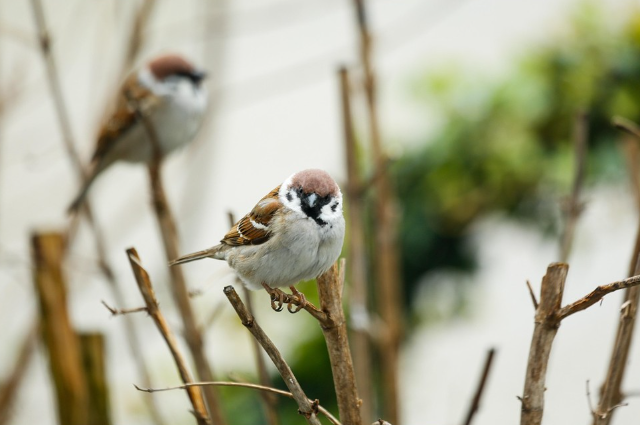
Image by Kurt Bouda from Pixabay
A Morning That Once Sang With Life
There was a time not very long ago, when mornings in Indian cities did not begin with alarms, traffic, or the glow of mobile screens. They began with life. As the first light of dawn filtered through curtains and across narrow lanes, a familiar, comforting sound would gently pull the city awake, the cheerful, restless chirping of sparrows.
Perched on windowsills, huddled along electric wires, or fluttering between balconies, these tiny birds were everywhere. Their presence was so ordinary, so constant, that it felt almost permanent. A sparrow would hop across the floor searching for grains, another would tilt its head curiously at its reflection in a steel plate, while a pair might be busy weaving a nest in a quiet corner of a roof. Their movements were quick, almost playful, little sparks of energy breathing life into still spaces.
In many homes, sparrows were not just birds; they were part of daily rituals. Grandmothers would scatter a handful of rice or millet on the balcony. Children would watch in delight as the birds gathered, chirping loudly, competing and cooperating at once. Clay bowls filled with water would glisten in the morning light, doubling as both a lifeline for the birds and a silent symbol of coexistence. Without realising it, people shared their homes, their spaces, and even their mornings with these feathered companions.
The sparrow’s song was more than just background noise; it was a signal. A signal that the environment was alive, that nature still had a place in the heart of the city. “Where there is life, there is sound.” And sparrows were that sound, vibrant, persistent, reassuring.
But today, something feels different.
The mornings still arrive, the sun still rises, and the city still awakens, but the soundtrack has changed. The chirping that once filled the air has grown faint, almost absent. Balconies that once hosted lively gatherings of sparrows now remain empty. The clay bowls dry up unnoticed. The silence, though subtle, is unmistakable.
Is it just nostalgia playing tricks on us, or has something truly disappeared? And it raises a haunting question:
Have the sparrows disappeared…
Or have we built a world where they simply cannot belong anymore?
In a small Mumbai balcony, an elderly woman still places a handful of rice every morning. “They used to come in dozens,” she says softly. “Now, sometimes… just one.”
The Unfolding Reality: A Quiet but Alarming Decline
The disappearance of sparrows is not the kind of crisis that arrives with drama or urgency. There are no sudden die-offs scattered across headlines, no images shocking enough to force immediate attention. Instead, this is a quieter tragedy, one that has unfolded gradually, almost invisibly, right in front of us. Like the slow fading of an old photograph, the change is so subtle that it often goes unnoticed, until one day, we realise something is missing.
For decades, the House Sparrow was among the most common birds across Indian cities. It thrived alongside humans, adapting effortlessly to urban life. Markets, railway stations, homes, and roadside eateries all served as its habitat. But over the past two to three decades, observations from birdwatchers, conservation groups, and environmental studies have begun to point in the same direction: a steady and significant decline.
In many metropolitan areas, sparrow populations have dropped by nearly 50% within just a decade. In some local pockets, especially densely built urban zones, the decline is even more severe, reaching 70–80% or higher. Long-term trends suggest that almost half of India’s sparrow population has vanished in the last 20–25 years. These are not isolated figures; they form a consistent pattern across cities like Delhi, Mumbai, Bengaluru, and Hyderabad.
What makes this decline particularly alarming is not just the numbers, but the nature of the decline itself:
- It is gradual, making it harder to detect
- It is widespread, affecting multiple regions simultaneously
- It is systemic, linked to broader environmental changes rather than a single cause
Unlike endangered species that live in distant forests, sparrows lived among us. Their disappearance, therefore, is not a remote ecological issue; it is a reflection of the changing health of our own living spaces.
This raises an important and uncomfortable question:
If a bird that adapted so well to human life is struggling to survive, what does that say about the environment we are creating?
Another striking aspect is how easily this decline escaped public attention. Sparrows were once so abundant that their absence did not immediately register. As the saying goes, “You don’t miss the sound of something until it stops.” The gradual thinning of their numbers blended into the background of urban change, new buildings, busier roads, and shrinking green spaces, until their silence became noticeable.
There is also a deeper ecological implication. Sparrows are often considered indicator species; their presence reflects a healthy, balanced environment. A decline in their population signals disruptions in food chains, habitat structures, and biodiversity. In other words, the disappearance of sparrows is not just about losing a bird; it is about losing balance.
And perhaps the most pressing concern is this: Are we witnessing just the beginning? If the current trends continue, will future generations grow up in cities where sparrows exist only in textbooks and memories? Will the bird that once symbolised simplicity and coexistence become a relic of the past?
The reality is clear, even if it is uncomfortable, this is not just a decline; it is a warning. A warning that something fundamental in our relationship with nature is shifting.
Unravelling the Causes: Why Are Sparrows Disappearing?
The decline of the sparrow is not the result of a single dramatic event, but rather a combination of subtle, interconnected changes that have quietly reshaped urban life. From the way we design our buildings to the way we manage our surroundings, every shift has had a ripple effect on the fragile ecosystem that once supported these birds.
Urban expansion has replaced natural habitats with concrete, modern architecture, which has erased nesting spaces, while the disappearance of insects has cut off a crucial food source. Added to this are less visible but equally damaging factors like pollution, noise, changing human habits, and climate variations, all working together to create an environment where survival is increasingly difficult.
This section explores the many layers of this decline. Each reason, on its own, may seem small or insignificant. But together, they form a powerful narrative, one that reveals how everyday choices and patterns of development have gradually pushed sparrows out of the spaces they once called home.
“Many drops make an ocean.” In this case, many small changes have led to one large, undeniable consequence, the quiet disappearance of a bird that once defined our mornings.
Cities That Grow, Nature That Shrinks
Over the past few decades, Indian cities have transformed at a breathtaking pace. Skylines have risen, roads have widened, and infrastructure has expanded to accommodate growing populations and aspirations. What once were low-rise neighbourhoods dotted with courtyards, trees, and open terraces have steadily given way to high-rise apartments, glass towers, and tightly packed concrete blocks. Progress, as we call it, has been rapid and visible.
But beneath this visible growth lies an invisible loss.
Traditional homes were unintentionally designed in a way that supported life beyond human needs. Sloping tiled roofs, small openings near ceilings, exposed beams, ventilators, and uneven walls created countless tiny spaces, perfect for sparrows to nest, rest, and breed. These structures were porous, breathable, and shared. Humans lived inside them, but nature lived with them.
Modern architecture, however, tells a very different story. Today’s buildings are engineered for efficiency, aesthetics, and insulation. Smooth glass facades, sealed windows, air-conditioned interiors, and polished concrete surfaces leave no room for intrusion. What we consider “clean” and “perfect” spaces are, in reality, hostile environments for small urban wildlife.
- No ledges to perch on
- No crevices to build nests
- No access points into buildings
- No tolerance for coexisting species
In trying to design spaces that exclude dust, heat, and noise, we have also excluded life. This transformation has effectively turned cities into what many ecologists call “concrete jungles”, but unlike real jungles, these lack biodiversity. They may be dense and expansive, but they are ecologically poor.
Another critical issue is urban density. As more buildings are packed into limited space, open areas shrink drastically. Small patches of land that once hosted shrubs, insects, and birds are replaced by parking lots, paved surfaces, or additional construction. The result is a landscape that offers little to no ecological support.
This leads to a deeper question:
Can a city truly be called “developed” if it cannot sustain even the smallest forms of life?
The irony is striking. Sparrows were among the most adaptable birds, thriving in proximity to humans for centuries. They adjusted to our noise, our habits, even our food. Yet, the pace and nature of modern urbanisation have outgrown even their remarkable adaptability.
As the idiom goes, “We built walls so high that even life could not cross them.”
And so, while our cities continue to grow upward and outward, nature quietly retreats, inch by inch, space by space.
The disappearance of sparrows, then, is not accidental. It is a direct consequence of how we have chosen to build our world - A world that is efficient, modern, and impressive, but increasingly, silent.
The Disappearance of Green: When Trees Become Rare
If cities are the body, then trees are their lungs, and for sparrows, they are much more than that. They are shelter, food source, nesting support, and a refuge from the relentless pace of urban life. For decades, even in crowded neighbourhoods, trees stood quietly along roadsides, in courtyards, and between homes, forming a living network that sustained countless small creatures.
Today, that network is steadily breaking.
As cities expand, trees are often the first casualties. They are cut down to make way for wider roads, new buildings, parking spaces, and infrastructure projects. What replaces them is rarely equivalent. Decorative plants, manicured lawns, or isolated patches of greenery may look aesthetically pleasing, but they lack the ecological depth needed to support bird life. A trimmed hedge cannot replace a full-grown tree. A row of ornamental plants cannot replicate a living ecosystem.
For sparrows, this loss is devastating.
Trees provide:
- Safe resting spaces away from predators.
- Natural shade protects them from extreme heat.
- Access to insects, which thrive around native vegetation.
- Microhabitats where breeding and feeding can occur.
When trees disappear, all these functions vanish with them. The environment becomes harsher, hotter, and less hospitable.
Urban heat is another overlooked factor. Without trees, cities experience what is known as the “urban heat island effect”- where concrete and asphalt absorb and radiate heat, raising temperatures significantly. For a small bird like the sparrow, even slight temperature increases can affect survival, breeding patterns, and food availability.
Moreover, the quality of green spaces has changed. Native plants, which support local insects and biodiversity, are increasingly replaced by exotic species chosen for visual appeal rather than ecological value. These plants often fail to attract insects, which in turn reduces food availability for sparrows. It creates what appears to be greenery, but is, in reality, an ecological void.
This raises an important question:
Is greenery still meaningful if it does not support life?
There is also a psychological disconnect at play. As urban residents, we often measure development in terms of infrastructure, taller buildings, smoother roads, and faster connectivity. Trees are seen as obstacles rather than assets. Their removal is justified in the name of progress, rarely questioned until the consequences become visible.
But nature works in balance. Remove one element, and others begin to falter. “Cut down a tree, and you don’t just remove shade, you erase a world.”
For sparrows, every lost tree is not just a missing perch; it is a lost opportunity for survival. It is one less place to rest, to feed, to raise their young. And when such losses accumulate across a city, the impact becomes irreversible.
The disappearance of green spaces, therefore, is not just an environmental issue; it is a biological crisis unfolding in slow motion. And in that quiet unfolding, the sparrow finds itself with fewer places to land, fewer reasons to stay, and fewer chances to survive.
A Home Lost: The Nesting Crisis
For the House Sparrow, survival has always been closely tied to human habitation. Unlike many birds that retreat into forests or wetlands, sparrows chose to live beside us, adapting their lives to our homes, our rhythms, and our spaces. In doing so, they became one of the most familiar and beloved urban birds.
But this relationship depended on something very simple: access to safe nesting spaces.
Traditional homes unknowingly provided the perfect conditions. Small cavities in walls, gaps beneath roof tiles, ventilators, wooden beams, and ledges created countless hidden corners where sparrows could build their nests. These spaces offered:
- Protection from predators such as cats and crows
- Shelter from harsh weather - heat, rain, and wind
- Proximity to food sources, often found near human activity
A pair of sparrows could quietly build a nest, raise their chicks, and repeat the cycle, season after season. Today, that possibility is rapidly disappearing.
Modern buildings are designed to be sealed, smooth, and structurally tight. Every gap is closed, every opening covered, every surface polished. Ventilators have been replaced by exhaust systems. Roof tiles have given way to concrete slabs. Wooden structures have been replaced with steel and glass.
What does this mean for sparrows?
It means there is nowhere to nest.
This has led to what can only be described as a housing crisis in the bird world. Sparrows may still be present in some areas, but without nesting sites, they cannot breed successfully. And without breeding, populations inevitably decline.
The consequences are profound:
- Reduced reproduction rates, as fewer nests can be built.
- Increased competition is forcing multiple pairs to fight for limited spaces.
- Higher mortality, especially among chicks exposed to unsafe conditions.
- Gradual disappearance, as older birds die without being replaced.
It is a silent but devastating cycle.
Imagine being forced out of your home, with no place to raise your family, no safe corner to return to. Survival becomes uncertain, not as a result of immediate danger, but as a result of the absence of opportunity. That is the reality sparrows face today.
There is also a deeper irony here. Sparrows did not lose their homes due to natural disasters or sudden changes; they lost them as a result of human design choices. In our pursuit of perfection, cleanliness, and efficiency, we unintentionally erased the small imperfections that once supported life.
As the idiom goes, “In smoothing out every corner, we left no space for life to settle.”
Yet, this is one of the few challenges where solutions are both simple and effective. Artificial nest boxes, small openings in structures, and conscious architectural choices can restore what has been lost. Wherever such efforts have been made, sparrows have shown a remarkable ability to return. At its heart, this is not just a story of loss; it is a story of displacement.
And sometimes, all it takes to bring life back is to give it a place to belong.
Hunger in the Air: The Decline of Insects
If the loss of homes has pushed sparrows to the edge, the loss of food is what is quietly pulling them over it. Among all the reasons behind their decline, this one is perhaps the most invisible and the most devastating. While we can see trees being cut or buildings rising, we rarely notice when something as small as an insect begins to disappear.
For the House Sparrow, food is not just about survival; it is about reproduction. Adult sparrows can feed on grains, seeds, and food scraps. But their chicks? They depend almost entirely on soft-bodied insects during the early stages of life. These insects provide essential proteins that help young birds grow, develop feathers, and gain strength. But studies across the world have shown that insect populations have declined by over 40% in many regions over the past few decades, creating a silent but devastating food crisis.
Now imagine a nest where the parents return again and again, but with less food each time. This is the reality in many urban environments today.
The decline in insect populations is driven by several interconnected factors:
- Excessive use of pesticides in agriculture and urban gardening kills not only harmful pests but also beneficial insects.
- Loss of native vegetation, which reduces habitats where insects breed and thrive.
- Air and water pollution, which disrupt insect life cycles.
- Overly “clean” urban spaces, where fallen leaves, soil patches, and natural growth are removed in the name of maintenance.
What we are witnessing is part of a larger global phenomenon often referred to as the “insect decline”, a silent collapse at the base of the food chain. For sparrows, this creates a tragic chain reaction:
No insects - insufficient nutrition for chicks - lower survival rates - fewer adult sparrows - declining population
It is a slow but relentless process.
There is also a seasonal dimension to this crisis. Sparrows typically breed during times when insects are abundant. But changing environmental conditions, rising temperatures, unpredictable rainfall, and disrupted ecosystems have begun to affect insect availability. When food does not align with breeding cycles, entire broods can fail.
Another overlooked aspect is how urban lifestyles contribute to this problem. Paved surfaces replace soil. Chemical sprays are used to keep homes and gardens “pest-free.” Even street lighting can disrupt insect behaviour, affecting their reproduction and survival. In trying to eliminate inconvenience, we have unknowingly eliminated necessity.
This raises a crucial question:
Can a bird survive in a world where its food source has vanished?
The answer, increasingly, is no.
“Cut the roots, and the tree will fall.” In this case, insects are the roots of a much larger ecological system. When they disappear, the effects ripple outward, affecting birds, plants, and ultimately, us.
The tragedy is that this crisis is almost entirely silent. There are no visible warnings, no immediate consequences that force attention. Just fewer insects on a summer evening, fewer birds at dawn, and a gradual thinning of life. And in that thinning, the sparrow struggles not because it cannot adapt, but because there is less and less left to adapt to. Hunger, after all, is not always loud. Sometimes, it is the quietest force of all.
Pollution: An Unseen Enemy in the Air
Air pollution is often framed as a human crisis, something that affects our lungs, our health, and our quality of life. But the truth stretches far beyond us. It seeps into the very fabric of urban ecosystems, quietly reshaping the lives of creatures that share our space. Among the most affected is the sparrow, a bird so small and delicate that even slight environmental changes can have profound consequences.
Unlike humans, sparrows cannot shield themselves from polluted air. They breathe it constantly, flying through it, nesting within it, feeding amidst it. Their tiny respiratory systems are far more sensitive, making them especially vulnerable to pollutants such as particulate matter, nitrogen oxides, and sulphur dioxide.
This leads to a range of physiological stresses:
Respiratory strain: Fine particles enter the lungs, reducing oxygen intake and affecting stamina. A bird that struggles to breathe cannot forage efficiently, escape predators, or care for its young.
Weakened immunity: Continuous exposure to pollutants compromises their immune systems, making them more susceptible to disease and infections.
Toxic accumulation: Heavy metals like lead and mercury, present in polluted environments, can accumulate in the bodies over time, affecting organ function and reproductive health. But pollution does not act in isolation; it spreads its effects across the ecosystem.
Fine particulate matter settles on leaves, soil, rooftops, and water sources. This contamination disrupts plant health, reduces photosynthesis, and alters the chemical balance of the environment. More importantly, it directly impacts insects, the primary food source for sparrow chicks. Polluted conditions either kill these insects or reduce their populations drastically.
The result is a cascading effect:
Pollution - Decline in insects - Food scarcity - Malnourished chicks - Reduced survival - Declining sparrow population
Even water sources are not spared. Birds often drink from puddles, open containers, or small water bodies that may contain dissolved pollutants. Over time, this further increases their toxic exposure.
Another subtle yet significant impact is on reproduction. Studies have shown that polluted environments can lead to:
- Reduced egg-laying
- Lower hatch rates
- Weaker offspring
In essence, pollution does not just affect individual birds; it affects entire generations. And perhaps what makes this issue even more concerning is its invisibility. Unlike a felled tree or a demolished nest, pollution leaves no obvious trace at the moment. There are no immediate signs that something is wrong, only gradual weakening, fewer sightings, quieter mornings.
This raises an unsettling question:
If the air itself becomes toxic, where can life truly thrive?
The irony, then, is both stark and sobering:
The same air that chokes our cities is silently choking its smallest inhabitants.
And in that shared breath - heavy, invisible, unavoidable lies a reminder that environmental harm does not discriminate. It does not stop at human boundaries. It travels, settles, and seeps into every living being that calls the city home. When the air is no longer clean, it is not just survival that is threatened - it is the very possibility of life itself.
Noise Pollution: When Communication Breaks Down
Cities today are rarely silent. From the early morning rumble of vehicles to the late-night hum of construction and generators, urban spaces are filled with a constant, unrelenting layer of sound. Horns blare, engines roar, loudspeakers echo, and machinery drills through the day. What was once an occasional disturbance has now become a permanent backdrop, so normal that we hardly notice it anymore. But for the sparrow, this is not just background noise. It is a barrier to survival.
Birds live in a world where sound is essential. Unlike humans, who rely heavily on sight and language, sparrows depend on vocal signals for almost every aspect of their lives. Their chirps are not random; they are purposeful, nuanced, and vital. Through these sounds, they:
- Attract mates, using specific calls during breeding seasons.
- Warn others of predators, alerting the flock to immediate danger.
- Maintain social bonds, staying connected with their group.
- Coordinate feeding and movement, especially in busy urban environments.
In a natural setting, these sounds travel clearly, allowing sparrows to respond quickly and effectively. But in a noisy city, these signals are often drowned out.
This phenomenon, known as acoustic masking, occurs when background noise overlaps with the frequency of bird calls, making them difficult or even impossible to hear. Imagine trying to whisper across a crowded railway platform during peak hours. No matter how important the message, it gets lost.
The consequences for sparrows are far-reaching:
- Mating becomes difficult: If a male’s call cannot reach a potential mate, opportunities for reproduction are lost. Over time, this directly impacts population growth.
- Delayed or missed danger signals: When alarm calls are masked by noise, birds may fail to react quickly to predators, increasing mortality.
- Fragmented social groups: Communication breakdown leads to disorientation within flocks, making coordination harder.
- Chronic stress: Constant exposure to high noise levels elevates stress hormones, affecting health, immunity, and behaviour.
Some birds attempt to adapt by altering their calls, chirping louder or at higher pitches, but this comes at a cost. It requires more energy, increases fatigue, and is not always effective against overwhelming noise levels.
There is also a deeper behavioural impact. Noise pollution can change nesting patterns, forcing birds to avoid otherwise suitable habitats simply because they are too loud. In extreme cases, it may even discourage sparrows from settling in certain areas altogether.
This raises a compelling question:
If a bird cannot be heard, can it truly exist in that space?
The comparison is simple yet powerful. Imagine living in a room where the volume never drops, where every attempt to speak is drowned out, every warning unheard, every call unanswered. Over time, frustration turns into isolation, and isolation into vulnerability. And in the natural world, vulnerability is often fatal.
When communication fails, coordination collapses. When coordination collapses, survival becomes uncertain. For sparrows, survival is not just about food and shelter; it is about connection. In cities where noise never sleeps, that connection is slowly being lost.
Changing Food Habits: The Disappearance of Grain Sources
For centuries, the survival of the House Sparrow was quietly intertwined with human lifestyles. Without any conscious effort, our daily habits created a steady, reliable food supply for these birds. In bustling grain markets, tiny seeds would spill onto the ground as sacks were opened, weighed, and transported. In homes, grains were cleaned, dried, and stored in ways that left small quantities accessible. Courtyards and balconies often became informal feeding grounds, where a handful of rice or millet was scattered as part of routine life.
These seemingly insignificant acts formed an invisible support system.
Sparrows adapted to this environment effortlessly. They learned to forage around human settlements, timing their visits with market activity or household routines. Food was not abundant in excess, but it was consistent, predictable, and accessible.
But as urban lifestyles evolved, this delicate balance began to shift.
Modern cities have moved toward efficiency, hygiene, and convenience:
- Open grain markets have been replaced by packaged goods in supermarkets.
- Traditional storage methods have given way to airtight containers and sealed kitchens.
- Food handling has become more controlled, leaving little to no spillage.
- Urban cleanliness initiatives ensure that streets and public spaces remain free of food waste.
While these changes have improved sanitation and reduced wastage for humans, they have unintentionally removed a vital food source for sparrows. What once existed as a constant trickle of nourishment has now dried up.
This creates a subtle but significant challenge. Unlike birds that rely entirely on natural ecosystems, sparrows evolved to depend partly on human environments. When those environments change, their survival becomes uncertain.
There is also a cultural shift at play. Earlier generations often had a closer relationship with nature - feeding birds was seen as an act of kindness, sometimes even a daily ritual. Today, fast-paced urban life leaves little room for such practices. Balconies are enclosed, outdoor spaces are limited, and the simple act of sharing food with birds is becoming increasingly rare.
When human habits change, what happens to the species that depended on them?
The disappearance of grain sources may not seem as dramatic as deforestation or pollution. There are no visible losses, no immediate alarms. But its impact is steady and cumulative.
- Less accessible food means. increased competition among birds.
- Reduced nutrition affects energy levels and breeding success.
- Over time, fewer birds are able to sustain themselves in urban areas.
The grains are no longer visible, and slowly, neither are the sparrows.
This shift reminds us of a deeper truth. Not all environmental changes are loud or destructive. Some are quiet, almost invisible, but their consequences echo over time. And in this quiet transformation of our food habits, the sparrow has lost yet another thread that once tied it to human life.
Predators and Urban Threats: A Riskier Environment
Urban life does not just take away resources; it reshapes danger. As cities expand and ecosystems shift, the balance between species changes in ways that often put smaller, more vulnerable birds like the sparrow at a disadvantage. What was once a relatively stable coexistence has turned into a far more unpredictable and hazardous environment.
One of the most significant changes is in predator dynamics. In natural ecosystems, predators and prey exist in a kind of balance. But urban environments disrupt this equilibrium, often favouring species that can adapt quickly to human presence.
Take domestic and stray cats, for instance. With abundant food sources and shelter in cities, their populations have grown steadily. Unlike wild predators, cats hunt even when they are not hungry, making them particularly dangerous for small birds. A single cat can kill multiple birds in a short span, and sparrows, small, ground-feeding, and often unaware, become easy targets.
Then there are crows, highly intelligent and opportunistic birds that thrive in urban settings. They compete aggressively for food and space, often dominating areas where sparrows once lived peacefully. Crows may also prey on eggs and chicks, further reducing sparrow populations. Even pigeons, though not direct predators, compete for nesting spaces and food, pushing sparrows out of already limited habitats.
In addition to these living threats, cities are filled with man-made hazards that did not exist in natural environments:
- Glass windows and reflective surfaces create illusions of open sky or greenery. Birds, unable to recognise these reflections, often collide at high speed, leading to injury or death.
- Vehicles pose constant danger, especially in areas where sparrows forage near roads. A moment’s delay, a sudden movement and survival becomes a matter of chance.
- Electrical wiring and infrastructure can lead to entanglement, injury, or accidental electrocution.
These dangers are not always obvious, but they are ever-present.
There is also the factor of reduced safe spaces. With fewer trees, nesting spots, and quiet areas, sparrows are forced into more exposed environments where threats are higher. The margin for error becomes thinner. A slight misjudgment, choosing the wrong perch, flying at the wrong moment, can be fatal.
This creates a harsh reality:
It is no longer just about finding food or shelter. It is about surviving a landscape filled with constant risk.
The urban environment, in many ways, has become a test of endurance - one that favours stronger, larger, or more aggressive species. Sparrows, with their small size and gentle nature, struggle to compete in such conditions.
As the saying goes, “It is not only the scarcity of resources, but the abundance of dangers that defines survival.”
And for sparrows, the city is no longer just a place to live; it is a place to constantly escape, avoid, and endure. In a world where threats are everywhere, even the smallest life must fight the hardest to survive.
Climate Change: A Slow but Powerful Influence
Climate change rarely announces itself with a single dramatic moment. It does not arrive overnight or alter the world in ways that are immediately visible. Instead, it works quietly, shifting temperatures, altering seasons, and subtly disrupting the natural rhythms that life depends on. For small, sensitive species like the House Sparrow, these gradual changes can have profound and lasting consequences.
At the heart of the issue is timing.
Sparrows, like many birds, rely on environmental cues to guide their life cycles, when to breed, when to build nests, and when food will be most abundant. These cycles evolved over generations, finely tuned to predictable patterns of temperature, rainfall, and seasonal change.
But climate change is rewriting those patterns.
Rising Temperatures: Stress Beyond Survival
Increasing urban temperatures, especially in cities already affected by the heat island effect, place immense strain on sparrows. Extreme heat can lead to:
- Dehydration and exhaustion, particularly during peak summer months
- Reduced activity, as birds conserve energy and avoid exposure.
- Lower breeding success, as eggs and chicks are highly sensitive to heat.
In severe heatwaves, even adult birds may struggle to survive, especially when water sources are scarce.
Unpredictable Rainfall: Disrupting Nature’s Timing
Rainfall patterns have become increasingly erratic, arriving too early, too late, or in sudden, intense bursts. This unpredictability affects:
- Insect availability, which is closely linked to moisture and plant growth.
- Breeding cycles, as sparrows depend on a steady food supply for their chicks.
- Nest safety, with heavy rains sometimes destroying fragile nests.
When food availability and breeding periods fall out of sync, entire broods may fail, not from lack of effort, but from poor timing.
Heatwaves and Extreme Weather Events
Extreme weather events are becoming more frequent and intense:
- Prolonged heatwaves increase mortality rates
- Sudden storms can destroy nests and displace birds
- Drought conditions reduce both food and water availability
For a small bird, even a short period of extreme conditions can be life-threatening.
The Compounding Effect: When Pressures Overlap
Perhaps the most critical aspect of climate change is how it interacts with other existing challenges. A sparrow already struggling with limited nesting spaces, reduced food sources, pollution and noise now faces an additional layer of environmental stress.
This creates a compounding effect, where multiple pressures overlap and intensify one another. A slight temperature rise may not seem significant on its own, but combined with food scarcity and habitat loss, it can push survival beyond its limits.
This raises a crucial question:
How much change can a small bird endure before adaptation is no longer possible?
Climate change may act gradually, but its impact is relentless. It chips away at stability, disrupts balance, and weakens resilience over time. The tragedy is that these changes are often invisible at the moment. There is no single event we can point to and say, “This is when it happened.” Instead, there is only a gradual shift, fewer birds, quieter mornings, and a growing absence that is felt more than seen.
For sparrows, climate change is not just an environmental issue; it is a test of endurance in a world that is changing faster than they can adapt. In that slow, steady transformation, survival becomes not just difficult but uncertain.
The Radiation Debate: Myth vs Reality
Few explanations for the decline of the sparrow have captured public imagination as strongly as the idea of mobile tower radiation. It is easy to understand why. The rapid rise of mobile technology has been visible, dramatic, and almost universal. Towers have appeared across skylines, networks have expanded, and with them has come a growing concern: Could this invisible radiation be driving sparrows away?
At first glance, the argument seems plausible. Radiation is unseen, poorly understood by the general public, and often associated with harm. Linking it to a visible decline in birds offers a simple, almost intuitive explanation.
But science tells a more nuanced story.
Research conducted over the years suggests that while electromagnetic radiation may have some biological effects, there is no conclusive evidence to prove that it is the primary cause of sparrow decline. Compared to more direct and measurable factors such as habitat loss, disappearance of nesting spaces, and reduction in food sources, the role of radiation appears limited or secondary.
In fact, one of the key challenges in this debate is correlation versus causation.
Mobile towers have increased over the same period that sparrow populations have declined. But this does not necessarily mean one caused the other. During the same time, cities have also:
- Expanded rapidly
- Lost green cover
- Shifted to modern architecture
- Increased pollution levels
- Reduced insect populations
All of these changes have a far more direct and observable impact on sparrow survival.
There are also inconsistencies in the radiation argument. Sparrows are still found in some areas with high tower density, while in other places with fewer towers, their numbers have declined. This suggests that other environmental factors play a more decisive role.
This does not mean radiation should be dismissed entirely. Ongoing research continues to explore its long-term effects on wildlife, and it remains an area of scientific interest. However, focusing on it as the main culprit risks oversimplifying a complex ecological issue.
And that is where the real danger lies.
Blaming a single, visible factor can create a false sense of understanding. It allows us to point to one cause, and, by extension, one solution. But the decline of sparrows is not the result of one problem. It is the outcome of multiple, interconnected changes that have collectively altered their environment.
By focusing too heavily on radiation, we risk overlooking the more immediate and actionable causes:
- The buildings we design
- The trees we remove
- The chemicals we use
- The spaces we reshape
- This raises an important question:
Are we searching for easy answers instead of confronting difficult truths?
The reality is this: if we ignore the real drivers of decline, our efforts to protect sparrows will fall short. Solutions built on an incomplete understanding cannot succeed. The truth may be more complex, less dramatic, and harder to accept. But it is also more useful. And unless we choose to see that complexity, unless we address the real causes, the silence we hear today may only deepen tomorrow.
So, are sparrows disappearing because of one big reason?
No.
They are disappearing due to many small changes, each seemingly harmless, but collectively devastating. Perhaps that is what makes this crisis so urgent, for if many small actions caused the problem, then many small actions can also become the solution.
What Can We Do? Small Actions, Big Change
The story of the House Sparrow is not just a story of decline; it is also a rare story of possibility. Unlike many species that disappear into distant forests or inaccessible habitats, sparrows live among us. Their survival is closely tied to our everyday choices, which means something powerful:
We are not helpless spectators; we are participants in their recovery.
And the most encouraging part? The solutions do not require grand interventions or complex policies. They begin with simple, mindful actions, small steps that, when multiplied across homes and communities, can create meaningful change.
Plant Trees and Native Plants: Rebuilding Lost Ecosystems
Green spaces are not just aesthetic; they are essential. By planting trees and native plants, we recreate the natural support systems that sparrows depend on.
Native plants, in particular, play a crucial role as they:
- Attract insects, providing food for sparrow chicks.
- Offer shade and resting spots.
- Create microhabitats that support biodiversity.
Even a balcony garden, a few potted plants, or a small patch of soil can become a thriving mini-ecosystem. Over time, these pockets of greenery can reconnect fragmented habitats across cities.
It’s a simple truth: bring back plants, and life follows.
Keep Water Bowls: A Lifeline in Harsh Summers
Urban summers can be brutal, especially for small birds. With natural water sources disappearing and temperatures rising, dehydration becomes a serious threat.
Placing a shallow bowl of clean water on your balcony, terrace, or window ledge can make an immediate difference. It serves multiple purposes:
- Drinking water for hydration.
- A place for birds to cool down.
- A safe, accessible oasis in a harsh environment.
Regularly cleaning and refilling the bowl ensures it remains safe and inviting. What may seem like a small gesture to us can be the difference between life and death on a scorching day.
Install Nest Boxes: Giving Back Lost Homes
One of the biggest challenges sparrows face today is the lack of nesting spaces. Artificial nest boxes offer a practical and highly effective solution.
When installed correctly in quiet, shaded areas, they:
Mimic natural cavities once found in older buildings.
Provide safe breeding spaces away from predators.
Encourage sparrows to return and settle.
Conservation efforts have shown that sparrows readily adopt such spaces when available. A single nest box can support an entire family, bringing life back to spaces that had grown silent. In fact, in some urban initiatives, over 60–70% of installed nest boxes have been successfully occupied, proving that even small interventions can bring them back. Sometimes, restoring nature begins with something as simple as offering a home.
Avoid Pesticides: Protecting the Food Chain
Insects are the foundation of the sparrow’s diet, especially for their young. The widespread use of pesticides, however, has drastically reduced insect populations.
By choosing to avoid or minimise chemical use:
- Insect populations can recover.
- Natural food sources are restored.
- The ecological balance begins to heal.
Switching to organic or natural gardening practices not only benefits birds but also improves soil health and overall biodiversity. The principle is clear: protect the smallest life forms, and larger ones will thrive.
Offer Grains: Reviving a Lost Connection
A handful of grains, millet, rice, or wheat, may seem insignificant. But for sparrows, it can be a reliable and much-needed food source.
Placing grains in a fixed spot daily:
- Helps birds establish a routine.
- Reduces the struggle to find food in urban settings.
- Recreates a traditional human–bird connection that has faded over time.
This simple act also carries a deeper meaning. It reminds us of a time when coexistence was natural, when sharing space and resources with other living beings was part of everyday life.
The Power of Small Actions
Individually, these actions may seem too small to matter. A bowl of water, a few grains, a plant, a box on a wall, how much difference can they really make? But collectively, they create a ripple effect.
One balcony becomes a refuge. One neighbourhood becomes a habitat. One city begins to change.
As the idiom beautifully captures, “Little drops make the mighty ocean.”
Perhaps that is where hope lies, not in waiting for large-scale change, but in recognising that every small act is a step toward restoring life. In the end, saving the sparrow does not require extraordinary effort; it requires ordinary people choosing to care.
A Question for Every One of Us
The decline of the House Sparrow is not just an environmental concern; it is a mirror held up to our choices, our priorities, and the kind of future we are shaping. It forces us to pause and ask questions that go far beyond birds.
What kind of cities are we really building?
On one hand, we celebrate cities that are fast, efficient, and modern, filled with towering buildings, seamless infrastructure, and constant movement. But in our pursuit of progress, have we unintentionally created functional spaces, yet devoid of life? Spaces where everything is controlled, polished, and perfected, but nothing truly lives beyond human boundaries? Or do we envision cities differently?
Cities that breathe with nature, where trees are not obstacles but essentials, where birds are not intruders but inhabitants, where the rhythm of life includes more than just human activity. Cities where mornings are not defined by noise alone, but by the gentle, familiar chorus of birdsong. A city is not just a collection of buildings; it is an ecosystem.
The absence of sparrows raises a stronger, more unsettling possibility: If such a small, adaptable bird can no longer survive in our cities, what does that say about the health of the environment we are creating?
This question becomes even more powerful when we think about the future.
What will the next generation inherit?
Will children grow up hearing stories about sparrows the way we hear stories about extinct species through photographs, textbooks, and memories that feel distant and unreal? Will the chirping of birds become something artificial, played through screens instead of experienced in real life? Or will they wake up, as we once did, to a living, breathing world where sparrows hop along windowsills, where their chatter fills the air, where coexistence is not an idea but a reality?
There is also a moral dimension to this question. Do we have the right to shape cities in ways that exclude other forms of life entirely? Or do we carry a responsibility to ensure that progress does not come at the cost of silence?
As the saying goes, “We do not inherit the earth from our ancestors; we borrow it from our children.” The choices we make today, how we build, how we live, and how we coexist will determine the soundscape of tomorrow. And perhaps, at its heart, this is not just a question about sparrows. It is a question about who we are becoming. In the end, the kind of cities we build will reflect the kind of world we believe in- one that is efficient and isolated, or one that is vibrant, shared, and alive.
And the answer to that question is being written every single day, in the choices we make.
Conclusion: When Silence Becomes the Loudest Warning
There will come a day, quiet, ordinary, almost unremarkable, when the silence will no longer feel natural. It will linger a little longer than usual. It will settle into spaces where sound once lived. And in that stillness, something will feel out of place.
Not visibly broken.Not dramatically lost. Just… missing.
Because it is.
The fading presence of the House Sparrow is not just the disappearance of a bird. It is the quiet unravelling of a relationship between humans and nature, between cities and life, between progress and balance. It is a signal, subtle yet urgent, that something fundamental is shifting in the world we are building.
Sparrows were never rare. They were never distant or hidden. They lived beside us, adapted to us, trusted our spaces enough to raise their young within them. And if even such a resilient, familiar bird is struggling to survive, then the question is no longer about them alone; it is about the environment we have created around ourselves.
What does it mean when life begins to withdraw from our cities? It means the air is changing. The food chains are weakening. The ecosystems are losing their balance. And slowly, almost imperceptibly, the world becomes less alive.
This is why the disappearance of sparrows matters. Not because they are the only species at risk, but as they are a warning we can still hear, if we choose to listen. A warning that arrives not with alarm, but with absence. Not with noise, but with silence. And silence, in this case, speaks louder than anything else.
“When the last sparrow disappears, it will not just take its song with it; it will take a piece of our humanity.”
What we lose is not just sound.
We lose connection.
We lose coexistence.
We lose the quiet reassurance that we are not alone in the spaces we inhabit.
We did not chase the sparrows away; we simply built a world where they could no longer stay.
But this is not a story that has ended. Not yet.
The future is still unwritten, and the silence is not yet complete. There is still time to act, to restore, to rethink the way we build and live. The solutions are not distant or impossible; they are within reach, in the smallest of actions and the simplest of choices.
And so, the real question is no longer:
“Are sparrows disappearing?”
We already know the answer.
The real question is -
“Will we listen to the silence before it becomes permanent?”
Once it does, no amount of progress, no measure of development, will be able to bring the song back.
References
- https://www.thehindu.com
- https://timesofindia.indiatimes.com
- https://www.deccanherald.com
- https://www.bnhs.org
- https://www.indiawaterportal.org
- https://www.wwfindia.org
- https://www.nationalgeographic.com
- https://www.sciencedirect.com
- https://www.nature.com