
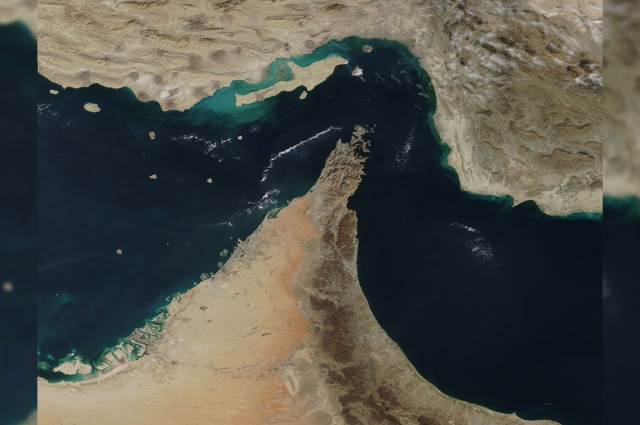
At dawn, the sea looked calm. Oil tankers, massive, slow-moving giants, began lining up at the mouth of a narrow waterway. But something was different. Movement had slowed. Radio chatter intensified. Insurance alerts were issued. Markets, thousands of kilometres away, began reacting even before a single drop of oil was delayed.
What could cause such a chain reaction?
A single word: Hormuz.
The Strait of Hormuz, a narrow passage between Iran and Oman, is not just a geographical feature; it is the pulse of the global energy system. When it flows smoothly, the world functions quietly. When it trembles, the world pays attention.
And for India, a nation deeply tied to Gulf energy, the stakes are not abstract. They are immediate, tangible, and deeply personal.
What happens if this narrow passage is disrupted?
Can the world afford such a risk?
And more importantly, can India?
At first glance, it seems almost unbelievable that a thin stretch of water on the world map could influence the lives of billions of people. Yet in today’s deeply interconnected world, geography often carries immense power. A single maritime corridor, quietly nestled between desert coastlines in the Middle East, has the ability to influence global trade, shape political decisions, and determine the stability of energy markets across continents. This is the Strait of Hormuz, a place where geography, economics, and geopolitics intersect in remarkable ways.
Modern civilisation runs on energy. From the buses that transport workers to the factories that manufacture goods, from the aeroplanes that shrink distances to the ships that move global commerce, fuel powers the rhythm of everyday life. Much of that fuel originates from a cluster of oil-rich nations whose resources have shaped global politics for decades. Before this energy can reach distant economies, however, it must pass through specific maritime routes that connect producing regions to consuming markets. Among these routes, the Strait of Hormuz stands out as one of the most critical gateways in the entire global energy network.
What makes this passage particularly significant is not merely the scale of traffic that moves through it, but the fragile balance that surrounds it. The waters around the strait lie in a region long marked by political rivalries, shifting alliances, and strategic competition among powerful nations. As a result, the stability of this small corridor has implications that stretch far beyond its shores. Even a hint of tension in the region can trigger immediate reactions in international markets, reminding the world how dependent modern economies remain on vulnerable supply routes.
The importance of this waterway becomes even more evident when one considers the countries whose economic stability is closely tied to energy imports. Among them is India, a rapidly growing economy where fuel demand continues to rise alongside urbanisation, industrial expansion, and increasing mobility. For such nations, developments in distant maritime corridors are not abstract geopolitical events; they have tangible consequences that can affect transportation costs, industrial production, and household budgets.
Thus, the Strait of Hormuz is far more than a geographic feature tucked between two coastlines. It is a crucial crossroad where global commerce, energy security, and international politics converge. Understanding its significance is essential for grasping how the movement of ships across a narrow channel can influence economies, shape diplomatic strategies, and impact everyday life in countries thousands of kilometres away.
Part 1: What Exactly Is the Strait of Hormuz?
The Strait of Hormuz is one of the most strategically important waterways in the world. Though small in size, it serves as a crucial maritime gateway connecting the oil-rich Gulf region with the rest of the world. In geographical terms, a strait is a narrow passage of water that links two larger bodies of water, and the Strait of Hormuz performs this role precisely by connecting the Persian Gulf to the Gulf of Oman, which eventually opens into the Arabian Sea and the wider Indian Ocean. This connection makes it one of the most vital maritime routes for global shipping, particularly for the transport of energy resources.
Geographically, the strait lies between Iran to the north and Oman and the United Arab Emirates to the south. These coastlines form a narrow maritime corridor through which ships leaving the Persian Gulf must travel in order to reach international waters. Because of this unique location, the Strait of Hormuz acts as a natural gateway for trade flowing out of the Gulf region.
One of the most striking features of the strait is its narrow width. At its narrowest point, the Strait of Hormuz measures only about 33 kilometres across. Within this limited space, international shipping lanes have been carefully designed to guide vessels safely through the waterway. The lanes themselves are extremely narrow, especially considering the enormous size of the vessels that travel through them.
Key geographical features of the Strait of Hormuz include:
Extremely narrow shipping corridors – Tankers moving in opposite directions use lanes that are only a few kilometres wide.
A key location between major oil-producing regions and global markets.
Heavy maritime traffic consisting of oil tankers, cargo ships, and naval vessels.
Deep waters suitable for large crude carriers, which are among the biggest ships in the world.
Despite its narrow size, the strait handles an astonishing amount of maritime traffic every day. Massive oil tankers carrying crude oil and liquefied natural gas move through this corridor continuously. These ships transport energy resources from the Persian Gulf to markets in Asia, Europe, and other parts of the world.
The significance of this passage also stems from the fact that many major oil-producing countries depend on it as their primary export route. Nations such as Saudi Arabia, Iraq, Kuwait, Qatar, and the United Arab Emirates lie along the shores of the Persian Gulf. For these countries, the Strait of Hormuz is the most direct maritime path through which their oil and natural gas reach global consumers.
Several important characteristics define the Strait of Hormuz and explain why it attracts global attention:
It is the only sea route connecting the Persian Gulf with the open ocean.
A large portion of the world’s energy supply travels through it.
Its narrow geography makes it vulnerable to disturbances.
It lies in a region that has long been deeply and politically sensitive.
Because of these factors, the Strait of Hormuz is often described as a “global maritime chokepoint.” In international trade, a chokepoint refers to a narrow route through which a significant portion of global traffic must pass. When such a route becomes unstable or blocked, the consequences can ripple across the entire global economy.
Thus, while the Strait of Hormuz may appear small on a map, its importance is immense. It functions as a crucial maritime gateway linking energy-rich regions to the rest of the world, and its stability plays a vital role in ensuring the smooth functioning of global trade and energy supply chains.
Part 2: Why the Strait of Hormuz Is So Important to the World
The significance of the Strait of Hormuz lies not merely in its geography but in the enormous volume of energy resources that pass through it every day. In the modern world, oil and natural gas remain the lifeblood of industrial economies. They power vehicles, run factories, generate electricity, and fuel global trade. Much of this energy originates in the Gulf region, which holds some of the largest petroleum reserves on the planet. Before reaching markets across Asia, Europe, and other regions, a substantial portion of this energy must pass through the narrow waters of the Strait of Hormuz.
Because of this critical role, the strait has become one of the most important maritime routes in the global energy network. Every day, fleets of massive tankers loaded with crude oil and liquefied natural gas move through this corridor, carrying fuel to countries thousands of kilometres away. The uninterrupted movement of these vessels is essential for maintaining the stability of international energy supplies.
Several reasons explain why the Strait of Hormuz holds such enormous importance for the world.
1. A Major Artery of the Global Energy Supply
One of the primary reasons for the strait’s importance is the sheer quantity of oil and gas transported through it. Estimates indicate that roughly one-fifth of the world’s petroleum consumption passes through this narrow waterway each day. This means that a significant share of the energy powering industries, transportation systems, and urban economies across the globe depends on the safe passage of ships through this corridor.
In addition to crude oil, the strait is also a vital route for liquefied natural gas (LNG), an increasingly important fuel used for electricity generation and industrial processes. Countries that rely heavily on imported LNG depend on seamless shipping through this route to ensure stable energy supplies.
2. Gateway for the World’s Largest Oil Producers
The Strait of Hormuz serves as the principal maritime exit for several major oil-producing countries located along the Persian Gulf. These countries possess vast reserves of hydrocarbons and play a crucial role in meeting global energy demand.
Some of the major producers whose exports pass through this strait include:
Saudi Arabia, one of the world’s largest exporters of crude oil.
Iraq, whose oil production has grown significantly in recent decades.
Kuwait, heavily dependent on petroleum exports.
Qatar, a global leader in liquefied natural gas production.
United Arab Emirates, an important energy supplier to global markets
For these nations, the Strait of Hormuz is the most direct route through which their oil and gas can reach international buyers. Any interruption to shipping through this passage would affect not only these exporters but also the countries that depend on their energy supplies.
3. A Pivotal Chokepoint in Global Trade
The Strait of Hormuz is one of the most critical maritime chokepoints in the world. Because traffic is concentrated in such confined spaces, even minor obstructions can have widespread consequences.
If ships are delayed or prevented from passing through the strait, several ripple effects can occur:
Energy supplies to importing countries may be disrupted.
Global oil prices may rise sharply due to fears of shortages.
Shipping costs and insurance premiums for vessels may increase.
Financial markets may react with volatility as traders anticipate supply constraints.
In a world where economies are tightly interconnected, such disruptions can quickly spread from energy markets to broader economic sectors.
4. Impact on Global Energy Prices
Another reason the Strait of Hormuz commands global attention is its influence on oil prices. Energy markets are extremely sensitive to geopolitical developments in the region. Even the possibility of instability or conflict near the Strait can cause oil prices to rise.
This is because markets operate largely on expectations. If traders believe that supply routes might be threatened, they begin to anticipate shortages. As a result, oil prices can climb rapidly even before any actual halt occurs.
Such price fluctuations affect not only energy companies but also governments, industries, and consumers across the world.
5. A Waterway Under Constant Global Attention
Because of its economic and global importance, the Strait of Hormuz remains under constant observation by governments, shipping companies, and international organisations. Naval forces from multiple countries patrol the region to ensure that commercial shipping continues safely. The strait, therefore, represents far more than a geographic passage; it is a focal point where energy security, international trade, and geopolitical interests converge.
In many ways, the Strait of Hormuz can be compared to a vital artery in the global economic system. Just as arteries carry blood essential for life, this maritime corridor carries the energy resources that sustain modern economies.
A disturbance here would not remain confined to the Middle East; it would send shockwaves through global markets, affecting industries, governments, and households across continents.
For this reason, the stability and security of the Strait of Hormuz remain a matter of global concern, illustrating how a narrow passage of water can hold immense power over the functioning of the modern world.
Part 3: The Strait of Hormuz and Global Geopolitics
If the Strait of Hormuz is the world’s energy artery, then geopolitics is the force that determines whether that artery flows smoothly or faces dangerous blockages. What makes this region uniquely sensitive is not just its strategic location, but the complex web of power, influence, and mistrust that surrounds it. Here, diplomacy is often tense, military readiness is constant, and every move is watched with global concern.
At the heart of this geopolitical landscape lies Iran, a nation whose geographic position gives it a commanding presence over the northern edge of the strait. This positioning has long translated into powerful influence. Unlike many other waterways in the world, control here is not just about navigation; it is about leverage. The ability to influence, threaten, or secure this passage gives immense bargaining power in international relations.
A Region Where Power Is Constantly Negotiated
The Strait of Hormuz exists within a broader region marked by shifting alliances and deep-rooted rivalries. Relationships between countries here are often shaped by:
Historical conflicts and ideological differences.
Competition for regional dominance.
External involvement by global powers.
This creates an environment where stability is never taken for granted. Even during periods of relative calm, there is an undercurrent of persistent caution.
The Role of Global Powers
The presence of external powers, particularly the United States, adds another layer of complexity. For global powers, ensuring that this maritime route remains open is not just an economic necessity but also a geopolitical priority.
This has led to:
Continuous naval deployment in nearby waters.
Joint exercises with allied nations.
Surveillance operations to monitor activity in the region.
Such actions are intended to maintain balance, but they can also heighten tensions, especially when perceived as threats by regional actors.
A Theatre of Signalling and Strategy
Unlike open conflict zones, the Strait of Hormuz often becomes a stage for tactical signalling rather than confrontation. Nations use various actions to send messages without crossing into full-scale conflict.
These signals can take the form of:
Military drills near the waterway.
Increased patrol activity.
Public statements warning of potential consequences.
Temporary detentions or inspections of vessels.
Each move is carefully calculated. The objective is often to demonstrate strength or resolve without triggering escalation. However, such signalling carries inherent risks, such as misinterpretation or miscalculation, which can quickly spiral into crisis.
A clear example of how fragile the situation can be was seen in 2019, when several oil tankers were attacked near the Strait of Hormuz amid rising tensions involving Iran and the United States. The incidents immediately triggered global concern, pushing oil prices upward and forcing shipping companies to reassess routes and security measures. Even though the strait was not closed, the mere occurrence of such attacks highlighted how quickly instability in this region can disrupt global energy markets. It served as a stark reminder that the risks surrounding the Strait of Hormuz are not theoretical; they are real and immediate.
The Psychology of Uncertainty
One of the most powerful aspects of geopolitics in this region is uncertainty. Markets, governments, and industries do not just react to actual events; they react to perceived risks.
This creates a unique dynamic where:
A warning can be as impactful as an action.
A military exercise can raise global anxiety.
A diplomatic breakdown can ripple across continents.
In this sense, the Strait of Hormuz operates not only as a physical space but also as a psychological pressure point in global affairs.
Why the Strait Remains a Persistent Flashpoint
Several underlying factors ensure that the Strait of Hormuz continues to remain geopolitically sensitive:
Its proximity to politically volatile regions.
Its role in connecting competing spheres of influence.
It has symbolic importance as a point of control and resistance.
Its ability to amplify even minor tensions into global concerns.
Unlike many other vital locations, the significance of this strait is constantly reinforced by the interplay of politics, military strategy, and economic dependence.
A Delicate Balance with Global Consequences
The Strait of Hormuz represents a fragile equilibrium, one where peace is maintained not by the absence of tension, but by the careful management of it. Nations tread cautiously, aware that any misstep could have consequences far beyond the region.
It is this delicate balance that makes the Strait one of the most closely observed geopolitical spaces in the world. Decisions made here, whether diplomatic, military, or strategic, do not remain confined to the region. They echo across global markets, influence international relations, and shape the stability of economies worldwide.
In essence, the Strait of Hormuz is a passage of water as well as a living example of how geography and geopolitics intertwine, where power is constantly negotiated, and the stakes are nothing less than global stability.
Part 4: Why the Strait of Hormuz Is Crucial for India
What if a 33-kilometre stretch of water could raise fuel prices in Mumbai overnight?
For India, this is not a hypothetical question…
The Strait of Hormuz is not just a distant maritime corridor discussed in international news; it is deeply woven into the fabric of the country’s economic functioning. As one of the fastest-growing major economies in the world, India’s demand for energy has been rising steadily, driven by rapid urbanisation, expanding industries, and increasing mobility among its population. Every additional car on the road, every new factory, and every growing city adds to the country’s energy needs.
However, India faces a fundamental challenge: it does not produce enough oil domestically to meet its growing demand. As a result, the country depends heavily on imports, particularly from the Gulf region. This dependence makes maritime routes, especially the Strait of Hormuz, critically important for ensuring a steady and reliable flow of energy into the country.
India’s Growing Energy Appetite
India’s development story is deeply intertwined with its rising energy consumption. As infrastructure expands and industries scale up, the demand for fuel continues to surge across multiple sectors. Transportation relies heavily on petrol and diesel to keep vehicles moving across cities and highways, while industries depend on a steady fuel supply to sustain manufacturing and production processes. Aviation and shipping play a crucial role in maintaining both domestic and international connectivity, further adding to energy needs. At the household level, fuels such as LPG remain essential for everyday living. This steadily increasing demand means that even a minor breakdown in energy supply chains can lead to immediate and far-reaching consequences.
Dependence on the Gulf Region
A significant portion of India’s crude oil imports comes from countries located around the Persian Gulf. These countries are geographically closer to India and have long-standing trade relationships with it. The oil exported from these nations must travel through the Strait of Hormuz before entering the Arabian Sea and reaching Indian ports.
This creates a direct link between the stability of the Strait and India’s energy security.
A Lifeline That Cannot Be Easily Replaced
What makes the Strait of Hormuz especially critical for India is the lack of immediate alternatives. While there are other global suppliers, shifting supply chains is not always simple or quick.
Challenges include:
Longer shipping routes, which increase shipping expenses.
Higher oil prices from alternative suppliers.
Logistical adjustments in refining and distribution systems.
Time delays in securing new contracts and supply agreements.
Because of these constraints, the Strait of Hormuz functions as a primary and irreplaceable energy corridor for India in the short term.
The importance of this strait becomes clearer when we connect it to everyday life in India. Energy is not an isolated sector; it influences nearly every aspect of the economy.
A disruption in the Strait of Hormuz can lead to:
Higher fuel prices affect daily commuters.
Increased transportation costs are raising the prices of goods.
Rising household expenses, especially for cooking fuel and electricity.
Pressure on businesses, particularly those dependent on logistics and manufacturing.
Economic Stability and Energy Security
India’s economic growth depends heavily on stable and affordable energy supplies. When oil prices rise sharply due to disturbances in the Strait of Hormuz, it can create broader economic challenges:
Increased import bills strain foreign exchange reserves.
Inflation rises, affecting consumers and businesses.
Government finances come under pressure due to fuel subsidies or tax adjustments.
This makes the stability of the strait not just an energy issue, but a core economic concern for India.
Critical Importance Beyond Economics
The Strait of Hormuz also holds key importance for India’s foreign policy and security considerations. Ensuring uninterrupted access to energy resources requires:
Strong diplomatic ties with Gulf countries.
Active engagement in regional stability efforts.
Maritime vigilance to protect shipping routes.
The Indian Navy plays a key role in safeguarding Indian commercial vessels in sensitive waters, reflecting how energy security and national security are closely interconnected.
A Distant Strait, A Direct Impact
In essence, the Strait of Hormuz may lie far from India’s shores, but its influence is immediate and far-reaching. It acts as a vital bridge connecting India to the energy resources that power its economy.
This raises an important reflection:
How secure is a nation’s growth if it depends so heavily on a single, narrow maritime passage?
For India, this question is not theoretical; it is central to its long-term planning and economic resilience. Until alternative energy sources and diversified supply routes become more robust, the Strait of Hormuz will remain a critical lifeline that supports the nation’s progress and stability.
Part 5: How Disruptions in the Strait of Hormuz Affect the Indian Economy
When we speak of disturbances in the Strait of Hormuz, it may seem like a distant geopolitical issue unfolding far from Indian shores. But in reality, the consequences travel fast, often reaching Indian households, industries, and markets within days. This is because energy is not just another commodity; it is the foundation upon which modern economies operate. When its supply is threatened, the effects ripple across every layer of economic life.
For India, which depends heavily on imported oil, even a temporary disturbance in shipping through the Strait of Hormuz can trigger a chain reaction. The impact is rarely isolated; it spreads, intensifies, and touches multiple sectors simultaneously.
1. Immediate Shock: Rising Oil and Fuel Prices
The first and most visible impact of any halt is a sharp rise in global oil prices. Energy markets are highly sensitive, and even the fear of supply uncertainty can push prices upward.
For India, this translates directly into:
Increased cost of crude oil imports.
Higher petrol and diesel prices at fuel stations.
Rising prices of LPG cylinders used in households
Fuel, being a daily necessity, becomes more expensive almost immediately, affecting millions of people.
2. The Domino Effect: Inflation Across the Economy
Fuel is not just used for transport; it is embedded in the cost structure of nearly every product and service. When fuel prices rise, the effect spreads across the economy like a chain reaction.
This leads to:
Higher freight costs for goods.
Increased prices of fruits, vegetables, and essential commodities.
Costlier public and private transport services.
Rising prices of manufactured goods.
Inflation, therefore, is not just a statistic; it becomes a lived reality for households as everyday expenses begin to climb.
3. Pressure on India’s Trade Deficit and Currency
India imports a large share of its oil, paying for it in foreign currency, primarily US dollars. When oil prices rise:
The import bill increases significantly.
More foreign exchange is required to pay for the same quantity of oil.
The trade deficit widens, as imports become more expensive.
This can also put pressure on the Indian rupee, potentially leading to currency depreciation, which further increases the cost of imports, a cycle that can strain the economy.
4. Impact on Key Economic Sectors
Several industries in India are particularly sensitive to fuel price fluctuations. A blockage in the Strait of Hormuz can therefore affect entire sectors:
Aviation – higher aviation turbine fuel costs lead to increased airfares.
Logistics and transport – trucking and shipping costs rise, affecting supply chains.
Manufacturing – increased production costs reduce profitability.
Agriculture – higher diesel prices impact irrigation and transportation of produce.
These sectoral impacts can slow down economic activity and reduce overall growth momentum.
5. Government Policy Challenges
Rising oil prices also create difficult choices for the government. Authorities must balance economic stability with public welfare.
Key challenges include:
Whether to reduce fuel taxes to ease the public burden.
Managing subsidy costs for LPG and other fuels.
Controlling inflation without slowing economic growth.
Each decision involves trade-offs, making policy responses complex and often politically sensitive.
6. Impact on Household Budgets and Lifestyle
At the most personal level, instability in the Strait of Hormuz affects how people live and spend.
Households may experience:
Reduced disposable income due to higher fuel and living costs.
Changes in consumption patterns.
Increased financial stress, especially for middle- and lower-income groups.
What begins as a geopolitical issue thus transforms into a daily economic challenge for ordinary citizens.
7. Investor Sentiment and Market Volatility
Financial markets also react to instability in critical energy routes. Investors tend to become cautious when uncertainty rises.
This can lead to:
Stock market volatility.
Reduced investor confidence.
Fluctuations in sectors linked to energy and transportation.
Such reactions can further influence economic stability and growth prospects.
A Ripple That Becomes a Wave
The most striking aspect of disruptions in the Strait of Hormuz is how quickly and widely their effects spread. What begins as a regional issue soon becomes a national concern for countries like India.
From fuel stations to vegetable markets, from airline tickets to factory outputs, the impact is felt everywhere.
This interconnectedness highlights a crucial reality:
In today’s globalised world, a narrow waterway thousands of kilometres away can shape the economic experience of millions at home.
For India, safeguarding against such interruptions is not just about energy, it is about protecting economic stability, controlling inflation, and ensuring that growth remains steady even in the face of global uncertainty.
Part 6: How India Is Preparing for Risks in the Strait of Hormuz
Recognising the risks associated with overdependence on a single, narrow maritime corridor, India has gradually begun building a multi-layered strategy to safeguard its energy security. The goal is not just to respond to crises, but to anticipate them, to ensure that even if disruptions occur in critical routes like the Strait of Hormuz, the country’s economy can continue to function without severe shocks.
This approach combines infrastructure development, diplomatic outreach, military preparedness, and a long-term transition toward alternative energy sources. Together, these measures reflect a broader understanding: energy security is not a single solution, but a continuous process of adaptation.
1. Building Petroleum Reserves: A Safety Net for Emergencies
One of India’s most important steps has been the creation of Strategic Petroleum Reserves (SPRs)—large underground storage facilities designed to hold crude oil for use during emergencies.
Key locations include:
Visakhapatnam
Mangaluru
Padur
These reserves act as a buffer during supply setbacks, allowing India to maintain fuel availability even if imports are temporarily affected.
Their importance lies in:
Providing short-term energy security during crises.
Reducing panic in markets and stabilising supply.
Give the government time to arrange alternative imports.
While these reserves cannot fully replace regular imports, they serve as a crucial first line of defence.
2. Diversifying Oil Import Sources: Reducing Overdependence
India has been actively working to reduce its reliance on any single region by diversifying its sources of crude oil.
In recent years, imports have expanded beyond the Gulf to include countries such as Russia, the United States, and Brazil.
This diversification helps India in several ways:
Minimises risk if one region faces instability.
Enhances bargaining power in global oil markets..
Ensures flexibility in sourcing energy.
Although the Gulf region remains important, diversification reduces vulnerability to constraints in specific routes like the Strait of Hormuz.
3. Strengthening Maritime Security: Protecting Sea Lanes
Given the importance of sea routes for energy imports, maritime security has become a key priority. The Indian Navy plays a critical role in safeguarding shipping lanes, particularly in sensitive regions such as the Arabian Sea and nearby waters.
Key measures include:
Escorting Indian commercial vessels in high-risk zones.
Conducting surveillance and patrol operations.
Coordinating with international naval forces to ensure safe passage.
This proactive approach ensures that Indian ships remain protected even during periods of heightened tension.
4. Diplomatic Engagement: Balancing Relationships in a Complex Region
India’s foreign policy plays a crucial role in maintaining uninterrupted energy supplies. The country has carefully cultivated strong diplomatic ties with multiple nations in the region, including Iran, Saudi Arabia, United Arab Emirates
This balanced approach allows India to:
Maintain stable energy partnerships.
Navigate geopolitical tensions without taking extreme positions.
Ensure continued access to critical resources.
India’s ability to engage with diverse and sometimes rival nations is one of its core strengths in this region.
5. Expanding Renewable Energy: Reducing Long-Term Dependence
Perhaps the most transformative step India is taking is investing in renewable energy sources such as solar, wind, and bioenergy.
This transition is driven by two key goals:
Reducing dependence on imported fossil fuels.
Building a more sustainable and resilient energy system.
India has already made significant progress in expanding solar and wind capacity, positioning itself as a global leader in clean energy initiatives.
Over time, this shift could:
Lower vulnerability to external supply shocks.
Reduce exposure to global oil price volatility.
Support environmental sustainability.
While the transition will take time, it represents a crucial long-term solution.
6. Enhancing Energy Efficiency and Alternative Fuels
In addition to securing supply, India is also focusing on reducing demand pressure through efficiency and innovation.
Efforts include:
Promoting electric vehicles (EVs).
Improving fuel efficiency standards.
Encouraging the use of alternative fuels such as ethanol blending.
These measures help in gradually decreasing reliance on crude oil imports.
A Strategy of Resilience, Not Reaction
India’s approach to managing risks related to the Strait of Hormuz reflects a broader shift, from reactive crisis management to proactive resilience building.
Instead of relying on a single solution, the country is:
Storing energy for emergencies.
Diversifying supply sources.
Protecting maritime routes.
Strengthening diplomatic ties.
Investing in a cleaner energy future
This multi-pronged strategy acknowledges a critical reality:
In a world of uncertain geopolitics and fragile supply chains, resilience is the strongest form of security.
While the Strait of Hormuz will continue to remain a vital route for the foreseeable future, India’s evolving energy strategy aims to ensure that its growth and stability are not held hostage by any single chokepoint.
Conclusion: A Narrow Strait, A Vast Impact And a Defining Question for the Future
In the vast geography of our planet, it is often the smallest passages that carry the greatest weight. The Strait of Hormuz is one such paradox, a narrow corridor of water that quietly dictates the rhythm of global energy, influences the stability of economies, and shapes the strategic decisions of nations. It is not merely a route on a map; it is a pressure point where commerce, conflict, and cooperation converge.
What makes this strait truly remarkable is not just what passes through it, but what depends on it. Entire economies rise and fall with the flow of energy it carries. Markets respond to its tensions in real time. Governments build policies around its stability. And for countries like India, its significance is deeply personal, felt in fuel prices, inflation, and the everyday cost of living.
Yet, beyond its immediate importance lies a larger and more urgent reality. The Strait of Hormuz exposes a fundamental vulnerability in the modern world: the dependence of global systems on fragile, concentrated pathways. When so much of the world’s energy is funnelled through a single narrow passage, even the smallest disruption can trigger consequences far beyond its shores. It is a reminder that globalisation, while powerful, is also delicate.
But within this vulnerability lies an opportunity, an opportunity for nations to rethink, recalibrate, and reimagine their approach to energy and security. For India, this means not only safeguarding supply routes but also accelerating the transition toward diversified sources, stronger reserves, and sustainable alternatives. It means building an economy that is resilient enough to withstand external shocks and flexible enough to adapt to an uncertain future.
The story of the Strait of Hormuz, therefore, is not just about geography or geopolitics. It is about interdependence. It is about how a decision in one corner of the world can shape lives in another. It is about the invisible threads that connect nations, markets, and people in ways we often overlook.
And as the world moves forward, one question lingers with growing urgency:
Can the future of global energy continue to rely on a single, narrow gateway, or is it time to build a system that is broader, stronger, and far less fragile?
Until that answer takes shape, the Strait of Hormuz will remain what it has always been—
A silent yet powerful force, reminding the world that sometimes, the smallest spaces hold the greatest power.
References:
- www.thehindu.com
- www.indianexpress.com
- www.economictimes.com
- www.bbc.com
- www.rbi.org.in
- www.eia.org