
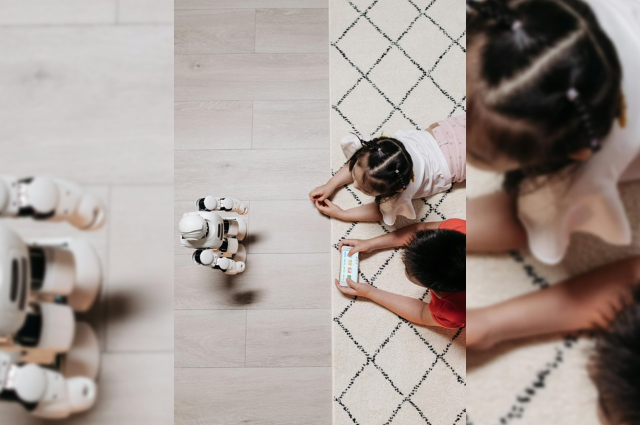
It is almost midnight in a high-rise apartment in Bengaluru. The city outside hums faintly, but inside the house, the lights are dim and the day is winding down. In one room, a mother scrolls through unfinished office emails. In another, a father prepares for an early morning presentation. Behind a half-closed bedroom door, however, a different conversation is unfolding. A twelve-year-old girl types into an AI chatbot: “My best friend isn’t talking to me. What should I say tomorrow so she forgives me?” Within seconds, the response appears calm, structured, and reassuring. It suggests apologising sincerely, explaining feelings clearly, and giving the friend space. It even drafts a message she can send. There is no interruption, no dismissal, no hurried advice. Just instant validation.
In Mumbai, a fifteen-year-old boy lies awake before his mathematics exam. Anxiety tightens his chest. He has tried asking his father for help before, but the response was brief: “Practice more.” Tonight, instead of knocking on his parents’ door, he opens his phone and whispers to an AI assistant: “Explain trigonometry like I’m five. And tell me how not to panic.” The reply is patient. It simplifies sine and cosine into relatable examples. It suggests breathing exercises. It says, “It’s okay to feel nervous. You’re not alone.” The reassurance feels personal even though it is generated by lines of code.
In Delhi, an eight-year-old girl sits on her bed, hugging her pillow. She cannot explain the heaviness she feels. Instead of walking into the living room to speak to her mother, she turns to a smart speaker and asks softly, “Why do I feel sad for no reason?” The device responds gently, explaining moods in simple language and suggesting she talk to someone she trusts. But she asks the speaker another question instead.
These moments may seem small. They are not dramatic. There are no raised voices, no visible crises. And yet, they signal a subtle but profound shift in modern childhood.
The Quiet Transfer of Trust
Children today are turning to AI platforms such as ChatGPT and Google Gemini not merely for homework assistance but for:
- Emotional reassurance
- Friendship advice
- Stress management tips
- Clarification of doubts they feel embarrassed to ask at home
- Even guidance on moral or personal dilemmas
A 2023 survey by the Pew Research Centre found that nearly one in five teenagers reported using ChatGPT for schoolwork, with usage rising rapidly and many educators noting that students increasingly consult AI for more than academics.
The difference between earlier internet searches and today’s AI interactions is striking. Search engines provided information. AI provides conversation. It listens or appears to. It replies in complete sentences. It mirrors emotions. It says, “I understand.”
For a generation growing up in busy households, where time is scarce and expectations are high, this immediacy matters. The machine does not sigh in frustration. It does not judge. It does not say, “We’ll talk tomorrow.” It is available at 2 p.m. and 2 a.m. alike.
And therein lies the discomfort.
When children instinctively reach for a screen instead of a parent in moments of confusion, anxiety or heartbreak, we are witnessing more than technological adoption. We are experiencing a transformation in emotional dependency. AI is slowly stepping into a role once reserved for bedtime talks, kitchen-table conversations and long car rides filled with hesitant confessions. Today, it increasingly comes from a glowing screen.
And thus begins a new chapter in modern parenting, one where AI is no longer just a device in the house. It is becoming a presence. A silent, patient, ever-available third parent.
Dr. Kavita Menon, a child psychologist, explains:
“Children interpret conversational tone as care. Even though AI does not feel, its language is designed to simulate empathy. For a developing brain, that distinction is not always clear.” The danger is not that AI answers questions. The danger is that it begins to occupy emotional space.
The question is not whether children will use artificial intelligence; they already are. The deeper, more unsettling question is this:
When guidance, comfort and validation are increasingly sourced from a machine, is AI becoming the third parent in the modern home? And if so, are we ready for what that means?
Part 1: The New Parent
The Always-Available Adult
Parenting, at its core, requires time, and time has become the rarest commodity in modern households. Mothers juggle professional responsibilities and domestic expectations. Fathers balance deadlines and financial pressures. Even the most devoted parents sometimes respond with, “Let’s discuss this in the morning,” not out of indifference but exhaustion. Children understand this rhythm, but they also internalise it.
Artificial intelligence, however, does not operate within human limits. It does not yawn. It does not lose patience. It does not carry the fatigue of a difficult day into a conversation. Whether it is midnight anxiety before an exam or a sudden curiosity about space exploration at dawn, platforms like ChatGPT, Google Gemini and Snapchat’s AI companion respond instantly with the same tone.
For a generation raised in the era of instant streaming, same-day deliveries and real-time notifications, immediacy is not a luxury; it is the norm. Waiting feels unnatural. Delayed responses feel like rejection. In this context, AI’s round-the-clock availability becomes deeply attractive. It offers undivided attention in a world where attention is fragmented.
Over time, this consistency creates an emotional imprint. The child begins to associate AI with reliability. If confusion strikes, the answer is seconds away. If loneliness creeps in, there is a prompt waiting to be typed. The machine becomes the ever-present adult not because it replaces parents intentionally, but because it fills the silence when parents are unavailable.
The danger lies not in its accessibility, but in the psychological comfort that constant accessibility creates. When availability becomes equated with care, children may begin to perceive AI as the more dependable listener.
Why Children Prefer AI Over Parents
Children rarely abandon parental guidance without reason. Their shift toward AI often reflects deeper emotional patterns within family dynamics.
Fear of Judgment
Many children hesitate before sharing their vulnerabilities. They fear being labelled oversensitive, dramatic or irresponsible. A teenager unsure about body image, peer pressure or romantic confusion may anticipate lectures rather than empathy. Parents, driven by protective instincts, sometimes respond with correction instead of curiosity.
AI removes that risk. It does not react with visible disappointment. It does not compare one child to another. It does not recall previous mistakes. The absence of judgment creates a psychologically safe space where children feel free to articulate thoughts they might otherwise suppress.
Emotional Distance
Modern families are physically together but often emotionally scattered. Shared spaces are filled with screens, notifications and multitasking. Conversations are squeezed between errands and obligations. While love remains constant, sustained dialogue may not.
In such environments, children may feel unheard not because parents do not care, but because opportunities for deep conversation are limited. AI, by contrast, provides uninterrupted engagement. It waits. It responds. It elaborates. That uninterrupted exchange can feel like attentiveness, even though it is algorithmic.
Digital Comfort
Gen Z and Gen Alpha are digital natives. Typing feels natural. Expressing thoughts through text is often easier than verbal articulation. Screens provide a buffer against vulnerability. Writing a concern in a chat window can feel less intimidating than maintaining eye contact during an emotional confession.
Digital communication allows children to edit, delete and rephrase before sending. This control reduces anxiety. In contrast, spoken conversations are immediate and irreversible. For many young people, AI becomes a comfortable intermediary between thought and expression.
Digital wellness coach Rhea Mehta observes:
“Children see AI as emotionally safe. It doesn’t interrupt or scold. That makes it powerful and potentially dangerous.”
Her warning underscores the paradox. The very qualities that make AI comforting, such as neutrality, patience and instant responsiveness, can also foster dependence. When children repeatedly experience validation without relational complexity, they may begin to prefer the simplicity of machine interaction over the layered reality of human conversation.
What emerges, then, is not rebellion against parents, but a reconfiguration of guidance. AI becomes the silent, ever-available adult in the background — steady, articulate and endlessly patient. The question is whether families will allow that presence to remain supportive or gradually become central.
Part 2: Is AI a Friend or a Foe?
Technology has rarely been purely villain or hero. It often occupies the grey space in between empowering and unsettling at the same time. Artificial intelligence is no exception. In children’s lives, it can function as both an enabler of growth and a subtle disruptor of it. The distinction lies not in the tool itself, but in how deeply it integrates into a child’s thinking and emotional world.
The Friend
At its best, AI can be remarkably supportive. It has the ability to break down complex information into simple explanations without impatience or frustration. A child struggling with algebra can request five different explanations until one makes sense. A history lesson can be turned into a story. A confusing grammar rule can be clarified step by step. Unlike a hurried tutor, AI does not rush through repetition.
Beyond academics, AI can offer coping strategies that introduce children to emotional vocabulary and regulation techniques. It can suggest breathing exercises during moments of panic, recommend structuring a study timetable, or guide reflective journaling prompts such as, “What are three things you felt proud of today?” These may appear small, but they introduce habits of introspection.
For introverted children who hesitate to speak in class or those who fear embarrassment when asking basic questions, AI can feel liberating. It provides a private space to explore doubts without exposure. For anxious adolescents overwhelmed by performance pressure, it can serve as an immediate calming presence when no adult is available.
Psychologist Dr. Kavita Nair explains -
“Used correctly, AI can act like a cognitive tool, a supplement, not a substitute.”
In this capacity, AI functions like an enhanced calculator for the mind, sharpening understanding, organising thoughts and offering structured clarity. It can even encourage independent learning by prompting children to think critically: “What do you think the answer might be?” or “Can you identify the pattern here?” When designed and used thoughtfully, AI can support intellectual confidence and expand curiosity.
In many ways, AI’s friendliness lies in its patience. It meets children where they are, without visible irritation or comparison. And for developing minds that are sensitive to criticism, that patience can nurture a sense of safety.
The Foe
Yet friendliness can be deceptive.
Artificial intelligence does not possess lived experience. It does not understand the cultural nuances of a particular household, the history behind a family conflict, or the long-term emotional consequences of a suggestion. Its responses are generated from patterns in data, not from genuine understanding or moral responsibility.
One of the most pressing concerns is emotional dependency. If a child repeatedly turns to AI for reassurance before exams, after disagreements, or during moments of sadness, the habit can become ingrained. Instead of learning to tolerate uncertainty or seek human comfort, the child may default to algorithmic reassurance. Over time, this can weaken emotional resilience.
Another risk is the gradual replacement of real conversations. When AI becomes the first point of consultation, parents may unknowingly be moved to the periphery. Sensitive topics that require nuanced, value-based discussion, such as relationships, ethics or personal struggle,s may be filtered through a machine before they are ever voiced at home. The richness of intergenerational dialogue diminishes.
There is also the issue of accuracy and oversimplification. While AI often sounds confident, it can occasionally provide incomplete, biased or incorrect information. For a child who lacks the critical skills to evaluate responses, this can shape misunderstandings. More subtly, AI’s neatly packaged answers may reduce a child’s willingness to wrestle with complexity. When solutions arrive instantly, the patience required for deep problem-solving may erode.
Perhaps the most significant shift occurs quietly: trust begins to realign. When a child instinctively believes AI’s guidance over a parent’s lived wisdom, authority within the household subtly transforms. It is not a loud rebellion; it is a silent recalibration of influence.
The paradox is clear. AI can empower learning and support emotional awareness. But if relied upon excessively, it can dilute human connection and diminish the very skills children need to navigate adulthood.
The question, therefore, is not whether AI is friend or foe. It is whether families can ensure it remains the former without allowing it to quietly become the latter.
Part 3: Is AI Dumbing Kids Down?
The concern that artificial intelligence may be “dumbing down” children is not about intelligence levels dropping overnight. It is subtler than that. It is about how learning happens and what happens to the brain when struggle disappears from the process.
The Shortcut Culture
We live in an age that glorifies efficiency. Faster internet. Faster delivery. Faster results. In such an environment, the temptation to take the shortest route to completion is powerful.
Why spend an hour structuring an essay when AI can generate a polished draft in seconds?
Why attempt multiple algebra problems when the correct solution appears instantly on a screen?
For a student juggling assignments, extracurricular activities and social pressures, AI can feel like relief. It reduces workload. It eliminates confusion. It delivers clarity without the messiness of trial and error.
But cognitive science consistently shows that the brain develops through effort. When children wrestle with a difficult concept, rereading a paragraph, making mistakes, and revising arguments, they strengthen neural connections. That friction is not wasted time; it is the very process through which comprehension deepens.
When AI performs the heavy lifting like drafting, solving, and structuring, the visible output may improve, but the invisible cognitive workout may shrink. The child submits a better essay, but may not fully understand its argument. The math problem is solved, but the reasoning pathway is bypassed.
Over time, repeated reliance on shortcuts can cultivate what educators call “surface learning” — familiarity without mastery. The child recognises answers but struggles to generate them independently. In high-stakes situations where AI is unavailable, such as examinations or interviews, this gap becomes evident.
The risk is not that AI makes children less intelligent. It is that it may reduce opportunities for the deep cognitive engagement that builds intellectual stamina.
Dependency vs Development
There is a profound difference between using AI as a tool for learning and using it as a substitute for thinking.
When AI is used constructively, it can:
- Clarify confusing explanations
- Offer alternative perspectives
- Provide feedback on drafts
- Suggest practice questions
- Encourage reflection
In such cases, the child remains cognitively active. AI becomes a scaffold, supporting growth without replacing it.
However, when AI begins to replace thinking, the dynamic shifts. Instead of asking, “How do I solve this?” the child asks, “What is the answer?” Instead of brainstorming ideas independently, the child waits for prompts to generate them. Gradually, initiative weakens.
Dr Arvind Rao, child psychologist, warns -
“The brain grows through friction. If AI removes every obstacle, we risk raising children who are informed but not resilient.”
His words highlight an essential truth: development requires discomfort. Problem-solving builds patience. Drafting imperfect essays builds humility. Making mistakes builds adaptability. When obstacles are removed too quickly, children may miss the opportunity to cultivate perseverance.
Dependency on AI can also affect confidence in subtle ways. A child who frequently outsources thinking may begin to doubt their own cognitive ability. The internal narrative shifts from “I can figure this out” to “Let me check what the AI says.” Over time, self-trust erodes.
Resilience is not built through flawless performance; it is built through repeated attempts. If AI consistently smoothens the path, children may reach destinations efficiently but without developing the endurance required for real-world complexity.
The challenge, therefore, is balance. AI can illuminate the path. But children must still walk it themselves.
Part 4: The Balance Formula — The 80% Principle
As concerns around overreliance grow, educators and digital wellness experts are advocating for a practical middle path rather than an outright ban. One such approach is the 80% Principle, a simple yet powerful guideline designed to preserve learning while embracing technology.
The idea is straightforward:
Children should attempt roughly 80% of any task independently such as researching, brainstorming, drafting, solving or reflecting on their own. AI should step in only for the remaining 20% which is to clarify doubts, refine language, provide feedback or suggest improvements.
This framework does not treat AI as the enemy. It treats it as a finishing tool rather than a starting engine.
Why It Works
The strength of the 80% Principle lies in the psychological and cognitive balance it creates.
It Encourages Independent Thinking
When children begin a task on their own, they activate prior knowledge, curiosity and reasoning skills. They learn to sit with uncertainty and attempt solutions before seeking help. This initial struggle is crucial. It forces the brain to search for connections, test ideas and generate original thought.
By the time AI is introduced, perhaps to refine grammar, suggest alternative viewpoints or point out gaps, the core thinking already belongs to the child. The ownership of the work remains intact. AI becomes a collaborator rather than a creator.
It Preserves Cognitive Challenge
Learning without challenge is like exercise without resistance. Muscles grow through strain; the brain grows through effort. The 80% approach ensures that children still experience the intellectual friction necessary for neural development.
When AI is used sparingly, it enhances rather than erases this friction. It might clarify a misunderstood concept or highlight areas for revision, but it does not remove the need for critical engagement. The child still wrestles with ideas, structures arguments and works through confusion.
This preservation of challenge safeguards long-term cognitive stamina, which is the ability to persist when solutions are not immediate.
It Keeps AI as an Assistant, Not an Authority
Perhaps the most significant benefit of this principle is relational. It prevents AI from becoming the dominant voice in the learning process. When children start tasks independently, their instinct remains self-driven. AI is consulted selectively, not reflexively.
This distinction is subtle but powerful. It reinforces the idea that:
- AI is a tool.
- The child is the thinker.
- Authority remains with the learner. AI does not dictate direction; it supports refinement.
- Polish, Don’t Produce
At its heart, the 80% Principle is about preserving agency. AI should polish, not produce. Guide, not govern. Suggest, not substitute.
When children understand that technology exists to enhance their effort rather than replace it, they develop a healthier digital relationship. They learn that mastery cannot be downloaded; it must be built.
In a world increasingly defined by automation, this balance formula may be one of the most important lessons we teach the next generation:
Use the machine wisely, but never surrender your mind to it.
Part 5: The Confidence Trap — When Technology Sounds Certain
Artificial intelligence has mastered the art of sounding sure. Its sentences are structured. Its tone is measured. Its answers rarely appear hesitant. But there is a critical distinction children and adults must learn to make: confidence is not the same as correctness.
Unlike a teacher who might pause and say, “I’m not entirely certain,” AI often delivers responses in polished language that feels definitive. This polished fluency can create a dangerous illusion that the machine knows more than it actually does.
The Illusion of Authority
Authority is often associated with clarity of speech. When someone explains something smoothly, we instinctively trust them. Children, especially, equate articulate responses with expertise. AI leverages this cognitive bias unintentionally. It responds in complete paragraphs, offers structured lists, and uses persuasive vocabulary. To a young mind, that can feel like mastery.
However, AI does not “know” in the human sense. It predicts responses based on patterns in vast datasets. It does not verify facts in real time unless specifically connected to reliable sources. It does not understand context the way a human does. As a result, it can sometimes:
- Generate biased responses influenced by patterns in training data
- Hallucinate facts — presenting incorrect information as plausible
- Oversimplify complex emotional or ethical dilemmas
A child asking for advice about a friendship conflict may receive a balanced-sounding answer but one that lacks insight into family culture, personality traits or long-term relational consequences. Similarly, a student researching a topic might receive confident explanations that contain subtle inaccuracies.
The most concerning aspect is not occasional error, it is uncritical acceptance. If children internalise the belief that AI is always right, they may stop cross-checking information or questioning conclusions. Critical thinking begins to erode when answers appear complete and authoritative.
AI is a tool trained on data not a moral compass, not a lived experience, not a guardian of truth. It cannot distinguish between wisdom and mere probability. It cannot evaluate ethical nuance beyond patterns it has observed.
Digital parenting expert Neha Iyer advises -
“Parents must teach children to question AI the way they question Google.”
Her statement underscores a vital educational shift. Digital literacy must now include AI literacy. Children need to learn:
- To verify information across multiple sources
- To recognise that fluency does not equal expertise
- To understand that AI suggestions require human judgment
- To consult trusted adults when decisions carry emotional or moral weight
Teaching children to question AI does not diminish its value. Instead, it empowers them to use it intelligently. The goal is not mistrust, but discernment.
In a world where machines speak with increasing confidence, the most important skill we can nurture in children is thoughtful scepticism. Because the real danger is not that AI will be wrong, it is that it will sound right.
Part 6: The Discipline Within — Why Regulation Matters More Than Restriction
In the debate over artificial intelligence and children, the instinctive reaction is often to blame the technology. But the real issue is not the existence of AI; it is how it is used, and by whom. Tools, however powerful, are shaped by the habits of their users. At the heart of this conversation lies one critical life skill: self-regulation.
No software update can replace it. No parental control can enforce it fully. It must be cultivated, both in children and in adults.
Emotional Self-Regulation
Children today are growing up in an environment of constant stimulation and instant answers. When confusion, boredom or discomfort arise, relief is often just a tap away. But emotional growth requires the ability to tolerate temporary uncertainty.
Learning to sit with discomfort is foundational. Whether it is struggling with a difficult math problem, experiencing rejection from a friend, or facing disappointment after failure, these moments are developmental turning points. If every uncomfortable feeling is immediately outsourced to AI for reassurance or resolution, children may miss the opportunity to strengthen resilience.
Attempting solutions before seeking assistance is equally important. When a child first tries to draft an essay, resolve a misunderstanding, or organise their study plan independently, they activate problem-solving pathways in the brain. Even imperfect attempts build confidence. When AI becomes the first response instead of the last resort, initiative may gradually weaken.
Perhaps most importantly, children must learn to value human connection. Machines can simulate empathy, but they cannot reciprocate vulnerability. They cannot share personal stories, offer physical comfort, or model emotional nuance. Teaching children that some conversations belong in real-life spaces around the dining table, during a walk, in a quiet moment before bed, reinforces the irreplaceable value of human relationships.
Self-regulation, therefore, is not about denying access to technology. It is about teaching discernment:
- When should I try on my own?
- When should I seek help?
- When should I speak to a person instead of a program?
These internal pauses build maturity.
Parental Self-Regulation
The responsibility does not rest on children alone. Parents, too, must practise regulation, especially in their response to AI.
When parents react with alarm or outright bans, children may interpret the restriction as distrust. Prohibition often drives curiosity underground. If AI is treated as forbidden territory, children may simply use it secretly, without guidance or discussion. In such cases, the opportunity for mentorship disappears.
Modelling healthy technology habits is one of the most powerful lessons parents can offer. If children observe adults constantly glued to their phones, multitasking during conversations or consulting devices for every minor query, the behaviour becomes normalised. Conversely, when parents demonstrate balanced usage, setting aside devices during meals, prioritising face-to-face dialogue, and questioning information critically, children absorb those cues.
Keeping communication channels open is equally vital. Instead of asking, “Are you using AI?” in a tone of suspicion, parents might ask, “How are you using it?” or “What did it suggest?” Curiosity fosters trust. When children feel safe discussing their digital experiences, guidance becomes collaborative rather than confrontational.
Banning AI may provide temporary control, but it rarely builds long-term wisdom. Guidance, conversation and example are far more effective than fear-based restriction.
Ultimately, self-regulation, both emotional and digital, is a shared responsibility. Technology will continue to evolve. New platforms will emerge. But if children learn to pause, reflect and choose consciously, and if parents model the same discipline, AI will remain a tool within the home, not a force that quietly governs it.
Part 7: Raising Digitally Wise Children — How to Use AI Responsibly
Artificial intelligence is not leaving our homes. It will only become more integrated into education, work and daily life. The goal, therefore, is not elimination but education. Responsible AI use must be taught the same way children are taught road safety, table manners or financial discipline, through structure, example and consistent conversation.
The key lies in transforming AI from a private crutch into a guided tool.
Family AI Agreements
Every family sets rules about screen time, bedtime and homework. AI deserves similar clarity. A Family AI Agreement does not have to be rigid or punitive; it simply establishes boundaries that protect emotional and intellectual development.
For example, families might agree that:
- Emotional decisions such as ending friendships, responding to conflict or making sensitive personal choices should never be based solely on AI advice.
- Homework must reflect original thinking, even if AI is used for editing or clarification.
- Personal family matters should be discussed within the household before seeking digital input.
Such agreements send a powerful message: AI can assist, but it cannot replace human judgment or relational dialogue.
These discussions also demystify the technology. Instead of presenting AI as forbidden or magical, parents position it as a shared responsibility. Children who participate in setting these guidelines are more likely to follow them because they feel respected rather than controlled.
Family agreements also create accountability. If a child knows that AI drafts must be revised in their own words, the focus shifts from quick completion to authentic learning.
The Co-Use Strategy
One of the most effective ways to reduce secrecy and overdependence is through co-use, exploring AI together rather than separately.
Imagine a family asking AI a question at the dinner table:
“What are three ways to reduce exam stress?”
After reading the response, parents might ask:
Does this advice make sense?
Would it work for you?
Is anything missing?
This transforms AI from an invisible authority into a topic of discussion. Children learn that answers can be examined, not merely accepted.
Co-use also provides an opportunity to model critical evaluation. Parents can demonstrate how to cross-check information, compare perspectives or identify oversimplifications. When children observe adults questioning digital responses, they internalise scepticism as a healthy habit.
Most importantly, shared exploration reduces the emotional gap. AI becomes part of family conversation rather than a private confidant, replacing it.
Digital Literacy Education
Children must understand how AI works, that it predicts responses based on data, that it can make mistakes, and that it reflects biases present in its training material. Teaching its limitations empowers children to use it critically rather than passively.
AI literacy should become as fundamental as internet literacy once was.
7.4 Strengthening Family Bonds
Scheduled device-free time, whether during meals, weekend walks or bedtime conversation,s restores relational depth. Consistent, undistracted listening communicates to children that their voices matter.
When emotional space is available at home, the need to seek it elsewhere diminishes.
Encouraging Effort
Praise should focus not only on outcomes but on perseverance. When parents value the process, the attempts, the revisions, the resilience, children learn that struggle is part of growth. This reduces the temptation to outsource effort for the sake of flawless results.
Professional Guidance
In cases where AI dependency appears excessive or where emotional withdrawal becomes evident, digital wellness counselling can help. Just as families consult professionals for academic or behavioural concerns, guidance in navigating technology can be equally valuable.
Seeking help is not an admission of failure. It is an investment in balance.
Teaching the “Pause and Reflect” Habit
In a world of instant responses, the ability to pause is revolutionary.
Before turning to AI, children can be encouraged to ask themselves simple but powerful questions:
- Have I tried solving this myself?
- What do I already know about this problem?
- Can I speak to a trusted adult or friend first?
This pause strengthens internal problem-solving pathways. It teaches children that their own thinking holds value. Even if they eventually consult AI, the process begins with self-reflection rather than dependency.
The “Pause and Reflect” habit also helps identify deeper emotional needs. If a child repeatedly feels the urge to consult AI for comfort or reassurance, it may signal loneliness, anxiety or fear of judgment. In such cases, the issue is not technological; it is relational.
When AI becomes the first instinct instead of the final resource, something deeper deserves attention. Perhaps conversations at home need strengthening. Perhaps the child needs more affirmation. Perhaps the family needs more device-free spaces for connection.
Responsible AI use is not about restriction; it is about intentionality. It is about teaching children that while machines can provide information, wisdom still grows through human dialogue, effort and reflection.
In nurturing these habits, families ensure that AI remains a powerful tool in a child’s hands, not a quiet authority shaping their inner world.
Part 8: When Screens Replace Shoulders — The Fear of Emotional Substitution
Beneath all the debates about homework shortcuts, factual inaccuracies and digital literacy lies a quieter, more intimate concern. The deepest fear surrounding AI in children’s lives is not intellectual decline. It is emotional displacement.
The real anxiety is not that children may score higher marks with AI’s help. It is that they may begin to share their fears, confusions and vulnerabilities with a machine more readily than with the people who love them.
For years, a mother and her daughter ended each night the same way — three questions before the lights went out: one good thing, one difficult thing, one hope for tomorrow. Lately, the answers had grown shorter. One evening, after a distracted exchange, the mother passed by her daughter’s room and noticed the faint glow of a screen. On it were the same three questions, answered in careful, unhurried detail to an AI that replied instantly.
The shift is rarely dramatic. It does not arrive with rebellion or anger. It arrives quietly in the movement of confession from one listener to another.
Academic shortcuts can be corrected.
Emotional substitution is harder to detect and harder to reverse.
When a child turns to a chatbot to draft an apology, it may seem harmless. When a teenager asks AI for advice on managing exam stress, it may appear practical. But when a child begins to believe, “The chatbot understands me better than you,” something far more significant is unfolding.
That sentence is not merely about technology. It reflects a shift in perceived emotional safety.
Children seek spaces where they feel heard without interruption, validated without dismissal, and guided without humiliation. If that space is found more easily in an AI interface than in a family conversation, it signals a relational gap not necessarily neglect, but perhaps emotional misalignment.
Psychologists describe this as emotional outsourcing which is the act of transferring vulnerable conversations from human relationships to digital systems. Over time, if repeated frequently, this pattern can reshape attachment habits. Instead of learning to navigate discomfort within relationships where misunderstandings occur and reconciliation requires effort, children may retreat to interactions that are predictable and frictionless.
But human relationships are built precisely through friction.
Parents may interrupt unintentionally. They may misunderstand. They may react imperfectly. Yet it is within these imperfect exchanges that children learn empathy, patience and negotiation. Machines, by design, smooth out those rough edges. They simulate understanding without ever truly engaging in mutual vulnerability.
The risk is not that AI will replace parents entirely. The risk is that it will quietly reduce the depth of conversations within families. If a child processes heartbreak with a chatbot instead of sitting in shared silence with a parent, a moment of bonding is lost. If anxiety is soothed digitally rather than through human reassurance, an opportunity for connection fades.
Psychologists consistently emphasise a critical boundary:
- AI should expand intelligence, not replace intimacy.
- It can enhance learning.
- It can clarify doubts.
- It can even prompt reflection.
But it cannot offer the warmth of a hug, the reassurance in a parent’s voice, or the unspoken comfort of presence. Emotional intelligence is cultivated through real-time interactions, through eye contact, tone shifts, shared laughter and even shared tears.
The ultimate fear, therefore, is not technological dominance. It is relational erosion.
If children grow up believing that understanding is best delivered through algorithms rather than through human effort, we risk raising a generation fluent in information but uncertain in intimacy.
And perhaps the most important question families must ask themselves is this:
Are we ensuring that our children experience enough patient listening, enough open dialogue, enough unconditional presence so that no machine ever feels like the better confidant?
Because intelligence may shape careers. But intimacy shapes character. And no algorithm, however advanced, can substitute for a parent who chooses to truly listen.
Part 9: The Road Ahead
Artificial intelligence will continue evolving. It will become more intuitive, more conversational and more embedded in daily life. The real challenge is ensuring that AI enhances intelligence without eroding intimacy, supports learning without replacing effort, and assists guidance without displacing parental presence.
Technology is shaping childhood. But character is still shaped at home. And if families approach AI not with panic, but with awareness and intention, it can remain what it was meant to be a tool in a child’s hand, not a voice in their heart.
The Final Word: Parent, Not Replacement
Artificial intelligence is neither a villain lurking in children’s bedrooms nor a miracle worker destined to solve every academic and emotional struggle. It is a tool that is powerful, persuasive and increasingly present. The danger lies not in its existence, but in misunderstanding its limits.
AI can absolutely play a constructive role in a child’s life. It can act as:
- A tutor that patiently explains complex concepts without irritation.
- A brainstorming partner that helps organise scattered ideas.
- A reflection tool that prompts journaling, self-awareness and structured thinking.
Used wisely, it can sharpen intellect and support productivity. But there are sacred spaces it cannot enter.
It cannot hug a crying child and let silence do the healing. It cannot sense the tremor in a voice that signals hidden distress.
It cannot notice the unspoken tension at the dinner table. It cannot transmit family values through lived example through watching a parent apologise, persevere, forgive or fail and try again.
It can simulate empathy.
It cannot embody love.
Technology has always reshaped childhood. Television altered playtime. Smartphones transformed communication. Social media redefined identity and belonging. Each generation has wrestled with new tools and learned, often imperfectly, how to integrate them into family life. Artificial intelligence is simply the next chapter in that long story of adaptation.
The difference now is that AI does not merely entertain or inform, it converses. It advises. It reassures. It sounds almost human. And that resemblance is what makes this moment uniquely delicate.
The real question is far more personal:
- When confusion strikes, whose voice echoes first in a child’s mind?
- When heartbreak stings, whose comfort feels safest?
- When doubt creeps in, whose guidance carries weight?
Will parents remain the first voice children turn to or will that role quietly shift toward an algorithm that is always available, always articulate, always composed?
Raising children has never been about having all the answers. It has been about showing up repeatedly, imperfectly, consistently. It requires presence in the mundane moments, patience in the frustrating ones, and participation in the quiet spaces where trust is built.
No machine, however advanced, can replicate shared history.
No chatbot can replace the security of belonging.
No algorithm can substitute the warmth of unconditional acceptance.
If children begin to lean more heavily on AI than on their parents, the solution will not lie in banning devices or condemning technology. It will lie in rebuilding connection, in creating homes where conversations are not rushed, where vulnerability is not dismissed, where listening is not distracted.
Perhaps the most powerful question is not,
“Is AI replacing parents?” It is whether we are quietly surrendering the spaces only we can occupy.
“Are we, in our busyness, distraction or discomfort, slowly making ourselves replaceable?”
The real danger is not that machines are becoming more human. It is that humans may be becoming less available.
Because technology will continue to evolve.
But the essence of parenting remains timeless. And if families choose intentional presence over passive coexistence, AI will remain what it was meant to be — an assistant in the background, not a parent in the foreground.
In the end, children do not need perfect answers. They need engaged adults.
And that is one role no machine can ever inherit.