
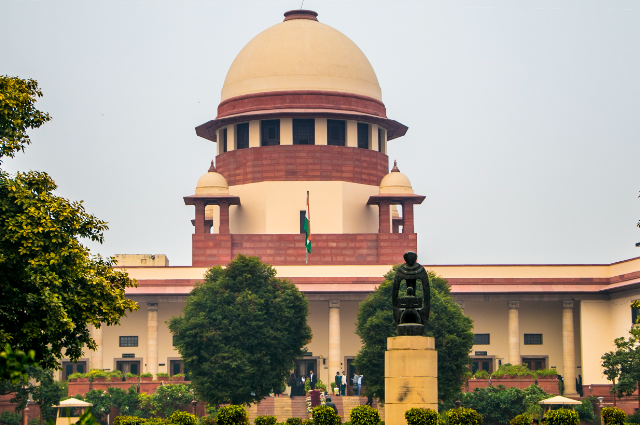
The Supreme Court's recent interrogation of the Election Commission of India over its Summary Revision of Electoral Rolls (SIR) process has exposed a troubling constitutional question of can an institution designed to conduct free and fair elections assume the power to determine who belongs to the nation itself? As the country's apex court examines petitions challenging the electoral body's authority to remove voters based on citizenship concerns, we find ourselves at a critical stage where democratic participation, institutional boundaries, and the rights of vulnerable communities hang in the balance.
Unfolding Constitutional Crisis
The controversy centres on a seemingly administrative procedure about the Summary Revision of Electoral Rolls, which the Election Commission conducts to maintain updated voter lists. However, what appears routine on the surface has, according to petitioners, transformed into something far more threatening, where a mechanism for mass alienation that disproportionately targets marginalised communities, particularly Muslims and members of Scheduled Castes and Scheduled Tribes.
During hearings before a bench comprising Chief Justice Sanjiv Khanna and Justice Sanjay Kumar, the Court posed searching questions that cut to the heart of the matter. The judges asked the Election Commission a simple question: Was citizenship verification on your mind when you initiated the SIR process? This inquiry matters profoundly because the justification of the poll body provides for its actions determines whether those actions fall within its constitutional mandate or represent an unconstitutional overreach.
The Election Commission's response has been to assert its authority under the Representation of the People Act, 1950, particularly Section 23, which it claims empowers it to conduct "summary inquiries" into citizenship for electoral purposes. The poll body argues that determining voter eligibility necessarily involves examining citizenship status, and that this falls squarely within its constitutional and statutory responsibilities.
Shifting Sands of Justification
What makes the Supreme Court's scepticism particularly pointed is the apparent evolution in the Election Commission's rationale. The Court specifically questioned why illegal immigration was not cited as the original reason for initiating the SIR process if citizenship verification was indeed the primary concern. This line of questioning suggests judicial care about explanations and justifications manufactured after the fact to legitimise actions taken for different, perhaps unstated, purposes.
The petitioners challenging the Election Commission's actions have presented compelling arguments that strike at the foundational issue of institutional competence and authority. They contend that citizenship determination is a specialised function that falls exclusively within the domain of designated authorities under the Citizenship Act, 1955. According to this view, the Election Commission, regardless of its electoral mandate, simply lacks the jurisdiction to adjudicate matters of citizenship and a power that resides with the central government and its designated officers.
This is not a simple procedural gap. The distinction matters because citizenship determination involves complex legal questions, requires adherence to specific evidentiary standards, and carries profound consequences for individuals' fundamental rights. Allowing an electoral body to make such determinations, the petitioners argue, creates a parallel system that bypasses the protections built into the citizenship verification framework.
Ground Reality of Targeting the Vulnerable
Beyond the constitutional abstractions lie human consequences that reveal the stakes of this legal battle. The petitioners have presented evidence suggesting that the SIR process has been weaponised to target specific communities. Reports indicate that predominantly Muslim and SC/ST voters have found themselves subjected to intensive scrutiny, with their names being removed from electoral rolls based on allegations of "doubtful citizenship."
The pattern is disturbing for individuals who have voted for years, whose families have lived in their communities for generations, and who suddenly find themselves challenged to prove their belonging. The burden of proof shifts dramatically, transforming citizenship from a presumed status into something that must be constantly re-established, documented, and defended. For communities already facing social and economic marginalisation, this represents not just an administrative hurdle but an existential threat to their political voice.
The asymmetry in how this power is exercised raises questions about equal protection under law. If the process were genuinely about maintaining electoral roll accuracy, one would expect to see proportional scrutiny across all communities. Instead, the concentration of challenges in specific demographic groups suggests that the SIR mechanism may be functioning less as a neutral administrative tool and more as an instrument of targeted marginalisation.
Limits of Electoral Authority
The Supreme Court's questioning reflects a fundamental concern about institutional boundaries in a constitutional democracy. The Election Commission, as considered in our constitutional framework, serves as an independent body tasked with conducting elections fairly and impartially. This independence is precious and must be zealously guarded. However, independence does not mean unlimited authority, and autonomy in one domain does not confer competence in all others.
When the Court asks whether the Election Commission has the power to decide citizenship under the SIR process, it is probing whether allowing such authority would create dangerous precedents. If an electoral body can determine who is and isn't a citizen for voting purposes, what prevents that determination from having broader implications? What safeguards exist to ensure such power isn't abused? What standards of evidence apply? What avenues of appeal are available to those whose citizenship is questioned?
These questions become particularly serious when we consider that citizenship determination is not simply a binary, yes-or-no proposition. It involves examining documentary evidence, assessing credibility, applying complex legal provisions, and often making judgment calls about ambiguous situations. The Citizenship Act establishes specific procedures and designated authorities precisely because these determinations require specialised expertise and must be made under clearly defined legal standards.
The Election Commission's claim that it can conduct "summary inquiries" into citizenship for electoral purposes potentially creates a shortcut around these protections. A "summary inquiry" suggests a cutout process, less formal than the full citizenship determination proceedings. Yet the consequences, removal from electoral rolls and effective disenfranchisement, are anything but minor.
Democracy's Double Bind
This controversy places us in an uncomfortable position. On the one hand, electoral rolls must be accurate. The integrity of our democratic process depends on ensuring that those who vote are entitled to do so. Genuine instances of fraudulent registration or voting by non-citizens undermine the principle of popular sovereignty and must be addressed.
On the other hand, the right to vote stands among the most fundamental rights in a democracy. Disenfranchisement and the removal of someone's ability to participate in choosing their government represent one of the most severe deprivations a democracy can inflict on an individual. When disenfranchisement occurs without adequate procedural protections, without clear standards, and with seeming bias towards particular communities, it threatens the very democratic character of our system.
The challenge lies in balancing these competing imperatives without sacrificing either. We need mechanisms to maintain electoral roll accuracy, but we also need safeguards to prevent those mechanisms from becoming tools of political exclusion. The question before the Supreme Court is whether the current SIR process, as administered by the Election Commission, achieves this balance or tips dangerously towards the latter.
What the Court Must Consider?
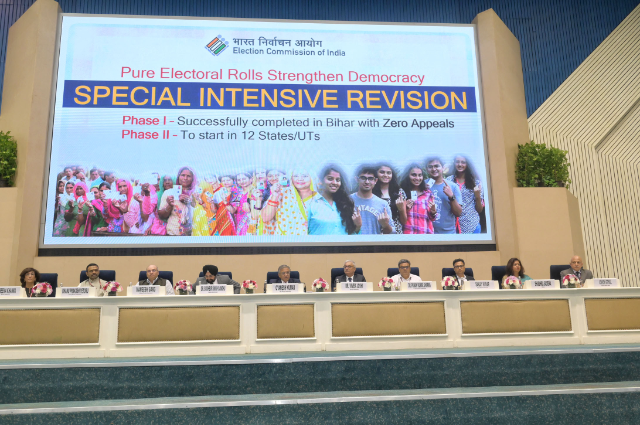
As the Supreme Court deliberates on these petitions, several critical considerations should guide its analysis. First, institutional competence matters. The Election Commission has expertise in conducting elections, not in adjudicating citizenship claims. Allowing it to assume the latter role without clear statutory authority and procedural safeguards risks creating a system prone to error and abuse.
Second, the principle of proportionality must apply. Even if some authority to verify voter eligibility is necessary, the scope and manner of that verification must be proportionate to the legitimate aim. Mass challenges to electoral registrations, particularly when concentrated among vulnerable communities, suggest a process that has exceeded proportional bounds.
Third, procedural fairness demands that those whose citizenship is questioned have meaningful opportunities to respond, access to clear standards of evidence, and realistic avenues of appeal. The current SIR process, operating as a "summary" procedure, may not provide these essential protections.
Finally, the Court must consider the chilling effect on democratic participation. When citizens from particular communities see their neighbours challenged and removed from electoral rolls, the message sent is clear that your belonging is conditional, your citizenship is suspect, and your political voice can be silenced through administrative procedures. This chilling effect can suppress democratic participation as effectively as direct prohibition.
A Path Forward: SC Intervention will lead to establishing clear boundaries
The Supreme Court's intervention offers an opportunity to establish clear boundaries and robust protections. Rather than allowing electoral roll revision to function as a backdoor citizenship verification mechanism, the Court should insist on maintaining the distinction between these functions. Citizenship determination should remain with the authorities and procedures established under the Citizenship Act, while electoral roll management should focus on verifiable criteria directly related to voter eligibility.
Where doubts about citizenship genuinely arise, the Election Commission should have the authority to refer such cases to appropriate citizenship authorities rather than attempting to resolve them through summary procedures. This approach respects institutional boundaries while still addressing legitimate concerns about electoral integrity.
Moreover, any process for challenging voter registrations must be subject to stringent safeguards and clear evidentiary standards, individual notice and opportunity to respond, reasoning for removal decisions, and accessible appeal mechanisms. The burden of proof should not fall on citizens to constantly re-establish their belonging but on those who challenge their registration to provide substantive grounds for doing so.
Democracy's Gatekeepers
This case ultimately asks who should serve as the gatekeepers of democratic participation. The answer our constitutional framework provides is clear: no single institution should exercise unchecked power to determine who belongs to the political community. Citizenship determination, electoral management, and judicial review must remain separate functions, each subject to checks and balances.
The Supreme Court's probing questions to the Election Commission reflect an appropriate doubt about institutional overreach. By insisting on clarity regarding the purpose, authority, and procedures governing the SIR process, the Court performs its essential role of ensuring that administrative convenience does not override constitutional rights and that institutional authority does not exceed constitutional boundaries.
As this litigation proceeds, the stakes extend far beyond the specific individuals whose names have been removed from electoral rolls. At issue is the character of our democracy itself, whether it will be genuinely inclusive or whether administrative procedures will become instruments of exclusion, whether constitutional rights will receive robust protection or yield to bureaucratic convenience. The Supreme Court's ultimate decision will help determine which vision of democracy prevails.
. . .
References: