
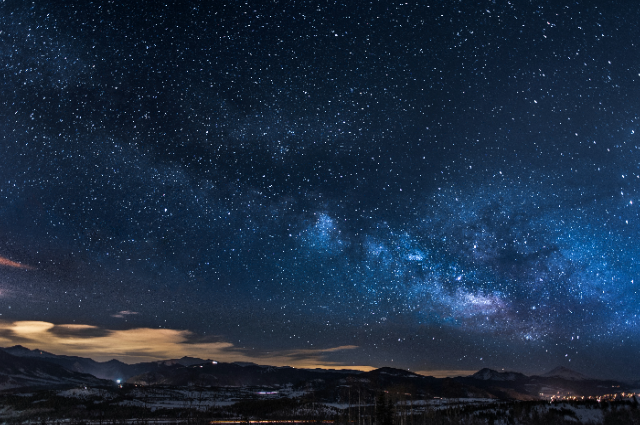
On a quiet night, three scholars from Persia studied the sky as they often did. They were observers who believed that patterns in the cosmos carried meaning. That night, a star appeared unlike any they had seen before—steady, luminous, almost intentional. It did not flicker like the others but seemed to hold its place, as though inviting them to pause and listen to a message written across the heavens.
After days of reflection, they concluded that the star signalled the birth of a great king in the land of Judea. Leaving behind their familiar surroundings, they began a long and uncertain journey. The road stretched across deserts and unfamiliar towns. Fatigue visited them often, yet the star reassured them each time they looked up.
They followed it the way travellers today follow GPS navigation—trusting each instruction without needing to see the entire route.
Eventually, they reached Jerusalem, the city of power. Tall walls, guarded gates, and the grandeur of the palace influenced their thinking. A king, they reasoned, must be born in a royal place. For the first time, they shifted their gaze from the sky to human structures. They entered the court of Herod and asked, “Where is the child born to be king?” It was like ignoring the GPS and choosing a road simply because they trusted their pre-acquired knowledge.
Their question unsettled the ruler. What sounded like curiosity to them sounded like a threat to him. Fear flickered beneath his calm expression. He directed them toward Bethlehem, but his politeness concealed suspicion. As they left the palace, something unexpected happened—the star disappeared.
Just as a navigation screen loses the route when one moves too far away from the suggested path.
Without the light, uncertainty filled their hearts. Their confidence weakened. For a moment, human reasoning had replaced the guidance of a creation by God. Yet as they moved away from the palace and its influence, the star appeared again. It had not vanished; it had waited. Like the GPS calmly recalculating and offering a new route instead of condemning the wrong turn. The three Magi were overjoyed to see the lost star once more.
With renewed clarity, they followed the light. It led them not to grandeur but to a humble dwelling. There was no throne, no royal guard—only quiet simplicity. Yet they sensed they had reached their destination. They offered their gifts and felt a deep sense of peace. Until then, their lives had been spent studying creation—the skies, the stars, the mysteries of the universe. Now, they stood before the Creator. The star they had always admired was pointing to a greater truth: the One who made the heavens had entered the earth.
That night, they were warned by heaven in a dream not to return to Herod. Understanding the danger, they chose another path home.
But their earlier deviation had consequences. When Herod realised they had not returned, fear hardened into cruelty. Determined to eliminate any threat, he ordered the killing of innocent children below two years old in Bethlehem. The town that had witnessed hope became a place of sorrow. Mothers wept. Silence replaced celebration.
The scholars never intended this tragedy. Their question had been innocent. Yet their momentary shift from divine guidance to human assumption had unknowingly set events in motion. They returned home wiser, carrying not only the memory of the star but also the story of meeting the Creator born as a human.
Their journey reminds us that guidance is often gentle, deviations are human, and direction can always be found again. But it also teaches something deeper: every choice, however small, has the power to influence paths beyond our sight. The star waited patiently, and when they chose to follow it again, it led them home—not just to a place, but to wisdom.