
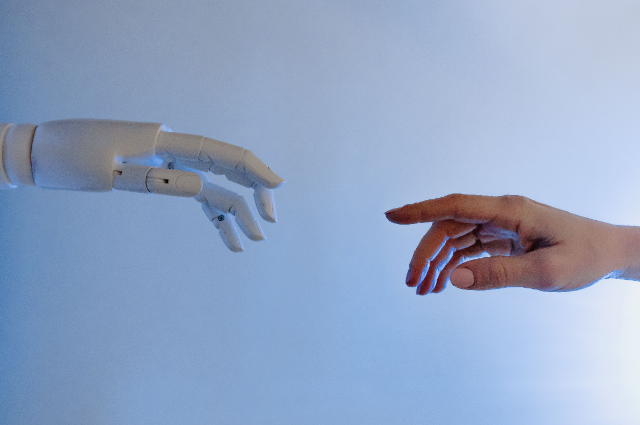
Artificial Intelligence has become a transformative force, raising important questions about its implications for human intelligence. The real issue is not whether AI will replace human intelligence, but whether it will change the way we learn, think, work, and exercise judgment.
Much public discussion has focused on employment, with many wondering whether intelligent machines will eventually perform tasks now carried out by humans. Yet a deeper question deserves attention. As AI increasingly remembers, retrieves, and generates information on our behalf, are we gradually surrendering our ability to think independently, exercise sound judgement, and cultivate wisdom? This is not merely a technological issue but one that lies at the heart of education and the future of human civilisation.
As a writer, I have found AI to be an invaluable companion. Whenever a new idea occurs to me, I use it to explore different perspectives, expand my thinking, and retrieve information I may have forgotten. Tasks that once required hours can now be completed in seconds. At the same time, I have noticed that because information is always available, I no longer feel the same urgency to memorise facts. This raises an important question: if machines increasingly become our external memory, what role will human memory play in the future?
AI, Learning, and the Changing Nature of Education
Teachers around the world face a similar challenge. Students increasingly rely on AI to solve mathematical problems, write essays, summarise books, complete assignments, and even answer philosophical questions. While the quality of AI-generated responses is often impressive, an important concern remains. If students simply accept these answers without questioning them, are they truly learning, or merely outsourcing the process of thinking?
History offers reassurance. Every major technological revolution has been accompanied by similar fears. When calculators entered classrooms, many believed children would lose their arithmetic skills. When computers became widespread, millions of jobs were predicted to disappear. The arrival of the internet prompted fears that books would become obsolete and human memory would deteriorate. None of these predictions came true in their entirety. Technology transformed society, eliminated some occupations, created many new ones, and education gradually adapted. Artificial Intelligence is likely to follow the same pattern.
The challenge, therefore, is not to resist AI but to use it wisely. Doing so requires a new form of literacy. Effective use of AI involves much more than typing a question into a computer. It requires the ability to ask meaningful questions, explain problems clearly, evaluate responses critically, verify facts using reliable sources, recognise bias, and exercise sound judgement before accepting conclusions. AI can enhance human intelligence, but it cannot replace human responsibility.
This reality points to a fundamental transformation in education. In earlier generations, memorising facts was a valuable skill because information was scarce and teachers were the principal source of knowledge. Today, information is abundant. Digital technologies and AI can collect, organise, summarise, translate, and analyse enormous quantities of data within moments.
In such a world, simply possessing information is no longer enough. The central purpose of education is shifting from acquiring information to developing the ability to interpret, evaluate, and apply it wisely and responsibly.
From Data to Wisdom: Understanding the DIKW Model
One useful way to understand this transformation is through the DIKW model—Data, Information, Knowledge, and Wisdom.
Data consists of isolated facts, figures, observations, and measurements. By themselves, these fragments have little meaning.
When data is organised within a meaningful context, it becomes information. Information answers basic questions and helps us understand what has happened.
Knowledge emerges when information is connected through reasoning, experience, and understanding. It reveals relationships, patterns, and causes, enabling us to explain why things happen and apply that understanding in practical ways.
Above knowledge stands wisdom—the ability to decide how, when, and even whether knowledge should be applied. Wisdom requires sound judgement, ethical awareness, compassion, experience, humility, and a deep sense of responsibility. Unlike data, information, or knowledge, wisdom cannot simply be downloaded or generated by an algorithm.
Artificial Intelligence already performs exceptionally well in the first three stages. It processes vast amounts of data, organises them into information, and synthesises knowledge with remarkable speed and accuracy. In many tasks, AI retrieves and analyses information far more efficiently than human beings.
The final step, however—the transformation of knowledge into wisdom—remains uniquely with human beings.
Knowledge, Wisdom, and Everyday Life
The distinction between knowledge and wisdom becomes clearer when we observe everyday life. Modern technology can process information with extraordinary speed, but the responsibility for interpreting that information and acting upon it still rests with human beings. It is this uniquely human capacity for discernment that education must increasingly cultivate in the age of Artificial Intelligence.
Consider the work of a village office. Today, applications for certificates can be completed online, and AI can help applicants identify the required documents, detect errors, and submit forms correctly. Yet it cannot determine whether an applicant is genuinely eligible. A village officer may still need to visit the location, verify the facts personally, and make a judgement based on reality rather than digital records. A computer processes documents; a human being verifies the truth.
The same principle applies to social media, where information reaches us continuously. Information alone cannot tell us whether a claim is true. We must examine its source, assess its credibility, and determine whether the evidence has been manipulated. Critical thinking is therefore no longer optional; it is an essential safeguard against misinformation.
Education presents a similar challenge. A student can now submit an assignment written entirely by AI, complete with polished language and accurate references. Instead of merely asking students to produce answers, teachers should encourage them to question those answers, evaluate the reasoning behind them, compare alternative perspectives, and verify their accuracy. The purpose of education is not simply to obtain correct answers but to cultivate thoughtful judgement.
Medicine provides another example. Medical science may recommend several treatments, but wisdom is required to choose the most appropriate one for a particular patient. Healing has always involved more than scientific knowledge; it demands compassion, experience, and professional judgement.
Agriculture tells the same story. Modern technologies can forecast rainfall, monitor soil conditions, detect crop diseases, and recommend irrigation schedules. Yet experienced farmers possess practical wisdom gained through years of observing their land, understanding local conditions, and learning from experience. Such knowledge cannot be completely replaced by computer models.
Even banking continues to depend on human judgement. Financial algorithms can analyse risks and estimate probabilities, but many situations require compassion, discretion, and an understanding of the human circumstances behind the numbers. Wisdom enables us to recognise when justice should be tempered with understanding.
Perhaps the clearest example comes from family life. If a child performs poorly in an examination, the marks themselves are merely data. Comparing them with previous results produces information. Discovering the reasons—such as illness, anxiety, family difficulties, or inadequate preparation—creates knowledge. Deciding how to respond requires wisdom. One child may need encouragement, another additional guidance, another counselling, and another simply time to regain confidence. Love, patience, understanding, and discernment cannot be supplied by algorithms.
These familiar situations reveal a common truth. Artificial Intelligence can help us collect data, organise information, and expand knowledge with remarkable speed. Yet the final stage of understanding—the ability to make sound, ethical, and compassionate decisions—cannot be delegated to machines. Wisdom remains a uniquely human quality, residing not only in the mind but also in the heart.
Science, Spirituality, and the Nature of Wisdom
Recognising this distinction leads to a deeper question. If wisdom cannot be produced merely by accumulating knowledge, where does it come from? Why have some of history's greatest tragedies occurred not because humanity lacked knowledge, but because knowledge was used without moral judgement?
At this point, the discussion moves beyond science and technology into the realm of values, self-awareness, and what may broadly be called spiritual wisdom.
History provides many examples. Scientific knowledge has produced extraordinary achievements, yet it has also contributed to devastating destruction when separated from wisdom. Nuclear science has provided energy capable of powering cities while also creating weapons capable of destroying them. Social media has connected billions of people worldwide but has also become a powerful channel for misinformation, negativity, and social division.
These examples illustrate an important truth. Science tells us what is possible; wisdom helps us decide what is desirable. Technology answers the question, How can this be done? Wisdom asks the more important question, Should it be done at all?
Science seeks to understand the external world. It has enabled humanity to cure diseases, improve agriculture, construct bridges, develop communication technologies, and solve countless practical problems. Few forces have transformed civilisation as profoundly as science and technology.
Yet every thoughtful person eventually encounters questions that science alone cannot answer.
Why do we seek peace, happiness and success?
What gives meaning to life, and who am I?
How should wealth, knowledge, and power be used for ourwell-being?
What responsibilities do we owe to one another?
What kind of society should we create for future generations? Physical growth or spiritual growth or both?
These are questions of values, purpose, and moral responsibility rather than scientific measurement.
In this context, spirituality should not be understood merely as religious practice or adherence to a particular faith. Rather, it refers to the cultivation of inner qualities such as self-awareness, integrity, compassion, humility, gratitude, self-discipline, forgiveness, and a willingness to place the common good above personal interest. Throughout history, these qualities have been cherished by philosophical and spiritual traditions across cultures.
A scientist may possess exceptional intelligence. An engineer may develop revolutionary technologies. An economist may create systems that generate enormous prosperity. Yet whether these achievements benefit humanity or become instruments of exploitation depends upon the character of those who use them. Intelligence determines what we can accomplish; wisdom determines how those accomplishments are used.
Artificial Intelligence and the Limits of Human Consciousness
Artificial Intelligence clearly demonstrates the distinction between intelligence and wisdom. Today's AI systems can write essays, compose music, generate paintings, summarise research, translate languages, analyse legal documents, and solve complex mathematical problems with remarkable speed and accuracy.
Nevertheless, an important boundary remains. AI can simulate emotions, but it cannot genuinely experience them. It can describe grief without mourning, explain courage without facing danger, and write eloquently about forgiveness without ever forgiving. It can recognise patterns associated with compassion, but it cannot itself feel compassion. Love, empathy, gratitude, sacrifice, moral responsibility, and the quiet voice of conscience arise not from computation but from the lived experience of being human.
For this reason, the future of education cannot be measured simply by how effectively students use AI. The more important question is whether education continues to nurture the qualities that machines cannot possess. If students graduate with exceptional technical skills but without honesty, empathy, responsibility, or sound judgement, society may become more efficient without becoming more humane.
The challenge before educators is therefore not to compete with Artificial Intelligence but to cultivate distinctly human capacities. Information has become abundant, and knowledge is increasingly accessible. Wisdom, however, develops through reflection, experience, ethical inquiry, meaningful relationships, and lifelong learning.
Perhaps this is the greatest educational opportunity of the AI age. If AI assumes much of the burden of gathering and organising information, education can devote greater attention to developing discernment, creativity, ethical reasoning, critical thinking, and compassionate leadership. Rather than diminishing human potential, AI challenges us to strengthen the qualities that make us uniquely human.
The Future of Education: From Knowledge to Transformation
If education is to remain relevant in the age of Artificial Intelligence, it must redefine its purpose. For generations, schools and universities measured success largely by the amount of information students could acquire and remember. That approach was appropriate when information was scarce. Today, however, knowledge is available instantly. AI can answer questions, summarise books, write reports, translate languages, and solve complex problems within seconds.
Consequently, education can no longer be limited to filling minds with information. Its central purpose must be to help learners question assumptions, evaluate evidence, distinguish truth from falsehood, think critically, and act responsibly.
The teacher's role is also changing. Rather than serving mainly as a transmitter of knowledge, the teacher becomes a guide who helps students ask better questions, examine different perspectives, understand the ethical consequences of their decisions, and cultivate intellectual humility. In an age when answers are abundant, learning to ask meaningful questions may become the most valuable educational skill of all.
Some educational thinkers suggest that the traditional DIKW model does not end with wisdom. Beyond wisdom lies transformation. Knowledge achieves its highest purpose only when it changes the way we live.
Knowing about environmental degradation is knowledge; choosing a sustainable lifestyle is transformation.
Knowing that prejudice and discrimination harm society is knowledge; treating every human being with dignity and respect is transformation.
Knowing that poverty, injustice, and conflict exist is knowledge; working, however modestly, to reduce suffering is transformation.
Education reaches its highest purpose not when students merely understand ideas but when those ideas shape their character and influence their actions.
This is perhaps the greatest paradox of modern civilisation. Humanity possesses more knowledge than ever before, yet knowledge alone has not prevented conflict, inequality, or environmental destruction. Information informs the mind, but it does not necessarily transform the heart.
That transformation requires qualities no technology can provide—honesty, compassion, courage, humility, self-discipline, integrity, and a deep sense of responsibility towards others. These qualities have long been nurtured through philosophy, ethical reflection, and the world's spiritual traditions. They are not alternatives to science but the moral compass that enables scientific knowledge to serve humanity.
Artificial Intelligence will continue reshaping education, healthcare, governance, business, and everyday life. Its capabilities will expand, and its influence will continue to grow. We should neither fear this progress nor accept it uncritically. Every generation has faced the challenge of using new knowledge wisely, and ours is no exception.
The Industrial Revolution asked whether humans could work alongside machines. The Information Revolution asked whether they could manage an ever-growing world of knowledge. The Age of Artificial Intelligence asks a deeper question:
Can humanity preserve wisdom while surrounded by limitless information?
The answer will not be found in technology alone. It depends upon the values we cultivate, the questions we encourage our children to ask, and the kind of society we choose to build.
Artificial Intelligence can extend the reach of the human mind, but it cannot replace the human conscience or the depth of human consciousness. Consciousness remains the foundation of self-awareness, empathy, moral responsibility, and the search for meaning. It continues to be explored through philosophy, psychology, and the world's spiritual traditions, remaining one of humanity's deepest mysteries.
Artificial Intelligence can greatly extend the power of the human mind, but only wisdom can guide the human heart.
The future of civilisation will not be determined by how intelligent our machines become, but by how wisely we choose to use them.
The true challenge of the AI age is therefore not to create smarter machines but to become wiser human beings.