
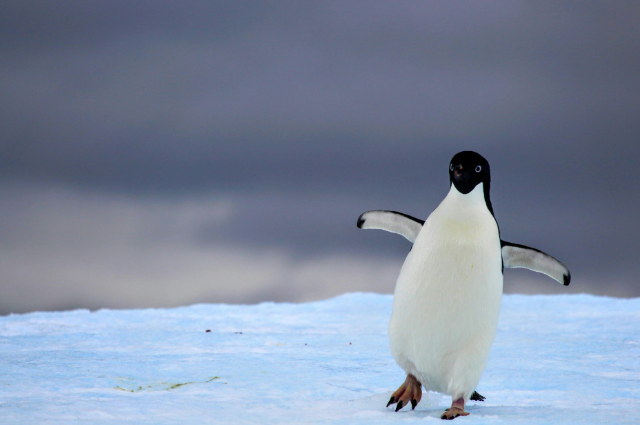
A clip of a penguin walking away from the colony has taken over the internet. While the internet explain it as existential angst, some viewers relate it to the life lessons. Scientists explain the behaviour as likely disorientation, illness or instinctual error, a rare but documented occurrence in penguins.
A penguin walks away from everything- and somehow, millions of people feel seen. IN 2026, a short clip of a lone penguin video drifting away from its colony blew up on the internet to which social media users named as "Nilhist Penguin". Others called it too real.
But what is really happening in the video? And is the penguin actually having an existential crisis, or is science offering a much simpler answer?
Let's break it down.
WHAT IS HAPPENING IN THE VIRAL CLIP?
This short clip went viral from the original footage from Encounters at the end of the world, a 2007 documentary by German filmmaker Werner Herzog. A lone penguin waddling away from its colony and heads towards the mountains, roughly 70 kilometers. Unlike most penguins, which stick close to the sea for food and survival, this one appears to be on a solo journey into nowhere. There's no ocean ahead, no food, no water. Just ice, snow and mountains.
WHY IS THIS CLIP GOING VIRAL?
The penguin became an accidental symbol of the burnout era- a slow, silent protest against routines we never agreed to. People started adding captions like:
- "When you are done with everything"
- "Me when i am about to leave"
- ''Me walking away from my problems"
The meme has become philosophical that reflects modern life. Everyone is moving fast, following routines, and then there is one figure who moves away from the crowd to the live life in its own way. The internet symbolizes it people emotions and stories more than penguin itself. In world full of chaos, overthinking and burnout, many viewers see themselves in that slow, "lonely" march towards.
WHAT SCIENCE SAYS ABOUT THE CLIP?
According to the scientists and researchers, this behaviour is rare but known in penguins. Possible reasons include:
- "Disorientation- environmental cues can fail".
- "Illness- wandering is sometimes a symptom".
- "Instinctual error- nature isn't always logical".
While the science explains the how, the internet explains it why, emotionally at least. It's less about biology and more about human projection. We see meaning because we want meaning. We didn't relate it to the penguin because it was lonely. We relate because we are.
And that's why the meme works so well.
MEME VS REALITY
"The penguin wasn't nihilistic. We were".
The viral penguin trend illustrates how digital culture often gravitates towards simple, emotionally resonant content. In a scroll filled with chaos, these awkward waddles and unbothered dives gave us permission to laugh, pause and feel a little lighter. The trend will fade like all trends do but the feeling it sparked won't. The penguin quietly proved that sometimes the interest is at its best when it's just having fun. And honestly? That's something worth sharing again and again.