
The afternoon sun in Delhi didn’t just shine; it poured down like molten iron. It melted the asphalt roads and turned the heavy air into a choking, static haze of dust and exhaust. Inside our residential quarters, the loud, rhythmic rattling of the desert cooler against the windowpane was losing its battle against the brutal forty-five-degree heat. I pushed open the heavy front door, my college bag slung over a shoulder drenched in sweat, my face dark with frustration. Dropping my boots by the doorway with a loud, exhausted thud, I let out a long breath.
My mother, wiping her forehead with the corner of her cotton dupatta, stepped out of the kitchen. Her eyes immediately locked onto my face with that deep, instinctive worry only mothers possess." What happened in college today, Rohan?" she asked gently. "Wasn't today supposed to be the last day of the semester? Why do you look so completely broken?" I collapsed onto the sofa, burying my face in my hands before looking up at her with a defeated smile. "It was the last day, Ma. But they didn't let us go.
The department just announced a mandatory, three-month mining research project for the summer break. And it’s not something I can do from the comfort of a library. It’s proper, gruelling fieldwork." Her hands went straight to her chest. "Oh dear, in this terrible heat? Mining? Where do they expect you to go? Rohan, please don't do this. Can’t you skip it, or see if you can change your topic? You know how much I worry; how can I watch you go out into this burning sun to dig into the dirt? You are a city boy; you aren't built for this kind of hardship. "No, Mom, I have to go," I replied, my voice tightening because I truly had no choice. "It’s not an option. It’s a prerequisite for my final degree, the only thing standing between me and graduation. If I don't go, I lose a whole year." I saw her opening her mouth to protest further, but I gently cut her off. "Don't worry about the logistics just yet.
I need to do some research tonight, look at some geological maps, and call a few seniors to figure out the exact details. But please, Ma... let me just get a fresh shower first to wash this sticky city dust off my skin, and then give me something to eat. "Later that night, the hum of the city faded as I sat at my desk, staring at my laptop screen and calling older students who had t east before. Through patchy phone lines and digital topography maps, one region kept coming up: the Chota Nagpur Plateau in Jharkhand. The seniors called it India's mineral heartland, a massive expanse holding some of the country's richest reserves of high-grade bituminous coal.
As I researched the local weather, a small wave of relief washed over me. Compared to the flat, endless furnace of Delhi’s dry heat, the plateau’s climate seemed forgiving. Being an elevated landmass surrounded by dense sal forests, the canopy broke the harshness of the sun. The data showed that every ten or fifteen days, heavy pre-monsoon showers swept through to normalise the summer. It felt manageable. I told myself I’d go there, get the data, and rush right back to the city.
My journey began at the Birsa Munda Airport in Ranchi. Stepping out of the terminal, I braced myself for the suffocating, hot wind I had grown to hate in Delhi. Instead, I stopped in my tracks. The air in Ranchi was different, soft, light, carrying a cool breeze from the distant hills. The summer here felt constantly interrupted by sudden, refreshing rain showers that cooled the earth before the heat could turn oppressive.
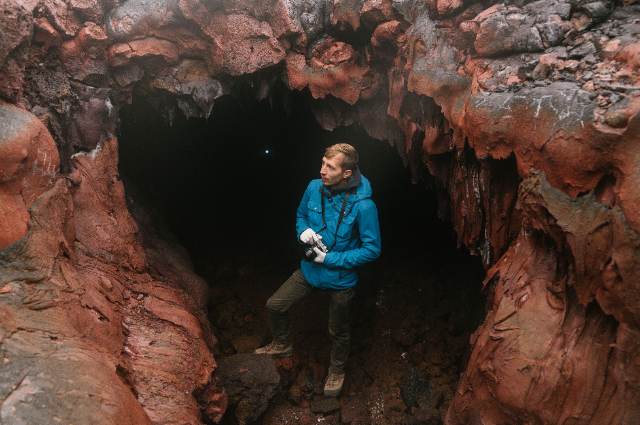
But the real field journey started the next day. Riding a crowded, dusty local bus toward the deep mining interior, I watched the scenery shift. Through the grime-streaked window, I saw ancient valleys and natural rock formations rising in grand, repeating archways and massive pillars. It felt like stepping into an old, forgotten world. Yet, as the bus crept closer to the actual mining belt, the gentle Ranchi weather vanished. The air grew heavy, thick with coal dust and the sharp, sulfurous smell of excavation. Suddenly, I was facing a hot, humid summer that felt just as suffocating as Delhi. I swallowed hard against the heat, forcing myself to remember why I was here. But when the bus finally rattled to a halt at my destination, my anxiety eased. The local villagers welcomed me with an open, genuine hospitality that I had never experienced in the city.
The next morning, I woke up with a single-minded focus: start the work, finish early, and get out. I felt entirely out of place in this remote village. The absolute silence, the lack of modern amenities, and the sheer simplicity of rural life made me restless. I wanted to escape back to my normal routine. To navigate the project, I sought out the village Mukhiya, a respected man named Budhan Oraon. Since I was a complete outsider, relying on the village head was my safest bet; he knew the mines like the back of his hand. He kindly arranged for me to stay at his own house.
For the first week, everything went precisely according to plan. I tracked coal seams in the morning and compiled my reports in the evening. And then, everything changed. The Mukhiya’s daughter returned home from her university city for the summer vacation. She was pursuing an English Honors degree, and her love for literature and writing gave her an air of grace and intellect that set her apart. When I first saw her standing in the courtyard, I was struck by how beautiful she was. At first, I tried to ignore her. I forced my eyes down to my data sheets, reminding myself that I was just a temporary visitor. But human emotions don't follow a syllabus. The more I tried to suppress it, the more acutely aware I became of her presence, watching her go about her daily chores, helping her mother, her laughter echoing softly through the house.
One afternoon, taking a half-day break to escape the midday heat, I finally struck up a conversation with her. We found out very quickly that talking to each other was the easiest thing in the world. There was no pretence. Soon, I found myself intentionally making time for her, and she began noticing me too. It didn’t take long for both of us to realise that something deep had shifted between us. Living under her parents' roof meant we had to be careful. We used her love for language as the perfect cover. She began helping me with my writing, refining my report descriptions. Under the guise of these study sessions in the veranda, we spent hours just talking about life, bridging the gap between our two worlds.
One evening, while sitting outside watching the dusk settle, she looked at me and asked, "You have been here for weeks, Rohan, but have you actually seen my village? It’s beautiful if you look past the mines. "No," I admitted, looking at my papers. "To be honest, I was just so focused on finishing early and leaving." A shadow crossed her face. "Oh. You want to leave as early as possible? I see. I suppose I'm just wasting your time then. "No, Kanak, it’s not like that at all," I said urgently, reaching out slightly before pulling my hand back. "Before I met you, I wanted to leave because I felt like a stranger here. Now... Now I want to stay. Especially if you're the one showing me around." She smiled shyly, her eyes dropping. "If you want to see it, you’ll have to ask my father for permission. He is very strict. "I will," I promised. That night at dinner, I brought it up to her father, asking if I could explore the surrounding hills. Her father nodded slowly. "Alright. I will take you tomorrow morning." Kanak immediately stepped in, knowing her father had a packed schedule. "Papa, you have that big panchayat meeting tomorrow. I don’t have any classes or chores. I can show him the paths." We exchanged a fleeting, secret smile as her father considered it and finally agreed.
The next morning, she took me to a ridge to watch the sunrise over the deep forest. It was breathtaking. The scene felt entirely poetic, the golden sun rising over an endless canopy of green, illuminating the rich, red earth like a canvas, reflecting the grand, timeless architecture of nature itself. On our way back, she told me about an upcoming local land and village survey. It was the biggest event of the season. As the days ticked away, we both knew my project was coming to an end. We hadn’t confessed our feelings in words yet, but the unspoken weight of my departure hung heavily over us. Independently, we both made a choice: we would confess our love on the day of the survey. When that day arrived, amidst the vibrant chaos and gathering of the village, we found a quiet moment away from the crowds. We finally poured our hearts out to each other. In that brief moment, hearing her say she loved me, the world felt absolutely flawless. But our happiness was brutally short-lived .That very night, her father caught us. We were talking in hushed whispers near the base of the dark stairwell, thinking the house was asleep. Suddenly, the light switched on. Her father stood there, his face contorted in pure rage. Before I could even process his movement, he stepped down and struck her across the face. The sound of the slap shattered the night. I couldn't bear to see her cowering. I immediately stepped between them, taking the entire blame onto myself. "Sir, please, don't blame her! She didn't want this; she tried to stop me. I am the one who pursued her. I love her, sir. It’s entirely my fault. "Her father’s face was a mask of cold stone. "You city boys know nothing about us, the tribal people," he said, his voice trembling with a quiet, dangerous anger. "Outside of Jharkhand, in a wealthy city like Delhi, your family will never accept an Adivasi girl. I know how the world works. It is better to pack your bags and leave right now. Your research is finished. "No, sir," I pleaded, my voice cracking. "I will convince them! I love her, I won't leave her. "I am asking you to leave respectfully, boy," he threatened. "Don't forget I am the Mukhiya here. I have other, far more dangerous ways to make you disappear from this village." Kanak was weeping silently, completely paralysed by fear and helplessness.
She knew her culture; she knew that if she rebelled or spoke up, her father would immediately pull her out of university and force her into an arranged marriage with a local villager. Looking at her tear-stained face, my heart broke. I looked at Budhan Rao and said, "I will leave tomorrow. But I promise you, Kanakpura, I will come back. I will bring my family, and I will marry you properly. Hold on to that. "The moment I reached Delhi, I confessed everything to my parents. I expected hesitation, but I didn't expect a wall of absolute hatred. The moment the word Adivasi left my mouth, my father roared in anger. He made it clear that marrying a tribal girl was entirely against our family rules, our caste, and our traditional customs. The rigid, unbending nature of their orthodox mindset felt as cold and heavy as the ancient stone ruins of the past, immovable and devoid of empathy. I tried everything. I argued, I begged, I wept. I went on a hunger strike, locking myself in my room for days. But the emotional warfare shifted when my mother locked herself in her own room, screaming through the door that she would end her life if I brought a tribal girl into this house. Crushed under the immense weight of guilt, filial duty, and sheer exhaustion, I broke. I gave up. Meanwhile, three hundred miles away, hell broke loose in Kanakpura's life. When my letters never arrived, and she realised I wasn't coming back, she spiralled into a severe depression. Her family kept her under literal lock and key, stripped of any contact with the outside world. Trapped, suffocated, and entirely heartbroken, she tried to end her life multiple times. When her father discovered her suicide attempts, he wasn't moved by her pain; he was terrified of village gossip. In his orthodox, patriarchal mind, a girl’s reputation was like a piece of white cloth; once it suffered a single stain or tear, it was deemed ruined and thrown away. Without ever asking her what she wanted, with absolute disregard for her education, her hard work, or her dreams of a career, her family moved with terrifying speed. Within ten days of my departure, they forcefully married her off to a local village boy. Her education was permanently halted, her books put away, and her future annihilated. By the time the brutal summer ended and the monsoon rains finally washed over the Chota Nagpur Plateau, Kanak was gone. She was trapped in a life she never chose, leaving me behind in the suffocating heat of Delhi, carrying a permanently broken heart and a lifetime of quiet, agonising regret.