
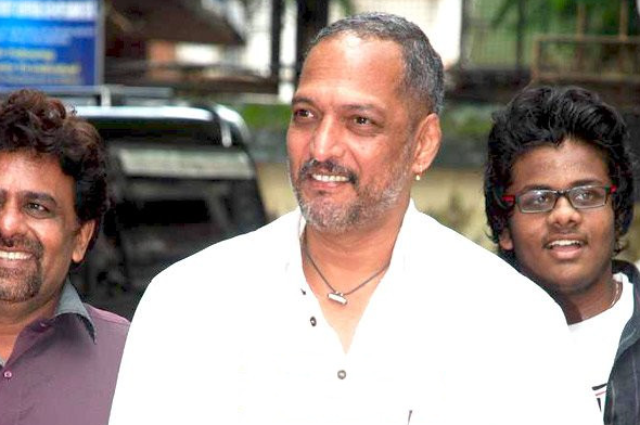
We often recognise heroes by the uniforms they wear. A soldier wears camouflage, a policeman wears khaki, and a film star wears the costume of a character who saves the world. But some heroes do not need costumes, scripts or cameras to prove their worth. Their real identity emerges through their choices and actions. Nana Patekar is one such personality.
Known for his powerful performances, intense expressions, and unforgettable dialogues, Nana Patekar has established himself as one of the most distinctive actors in Indian cinema. However, beyond his celebrated film career lies a lesser-known story of hardship, simplicity, courage, and compassion. His journey from childhood poverty to professional success, followed by his efforts to support distressed farmers, makes his life worth exploring beyond the boundaries of cinema.
A Childhood That Smelled of Hunger
Nana Patekar's early life was far removed from the glamour associated with Bollywood. Born on 1 January 1951 in Murud-Janjira, Maharashtra, he experienced financial difficulties during his childhood. His family's circumstances deteriorated after his father's business suffered losses.
At the age of around thirteen, Nana began working to support his family. He painted cinema posters after school, earning approximately ₹35 a month and receiving one meal a day for his work. His routine involved attending school and then travelling to work to earn money.
In an interview, he recalled that during those difficult days, food was more precious to him than anything else. He even described roti as the most beautiful fragrance in the world because he knew what it meant to remain hungry.
This experience was not merely a difficult chapter in his childhood. It shaped his understanding of poverty, human suffering, and dignity. The boy who once struggled to arrange a meal would eventually become a successful actor, but his memories of hunger remained with him.
Hunger Became His Teacher
Nana Patekar studied at the Sir J.J. Institute of Applied Art in Mumbai. His interest in theatre developed alongside his education, and the stage became an important part of his artistic journey.
His transition into cinema was not entirely planned. Actress Smita Patil, who knew him through theatre, encouraged him to explore opportunities in films. He eventually made his film debut in Gaman in 1978.
His breakthrough performances in films such as Parinda, Krantiveer, Tirangaa, Agni Sakshi and Ab Tak Chhappan established his reputation as an exceptional performer. He received three National Film Awards and was honoured with the Padma Shri in 2013.
Interestingly, Nana has often spoken about how his difficult childhood influenced his acting. His performances frequently portray anger, helplessness, courage, and emotional vulnerability with unusual intensity.
Perhaps he could portray suffering so convincingly because he had experienced some of it himself.
When an Actor Stepped Beyond the Film Set
Another remarkable chapter of Nana Patekar's life is associated with the Indian Army.
While preparing for his film Prahaar, he underwent rigorous military training. His association with military personnel continued beyond the film. During the 1999 Kargil conflict, he sought permission to visit the conflict zone and spend time with Indian soldiers.
He later spoke about his experience with the Army and the demanding conditions he encountered. Reports about his account describe his association with a Quick Reaction Team and substantial weight loss during this period.
It is important to distinguish his experience from that of soldiers who fought on the battlefield. Nevertheless, his decision to spend time alongside military personnel during the Kargil conflict reflects a connection that went beyond playing a soldier on screen.
Many actors have portrayed military officers. Nana Patekar made an effort to understand the lives of the men who actually wore the uniform.
A Superstar Who Chose Simplicity
Success often changes people's lifestyles. Expensive cars, luxurious houses, designer clothes, and extravagant celebrations are frequently associated with celebrity status. Nana Patekar's lifestyle, however, has often attracted attention for its simplicity.
Despite achieving considerable financial success, he reportedly continued living in a modest one-bedroom apartment in Andheri, Mumbai, measuring approximately 750 square feet. Reports state that he purchased the apartment decades ago for around ₹1.1 lakh and shared it with his mother.
His Pune farmhouse also reflects a preference for simplicity. An earlier report described its interiors as having basic wooden furniture, terracotta flooring, and essential household arrangements.
There is a popular claim that Nana Patekar has no furniture in his house. However, available reports describe simple furniture rather than a completely unfurnished home. The more meaningful fact is that he never appeared particularly interested in turning his living spaces into displays of celebrity wealth.
At his farmhouse, he reportedly grew crops such as rice, wheat, and vegetables and kept animals. He enjoyed farming and spending time away from the entertainment industry's demanding environment.
His lifestyle raises an important question: Does success necessarily require extravagance? Nana Patekar's life suggests that financial achievement and material simplicity can coexist.
When a Luxury Car Became Less Important Than a Farmer's Family
Perhaps the most moving aspect of Nana Patekar's life is his involvement in the welfare of distressed farmers.
In 2015, reports about farmer suicides in Maharashtra deeply affected him. He was particularly disturbed by the condition of families left behind after the loss of their breadwinners.
According to accounts of his philanthropic journey, he had considered purchasing a luxury car worth approximately ₹1.5 crore. Instead, he decided to redirect substantial money towards helping families affected by farmer suicides and agricultural distress.
He approached fellow Marathi actor Makarand Anaspure, and together they began working towards providing assistance to affected families.
This decision was significant because it represented more than financial generosity. It reflected a personal understanding of economic hardship. A man who had once experienced hunger could recognise the helplessness of families struggling to survive.
NAAM Foundation: Turning Compassion into Action
In September 2015, Nana Patekar and Makarand Anaspure established NAAM Foundation to support distressed farmers and rural communities in Maharashtra.
The foundation initially focused on helping families affected by farmer suicides and drought. Its work gradually expanded into areas such as water conservation, rural development, irrigation, and sustainable livelihoods.
One of its important areas of work has been water management. In drought-affected regions, water scarcity directly affects agricultural productivity and the livelihoods of farming communities.
NAAM has undertaken projects involving the restoration of water bodies, rivers, streams, and other water sources. These initiatives aim to improve water availability and strengthen rural communities.
According to the foundation's published information, its work has reached thousands of villages and benefited millions of people. These figures are reported by the organisation itself, but they indicate the scale of its stated activities.
The significance of NAAM Foundation lies in its attempt to move beyond temporary financial assistance. Helping a family during a crisis is important, but improving water availability can help address one of the underlying difficulties faced by farmers.
This is where charity begins to move towards sustainable development.
Giving Without Making Charity a Spectacle
Nana Patekar's charitable activities were not limited to NAAM Foundation. Reports have also documented his contributions to charitable organisations and drought-relief efforts.
He reportedly donated his remuneration from the film Paathshaala to five charitable organisations. He also contributed the cash component of the Raj Kapoor Special Contribution Award towards drought relief in Maharashtra.
His involvement in relief activities following the 2008 Bihar floods has also been reported.
These incidents reveal a pattern of using personal resources to support people facing difficult circumstances.
However, the most important aspect of his work is not the amount of money donated. It is the recognition that people experiencing poverty need dignity along with assistance.
In discussions about farmers, Patekar has spoken about their loneliness and the loss of self-respect that can accompany financial distress. His observations suggest that he understands poverty as more than a shortage of money. It can also mean social isolation and the feeling that nobody cares.
The Human Being Behind the Celebrity
Nana Patekar's life should not be presented as a story of perfection. Like other public personalities, he has faced controversies and criticism. His achievements and charitable contributions should be examined alongside legitimate questions and allegations rather than used to dismiss them.
A research-based account must recognise that a public figure can have both achievements and contradictions.
Nevertheless, his documented journey offers several important lessons.
His childhood teaches us the importance of resilience. His acting career demonstrates the value of discipline and dedication. His military training reflects his interest in understanding life beyond cinema. His simple lifestyle challenges the assumption that wealth must be displayed. His work with NAAM Foundation demonstrates how individual concern can develop into organised social action.
Most importantly, his connection with farmers reminds us that empathy often becomes stronger when people remember their own struggles.
The Real Hero Never Needed a Costume
Nana Patekar has portrayed numerous memorable characters on screen. He has played men who challenge injustice, confront criminals, and defend ordinary people. His powerful dialogues have entertained audiences for decades.
But his most meaningful contribution may not be found in any film.
It may be found in the families that received support, the villages that benefited from water-conservation projects and the farmers whose struggles received attention.
The thirteen-year-old boy who once painted film posters for ₹35 a month eventually became a celebrated actor. Yet his journey did not end with fame and financial success. He chose to use a part of his achievements to address the difficulties of people who continued to struggle.
Perhaps heroism is not about how many people recognise your face or remember your dialogues. It is about whether your presence makes a difference in somebody else's life.
A real hero does not always need a battlefield, a uniform or a dramatic background score. Sometimes, he needs only the courage to notice another person's suffering and the willingness to do something about it.
Nana Patekar's story reminds us that success is not merely about how far we rise in life. It is also about how many people we remember when we reach the top.
And that is a role no film script can truly create.