
“A civilisation that trusts its women with its heritage trusts itself with its future.”
In the vast silence of the Sahara, where the desert seems to erase every boundary drawn by human beings, there lives a people whose traditions quietly challenge many of our assumptions about gender.
They are the Tuareg, an Amazigh (Berber) people who have lived for centuries across the Sahara and Sahel, particularly in Mali, Niger, Algeria, Libya and Burkina Faso. Often called the “Blue People of the Desert,” they earned this evocative name from their traditional indigo-dyed clothing, whose colour can stain the skin with a bluish tint.
But perhaps the most striking thing about Tuareg culture is not the colour of their clothes. It is who wears the veil.
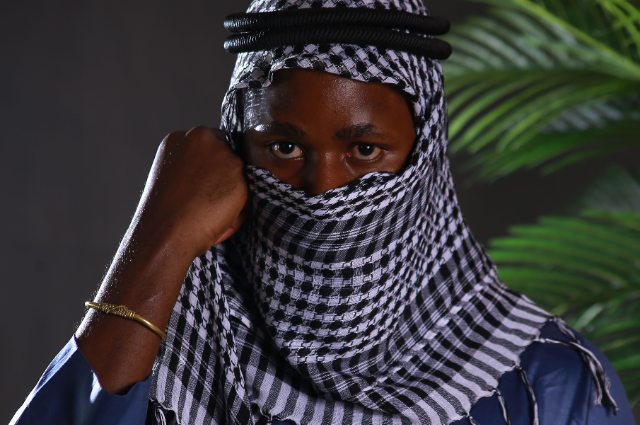
In the Tuareg world, it is the man who covers his face
In many societies, the veil is popularly associated with women. Among the Tuareg, however, the traditional face veil is principally worn by men.
The garment is known as the tagelmust—a long piece of cloth wrapped around the head and lower face, sometimes leaving only the eyes visible. Traditionally, it becomes associated with male adulthood, dignity, reserve and social identity. It also has a very practical purpose in the Sahara, where cloth can protect from intense sun, wind and blowing sand.
The meaning, however, goes beyond protection.
Anthropological research has connected Tuareg veiling with ideas of honour, personal reserve and social status. The Smithsonian's documentation of Tuareg dress, drawing on the work of anthropologist Susan Rasmussen, notes that these forms of head and face covering are connected not only with modesty but also with Tuareg ideas about the person and changes in social status throughout life.
So, the veil is not simply a piece of cloth.
It is a statement of identity.
And there is an interesting cultural reversal here: the man hides his face, while the woman traditionally does not.
This is one of the details that makes Tuareg society so fascinating—not because it is “opposite” to everyone else, but because it reminds us that customs we sometimes consider universal are often deeply cultural.
And then comes the more remarkable part: the position of women
Tuareg society has historically been largely matrilineal. This means that descent and important aspects of family identity are traced through the mother's line.
But matrilineal does not simply mean “women rule everything.” That would be an oversimplification. Rather, it has traditionally given women important forms of social and economic security.
In many Tuareg communities, women have owned the family tent, household possessions and, in some circumstances, livestock and other property. Anthropologist Susan Rasmussen has documented the particular importance of the nuptial tent: a woman traditionally receives it as part of her marriage arrangements and retains ownership of it.
The tent is not merely a shelter in a nomadic society.
It is a home.
It is property.
It is security.
And therefore, ownership of the tent can give a woman considerable independence.
Divorce does not necessarily mean losing everything
Perhaps one of the most striking aspects of traditional Tuareg marriage customs is what could happen when a marriage ended.
Women could initiate divorce, and divorce did not traditionally carry the same level of stigma found in many societies. A woman generally retained important possessions, and in traditional accounts, the husband could be the one expected to leave the woman's tent.
Rasmussen's observations are particularly revealing here. She notes that Tuareg women traditionally had rights to represent themselves legally, initiate divorce, inherit and manage property, including livestock and date palms. In nomadic communities, the woman's tent could remain hers after separation.
This does not mean that every Tuareg woman throughout history lived an independent or completely equal life. Tuareg society itself has varied across regions, classes and historical periods, and modern economic and political changes have altered many traditional practices.
Still, the underlying principle is striking:
A woman's security did not necessarily depend entirely upon her husband.
Women were also guardians of culture.
Tuareg women have traditionally played an important role in preserving the community's cultural memory.
Language, poetry, music, family history and traditions have been passed from one generation to another through them. Their influence was not confined to the household.
Even where men occupied formal political positions, women could exert considerable influence through family and social networks. Rasmussen records that Tuareg men often spoke of women with great respect, describing them as being “like princesses.”
That expression is revealing—not because every Tuareg woman was literally treated like royalty, but because it illustrates an ideal deeply associated with respect for women.
In some communities, violence against women has traditionally been regarded as shameful. Rasmussen also describes cases in which a woman could complain about an abusive husband and community elders could summon and reprimand him or impose a fine.
Again, this should not be romanticised. No society is perfectly free from inequality or violence, and cultural ideals do not always translate perfectly into everyday life. But the ideals themselves tell us something about the society.
Islam and Tuareg customs: a more complicated story
It is tempting to describe Tuareg customs simply as a conflict between Islam and an older matrilineal tradition. Reality is more complicated.
Most Tuareg today are Muslim, and Tuareg customs have developed through centuries of interaction between Islam, Amazigh traditions and local social institutions.
Even the men's veil cannot simply be labelled “non-Islamic.” Anthropological and museum sources point out that modesty is part of its meaning, while its particular form and male-specific use are strongly embedded in Tuareg culture.
Inheritance is similarly complicated.
Islamic inheritance principles generally distinguish between male and female shares in certain circumstances, while traditional Tuareg society has also maintained matrilineal systems of descent and property transmission. As Rasmussen explains, the interaction between Islamic, Arabic, local Tuareg and later colonial legal traditions has been complex.
In other words, Tuareg society cannot be neatly placed into the category of either “Islamic” or “non-Islamic.” Cultures rarely work that simply.
The myth about unveiling a Tuareg man's face
There is another fascinating story that frequently appears online.
According to the popular version, if someone saw a Tuareg man's uncovered face, he had to kill the person—or be killed himself.
It makes for a dramatic story.
But dramatic does not mean historical.
There is no reliable evidence for a universal Tuareg rule requiring someone to be killed simply because they saw a man's unveiled face. What is much better supported is that exposing the face in circumstances where it was expected to remain covered could be considered deeply shameful or dishonourable.
The distinction matters. History becomes weaker when fascinating traditions are turned into sensational myths.
What the Tuareg teach us about gender
Perhaps the most valuable lesson from the Tuareg is not that their society is somehow “better” than other societies.
It is that there is more than one way to organise human society.
We often assume that masculinity must look one way and femininity another. We assume that veiling belongs to women, that property naturally passes through men, that divorce necessarily leaves women economically vulnerable, or that political influence must always belong to the person holding the formal title.
The Tuareg challenge many of those assumptions.
Here, traditionally, men veil their faces while women leave theirs uncovered. Women can own important property.
A woman can initiate divorce.
The family line can be traced through the mother.
Women can influence decisions even when men occupy formal leadership positions.
And women can become the custodians of the cultural memory of an entire community.
Yet the story is not a simple tale of a “matriarchal paradise.” Men have traditionally held many formal political and military roles, social hierarchies have existed, and contemporary Tuareg communities are changing under the pressures of urbanisation, conflict, economic transformation and modern state institutions.
That complexity makes their story even more interesting.
The Tuareg remind us that matrilineal is not the same as matriarchal, and cultural difference is not automatically superiority or inferiority.
It is simply difference.
And sometimes, that difference gives us a mirror in which to question our own assumptions.
In the endless Sahara, where the wind constantly reshapes the dunes, the Tuareg have preserved a cultural idea that is perhaps more enduring than any particular custom:
Honour does not have one gender, and power does not have one shape.
Their men may hide their faces beneath the blue veil, but their culture has never hidden the importance of its women.
And perhaps that is the most beautiful paradox of all.
In the sands of the Sahara, a matrilineal tradition reminds us that leadership can begin where life itself begins, with women. It begins with women.
References: