
History is often written by governments, but every once in a while, it is rewritten by ordinary people who decide they have had enough.
India witnessed one such moment when Union Education Minister Dharmendra Pradhan resigned after weeks of nationwide protests over the alleged NEET-UG 2026 paper leak and CBSE marking irregularities. For lakhs of students, this was not merely a political event. It was the culmination of months of frustration, anxiety, and a growing belief that their future deserved better protection.
The movement found an unexpected yet powerful voice in Sonam Wangchuk, the engineer, education reformer, and Ramon Magsaysay Award recipient best known for his work in Ladakh and for inspiring the film 3 Idiots. Believing that the issue had become larger than an examination, Wangchuk began a hunger strike demanding accountability and reforms in the education system. His fast continued for 26 days, drawing the nation's attention.
When Wangchuk ended his hunger strike before the minister's resignation, many questioned his decision. Some even felt he had stepped back too early. Wangchuk later explained that he chose to end the fast after negotiations with the government and because he feared that the protests could turn violent or expose young demonstrators to legal action. For him, protecting the students had become more important than continuing the fast.
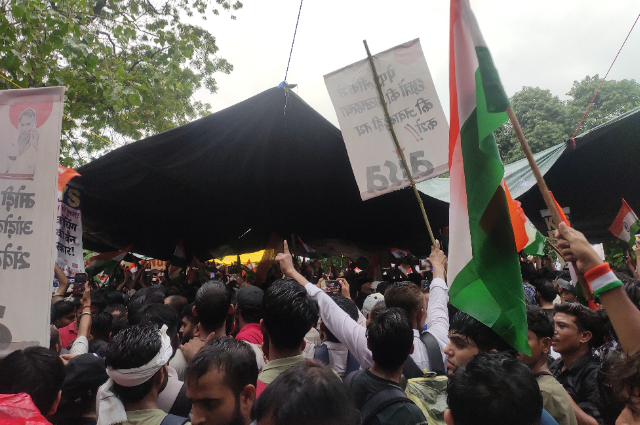
Meanwhile, the protests did not lose momentum. Thousands of students continued to gather at Jantar Mantar and in several cities across the country, demanding accountability and systemic reforms. The government eventually announced Dharmendra Pradhan's resignation, describing it as a voluntary decision, while also promising stricter laws against examination paper leaks. Opposition parties called the resignation a victory for students and democratic pressure.
Yet, the story did not end there. Talks between government representatives and protest leaders continued, as several demands—including compensation for affected families and assurance of no legal action against peaceful protesters—remained unresolved. The resignation addressed one demand, but the larger conversation about fairness and transparency in India's examination system continues.
Whether one agrees with every method used during the protests or not, one lesson stands out. Democracies remain healthy only when citizens continue to question, participate, and hold institutions accountable. The events of July 2026 reminded the country that young voices, when united with discipline and purpose, can no longer be dismissed as background noise.
Sometimes, history does not change because people shout the loudest. It changes because they refuse to stop asking for what is right
References used:-