
"Sometimes the most extraordinary journeys are the ones history quietly forgets."
Today, travelling from London to India usually means an eight- or nine-hour flight. Fast, convenient, and almost effortless. But there was a time when reaching India was not measured in hours; it was measured in stories.
Between 1957 and 1976, an ordinary-looking bus offered one of the most extraordinary journeys the world has ever seen. Yes, you could actually board a bus in London and step off nearly 50 days later in Calcutta (now Kolkata) after travelling through mountains, deserts, ancient cities, and several countries. It wasn't a dream or an adventurous novel. It was a real transport service that became the longest bus route in the world.
The first service, called The Indiaman, left London's Victoria Coach Station on 15 April 1957. It crossed Belgium, West Germany, Austria, Yugoslavia, Bulgaria, Turkey, Iran, Afghanistan, Pakistan, and finally entered India before reaching Calcutta. The one-way journey covered nearly 16,000 kilometres, while the complete round trip exceeded 32,000 kilometres.
But this wasn't merely a bus ride.
The coaches were designed to become temporary homes for travellers. They had sleeping bunks, a small kitchen, reading facilities, heaters, and even space to relax while watching the changing landscapes outside. Food and accommodation were included in the fare, making the journey feel more like a moving expedition than public transport. A one-way ticket initially cost £85, which later rose to around £145 in the early 1970s.
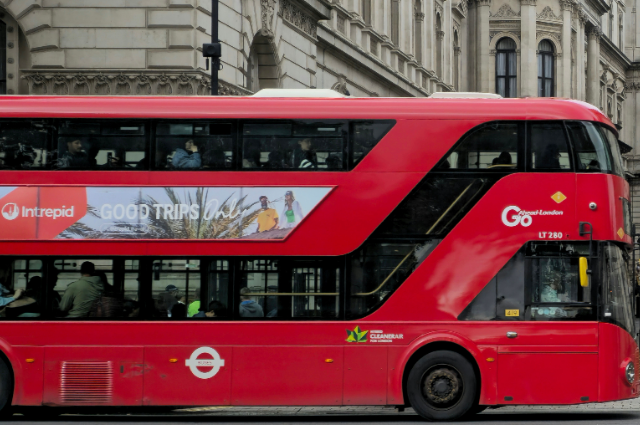
As the years passed, more operators joined the route. Among them, Albert Tours became the most famous. Its iconic double-decker bus, affectionately known as "Albert," carried travellers not only between London and Calcutta but, on some journeys, even continued onwards to Sydney, Australia. For many passengers, the destination was only half the adventure; the road itself was the real attraction.
The route soon became closely associated with the famous Hippie Trail of the 1960s and 1970s. Thousands of young travellers from Europe travelled overland to India in search of spirituality, culture, music, and a different way of life. Long before travel blogs, GPS, and social media existed, these journeys inspired stories that were passed from one backpacker to another. Some historians even credit this era of overland travel with influencing the beginnings of Lonely Planet, one of the world's best-known travel guide publishers.
Sadly, every remarkable journey eventually reaches its final stop.
By the mid-1970s, political tensions across the route had increased. Growing instability in the Middle East, rising unrest in Iran, worsening regional conflicts, and the uncertainty that eventually led to the Iranian Revolution and the Soviet invasion of Afghanistan made the overland route increasingly unsafe. In 1976, the legendary bus service was discontinued, bringing an unforgettable chapter of travel history to an end.
Interestingly, there have been announcements in recent years about reviving a Delhi–London bus journey. However, the project has faced repeated delays and has not yet become a regular service.
Today, the idea of spending fifty days on a bus may sound exhausting. Yet perhaps those travellers returned home with something modern transport often cannot provide: a collection of conversations, unexpected friendships, breathtaking landscapes, and memories gathered one road at a time.
After all, some journeys are not meant to save time. They are meant to teach us what time, distance, and the world truly feel like.
References:
- https://en.wikipedia.org/wiki
- https://bustolondon.in/
- https://secretldn.com
- https://timesofindia.indiatimes.com