
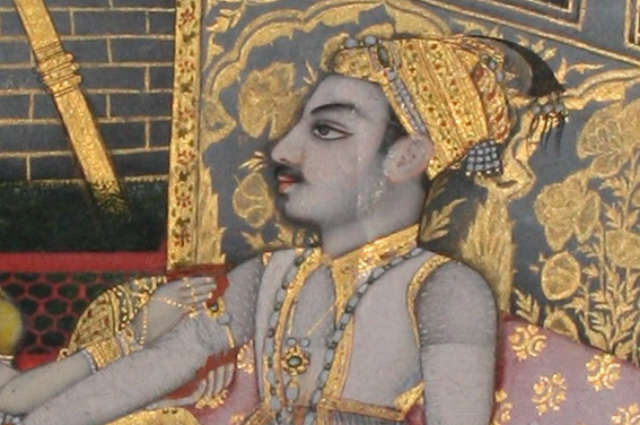
History remembers Plassey from the British side, the guns and the treachery, but Siraj-ud-Daulah’s fate has long been “shaped by the victors’ narratives”. The last independent Nawab of Bengal ruled a realm of extraordinary wealth and autonomy, yet colonial chronicles reduced him to a caricature villain. In reality, Siraj did not fall because he was weak; he fell because British intrigue and betrayal proved stronger than loyalty. Before his defeat, Bengal’s economy was booming – one study notes its revenue had grown by 40% and its markets handled some 65,000 tons of rice annually – yet Plassey transformed all that. The British rewrote his story to justify the empire, branding him a mad tyrant and blaming his 1757 defeat on personal failings rather than conspiracy. This essay argues that reclaiming Siraj’s intellectual legacy requires deconstructing these colonial myths. We will show how imperial propaganda demonised him, how modern scholarship and decolonial theory challenge those slanders, and why the battle over his memory still matters – from Bengal’s shattered economy to today’s struggles over identity and heritage.
Colonial Propaganda and the Demonisation of Siraj-ud-Daulah
Lord Curzon’s 1902 plaque in Calcutta, commemorating the so-called “Black Hole,” is a stark emblem of colonial myth-making. British narratives amplified the Calcutta incident and other tales of brutality to paint Siraj and his court as uncivilised and cruel. As one scholar observes, the Black Hole story was “used as propaganda to smear Indians as capable of the worst sort of barbarism”. Company writers eagerly seized on these tales. Robert Orme’s 18th-century history describes the young Siraj as full of “vicious propensities” and uncontrolled debauchery. Even Mughal-era chroniclers sympathetic to the Empire portrayed him in lurid terms: Ghulam Husain Tabatabai wrote that Siraj “carried defilement wherever he went” and made “the houses of men and women of distinction the scenes of his depravity”. These dramatised accounts – pulling at the moral outrage of Victorian readers reveal more about the writers’ agenda than Siraj’s character. In essence, the colonisers depicted him as a wild, indecent tyrant to justify the East India Company’s intrigue. As one modern historian notes, Siraj remains a “polarising figure”: some sources cast him as a barbarian, while others recognise that his “vilification” served to legitimise colonial conquest.
Reclaiming Siraj: Modern Scholarship and Decolonial Perspectives
In recent decades, postcolonial scholars have begun to invert the old caricature. Political scientist Udayan Bandopadhyay bluntly states that Siraj “died fighting colonial aggression” and emphasises that it was ambitious insiders from the general Mir Jafar to financiers like Jagat Seth and Krishnachandra Roy who actually handed Bengal to the British. Indian historians now view Siraj more as a tragic patriot than a bloodthirsty tyrant. As Professor Ratnabali Chatterjee observes, after all the debates, “none ever doubted [Siraj-ud-Daulah’s] patriotism”. Even colonial-era writers, if read critically, offer hints of this view: British historian George Malleson conceded in 1883 that “Siraj-ud-Daulah had neither betrayed his master nor sold his country”. Decolonial theory helps explain why earlier accounts fell so short of the truth. Drawing on the work of Edward Said and others, scholars like Partha Chatterjee show that the British needed a moral pretext, an “idea” to justify empire. In Bengal’s case, they seized upon Siraj’s challenge to Fort William as evidence of perfidy. Chatterjee notes that the Company “found a pretext for breaking the peace with Siraj-ud-daulah” and then cast Plassey as righteous revenge for the Black Hole horror. We now recognise these explanations as contrived: the true motives were greed and power. In sum, viewing Siraj through a decolonial lens restores his complexity as a sovereign defending his land rather than the one-dimensional monster of older textbooks.
Plassey’s Price: Bengal’s Wealth and Devastation
Before Plassey, Bengal’s prosperity rivalled any in the world. Under the Nawabs, the province’s revenues soared and its markets teemed with trade. But the Company’s victory in 1757 quickly reversed that fortune. British rule meant crushing new taxes and a ruthless revenue regime: within a few years, chroniclers note there was “misrule and a massive famine (1770)” in Bengal, a famine widely attributed to Company oppression and the treasury’s revenues “fell precipitously”. The fortune stored in Murshidabad (rumoured to be millions of pounds) was plundered to fund Clive and Co., enabling them to buy trade goods in India and ship them abroad. In essence, the East India Company became rich by impoverishing Bengal. As Britannica observes, Company taxes “financed further trade and conquest”: the money from Bengal’s rice, silk and cotton did not enrich its people, but underwrote British industrial expansion and military campaigns. Plassey’s real legacy was thus economic devastation. By the 1770s, Bengal, once self-sufficient and prosperous, was reeling under famine and debt, a victim of the policies laid down in Calcutta and London. Historians now see Plassey as a turning point that opened Bengal’s coffers to foreign exploitation and set the stage for empire.
Memory, Identity, and Heritage
The question of Siraj’s legacy remains fiercely contested in South Asia today. In West Bengal politics, the memory of 1757 still resonates. In a 2024 election campaign, the BJP even cast Siraj as “a tormentor of Hindus”, provoking historians to counter that he had simply stood against foreign invaders. The politicians’ rhetoric has real stakes. A party leader urged voters that “saving Bengal’s heritage is the challenge before you”, hinting that whose version of history survives is itself a battleground. Yet citizens and scholars alike refuse to let colonial stories go unchallenged. In urban centres and villages alike, Siraj-ud-Daulah has been memorialised in culture and ritual. Bangladeshi theatre, for example, routinely stages Siraj’s saga – as one review notes, a recent play “brings to light a dark chapter in the history of Bengal – the fall of Nawab Siraj ud-Daulah” inspiring audiences to rethink that epoch. Likewise, pilgrims quietly visit his tomb at Khoshbagh (Murshidabad). The gravesite “preserves the echoes of a turbulent past, where history and colonial narratives continue to shape perceptions of the last Nawab of Bengal”. One traveller writing after such a visit recalled that prayers at Siraj’s grave brought “a moment of serenity” to a group otherwise immersed in Bengal’s searing heat, a reminder that even in grief, collective memory can soothe and unify. These acts of remembrance, pilgrimages, and debates signal a broader demand to rewrite the story. They underscore that protecting heritage means confronting inconvenient truths, not hiding them. As one journalist quipped, even a trivial invocation of Siraj’s name became symbolic: to be called “Mir Jafar” is to be branded a traitor, reflecting how deeply the Plassey narrative has penetrated local consciousness. In the end, reclaiming Siraj’s history is about reclaiming dignity: it insists that our national identity include the wounded memory of those who resisted, not only the victors’ version.
Siraj-ud-Daulah did not fall because he was weak; he fell because betrayal and imperial ambition were stronger than loyalty. To rediscover his story is to challenge centuries of triumphalist lore and give voice to those the empire sought to silence. We have seen that colonial chroniclers painted Siraj as a monster, while a closer look – aided by decolonial scholarship reveals him as a tragic young ruler caught in a web of intrigue. His downfall at Plassey unleashed profound consequences: Bengal’s riches were siphoned away, its people subjugated under Company rule, and a pristine chapter of South Asian sovereignty was hastily closed. Today, as debates rage over how to remember 1757, the task of decolonising Siraj’s legacy is urgent. Honouring the truth of his reign means expanding our historical imagination and our sympathy: we learn that the “victors’ narrative” is only half the story, and that India’s heritage also belongs to the defeated. In the quiet of Khoshbagh, among the tombs of a dispossessed dynasty, or in classrooms rethinking textbooks, we glimpse the power of this revision. Rewriting Siraj-ud-Daulah’s history restores not only a Nawab’s honour, but the dignity of a people who endured the price of empire. In doing so, we affirm that history’s rightful heirs include the wounded and forgotten, and we take a step toward building a collective memory worthy of Bengal’s true past.