
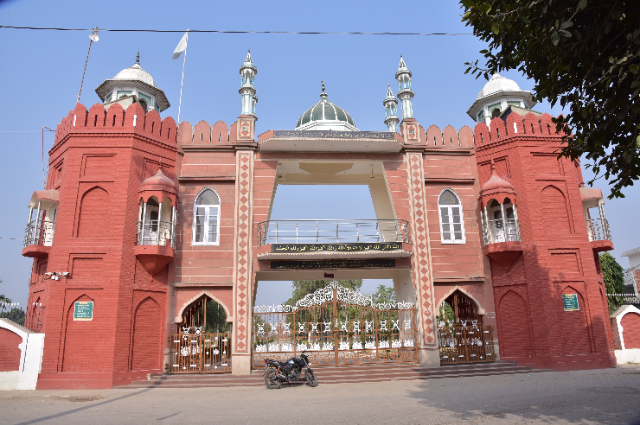
In mid-August 1947, terrified refugees from Punjab streamed through a land torn apart by communal massacre. Sikh and Hindu families fled what they expected would be Muslim violence, and Muslim families fled Sikh–Hindu attacks. Every state in eastern Punjab was ablaze with killings. One convoy of refugee Sikhs even reached a small nearby state called Malerkotla, anticipating the worst. Instead of bullets and mobs, they found an eerie calm. No one was killed. Scholars stress that this was not legend but fact: “Although Punjab experienced serious violence during the 1947 Partition, no one died in Malerkotla”. In a storm that killed up to a million people and uprooted ten to fifteen million across India and Pakistan, Malerkotla remained an exceptional patch of peace.
Why? This article treats Malerkotla as an interpretive window: how did ordinary people in one town choose solidarity when everywhere else turned on each other? Our thesis is that Malerkotla’s quiet was not accidental but built: a moral memory passed down through generations, leadership willing to restrain violence, and courageous individuals actively protecting neighbours. Those ingredients- memory, leadership, and courage- may be the architecture of any durable civilisation. We start with Partition’s backdrop, then tell the Malerkotla story, probe it with philosophy and Islamic ethics, and end with lessons for our polarised world today.
Historical context
Partition came after decades of British rule that increasingly organised politics by religion. Successive colonial reforms (for example, separate electorates after 1909 and the Government of India Act of 1935) made religious identity the basis of political representation. Historians note that “communalism” itself was partly a colonial construction that hardened over generations. By 1946–47, the Muslim League’s demand for Pakistan and Congress’s vision of secular India collided explosively. In Punjab, these conflicts exploded into the fastest, deadliest population transfer in history. The Radcliffe Line, announced on 17 August 1947, split Punjab overnight. Trains arrived at stations filled with corpses, whole villages were emptied in days, and mass abductions and rapes were later documented by bilateral commissions. Contemporary accounts speak of wives tortured, and neighbours turned killers after decades of friendship. According to Yasmin Khan’s history, “thousands of women were raped, at least one million people were killed, and 10–15 million were forced to leave their homes”. In the first months of 1948, more than 100 million people were displaced worldwide, a figure that only rose by 2022.
In the states around Malerkotla, violence was the norm. Its neighbours, Patiala, Nabha, Jind, and Faridkot, were ruled by Sikh maharajas whose forces often participated in or failed to stop massacres of Muslims. Mobs carrying axes and scythes roamed the roads; entire trains full of refugees were attacked. Malerkotla was in the midst of this storm. Its only isolation was that it defied it. It was a Muslim-majority state inside East Punjab, surrounded by the same rumours and panic, yet it “held” while everything burned around it. This makes Malerkotla’s story historically significant: it was not safe because it was cut off, but precisely because, despite being in the maelstrom, it chose not to join the frenzy.
The real story: memory and courage
The key to Malerkotla’s 1947 calm lies, its residents believe, in an old act of conscience. In 1705, Guru Gobind Singh’s two youngest sons, aged nine and seven, were captured by the Mughal Nawab of Sirhind and ordered to be bricked alive for refusing to convert to Islam. Present at the execution was Sher Mohammad Khan, the Muslim Nawab of Malerkotla. Though Khan had lost his own brother and nephew fighting Guru Gobind Singh’s armies, he could not stay silent. He publicly objected that killing children was un-Islamic, walking out in protest and crying “haa”, an Urdu exclamation of anguish, as the boys were entombed. His prophetic act, called Haa da Naara (“cry of justice”), earned him lasting fame. Legend holds that Guru Gobind Singh (the Sikh Guru) blessed Khan and his people: Malerkotla would be spared future harm.
Much has been written about how Malerkotla remembered this. Two centuries later, in 1947, that memory was “reactivated,” if only in residents’ minds. On the ground, the state’s last Nawab, Ahmad Ali Khan, made the decisive choice to maintain order. Historians note that Malerkotla’s forces did not join the ethnic cleansing elsewhere; instead, they patrolled the streets to protect vulnerable Muslims and Hindus alike, even as thousands of refugees poured in. Ahammad Ali Khan’s rule (though undistinguished in peacetime) is remembered for this achievement: after his death, opinions of him sharply improved. One British district officer’s memoir recalls that when local Muslims fled seeking safety, the Sikh and Hindu residents of a nearby town guaranteed them shelter out of loyalty to Malerkotla’s historic debt: “Our family home became a refuge sheltered by Sikh and Hindu neighbours who had internalised the old debt owed to Malerkotla”.
Crucially, modern historians caution that this peace was not magic. Fieldwork by Pippa Virdee suggests that Malerkotla’s reputation rests on both memory and institutions. In interviews, residents credit Sher Mohammad Khan’s 1705 Haa da Naara protest as the reason for 1947’s peace. But archival records point to a prosaic reality: a functioning local government willing to act on that memory. Muslim officers restrained mobs rather than inflaming them. Sikh neighbours were given the assurance that no one from Malerkotla would attack back, so they let fleeing Muslims stay. And most residents simply chose to stay rather than migrate – confident that the ancient promise of safety would hold. In short, moral memory alone did not save the town; it was moral memory plus action. As one summary puts it: “Moral memory combined with a functioning local government, Sikhs honoured an inherited debt, Muslim forces chose restraint, and a population decided not to flee”.
Philosophical reflection
What can these events teach us about ethics and human nature? Thinkers have long said that virtue is habituated, not automatic. Aristotle held that courage is trained; it is “the mean between excess and deficiency”, forged over generations. Sher Mohammad Khan’s 1705 protest was a courageous stand; Malerkotla’s 1947 peace was that stand practised repeatedly until it became a reflex.
Hannah Arendt warned that evil spreads not only through fanatics but through ordinary people lapsing into unthinking conformity. She called it the “banality of evil”: the failure to imagine another’s suffering. The Partition killers of 1947 often were neighbours who simply stopped thinking of “the other” as a person. Malerkotla’s people did the opposite: they refused to stop thinking. They actively maintained the humanity of strangers even amid panic. Arendt also wrote of “natality,” the human power to begin anew with an original act. Sher Mohammad Khan’s cry Haa was just such a natal moment: a single act of conscience that echoed forward centuries later.
Martha Nussbaum adds that emotions are not irrational obstacles but part of moral judgment. Compassion, she argues, is a “cognitively rich emotion it involves judging someone’s suffering as serious and undeserved. Crucially, Nussbaum contends that stable societies sustain compassion through stories and rituals, not just fleeting sympathy. Malerkotla’s annual retelling of Haa da Naara and even the building of a gurdwara on land donated by the Nawab ensured that compassion for the persecuted became part of public memory. It was a narrative, institutionally celebrated, that kept kindness alive across generations.
Other thinkers underscore related themes. Charles Taylor reminds us that identity is dialogical: we become who we are in relation to others. In Malerkotla, Muslims and Sikhs preserved a shared civic identity, “the people of this town,” without dissolving their distinct faiths. Alasdair MacIntyre emphasises that moral reasoning lives in tradition and narrative, not abstract rules. Indeed, it was the inherited story, not any colonial law, that guided behaviour. Emmanuel Levinas taught that encountering another’s vulnerable face creates an immediate ethical obligation. Sher Mohammad Khan’s refusal in 1705 sprang from seeing two innocent children doomed, a moment of pure Levinasian ethics. And Gandhi famously said nonviolence is the supreme courage, stronger than retaliation; Malerkotla’s soldiers embodied this silently by guarding refugees instead of firing.
Islamic ethical insights
Malerkotla’s own tradition explicitly grounds this episode in Islamic values. Sher Mohammad Khan himself invoked core principles: raḥmah (mercy) and ʿadl (justice). Islam’s central message is mercy (the Qur’an begins most chapters with “In the name of God, the Compassionate, the Merciful”), and it demands restoring justice even above political expediency. Khan declared that killing children violated ʿadl, the moral balance between people, and walked away.
Later, Malerkotla’s Nawab (in 1947) arguably exemplified iḥsān, excellence in goodness. Al-Ghazālī taught that true spiritual nobility is exceeding the bare minimum of duty by doing good to those who have wronged you. By protecting Muslim refugees who might have been viewed as “outsiders” in the tense situation, the Nawab practised iḥsān, giving undeserved safety. Ibn Khaldūn’s idea of ʿaṣabiyyah (group solidarity) also applies: he said the strongest polities are those that extend solidarity beyond narrow kinship to all members under a shared justice. Malerkotla’s ruling elite chose expansive solidarity, caring for every subject regardless of religion instead of narrow sectarianism that tore others apart.
Other Islamic concepts appear relevant. Amanah (trust) holds that leaders are entrusted by God with caring for the vulnerable. Malerkotla’s rulers took their amanah seriously to protect refugees. Sulḥ (reconciliation) is an Islamic practice of resolving conflict without bloodshed; it underlay the negotiation of Malerkotla’s peace with surrounding states. Ukhuwah insānīyyah (universal brotherhood), rooted in the Qur’ānic ideal that all humans come from one soul, resonates here too. As Fazlur Rahman and Seyyed Hossein Nasr have noted, Islam’s tradition has rich resources for pluralism and protecting minorities. Indeed, Albania’s rescue of Jews in WWII (under besa, a pledge of honour) is one example scholars cite: almost all Jews in Albania survived, and by war’s end there were more Jews there than before. Malerkotla stands as a lived testament that these Islamic values can truly foster peace among faiths.
Contemporary relevance
None of this is just history. The same forces that ignited Partition are strikingly familiar today. Rumour now spreads as fast as any tweet; inflammatory claims against minorities on social media mirror the tribal rumours of 1947. Political parties exploit identity fears as they did in colonial Punjab. Meanwhile, institutions can crumble just as suddenly: police may stand down or even join mobs, just as some princely armies did. At the same time, the world faces unprecedented displacement: over 100 million people are now uprooted worldwide from wars and persecution, making the question of how host communities respond urgent.
Malerkotla suggests an antidote: not tolerance as a thin coexistence, but an active moral narrative. Peace wasn’t passive in 1947; it came from an entrenched story about who matters. In Malerkotla, the story of Haa da Naara, of protection rather than betrayal, was told so often that kindness became reflex. Similarly, today, communities might cultivate and institutionalise narratives of compassion and shared destiny. That means more than counselling against violence; it means retelling counter-stories until they take root. Faith leaders, educators and media could all make “We are our brothers’ keepers” a daily refrain. Only then does empathy stop being a choice and start being an instinct.
Comparative examples
Malerkotla is not a fluke. Other societies have similarly defied genocidal waves by leaning on tradition. In rural France, Le Chambon-sur-Lignon (a Protestant village) sheltered 3,000–5,000 Jewish refugees during the Holocaust, saving them through communal nonviolence. In Albania, as mentioned, a Muslim-majority country rescued almost all its Jewish residents under the code of besa; it is famously the only Nazi-occupied country where the Jewish population grew, not shrank, during WWII. In Rwanda in 1994, a few courageous Hutu hid Tutsi neighbours at mortal risk. These cases share a pattern: pre-existing moral narratives, religious or cultural, that villagers consciously activated when crisis came, rather than scrambling to improvise values on the spot.
In each case, society resisted mass violence not solely through spontaneous goodness but because earlier someone, somewhere had built a story about neighbourliness and passed it down. Malerkotla, Le Chambon and others show that stories can carry the day when resources and weapons cannot.
Lessons for humanity
What practical takeaways does Malerkotla offer to a divided world?
- Educators and textbooks: Teach Malerkotla and similar cases as case studies in moral courage, alongside stories of violence. Use them to show how societies build resilience, not just how they collapse.
- Religious leaders: Intentionally cultivate and retell these cross-faith narratives. Use sermons, gatherings and school programs to keep the flame of compassion alive exactly as Nussbaum advises, through repeated public storytelling.
- Governments and police: Remember that impartial enforcement matters. The presence of disciplined security willing to act against mobs (even those claiming majority outrage) is decisive. Peacemaking requires enforcement, not just platitudes after the fact.
- Civil society: Build inter-community networks. The Sikh neighbours of 1947 guaranteed Malerkotla’s Muslims’ safety because they had ties of trust. Today, NGOs and citizen groups should foster friendships across religious lines so that in a crisis, people instinctively look out for outsiders as if family.
- Ordinary citizens: Practice Levinas’s attentiveness to the Other. Make the “face of the victim” real to you. Do what Aristotle called habituated virtue: deliberately see your neighbour before the category. Small acts (welcoming a stranger, questioning a prejudiced rumour) build strength over time.
Malerkotla did not escape Partition by being magically spared; it escaped because, centuries earlier, one man refused to be silent in the face of injustice, and in 1947 an entire community chose to remember that refusal. They chose the story of protection over the story of betrayal. History shows that civilisations are not preserved by armies or wealth. They are preserved, town by town and choice by choice, by people deciding that the story of who they are will be one of sheltering the vulnerable.
Today, our world once again confronts waves of manufactured hate on social media, in politics, and in mob mentality. In such times, Malerkotla’s quiet answer still speaks: hope comes not from monuments or laws, but from ordinary people who live by stories of solidarity. The last shrine in Malerkotla is not to any general or victory; it is to a gurdwara on land once given by a Muslim Nawab, an understated sign that when the brutal machinery of Partition roared around it, one small town chose humanity. That is a story worth telling, again and again, in every corner of our fractured world.