
On 26 September 2026, Vedanta chairman Anil Agarwal met Odisha Chief Minister Mohan Charan Majhi in Bhubaneswar and told reporters afterwards that they had discussed reopening the Niyamgiri bauxite project. He said the government had assured him of steps towards the necessary permissions, and that affected tribal families should be given jobs. [1, 2] A Day later, a senior member of the Niyamgiri Suraksha Manch answered that the community's position had not changed since 2013. [1]
That was the year twelve village assemblies voted against mining these hills. Thirteen years on, the question is larger than whether a mine will ever be dug. It is whether a decision reached through law, after a long struggle, still binds those who wish to revisit it.
A hill that is also a deity
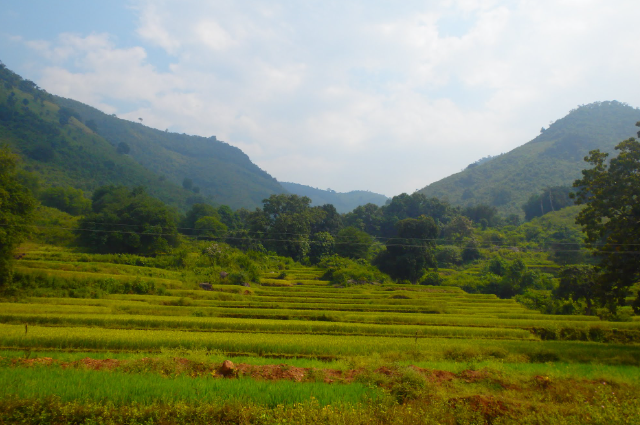
Niyamgiri, a forested range of ridges and streams, spreads across the Rayagada and Kalahandi districts of southern Odisha. It is home to the Dongria Kondh, officially classed as a Particularly Vulnerable Tribal Group, whose farming, water and forest produce depend on its slopes. Niyam Raja, the deity at the centre of their religious life, belongs to the same landscape. For the community, the hill is therefore not only a resource but a place of worship, and that distinction would later shape the legal argument.
The hills also hold an estimated 80 million tonnes of bauxite, the ore from which aluminium is made. [2] In the early 2000s, the Odisha Mining Corporation, a state undertaking, proposed to mine it for Vedanta's alumina refinery at Lanjigarh, at the foot of the range. Supporters saw jobs, revenue and a local supply of ore. Opponents feared the loss of forest, streams and a sacred site, and argued that the people who lived there had never been properly asked.
How the dispute reached the courts
The paper trail shows why the matter was contentious long before it became a national story. The Supreme Court's judgment records that in November 2004 the state told the environment ministry that the refinery project involved about 59 hectares of forest land, although the environmental clearance had recorded none. [3] In February 2005, the state forwarded a separate proposal to divert 660.749 hectares of forest for the mine. [3]
After a committee chaired by N.C. Saxena and the ministry's Forest Advisory Committee examined the project, the ministry on 24 August 2010 refused the final stage of forest clearance, citing violations of environmental law. [3, 4] The Odisha Mining Corporation challenged that refusal in the Supreme Court. It argued that the reasons had nothing to do with the mining project itself. The company's case, in other words, was legal and procedural, and the Court answered it in the same register.
What the court decided, and what it did not
On 18 April 2013, in Orissa Mining Corporation v. Ministry of Environment and Forests, the Supreme Court neither banned nor approved the mine. Instead, it turned to the Forest Rights Act of 2006, which recognises the role of gram sabhas, the village assemblies, in determining the nature and extent of community rights. The Court sent the unresolved questions, including the claimed right to worship Niyam Raja, back to the assemblies, with notice to the Ministry of Tribal Affairs. It also left them free to consider all other community, individual, cultural and religious claims. The assemblies were to decide within three months, after which the environment ministry would rule on forest clearance within two months, in light of what they had said. [3]
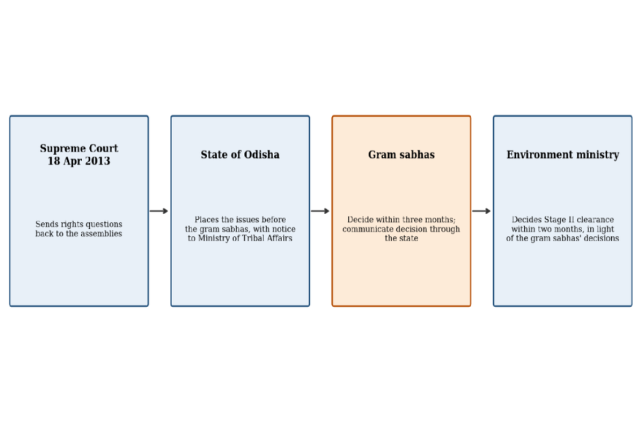
Figure 1. How the Supreme Court's 2013 directions were meant to work. Original diagram based on the judgment's operative directions.
Commentators have read the ruling in different ways. Some treat it as giving the assemblies decisive authority, reinforced by the Panchayats (Extension to the Scheduled Areas) Act of 1996, which gives gram sabhas in such areas a role in protecting community resources and customs. Others stress that the Court framed the question narrowly, around the religious and cultural claims placed before the assemblies. The distinction matters in 2026, because a revived proposal would test exactly how far that authority extends. [5]
Stage | Actor | Role in the 2010 to 2014 decisions |
| 2010 | Environment ministry | Refused final forest clearance on 24 August 2010. |
2013 | Supreme Court | Sent the rights questions to the assemblies and fixed the timelines (18 April). |
2013 | State of Odisha | Selected and convened twelve assemblies; the choice of villages was disputed. |
2013 | Ministry of Tribal Affairs | Told the state it could not arbitrarily decide which villages held rights. |
2013 | Gram sabhas | All twelve assemblies rejected the project (July and August). |
2014 | Environment ministry | Denied forest clearance, drawing on the assemblies' resolutions (January). |
Table 1. Who decided what. Compiled from the judgment and the press reports listed under sources.
Twelve villages, twelve answers
The process was contested from the start. Odisha convened assemblies in only twelve villages. The Union Ministry of Tribal Affairs wrote that a state could not arbitrarily decide which villages held rights, and activists pointed to well over a hundred villages with claims over the hills. [6, 7] Even so, in July and August 2013 all twelve assemblies met, and all twelve rejected the project, citing religious, ecological and livelihood grounds. Jerapa was reported as the twelfth village to do so. [8] In January 2014, drawing on those resolutions, the ministry denied forest clearance. [9]
The aftermath showed how the decision was received on each side. In 2014, Vedanta stated that it would not seek bauxite from Niyamgiri without the consent of local communities. [9] The Wire reports that the joint venture between the state corporation and Vedanta was formally annulled in September 2015. [10] Then, in February 2016, Odisha asked the Supreme Court to have the assemblies reconvened, arguing in effect that the situation had changed. On 6 May 2016, according to Down To Earth, a bench led by Justice Ranjan Gogoi dismissed the application and left the state to approach the appropriate forum. [11]
The case also drew on a standard older than the statute. The United Nations Declaration on the Rights of Indigenous Peoples (2007), which is not a binding treaty, treats free, prior and informed consent as central to protecting Indigenous communities, and Amnesty International urged India after the 2013 ruling to build a transparent process on that principle. [4] The same organisation warned in July 2013 that paramilitary forces stationed in the hills and some officials were intimidating villagers, and it called for the assemblies to be conducted freely. [7] Those were an advocacy group's claims, not findings, but they explain why the fairness of the process, and not only its outcome, matters.

Figure 2. Timeline of the Niyamgiri bauxite dispute, 2010 to 2026. Original graphic compiled by the author from the judgment and the press reports listed under sources.
Protest, law and the space between
It would be tidy to say that protest won. The record is more careful than that. Organised opposition kept the dispute alive for years, and activists intervened in the Supreme Court case. The cost was real: Krushna Sikaka, a senior member of the Manch, was reported last month to have spent more than six months in jail during the earlier protests. [1] Yet resistance alone did not close the mine. It mattered because a statute gave village assemblies a recognised role, because a court insisted that the role be exercised, and because a ministry accepted the result. Remove any one of these and the outcome might well have been different.
Scholars of environmental justice, notably David Schlosberg, argue that justice has at least three dimensions: recognition of who counts, participation in decisions, and fair distribution of benefits and burdens. [12] The 2013 process addressed the first two. The community's religious and customary claims were recognised in law, and its answer was made decisive. Collective resistance supplied the voice; law supplied the channel. Distribution, meaning who gains from the ore and who loses a hillside, was never settled, and that unfinished business explains why the conflict can return.
What has changed in 2026, and what has not
Precision matters here, because proposals, promises and permissions are different things. Reporting establishes a meeting, a stated intention by the company and, according to Mr Agarwal, an assurance of help from the state. [1, 13] Entrepreneur India reports that the push sits within a pledge of Rs 1 lakh crore of investment in Odisha, including another refinery at Raigarh, and notes that the Lanjigarh refinery currently relies largely on imported bauxite. [13] In the coverage available by mid-October, there is no reported fresh forest clearance, no new assembly process, no reversal of the 2014 denial, and no start to mining.
Nor is the 2013 outcome a permanent legal bar. It was a decision on a particular proposal under particular law, and 2016 showed that the state is willing to test it. [6, 11] Whether any revived proposal must return to the villages is a legal question that officials have not answered publicly. A government statement, a clearance order, or a court ruling would each change the picture, and none has been reported.
Both sides have arguments that deserve a hearing. Mr Agarwal frames the project around employment for affected tribal families, and the proposed investment is presented as a development case for the state. A company with a refinery at the foot of the hills has an obvious commercial interest in a local supply of ore. The community answers that Niyamgiri is its sacred land and livelihood, and says it will resist. Activists allege that the arrest of Lada Sikaka, a Dongria Kondh leader, is part of a pattern of punishing dissent. The Wire reported the arrest on 4 October [14], and an activist coalition called the charges fabricated [15]. These are allegations, and no official account linking the arrest to the mining proposal has been found. The coverage reviewed here also quotes opponents far more than supporters, so the full range of local opinion is not documented. Protests against Vedanta's nearby Sijimali bauxite project show how contested the wider region remains. [13]
What Niyamgiri asks of society
The limits of the case matter. Niyamgiri turned on a particular statute, a particular judgment and a particular claim about a sacred hill. Other projects raise different rights and different facts, so the case cannot prove that protest generally succeeds, and it cannot settle every debate about development. It shows something narrower and more useful: protest becomes consequential when it is joined to a legal right that someone is obliged to honour.
That finding turns three questions into tests for any development decision. Who has been asked, and was the question put in a form they could answer? Is there an institution bound to accept the answer? And when a settled decision returns for review, is the process as open as the one that produced it? A project can pass the commercial tests and still fail these. A community can pass these and still need the state's help to share in the benefits. Neither side of the argument is served by pretending otherwise.
Reform need not wait for a second dispute. Five safeguards follow from the Niyamgiri record. First, the state should publish the criteria for deciding which villages count as affected, with notice to the Ministry of Tribal Affairs, so that the choice cannot be contested afterwards. Second, assembly proceedings should be recorded and observed by independent officials, addressing concerns about intimidation. Third, the resolutions should be made public in full, so that consent is a documented fact rather than a claim. Fourth, a clear rule should state whether a revived proposal must return to the assemblies. Fifth, companies and governments should say, before applying for clearance, what they will do if the answer is no.
That brings us back to the opening question. A rejection recorded in 2013 does not enforce itself. It holds only while governments, regulators and companies treat it as an answer rather than an obstacle. The vote of 2013 did not settle whether Niyamgiri would ever be mined. It settled who must be asked first. How seriously that question is taken in the months ahead will say more about democratic participation in India than any slogan about protest could.
References
- Business Standard (27 September 2026). Tribals vow to oppose renewed mining push in Odisha's Niyamgiri hills. https://www.business-standard.com
- Shanghai Metals Market (September 2026). Vedanta Seeks to Restart Bauxite Mining in Odisha's Niyamgiri Hills After 13 Years. https://news.metal.com
- Supreme Court of India. Orissa Mining Corporation Ltd. v. Ministry of Environment and Forest and Others, decided 18 April 2013 ((2013) 6 SCR 881; 2013 Supreme (SC) 394). Full text: https://supremetoday.ai
- Amnesty International (18 April 2013). India: Landmark Supreme Court ruling a great victory for indigenous rights. https://www.amnesty.org
- Briefing note on the Vedanta judgment of 18 April 2013 (advocacy source, used for the PESA reference and the debate over the ruling's reach).
- Financial Express (26 February 2016). Odisha moves Supreme Court for relook on Niyamgiri (via India Environment Portal). https://indiaenvironmentportal.org.in
- Amnesty International (12 July 2013). India: Local authorities excluding indigenous people from decision on Vedanta mine plans (advocacy source). https://www.amnesty.org
- Down To Earth (2013). Jerapa becomes 12th village to reject Vedanta. https://www.downtoearth.org.in
- Deccan Herald (2014). Vedanta says it will not mine Niyamgiri until it has local consent (report undated in the copy consulted; it places the statement about four months after the ministry's refusal). https://www.deccanherald.com
- The Wire (16 May 2016). Mining At Any Cost: The Odisha Government's Continued Dismissal of Adivasi Rights. https://thewire.in
- Down To Earth (May 2016). SC puts an end to OMC's bid to mine Niyamgiri. https://www.downtoearth.org.in
- Schlosberg, D. (2007). Defining Environmental Justice: Theories, Movements, and Nature. Oxford University Press.
- Entrepreneur India (29 September 2026). Vedanta Revives Niyamgiri Push, Pledges INR 1 Lakh Cr in Odisha. https://india.entrepreneur.com
- The Wire (4 October 2026). At Niyamgiri, Policing is Paving the Way for Mining. https://thewire.in
- Pragativadi (29 September 2026). NAPM Demands Cancellation of Niyamgiri Bauxite Mining Leases to Vedanta (activist press conference). https://pragativadi.com