
The Everyday Hazard at a Scientific and Social Crossroads
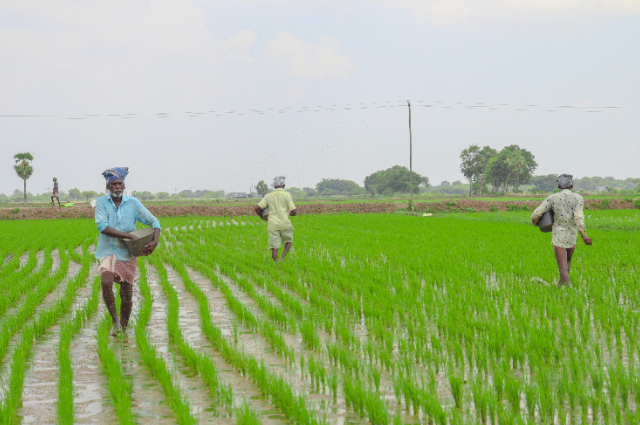
Dust from a threshing machine occupies a peculiar position among the hazards of rural life. It is neither a disaster nor a recognised epidemic, and it rarely appears in official records as a problem in its own right. It is a seasonal condition, familiar to every farming household, and therefore easily absorbed into the background of ordinary life. Hazards of this kind persist not because they are invisible but because they are familiar.
The story of Pooja Pal, a schoolgirl from Barabanki district in Uttar Pradesh, is usually told as a narrative of talent rewarded. The more productive question is not simply whether a young innovator built a useful device. It is also how an ordinary discomfort becomes a scientific question, and what must happen before an answer to that question can be trusted. Recognising a hazard and validating a remedy are different acts. The first requires attention; the second requires measurement.
This article therefore examines a specific proposition: scientific innovation can begin with an ordinary observation, but turning that observation into dependable technology requires evidence, technical refinement, mentorship, resources and institutions capable of sustaining further development. The proposition is tested rather than assumed. Between the child who notices, the teacher who guides, the farmer who feeds the machine and the institution that must eventually test the device lies a long sequence of steps, and the public record documents only the early ones.
A Classroom in Agehra: The Observation and Its Evidential Status
According to Drishti IAS, Pooja Pal is a resident of Agehra village in Barabanki.1 Reports agree that when she was in Class 8, dust from a threshing machine operating near her school affected the children in her classroom. The Better India describes students coughing and struggling to breathe, and Global Indian reports the same coughing.2,3 By the Better India’s account, she was in Class 12 when she travelled to Japan in June 2025.2 The same report, citing BBC News Hindi, records that her father is a daily-wage labourer and her mother a cook at a government school, and several reports describe a home without proper electricity or a toilet.2,3
These circumstances are relevant for a limited reason. They describe the resources available to her, not the quality of her reasoning. Hardship does not generate inventions; attention does. The sober reading is that she noticed what many had seen, and had the persistence, and later the support, to pursue it with scarce equipment.
The evidential status of the original observation requires care. Three categories must be kept apart: facts established by reliable sources, statements attributed to a person or publication, and interpretation. That children coughed near a threshing machine is an attributed account resting largely on her own recollection as relayed by journalists. The sources reviewed contain no independent record of the incident, no measurement of dust in the classroom and no clinical assessment of the children. Coughing is a credible trigger for inquiry. It is not, by itself, evidence of disease or of exposure level.
From Complaint to Design: How a Problem Becomes a Question
Many farming communities have lived with threshing dust. What distinguishes Pooja Pal’s response is the form of her question. Rather than accepting dust as an unavoidable by-product, she asked whether a machine that separates grain from stalks could do so without filling the air with debris, as The Better India reports.2 The shift is conceptual. A complaint asks for the nuisance to end; a design question asks where the dust could go instead.
She took the question to her science teacher, Rajeev Srivastava, whose surname is spelt Srivastav in some reports. According to The Better India, he encouraged her to seek a solution that could work in the field and not merely on paper.2 Drishti IAS adds that the idea drew on traditional sieving practices used at home.1 Only one source makes this claim, so it is treated here as reported rather than established. It is nevertheless plausible: sieving and winnowing are everyday techniques for separating light material from grain, and they supply an intuitive model of the problem.
The distinction between observation and experimentation is central. Observation establishes that something is happening. Experimentation asks why, and whether an intervention changes it. None of the reports describes a formal hypothesis, and inventing one would be misleading. They do describe several failed trials before a working model emerged.2 That is the point at which observation becomes investigation, because a design that can fail is a design being tested against the world.
The Prototype and the Pathway of Recognition: What Is Reported
The reports agree that the prototype was developed with her teacher’s guidance. The Logical Indian adds that a welder assisted and describes a simple construction using tin and a fan, with dust collected separately.4 Global Indian and The Better India describe a water-based mechanism that traps husk particles inside the machine instead of releasing them into the air.2,3 Drishti IAS describes a dust-free wheat thresher attachment that separates chaff and traps dust.1 These accounts are compatible but not identical, and they differ on whether the device is a stand-alone machine or an attachment. Bringing dust-laden air into contact with water resembles a familiar engineering principle, often called wet collection, although that is an interpretation and not a claim made by the sources. No source reviewed provides dimensions, airflow rates, water volume or drawings. The public record supports a general description of the principle, not an assessment of the design.
The reported cost of about ₹3,000 also requires careful reading. The Better India states that expenses accumulated across successive prototypes; The Logical Indian describes it as the cost of the working model; Global Indian says it was borne by her family and was a heavy burden.2,3,4 The figure is therefore a development cost paid by a household. It is not a unit manufacturing price, and it is not the price at which a farmer could buy a tested machine. It demonstrates frugality, but it also reveals who financed the earliest and riskiest stage of the research.
Recognition followed in stages. Her model was selected in the 2023 INSPIRE-MANAK competition, which The Logical Indian reports produced 60 national winners, with Pooja Pal the only one from Uttar Pradesh.4 Global Indian reports that it was displayed at the National Science Exhibition in 2024.3 In June 2025 she joined 53 other students from India in the Sakura Science High School Programme in Japan, according to The Better India.2 The President of India conferred the Pradhan Mantri Rashtriya Bal Puraskar on 26 December 2025, as recorded by Rashtrapati Bhavan, and The Logical Indian places her award in science and innovation.4,5 The Better India also reports that the Ministry of Science and Technology is facilitating a patent application.2 Each stage performed a different function: INSPIRE-MANAK, as described, encourages school students to develop solutions to everyday problems, and the Bal Puraskar is presented by the Press Information Bureau as a tribute to the creativity and spirit of children.4,6 These institutions are designed to identify promise. None is described in the sources as a technical testing body.
Recognition and Validation: A Necessary Distinction
The relationship between recognition and validation is the conceptual core of the story. Recognition is a judgement that an idea is original, relevant and promising. Validation is a demonstration, under defined conditions, that a device performs as claimed. A recognised idea may later be validated, but recognition does not make it so. Four stages should therefore be distinguished: an inventive idea, a working prototype, a technically validated device and a widely adopted technology. The reported record places Pooja Pal’s thresher at the second stage, with strong recognition of its promise.
No published measurements were found showing how much dust the device captures, under what conditions, or with what effect on people nearby. Drishti IAS states that the device reduces airborne particulate matter but cites no data.1 A claim repeated is not a claim tested. The name “dust-free” describes an aspiration, not a result. There is also a risk of circularity: the award lends credibility to the claim, and the claim is repeated because of the award. To treat recognition as validation would quietly lower the standard to which the device is held, when it deserves the same scrutiny as any technology intended for others to use.
What Threshing Dust Is: The Scientific Context
Evaluation requires an understanding of the dust itself. Researchers at the Indian Agricultural Research Institute measured dust in the breathing zone during manual harvesting and threshing of wheat and reported 11.89, 4.67 and 3.20 mg per cubic metre for inhalable, thoracic and respirable fractions respectively.7 Their particle-size analysis found a relatively low mass share of particles smaller than 2.5 micrometres and a high share above 7 micrometres.7 Separate research on dust abatement for wheat threshers has measured emissions from commercial machines at the operator’s breathing zone and around the blower outlet, which shows that methods for such evaluation already exist.8 Studies of rice threshing similarly describe the process as inherently dusty, with predominantly organic dust and potential respiratory consequences.9
Two consequences follow. First, much of the dust by mass is coarse, and coarse particles are comparatively easy to capture, so a water-based device may well remove a large share of them. But coarse and fine particles reach different parts of the respiratory system, and the finer fraction, though smaller in mass, travels deeper. Health relevance cannot be inferred from the weight of captured dust. Second, separating visible chaff from the air is not identical to reducing the exposure of the people nearby. A device could clear the visible cloud at the outlet while leaving the operator at the feed chute exposed, or leave the finest particles largely untouched. The distinction between separating chaff and reducing harmful airborne particulate matter is therefore crucial.
The Questions of Evaluation: What Testing Would Require
Whether the device performs as intended is, on the available evidence, a set of open questions and not a settled fact. A credible evaluation would need to ask:
- Does it reduce particle concentrations, including fine fractions, in the operator’s breathing zone and in the surrounding environment?
- How efficiently does it collect particles of different sizes?
- Does it alter grain quality, grain loss or threshing capacity?
- What happens to the chaff, which on many farms is retained as livestock fodder, and is it affected by moisture?
- How is the dust-laden water handled and disposed of?
- What are its water and power requirements?
- Is it durable, and can a village mechanic maintain it?
- Can it be fitted to different threshers, and at what manufacturing cost?
- Will farmers and workers accept and use it?
These questions are more meaningful than asking whether the device is dust-free. None of these tests has been reported in the sources reviewed. Moreover, showing that the device prevents illness would require a longitudinal health study of a kind no prototype test can supply. Until such evidence exists, claims about reduced disease or transformed farming practice are unsupported.
The Institutional Conditions of Innovation: Teacher, School, Workshop and Household
Reading the story as a chain of conditions is more informative than reading it as a single act of talent. First, a teacher took a child’s question seriously and, according to Global Indian, helped her submit the project to INSPIRE-MANAK.3 Second, a school, by The Better India’s account, supported experimentation.2 Third, a welder could turn a design into metal. Fourth, a family funded repeated trials from a small income. Fifth, a national programme existed to identify school-level ideas. The removal of any one link might have left the idea as a local conversation.
The teacher’s role was not merely encouragement. Mentorship converted a question into a project and a project into a submission, which is how an idea travels from a village into a system capable of recognising it. Equally revealing is the source of the money. The earliest stage of development, with its repeated failures, was financed privately by a household dependent on daily wages. A system that celebrates the finished prototype while leaving the unfinished stage to families is subsidised by those families, whether or not it intends to be.
The sources also say little about the interval between prize and product: technical testing, design refinement, manufacturing partners, field trials, training for maintenance and a route to market. The reported patent facilitation is a useful step, but a patent protects an idea; it does not show that the idea works. Whether the prototype has undergone formal testing, and under whose supervision, is not established by the available record.
From Exceptional Story to Enabling System
There is a difference between celebrating an exceptional individual and building a system in which many people can investigate the problems around them. The first produces inspiration, which is valuable but fragile. The second produces capacity. If success depends on a particular child having a particular teacher in a particular year, selection rather than opportunity is doing the work, and for every Pooja Pal there are children whose questions never reach anyone.
Several measures would shift the balance.
- First, schools should teach students to convert observations into measurable questions: what is the dust, how much is present, and how would a change be detected? Low-cost air-quality sensors and simple comparative tests could support this.
- Second, recognition should carry a next step, such as access to independent testing at agricultural engineering or science institutions.
- Third, technical mentoring should continue beyond the competition stage, since the skills required to refine a prototype differ from those required to conceive it.
- Fourth, the early costs of experimentation should not rest on households; modest public support for materials and testing would address this.
- Fifth, results, including negative results, should be documented and shared so that others can build on them.
None of this requires romanticising poverty. Scarcity did not make the invention possible; it made it harder and more expensive for her family. Talent and curiosity are distributed far more widely than the equipment and mentoring needed to test them. To treat Pooja Pal as a symbol of courage or national pride risks overlooking what she actually did, which was an identifiable intellectual and practical process: noticing, questioning, building, failing, revising and presenting.
From Inspiration to Verification: The Unfinished Part of the Story
The opening question was how an everyday hazard comes to be recognised as a problem. Pooja Pal’s story suggests an answer: someone converts discomfort into a question and then undertakes the less glamorous work of trying to answer it. That part of the record is well supported. A child noticed, asked, built a working model with a teacher and a welder, and persuaded national evaluators that the idea merited attention.
The remainder is unwritten, and it matters more to the farmers and children the device is meant to protect. Whether it reduces the dust people actually breathe, whether it can be made cheaply and maintained locally, and whether it will be used are questions that awards cannot answer. Only measurement can.
Recognition identifies promise; validation earns trust. A society that celebrates a young innovator but does not test her prototype has honoured the story and neglected the problem. The question should not end at whether the idea was admired. It should extend to whether it has been tested, and whether the people who breathe the dust can rely on the result.
References:
- Drishti IAS (6 January 2026), “Barabanki Girl Wins PM Bal Puraskar for Dust-Free Wheat Thresher”, State PCS current affairs, drishtiias.com.
- The Better India (28 December 2025), “17-YO Girl From UP Village Solves a Farm Dust Problem; Takes Her Idea from School to Tokyo”, thebetterindia.com.
- Global Indian (July 2025), Amrita Priya, “Even Barabanki felt out of reach from her village, but Pooja Pal’s invention took her to Japan”, globalindian.com.
- The Logical Indian, “A 17-Year-Old From Uttar Pradesh Built a Dust-Free Thresher, Then Took Her Innovation to Tokyo”, thelogicalindian.com.
- Rashtrapati Bhavan, record of the conferral of the Pradhan Mantri Rashtriya Bal Puraskar on 26 December 2025, dpl.rashtrapatibhavan.gov.in.
- Press Information Bureau, Government of India, explanatory document on the Pradhan Mantri Rashtriya Bal Puraskar, static.pib.gov.in.
- Pandirwar, A., Kumar, A., Singh, J.K., Mani, I., Jha, S.K. and Ramasubramanian, V., “Agricultural dust protective interventions for Indian farm workers”, Indian Journal of Agricultural Sciences (ICAR e-publication record).
- “Dust Abatement System for Wheat Thresher”, thesis abstract, Inflibnet repository.
- “Assessing Pulmonary Function in Workers Exposed to Rice Threshing Processes”, abstract, informaticsjournals.com.