
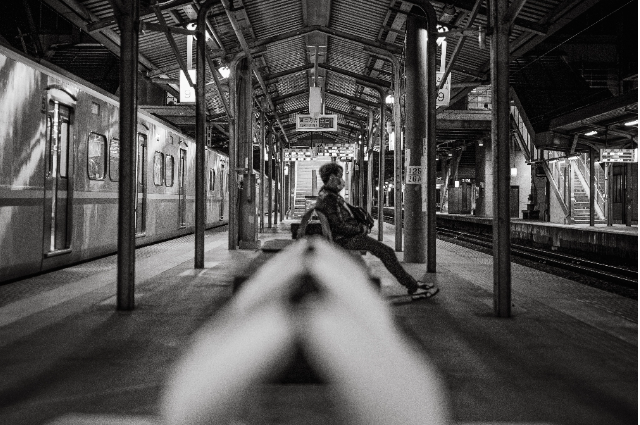
There was a time when waiting was so ordinary that it rarely attracted attention.
It lived quietly between the events of everyday life.
A student stood before a notice board searching for examination results. A family paused at the sound of the postman's bicycle. Railway reservations remained uncertain until the final chart was pinned outside the coach. Photographs returned from the studio days after they were taken, each envelope carrying a small curiosity about how the moments had turned out. News travelled through letters that often reached home after the event itself had become yesterday's conversation.
No one particularly enjoyed waiting. People complained about delays then, just as they do now. Yet waiting was accepted as part of how life unfolded. It belonged to the ordinary rhythm of living in the same way that seasons, festivals and school terms did. It demanded patience without ever announcing that patience was being taught.
That rhythm has changed with surprising speed.
Today, a payment is completed before we put the phone back into our pocket. A question is answered within seconds. A taxi appears on a screen long before it reaches the gate. Entertainment begins the moment boredom threatens to appear. The spaces that once separated one event from another have steadily disappeared.
This is one of the great outcomes of modern technology. No one would willingly exchange today's conveniences for the uncertainties of the earlier days. Nostalgia is not an answer to a delayed train, a long queue, or an unanswered letter.
Every technological achievement changes the task it was designed to improve.
Its deeper influence often appears quietly, in habits we never intended to change.
The effects become visible in ordinary moments.
A convocation ceremony ends. Photographs are uploaded before the graduate reaches home. Congratulations arrive immediately, but so do the next questions.
What now? Which examination? Which company? How long may it take? And such other questions
A different milestone that once invited reflection increasingly becomes the starting point of another countdown.
Elsewhere, a young professional scrolls through photographs of promotions, foreign assignments and entrepreneurial success. Years of uncertainty have disappeared behind a single smiling image. Long journeys now look like overnight achievements.
Comparison itself has changed.
Earlier generations compared with neighbours, classmates, or colleagues. Today, comparisons arrive from everywhere at once. We measure our progress against people we have never met, whose stories we know only through carefully edited moments.
Perhaps this is where the disappearance of waiting begins to matter.
Technology has shortened the distance between desire and fulfilment. It has also shortened the distance between expectation and disappointment.
When expectations begin to move faster than experience, impatience gradually stops feeling like a personal weakness.
It becomes part of the culture.
Waiting as an Education
Strangely, waiting has never enjoyed a good reputation.
No child asks for it. No adult celebrates it. We usually remember waiting as an inconvenience rather than as an instruction.
Yet some of life's most valuable lessons have always arrived at their own pace.
A child cannot be hurried into walking. A musician repeats the same passage until practice slowly becomes instinct. A farmer may prepare the land perfectly, but the monsoon still keeps its own calendar. Scientific discoveries often emerge after years of work that produce little visible reward.
In each of these examples, waiting is not the opposite of progress.
It is one of the conditions that makes progress possible.
Earlier generations encountered this lesson almost accidentally. Examination results arrived days later. Letters travelled slowly. Appointments required patience. Even the evening newspaper reminded people that information had its own rhythm.
None of these delays was enjoyable.
But together they quietly introduced people to uncertainty. They taught that sincere effort did not always produce immediate results and that disappointment did not always mean failure.
Modern life has removed much of that waiting.
Information arrives instantly. Services respond within minutes. Transactions finish almost before they begin.
These changes are undeniably beneficial.
Yet learning, trust, competence, and character continue to grow according to older rhythms. They remain stubbornly indifferent to the speed of technology.
Perhaps that is the quiet tension of our age.
Daily life increasingly teaches immediacy, while life itself continues to reward patience.
If ordinary experience no longer introduces young people to delay, uncertainty, and deferred gratification, where will those lessons now come from?
Schools can teach knowledge.
Families can offer guidance.
Experience alone teaches patience.
That may be one of the unnoticed costs of removing every ordinary reason to wait.
Attention Without Pause
Waiting once gave the mind something unexpected: room.
People watched trains arrive, and children invented games on station platforms or clouds gathering before the first rain. The mind wandered because there was nothing else for it to do. Looking back, those moments appear uneventful. Yet they quietly trained people to observe before reacting and to think before moving on.
Today, those pauses are quickly occupied. At airports, railway stations, and bus stops, almost every idle moment is claimed by a screen. A queue becomes an opportunity to check messages. A short journey becomes another chance to scroll. Silence has become something to be filled rather than experienced.
The consequence is subtle. Attention gradually follows the habits we practice. When every pause is occupied, the mind has fewer opportunities simply to linger. Many ideas arrive that way—not while we are deliberately searching for them, but while looking out of a window, waiting for a train or walking home without urgency. Reflection rarely announces itself. It usually appears when the mind is free to wander.
Perhaps that explains one of the quiet paradoxes of our age. Never before have people had access to so much information, yet sustained attention often feels more difficult. The problem is not a lack of intelligence. It is that interruption that has slowly become our normal condition.
Knowledge may arrive in seconds.
Understanding still asks for time.
The Things We Still Wait For
For all our success in reducing delay, waiting has not disappeared. It has simply moved to those parts of life that refuse to be organised by efficiency.
A gardener waters the soil without expecting flowers the following morning after sowing seeds. Some forms of waiting are accepted without complaint. Parents rarely wish their children to grow up before their time. We recognise instinctively that growth cannot be hurried without changing what it becomes. Yet when the waiting belongs to our own lives, the same wisdom often deserts us. We become impatient with seasons we would never question in nature. We expect our careers, relationships, and ambitions to unfold more quickly than growth itself allows. In doing so, we sometimes mistake delay for failure, forgetting that many of life's most important changes remain invisible while they are taking place.
None of these experiences feels like time wasted.
In fact, trying to shorten them would diminish them. A friendship formed over the years carries a different depth from one built overnight. A craft mastered patiently leaves behind a confidence that shortcuts rarely produce. Even childhood loses something when every hour is organised, measured and hurried towards the next achievement.
Perhaps we have misunderstood waiting.
It is not always the distance between where we are and where we wish to be. Sometimes it is the quiet space in which growth itself takes place.
Relationships in an Instant Age
The contrast becomes even clearer in relationships.
Technology has almost abolished distance. Families separated by continents now speak face-to-face. Friends remain connected despite living in different countries. What earlier generations experienced as separation often survives today as inconvenience.
Yet anyone who has watched a message marked Seen without an immediate reply understands that speed has created its own expectations. A silence of a few hours can invite explanations that were never intended. We have become accustomed to immediate communication, and, without noticing it, we sometimes begin expecting immediate reassurance as well.
Relationships rarely work that way.
Trust grows almost unnoticed, through promises quietly kept, ordinary conversations remembered, disagreements resolved, and kindness repeated over time. None of these moments seems remarkable when it happens. Together, they become the foundation of affection, confidence, and companionship.
Technology can bring people together remarkably quickly.
Knowing another human being still unfolds at the older pace it always has. Perhaps that is why some of our deepest frustrations have little to do with technology itself. They arise when we expect the human heart to keep pace with the devices in our hands.
The modern world has given us extraordinary gifts. Few people would willingly return to slower communication, uncertain transactions, or avoidable delays. The question is not whether progress has improved our lives. It undoubtedly has.
The quieter question is whether, in making life faster, we have also changed our relationship with time? As waiting disappears from ordinary experience, we may also be losing some of the moments through which patience, judgment, and resilience were once developed unnoticed. These qualities have never responded to urgency. They continue to mature according to rhythms that technology cannot accelerate.
Perhaps every generation is remembered not only for the problems it solved, but also for the habits it quietly acquired. Ours will almost certainly be remembered for its speed. Whether it is also remembered for preserving the patience that gives meaning to growth remains an open question.
Time has always been more than something we measure.
It is also the quiet medium through which human beings become who they are.
Perhaps that is why the most important things in life still ask of us what they always have.
Time.