
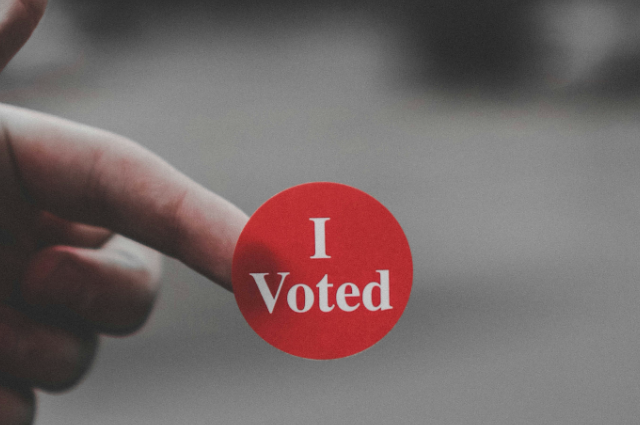
The Noise Around Elections:
Elections continue. But what happens when confidence quietly retreats from the systems around them?
Election seasons no longer arrive quietly. They come with relentless messaging, giant rallies, emotional slogans, strategic welfare announcements, endless digital campaigns, and financial scales that would have seemed unimaginable a generation ago. Politics today is no longer fought only through governance or ideology. It moves through perception, identity, media narratives, emotional mobilisation, and the management of public attention itself.
None of this automatically weakens democracy. Democracies evolve. Technology changes political communication. Campaigns naturally become larger as societies become more complex. Yet beneath the spectacle, another shift appears to be unfolding more quietly — the gradual erosion of public trust.
That erosion may matter more than any single electoral result.
The Quiet decline of public confidence.
Across many democracies, including our own, ordinary citizens increasingly carry a subtle unease. It rarely announces itself loudly. It appears in conversations, in silences, in private cynicism, in the growing habit of saying, “Nothing will change anyway.” The unease is not directed only at one political party or one election. It runs deeper than immediate politics. It concerns the growing suspicion that democratic systems no longer feel equally balanced, equally accessible, or equally trustworthy to everyone.
Institutions that once stood comfortably above political interpretation are now viewed through increasingly partisan lenses. Appointments are debated not merely on competence but on perceived alignment. Enforcement actions are interpreted politically before they are understood legally. Investigative agencies, constitutional bodies, sections of the media, economic narratives, statistical claims — all increasingly enter public debate carrying the shadow of suspicion.
Perhaps the greater danger is not whether every suspicion is objectively true. Democracies can survive disagreement. What becomes harder to survive is the weakening of collective confidence itself.
Trust is the invisible infrastructure of a republic. Roads can be rebuilt. Governments can change. Economies recover. But once citizens begin to doubt whether institutions still stand taller than political power, every action becomes contested, every result is emotionally disputed, and every public narrative is vulnerable to disbelief.
When Accountability Loses Meaning
The problem deepens when accountability itself begins losing emotional force.
Perhaps the greater danger begins not with the first visible distortion, but when societies gradually learn to live with it. When people continue noticing an imbalance, continue discussing it, yet slowly stop asking whether anyone will ever truly be held accountable or whether the institutions meant to ensure accountability still command enough public trust to do so. Democratic erosion often begins quietly there, in the moment citizens no longer expect accountability strongly enough to demand it.
People adjust faster than democracies heal.
That adjustment is now visible in many forms.
Money, Power, and Unequal Access.
Elections themselves increasingly appear beyond the realistic reach of ordinary citizens. Modern campaigns demand enormous financial machinery — media visibility, strategic consultants, digital operations, data management, organisational networks, and continuous public projection. A common citizen watching a multimillionaire-backed candidate contest elections against someone with limited means cannot easily avoid wondering whether democratic participation still operates on genuinely equal ground.
Legally, the right to contest remains open to all, but many citizens no longer feel public life is equally accessible.
That perception matters.
Because democracy weakens not only when participation is denied but also when ordinary citizens begin feeling the system has tilted so heavily toward money, influence, narrative control, and organised power that one honest individual can no longer meaningfully alter its direction. The more serious damage begins there—when citizens stop asking merely whether they can participate and begin quietly wondering whether the system still allows meaningful correction from within at all.
Media, Misinformation and Exhaustion
The media environment adds another layer to this unease. Large sections of modern media now operate by the corporations within financial and political ecosystems dependent on visibility, advertisement structures, access, and proximity to power for corporate benefits. Citizens increasingly feel public discourse itself is being shaped, amplified, softened, or redirected through forces they cannot fully see.
The problem is no longer simply bias. The deeper concern is the collapse of shared civic reality. People no longer argue only over ideology. Increasingly, they argue over facts themselves.
In the digital age, misinformation does not arrive occasionally. It circulates continuously through selective clips, edited narratives, manipulated context, coordinated messaging, emotional triggers, and algorithmic amplification. Different groups now consume different truths, trust different realities, and reject one another’s sources entirely. Statistical claims and economic data often enter public debate already politically interpreted before they are publicly understood.
A democracy becomes vulnerable when citizens no longer know with confidence whom to trust, what to verify, or whether objective civic truth still exists in the common public space.
This produces exhaustion.
The ordinary citizen today often feels simultaneously overloaded with information and uncertain of the truth. Many continue participating in elections while quietly withdrawing emotional faith from the systems surrounding them. Citizens still vote. But many no longer feel reassured afterwards.
The Middle Class and Democratic Fatigue
The salaried middle class occupies a particularly uneasy place within this atmosphere. It experiences the state through taxation, compliance, rising costs, inflationary pressure, and continuous obligation. Yet election periods increasingly bring highly visible welfare promises, subsidies, waivers, and public spending announcements timed close to political cycles, but always exclude them.
Welfare itself is not the issue. Every society carries obligations toward vulnerable citizens. The discomfort begins when taxpayers quietly wonder whether governance is slowly becoming inseparable from permanent electoral management.
A silent distance then begins growing between citizen and state.
At the same time, political competition increasingly relies on identity consolidation—caste, community, language, religion, region, resentment, memory, and emotion. Citizens are addressed less as thoughtful civic participants and more as demographic blocs to be strategically mobilised. Complex national questions are reduced to emotional instructions.
And somewhere within this atmosphere of constant political intensity, another transformation occurs quietly: vigilance begins fading.
The educated middle class often sees contradictions clearly, yet increasingly chooses silence over participation. Careers, loans, family responsibilities, social pressure, professional risk, emotional exhaustion, and fear of consequences slowly push many citizens away from active civic engagement. Ethical people begin withdrawing from public life not always because they stop caring, but because they stop believing meaningful accountability is still realistically possible.
History, Silence, and Institutional Drift
History suggests democracies rarely weaken dramatically at first. Elections continue. Institutions survive outwardly. Courts function. Opposition exists. The media speaks, at least partially. The deeper erosion usually arrives more quietly, through normalised distrust, concentrated influence, manipulated perception, institutional fatigue, unequal access to power, and public adjustment to conditions that once would have triggered stronger resistance.
Observers of countries such as Hungary and Turkey have often pointed to how democratic systems may remain formally intact while debates around institutional independence, centralised influence, and media concentration steadily intensify over time. These are not direct comparisons. Democracies differ widely in culture, history, and constitutional resilience. Yet they offer an important reminder: democratic erosion is often gradual, long before it becomes visible.
The greater danger may not be the disappearance of democracy but the normalisation of imbalance within it.
Societies adapt. Citizens adjust. Silence begins sounding less like agreement and more like exhaustion. Participation slowly becomes ritualistic. People continue voting, yet increasingly doubt whether anything larger truly changes afterwards.
A democracy survives not only through elections, but through public confidence that its major institutions — the Legislature, the Executive, the Judiciary, and an independent media — continue functioning with enough credibility and independence to restrain one another. Once faith begins weakening across all four simultaneously, citizens gradually stop feeling protected by the system and begin feeling exposed to it.
Conclusion: When silence stops, Being Stability.
Democracy, however, cannot survive on electoral procedure alone.
It survives when citizens continue believing they are responsible not only for choosing governments, but also for questioning power, protecting institutional credibility, defending public truth, and remaining vigilant about how democratic systems function between elections.
Rights without vigilance, institutions without public trust, and citizens without civic responsibility slowly create conditions favourable to concentrated power and increasingly authoritarian tendencies, even while democratic structures continue outwardly.
History suggests such transitions rarely announce themselves dramatically. More often, they emerge through normalised distrust, institutional fatigue, manipulated perception, unequal access to power, public silence, and frustrations left unresolved for too long. Silence, however, does not always mean acceptance. History repeatedly shows that when distrust accumulates beyond tolerable limits, and citizens begin feeling unheard for too long, societies can suddenly experience bursts of collective public restlessness that institutions often fail to anticipate in time.
Democracies do not always weaken when people stop voting.
Sometimes they weaken when people continue voting, but slowly stop believing accountability still matters afterwards.
And by the time a society fully notices how much trust it has lost, silence has usually been growing for years.