
On March 25, 2026, the halls of the United Nations General Assembly echoed with a profound sense of historical gravity. In a move that many activists have labelled the most significant moral victory of the 21st century, the UN passed a resolution formally recognising the transatlantic slave trade as the "gravest crime against humanity." Spearheaded by the Republic of Ghana, this resolution represents more than just a symbolic acknowledgement of past horrors; it is a fundamental restructuring of international accountability. For centuries, the legacy of the Middle Passage—a period that saw the forced abduction and transport of over 12.5 million
Africans were often treated by Western powers as a closed chapter of history. However, the 123 countries that voted in favour of this resolution have signalled to the world that the wounds of slavery are not merely historical, but contemporary.
The resolution’s adoption comes at a time of deep global fracture. While a vast majority of the international community stood in solidarity with Africa and the Caribbean, the opposition from the United States and Israel, along with widespread abstentions from Europe, highlights the lingering resistance to reparative justice. By framing slavery as a crime that does not "expire with time," the UN has effectively dismantled the statute of limitations on human dignity. This article provides a comprehensive analysis of the resolution, the diplomatic crusade that brought it to life, and the multi-generational struggle for reparations that is only just beginning.
The Genesis of a Global Resolution: Ghana’s Diplomatic Crusade
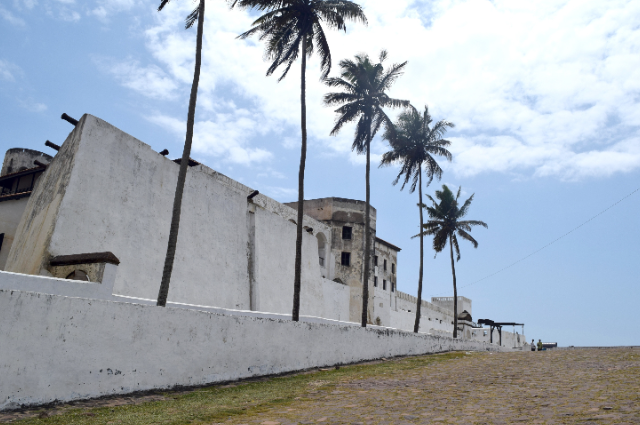
The journey to this resolution was not an overnight achievement but the result of decades of tireless diplomacy led by Ghana. Under the leadership of President John Dramani Mahama and Foreign Minister Samuel Ablakwa, Ghana positioned itself as the moral voice for the African diaspora. This leadership is deeply rooted in the physical reality of the Ghanaian coastline, which remains home to several "slave castles"—the last points of departure for millions of enslaved people. By centring the resolution on the experiences of those who were stolen from these shores, Ghana bridged the gap between historical trauma and modern political action. The Ghanaian delegation's strategy involved building a robust coalition within the African Union and the CARICOM nations (Caribbean Community). This "South-South" cooperation was essential to counter the diplomatic weight of the Global North. Minister Ablakwa famously remarked that "history does not disappear when ignored," a sentiment that became the rallying cry for the 123 nations that supported the measure. Ghana’s role in this process marks a turning point in international relations, where African nations are no longer passive recipients of Western "development aid," but are instead active demanders of legal and moral restitution. This section explores the specific diplomatic manoeuvres and the rhetoric used by Ghana to secure a majority vote in an often-deadlocked General Assembly.
Defining the Unspeakable: Why ‘Gravest Crime Against Humanity’ Matters
The specific terminology used in the resolution—labelling the slave trade as the "gravest crime against humanity"—is perhaps its most significant legal feature. Historically, the term "crime against humanity" was solidified during the Nuremberg Trials following World War II. By applying this label retroactively to the transatlantic slave trade, the UN is asserting that the moral laws of humanity were violated on a scale that surpasses even other documented atrocities. This designation is crucial because it moves slavery beyond the realm of "historical practice" into the realm of "universal wrong."
This linguistic shift has massive implications for international law. When a crime is labelled "gravest," it suggests that the responsibility for its resolution is shared by all of humanity, not just
the specific nations involved. It challenges the legal defences often used by Western governments, which argue that slavery was "legal at the time." The resolution asserts that some acts are so inherently evil that no domestic law can ever make them legitimate. This section delves into the legal philosophy behind the "gravest crime" designation and how it creates a new precedent for addressing historical atrocities that predated modern international courts.
The Arithmetic of Agony: Unpacking the Scale of the Transatlantic Trade
To truly grasp the gravity of the resolution, one must confront the staggering numbers associated with the transatlantic slave trade. Between the 15th and 19th centuries, at least 12.5 million Africans were funnelled into the industrialised machinery of the Middle Passage. However, modern historians argue that even this number is a conservative estimate. When one accounts for those who died during the initial capture in the interior of the continent, the "march of death" to the coast, and the weeks spent in dungeons, the total loss of life likely reaches into the tens of millions.
The "arithmetic of agony" extends beyond the initial abduction. The trade was an industrialised system designed for maximum extraction. The conditions on the slave ships were so inhumane that mortality rates frequently reached 25% per voyage. The economic impact on Africa was equally devastating; the continent was systematically stripped of its youngest, strongest, and most productive members, creating a demographic vacuum that stifled African development for centuries. This section provides a detailed analysis of the human cost, the logistics of the slave trade, and the long-term demographic and social destruction of the African continent.
Reparations as Restoration: Moving Beyond Symbolic Apologies
The most controversial aspect of the UN resolution is its explicit call for a "reparative framework." For years, Western leaders have offered "regrets" or "expressions of sorrow," but they have largely avoided the word "reparations." The resolution changes this by framing reparations not as a charitable handout, but as a legal and moral debt. Reparations are viewed as the "restoration" of what was stolen: labour, wealth, dignity, and heritage.
The debate over reparations often focuses on the financial aspect, but the resolution defines it more broadly. It includes the return of stolen artefacts, formal state-level apologies, investment in infrastructure in formerly colonised regions, and the dismantling of modern systemic racism. The argument for financial reparations is based on the concept of "unjust enrichment"—the idea that the modern wealth of nations like the UK, France, and the US was built on the foundation of unpaid Black labour. This section explores the various models of reparations being proposed, from direct cash payments to descendants to the creation of global development funds for Africa and the Caribbean.
The Great Dissent: Analysing the Opposition from the United States and Israel
The resolution's passage was marred by the opposition of three nations: the United States, Israel, and a third minor ally. The US vote against the resolution was particularly significant, as it highlighted the internal domestic tensions regarding the legacy of slavery. US diplomats argued that the resolution created a "hierarchy of crimes" that might diminish the perceived severity of other genocides. However, many international observers viewed this as a strategic move to avoid the legal liability that would come with recognising the slave trade as the "gravest" crime.
The opposition from Israel was also notable, often linked to its close diplomatic alignment with the US and concerns about how "reparative frameworks" might be applied to other international conflicts. The dissent of these powers reveals a deep-seated fear of the financial and political consequences of a truly global reckoning. This section analyses the official statements from the US State Department and Israeli officials, comparing their arguments against the realities of the resolution and exploring the domestic political pressures that influenced their votes.
The European Paradox: Between Historical Guilt and Financial Hesitation
The majority of European Union countries, along with the United Kingdom, chose to abstain from the vote. This "middle path" reflects what can be called the "European Paradox": a widespread acknowledgement of historical guilt tempered by a profound hesitation to commit to financial accountability. While nations like Germany and France have moved toward returning looted art, they remain deeply resistant to the idea of state-level reparations.
The United Kingdom, which arguably profited the most from the slave trade, led the charge for abstention. British diplomats argued that today’s taxpayers should not be held responsible for the actions of the British Empire. This stance ignores the fact that the British government only finished paying off the massive loan it took to "compensate" slave owners for their "lost property" in 2015. This section examines the specific reasons for European abstentions, the internal debates within the EU, and the growing grassroots movements within Europe that are demanding their governments support the UN resolution.
Restitution of Identity: The Return of Looted African Artefacts
A central pillar of the "reparative framework" mentioned in the resolution is the return of stolen artefacts. During the colonial era, which was the direct successor to the slave trade, European armies and explorers looted thousands of cultural and religious items from African kingdoms. These items, such as the Benin Bronzes and the Asante gold, are currently housed in museums in London, Paris, and New York. The resolution labels the retention of these items as a "continuation of the crime."
The return of these objects is about more than just art; it is about the "restitution of identity." For many African nations, these artefacts are the physical embodiments of their history and spiritual traditions. Their absence represents a "cultural erasure" that began when their ancestors were forced into slavery. This section explores the ongoing battles between African governments and Western museums, the legal challenges of repatriation, and why the resolution considers the return of these items a vital component of justice.
The African Union’s Unified Front: A Continental Vision for Justice
The success of the resolution is a direct result of the "unified vision" established by the African Union (AU). In 2025, the AU met in Accra to draft a comprehensive strategy for reparations. This was a historic moment, as it marked the first time that all 55 African nations agreed on a single set of demands regarding the slave trade. The AU’s framework emphasises that the exploitation of the continent did not end with the abolition of slavery but continued through colonialism and modern neo-colonial economic structures.
The AU’s vision is not merely about looking outward for compensation; it is also about internal healing. It calls for African nations to integrate the history of the slave trade into their national curricula and to build memorials that honour the victims. By presenting a unified front at the UN, the AU prevented Western powers from using "divide and rule" tactics to weaken the resolution. This section examines the specifics of the AU’s "Accra Declaration" and how it served as the blueprint for the UNGA resolution.
Systemic Aftershocks: How 400 Years of Slavery Shape Modern Economics
One of the most powerful arguments in the resolution is that the "consequences of slavery persist today." This section addresses the economic "aftershocks" of the slave trade. In the Americas, the wealth gap between the descendants of the enslaved and the descendants of the enslavers is not an accident of history; it is a direct result of policies that denied Black people the right to own property, build wealth, or receive a fair education for over a century after abolition.
Globally, the economic disparity between the Global North and the Global South is also a legacy of this era. The capital accumulated from the slave trade funded the Industrial Revolution in Europe, while Africa was left with destabilised societies and depleted resources. The resolution argues that "underdevelopment" is not a failure of African people, but a structural outcome of a global economy built on their exploitation. This section provides a detailed economic analysis of how slave-extracted wealth still circulates in modern financial markets and the banking sectors of the West.
Educational Decolonisation: Rewriting the Narrative of the Middle Passage
A major demand of the resolution is for member states to engage in "educational decolonisation." For too long, the history of the transatlantic slave trade has been sanitised in Western textbooks. It is often taught as a regrettable "mistake" that was eventually fixed by heroic white abolitionists. This narrative ignores the constant resistance of the enslaved people themselves and the fact that the trade was a deliberate, profitable, and highly organised state project.
The resolution calls for a "truth-telling" approach to history. This involves acknowledging the roles of specific institutions—such as the Church of England, the Dutch East India Company, and prestigious American universities—in the slave trade. By rewriting the narrative, the UN hopes to ensure "non-repetition." True justice requires that the world understand the slave trade as a foundational element of the modern world, not a peripheral tragedy. This section discusses the importance of curriculum reform and the global movement to dismantle the "myths of empire."
Guarantees of Non-Repetition: Institutionalising the Lessons of History
The final subtopic of the resolution focuses on "guarantees of non-repetition." In international law, this refers to the measures a state must take to ensure that a crime of such magnitude can never happen again. In the context of slavery, this means more than just a ban on human trafficking; it means dismantling the racial ideologies that were created to justify the slave trade. The concept of "race" as we know it today was largely a 17th-century invention designed to make the enslavement of Africans seem natural and moral.
The resolution urges nations to pass legislation that actively combats modern racial disparities in policing, housing, and healthcare. It also calls for the strengthening of the UN’s own human rights mechanisms to monitor and intervene in modern forms of slavery. By institutionalising the lessons of the past, the resolution seeks to create a world where the "indignity of slavery" is not just remembered, but rendered impossible. This section explores the practical steps for "non-repetition" and the role of international oversight in protecting human rights in the 21st century.
The UN resolution passed on March 25, 2026, marks the end of an era of silence and the beginning of an era of accountability. By declaring the transatlantic slave trade the "gravest crime against humanity," the international community has finally aligned its legal definitions with moral truth. The resolution is a victory for the 12.5 million ancestors whose voices were silenced by the Middle Passage, and it is a roadmap for their descendants who continue to fight for a fair and just world.
While the path toward full reparations is long and fraught with political resistance, the "reparative framework" established by this vote is irreversible. The world can no longer pretend that the past is dead; as the resolution makes clear, the past lives on in the systemic inequities of our present. As we move forward, the words of Ghana’s Foreign Minister Samuel Ablakwa remain a guiding light: "History does not disappear when ignored." The global community has finally chosen to stop ignoring it, and in doing so, has taken the first real step toward universal healing and reparative justice.
References
- United Nations General Assembly. (2026). Resolution 80/L.XX: Recognition of Transatlantic Slavery as the Gravest Crime Against Humanity. UN Press.
- Mahama, J. D. (2026). Keynote Address to the 80th UNGA: The Moral Imperative of Reparative Justice. Government of Ghana Publications.
- African Union Commission. (2025). The Accra Declaration: A Unified Vision for Reparations and Historical Restitution. AU Press.
- Guterres, A. (2026). Report on the Persistent Legacies of the Transatlantic Slave Trade and the Requirement for Farsighted State Action. United Nations.
- Ablakwa, S. (2026). Diplomatic Memoirs: The Road to 123 Votes. Accra Daily News.
- World Economic Forum. (2024). The Structural Impact of Historical Slave Wealth on Modern Global Banking Systems. WEF Research Paper.
- Beckles, H. (2023). Britain’s Black Debt: Reparations for Caribbean Slavery and Native Genocide. University of the West Indies Press.