
The dramatic collapse of Bashar al-Assad's regime in December 2024 brought an end to over five decades of dynastic rule and more than a decade of devastating civil conflict. As millions across Syria celebrated the downfall of an autocratic apparatus, the daunting realities of post-conflict state-building quickly came to the fore. The transitional administration under President Ahmed al-Sharaa inherited a country characterised by fractured communities, severely damaged municipal infrastructure, a stagnant national economy, and deep-seated fears among various religious and ethnic minorities. Navigating this delicate transition requires balancing rigorous counterterrorism initiatives with genuine efforts toward national reconciliation and civil integration.
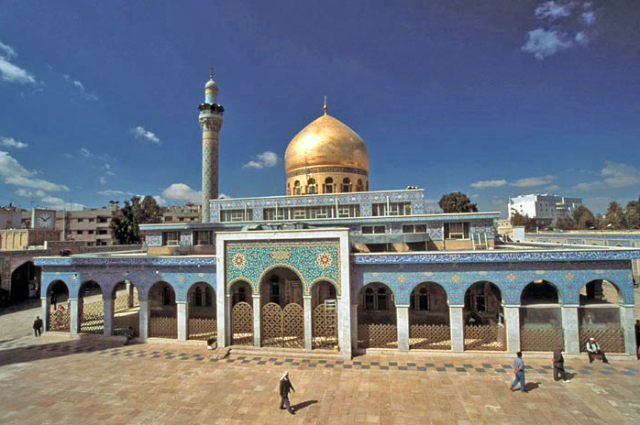
In no place is this delicate political and social balance more evident than in Set Zaynab, a prominent town situated just south of central Damascus. Centred around the historic sanctuary of Sayyida Zaynab—the granddaughter of Prophet Muhammad—the town has historically served as a global centre for Shia religious pilgrimage, cross-border commerce, and cultural exchange. Having transitioned from a heavily fortified enclave protected by foreign Shia militias under the former regime to an area under the oversight of post-Assad state security, Set Zaynab functions as a crucial barometer for Syria's broader trajectory. The town's daily life highlights the complex interplay between improving localised security, severe economic stagnation, persistent sectarian anxieties, and the enduring resilience of a population striving to rebuild its future.
Sacred Geography and the Heritage of Set Zaynab
Set Zaynab's historical identity is fundamentally rooted in its sacred geography, which centres on the grand shrine dedicated to Sayyida Zaynab, daughter of Ali ibn Abi Talib and Fatima az-Zahra. For centuries, this sanctuary has represented one of the most vital spiritual destinations for Shia Muslims globally. Before the outbreak of the Syrian conflict in 2011, millions of pilgrims travelled annually from countries such as Iraq, Iran, Lebanon, Kuwait, Bahrain, Pakistan, and India to perform religious rituals, participate in solemn observances like Ashura, and study within the town's religious academies. This continuous flow of international visitors transformed Set Zaynab into a vibrant, multi-ethnic urban hub where commercial enterprises, specialised printing houses, hospitality networks, and artisanal trades flourished alongside spiritual traditions.
During the civil war, the physical and symbolic status of the shrine took on heightened geopolitical significance. As opposition forces gained ground in the Damascus countryside, the protection of the sanctuary was cited as a primary justification for the direct military intervention of Iranian forces, Hezbollah, and allied Shia paramilitaries. The town was converted into a heavily militarised sector, shielded from nearby combat zones by extensive defensive rings, fortified checkpoints, and specialised security details. While this military presence protected the sanctuary from destruction and preserved a localised economy dependent on foreign personnel and remaining pilgrims, it simultaneously isolated Set Zaynab from surrounding communities, deepened regional sectarian divides, and tied the local social fabric closely to the survival of the Assad regime.
The Political Transition and the Shift in Governance
The rapid collapse of the Assad apparatus in late 2024 fundamentally reorganised the political and administrative structure of Damascus and its peripheral suburbs. As the former regime collapsed and key leaders fled into foreign exile, foreign armed groups and affiliated militias withdrew from their long-held positions in and around Set Zaynab. The sudden vacuum raised immediate concerns among residents regarding potential lawlessness, reprisal attacks, or the destruction of religious sites by victorious opposition groups. Because the Syrian conflict had taken on pronounced sectarian dimensions over more than a decade of war, communities in Set Zaynab braced for the worst as the political order shifted overnight.
In response to these vulnerabilities, the transitional government led by President Ahmed al-Sharaa moved deliberately to establish state authority over the region. Recognising that any outbreak of revenge violence or desecration of holy sites in Set Zaynab would undermine international legitimacy and destabilise the capital, official state security forces were deployed to secure the town's perimeters and internal checkpoints. The new administration sought to project a message of inclusive governance, explicitly promising that religious sites would be protected and that minority populations would not face collective punishment. The transition marked a crucial shift from private and foreign militia control to formal state-led policing, establishing a baseline of order that allowed daily life to resume under a new political framework.
Evaluating Localised Security: Achievements and Ongoing Vulnerabilities
Eighteen months after the political transition, the security environment in Set Zaynab presents a picture of significant progress alongside persistent, covert vulnerabilities. Local shopkeepers, workers, and community leaders widely acknowledge that baseline physical safety has stabilised considerably compared to the chaotic early days of the transition. The visible presence of state security forces along major thoroughfares, commercial avenues, and around the perimeter of the Sayyida Zaynab shrine has successfully prevented large-scale communal violence, armed robberies, and public disorder. Residents report feeling relatively safe moving within the town and conducting basic business, reflecting a tentative return to normalcy that few anticipated during the height of the political transition.
However, beneath this surface-level stability remain serious security threats driven by extremist insurgent cells and covert actors intent on destabilising the transitional government. The Islamic State of Iraq and the Levant (ISIL/ISIS) continues to operate clandestine networks within the Damascus countryside, specifically targeting Shia religious figures and civil infrastructure to reignite sectarian conflict. A prominent example occurred in May 2026, when Shia cleric Farhan Hassan al-Mansour was assassinated by an explosive device attached to his vehicle, an attack subsequently claimed by ISIL. Furthermore, state security agencies recently disrupted a covert insurgent cell in Set Zaynab linked to explosive devices detonated during French President Emmanuel Macron's official visit to Damascus in July 2026. These events demonstrate that while full-scale military conflict has ended, counterterrorism operations and intelligence gathering remain essential to maintaining localised stability.
The Economic Fallout and the Loss of International Tourism
While security conditions have stabilised, the economic realities of post-Assad Set Zaynab remain deeply challenging, primarily due to the total collapse of the religious tourism sector. Historically, foreign pilgrims served as the primary engine of the local economy, supporting hundreds of small-to-medium enterprises, including hotels, restaurants, transport agencies, souvenir shops, and specialised printing presses that produced religious literature. The constant turnover of international visitors ensured a steady inflow of foreign currency, which sustained the town even during broader national economic downturns.
Following the political transition and the withdrawal of foreign regional sponsors, international pilgrimage traffic decreased dramatically. Visitors from Iraq, who previously formed the vast majority of tourists in Set Zaynab, have largely ceased travelling to the area due to regional travel advisories, lingering security concerns, and political realignments, with present visitors restricted mostly to individuals with direct family ties to Syrian citizens. Smaller groups of pilgrims from Gulf nations such as Oman, Bahrain, and Kuwait occasionally visit the shrine, but their numbers represent a tiny fraction of historical averages. Consequently, local commercial districts face severe stagnation, with many storefronts operating at a loss, hotel buildings sitting empty, and business owners struggling to cover basic operational expenses in an economy devoid of its primary customer base.
Inflation, Infrastructure, and Daily Survival in the Suburbs
Daily life for the residents of Set Zaynab is further complicated by broad economic pressures, severe currency depreciation, and chronic municipal infrastructure deficits that affect the entire Damascus countryside. Although active bombardment and military blockades have ended, the national economy remains severely strained by years of war, damaged industrial capacity, and restricted access to international financial systems. The cost of basic food items, cooking fuel, heating oil, and industrial raw materials has risen dramatically, drastically reducing the purchasing power of average households and forcing families to make difficult trade-offs between essential needs.
Compounding these inflationary pressures are persistent deficits in basic public utilities, particularly municipal electricity and clean water distribution. State-provided electrical power operates on highly restricted rotation schedules, forcing shopkeepers, workshop operators, and households to rely heavily on private, diesel-powered generators. The exorbitant cost of fuel required to run these generators significantly inflates operational expenses for local businesses, eating directly into slim profit margins. Despite these structural hardships, residents note a few practical improvements under the new administrative arrangement. Most notably, travel time between central Damascus and Set Zaynab has decreased substantially following the removal of dozens of redundant, extortionate regime-era checkpoints. While improved transit conditions facilitate easier movement, local entrepreneurs continuously emphasise that physical connectivity alone cannot revitalise a local economy in the absence of broader structural relief.
Navigating Minorities' Concerns and Social Dynamics
The social dynamics of post-Assad Set Zaynab reflect the broader challenges of integrating religious and ethnic minorities into Syria's emerging political order. As a town with a substantial Shia population and a history of close association with the former regime's security architecture, Set Zaynab serves as a key test case for the transitional government's commitment to pluralism. Public messaging throughout the town emphasises national reconciliation and equal citizenship, with state-sanctioned banners proclaiming slogans such as “Syria is a nation for all.” On an official level, religious leaders and municipal officials maintain working relationships with state authorities to ensure that religious observances, including Ashura processions, continue without state interference
Despite these positive institutional signals, personal interactions and social spaces reveal lingering anxieties and informal friction. Members of religious minorities frequently describe an atmosphere of quiet caution, where individuals carefully navigate public encounters with strangers. Some residents report instances of subtle questioning regarding their town of origin or family background—inquiries often interpreted as indirect attempts to determine their sectarian identity or past political affiliations. While these encounters rarely escalate into open conflict, they highlight the psychological impact of a long civil war, showing that formal government guarantees must be accompanied by long-term social efforts to rebuild mutual trust among diverse communities.
Psychological Fractures and Intergenerational Trauma
Beyond immediate economic and security concerns, the long-term stability of Set Zaynab—and Syria as a whole—is profoundly affected by the deep psychological trauma inflicted on a generation that came of age during the civil war. Over thirteen years of continuous conflict, mass displacement, military conscription, and pervasive sectarian rhetoric have fundamentally shaped the worldviews of millions of young Syrians. Many young adults have known no other reality than conflict, state collapse, and intense social polarisation, creating a significant generational divide in how community relations are perceived.
Older residents and community elders in Set Zaynab frequently express concern regarding this generational rupture. Older Syrians, who remember the pre-war era characterised by routine inter-communal socialisation and shared civic spaces, often maintain personal relationships across religious divides despite the war's violence. In contrast, younger generations grew up in segregated, highly polarised environments, often losing family members, homes, or educational opportunities to the conflict. Youth who experienced displacement at a formative age and returned years later often carry profound personal grief and hardened attitudes toward other groups. Addressing this intergenerational trauma through targeted youth programming, civic education, and community-led reconciliation efforts is critical to preventing past grievances from fueling future localised conflicts.
Counterterrorism Operations and State Security Measures
To maintain order and prevent insurgent activity, state security agencies continue to execute targeted security operations and intelligence sweeps throughout Set Zaynab and adjacent suburban districts. These operations are designed to achieve two distinct goals: discovering and neutralising covert extremist cells affiliated with ISIL, and identifying unaligned armed groups or remnant regime elements that possess illicit weapons caches and pose a threat to public safety. Security forces routinely conduct search operations based on intelligence leads, establishing temporary perimeters around specific neighbourhoods to recover hidden armaments and detain suspect individuals.
Transitional authorities defend these security operations as necessary measures to establish a strict state monopoly on force and protect civilian populations from indiscriminate violence. In several instances, security sweeps in the Set Zaynab countryside have successfully uncovered concealed weapons depots containing light firearms, mortar rounds, and improvised explosive components. However, conducting high-visibility security operations within minority-populated areas requires significant care. To maintain public trust, state security agencies must ensure that search operations are conducted with strict adherence to legal standards, clear communication, and respect for civilian rights, avoiding actions that could be perceived as collective punishment or arbitrary intimidation.
Bridging Institutional Pledges and Grassroots Realities
Ensuring long-term social cohesion in post-Assad Syria requires successfully bridging the gap between high-level governmental commitments and the daily realities experienced by citizens on the ground. The administration of President Ahmed al-Sharaa has consistently articulated a commitment to constitutional rights, institutional transparency, and equal protection under the law for all Syrian citizens regardless of religious or ethnic origin. Official declarations from Damascus aim to reassure both domestic audiences and international observers that the new state structure is fundamentally committed to peaceful coexistence and democratic governance.
Converting these high-level commitments into tangible daily realities requires continuous effort at the municipal and neighbourhood levels. In Set Zaynab, practical steps—such as recruiting residents into civil policing roles, ensuring fair representation in municipal administrative councils, and providing transparent mechanisms to report security abuses—serve to build trust in state institutions. Conversely, administrative delays, economic marginalisation, or perceived biases in public service distribution can quickly undermine confidence. Building durable state legitimacy depends on demonstrating that official promises of equality and protection are consistently applied in everyday interactions between citizens and local authorities.
Strategic Imperatives for Long-Term Stabilisation and Economic Revival
Achieving long-term stability and economic vitality in Set Zaynab requires a multi-faceted approach that addresses immediate security needs while laying the groundwork for sustainable economic development. Because the town's local economy is deeply tied to religious tourism, revitalising commercial activity requires restoring international confidence and establishing clear, supportive policy frameworks. A comprehensive strategy for Set Zaynab must integrate localised security measures with broader national economic and diplomatic initiatives.
Key strategic imperatives for the sustainable recovery of Set Zaynab include:
- Sustained, Intelligence-Led Counterterrorism: Maintaining focused security operations to dismantle clandestine ISIL networks and neutralise remnant insurgent cells while ensuring full protection of civilian rights.
- Diplomatic Engagement for Tourism Normalisation: Working diplomatically with regional governments, particularly Iraq and Gulf nations, to establish clear travel protocols, lift advisories, and facilitate safe, regulated religious pilgrimage.
- Infrastructure Rehabilitation and Energy Subsidy: Prioritising the reconstruction of essential municipal infrastructure, including electrical grids, water treatment facilities, and public roads, to lower operational costs for local businesses.
- Inclusive Municipal Governance: Expanding local administrative councils to include representatives from small businesses, religious institutions, and civil society to address local grievances efficiently.
- Youth Engagement and Trauma Mitigation: Establishing community centres, vocational training programs, and conflict-resolution initiatives specifically designed to support young adults impacted by war-era displacement and trauma.
The evolution of Set Zaynab in the post-Assad era reflects the broader complexities, risks, and opportunities facing Syria as it navigates a monumental historical transition. A year and a half after the fall of a five-decade authoritarian regime, the town exists in a state of delicate balance. While the immediate threat of widespread communal violence has been mitigated through state security deployments and explicit official guarantees, the community continues to grapple with severe economic stagnation, the loss of its vital religious tourism sector, and the lingering psychological wounds of a decade-long civil war.
Moving forward, the successful recovery of Set Zaynab will depend on the transitional government's ability to maintain physical security without alienating local populations, revive commercial activity through regional diplomatic engagement, and foster genuine social integration at the grassroots level. By addressing the needs of war-impacted youth, investing in basic municipal infrastructure, and ensuring equal protection for all citizens, state authorities can help convert a fragile post-war stability into a lasting, inclusive peace. As Syria continues the complex process of national reconstruction, the resilience and recovery of historically sensitive communities like Set Zaynab will remain a primary indicator of the nation's overall progress.
References
- Al Jazeera Media Network. (2026, July 29). Fragile peace in Syria's Set Zaynab as sectarian challenges persist. Al Jazeera English.
- Associated Press Archives. (2025, July 3). Shia worshippers attend Ashura rituals at the Sayyida Zaynab shrine in southern Damascus. AP News Photo Collection.
- Salhani, J. (2026, July 29). Life and security in post-Assad Syria: A report from Set Zaynab. Al Jazeera Features.
- Syrian Transitional Government, Executive Office of the Presidency. (2025). Official directives on national reconciliation, civil security, and state reconstruction under President Ahmed al-Sharaa. Damascus Publishing House.
- United Nations High Commissioner for Refugees (UNHCR). (2026). Syria regional return, displacement, and community stabilisation report. UN Publications.