
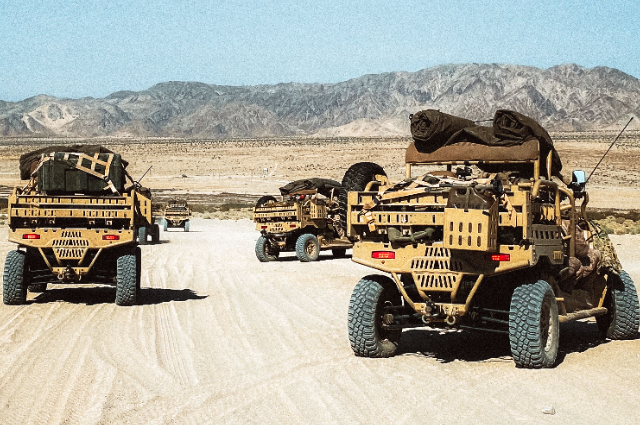
The Illusory Threshold of Military Triumph
The ongoing civil war in Sudan, ignited in April 2023 between the Sudanese Armed Forces (SAF) under General Abdel Fattah al-Burhan and the paramilitary Rapid Support Forces (RSF) led by Mohamed Hamdan Dagalo ("Hemedti"), has reached a complex operational juncture. Following a strategic summer offensive in mid-2026, the SAF secured notable battlefield gains. Army units recaptured several urban centres along the Export Road (Sadirat), a transit corridor linking the central Nile valley to the western provinces, forcing RSF units into defensive postures across key regions of central Sudan.
These tactical advances have prompted senior SAF commanders to project absolute victory over the RSF. However, military gains do not automatically translate into long-term political resolution. Even as the SAF asserts dominance along central supply lines, counter-offensives by the RSF and its tactical ally, the Sudan People’s Liberation Movement-North (SPLM-N, led by Abdulaziz al-Hilu, have captured key locations such as Kurmuk and Geisan in Blue Nile state. Concurrently, long-range drone strikes on army-controlled cities demonstrate that the RSF retains significant operational reach far beyond its primary stronghold in Darfur.
The fundamental reality of the conflict is that a complete defeat of the RSF as a unified paramilitary entity will likely not bring peace. Instead, it risks shattering Sudan's security ecosystem into fragmented localised conflicts. The fighting relies on loose coalitions of semi-autonomous militias, tribal networks, and political factions. Once the primary threat of the RSF diminishes, the shared interests holding these anti-RSF forces together are likely to collapse, exposing deep structural divisions across the state.
The Anti-RSF Coalition: Fragile Alliances and the Challenge of Command
The military offensive led by the Sudanese Armed Forces depends heavily on an irregular network of armed movements, tribal militias, and regional security groups. While the SAF serves as the central command structure, its operational capacity relies on non-state and semi-state partners. Chief among these are the Darfuri factions that signed the 2020 Juba Peace Agreement (JPA), including the Justice and Equality Movement (JEM), led by Finance Minister Gibril Ibrahim, and the Sudan Liberation Movement (SLM), led by Darfur Governor Minni Minnawi.
Faction / Group | Primary Leadership & Political Alignment |
Sudanese Armed Forces | Gen. Abdel Fattah al-Burhan (Central Command) |
Justice & Equality (JEM) | Gibril Ibrahim (Finance Minister) |
Sudan Liberation (SLM) | Minni Minnawi (Darfur Governor) |
Popular Resistance / SSP | Local Tribal Coalitions & Volunteers |
Al-Baraa ibn Malik | Islamist Brigades / NCP Affiliates |
Although the 2020 Juba Peace Agreement mandated the integration of these armed groups into the national military framework, progress has remained stalled. Former rebel commanders have been hesitant to surrender their operational autonomy, recognising that their private armed formations provide their primary political leverage. Senior military leaders have repeatedly promised to institute legal frameworks to absorb irregular fighters into standard military structures, but these plans face persistent administrative and political obstacles.
This reliance on semi-autonomous forces presents a structural vulnerability for the SAF. The broad coalition known as the "Popular Resistance"—comprising local defence committees, armed volunteers, and tribal units —has introduced thousands of armed individuals operating outside standard military chains of command. While these groups have provided critical manpower during defensive operations, their proliferation complicates post-war stabilisation. Unintegrated irregular units with distinct regional or ethnic allegiances pose a persistent risk of turning against central state authority once their common enemy is defeated.
Paramilitary Defections: Structural Weakness and Weapon Redistribution
The Rapid Support Forces do not operate as a modern, unified military force, but rather as a network of tribal militias, commercial security personnel, and mercenary units bound together by financial incentives and regional allegiances. As the SAF increased military pressure throughout 2026, this organisational structure showed clear signs of fragmentation, marked by high-profile defections of senior commanders.
Prominent commanders, including al-Nour al-Qubba, al-Savanna, and Hamad Khalifa (the RSF-appointed governor for the Kordofan region), have broken ties with the central RSF leadership. These defections have frequently involved intact combat units transferring loyalty alongside their commanders, often carrying heavy weaponry and armoured vehicles back to the SAF or establishing independent regional strongholds.
[RSF Central Command] ---> Fractures under pressure & incentives |
[Defecting Commander] ---> Retains direct loyalty of private troops |
[Integration into SAF] -> Transfers irregular units into state camp |
*RISK*: The SAF absorbs unintegrated, tribal-led armed units without establishing a unified chain of command. |
While these defections weaken the RSF’s central command, they create complex security challenges for the state. When irregular commanders defect, their troops maintain primary loyalty to their immediate officers rather than standard military hierarchies. A clear example is Abu Aqla Keikel, a former SAF officer who initially fought for the army, defected to the RSF in late 2023, and then rejoined the SAF in October 2024. His Sudan Shield Forces continue to operate with high operational independence, highlighting the army's growing reliance on commanders whose long-term allegiances remain fluid.
The Islamist Resurgence: Armed Brigades and Post-War Governance
A critical dimension of the anti-RSF coalition is the involvement of armed Islamist factions aligned with the former ruling National Congress Party (NCP) of Omar al-Bashir. Groups such as the Al-Baraa ibn Malik Brigade have provided experienced combatants who played a vital role in operations to clear RSF units from urban sectors of Khartoum.
The prominent role of these brigades has drawn international scrutiny. Sanctions imposed by Western governments on key Islamist militia leaders have put political pressure on the military leadership. In response to this international attention and recent SAF advances, some Islamist units have adopted a strategy of tactical withdrawal from front-line publicity, framing their operational shifts as a transition back to civilian life.
Historical Phase | Political & Military Status |
Pre-2019 Regime Era | Official State Hegemony (NCP) |
2023-2026 Civil War Era | Paramilitary Mobilization |
Post-Conflict Strategy | Tactical Shift toward Electoral/Civil Political Resurgence |
However, a retreat from active combat zones does not signal a departure from political ambition. Figures linked to the former NCP framework have indicated that Islamist political organisations intend to leverage their wartime contributions to secure influence in post-war governance. Having gained extensive combat experience, these disciplined brigades are unlikely to disarm unconditionally without political guarantees. Managing the political demands and security presence of these armed Islamist groups represents a major internal challenge for the SAF leadership moving forward.
Peripheral Governance and the Limits of Military Projection
Sudan’s security crises are rooted in long-standing structural disparities between the central Nile Valley authority and the country's peripheral regions. Historically, governments in Khartoum have struggled to project uniform administrative and military power across expansive regions such as Darfur, Kordofan, and the Blue Nile.
To manage rebellions in these distant provinces, past administrations relied on proxy militias. The Janjaweed forces, mobilised during the Darfur conflict in the early 2000s, were eventually formalised into the Rapid Support Forces in 2013. This history underscores the persistent structural challenge: the central state has repeatedly turned to irregular armed groups to offset its own institutional limitations in peripheral areas.
[Central Power Deficit] -> Mobilises Local Proxy Militias |
[Post-Conflict Era] <- Incorporates Proxy into State Framework |
[Institutional Rivalry] -> Proxy Challenges Central Authority (War) |
Overcoming this legacy remains a formidable challenge for a cash-strapped military apparatus dependent on volunteer forces and regional allies. In regions like Darfur—a vast territory bordering nations with porous frontiers—the RSF continues to utilise cross-border supply lines. Even if the RSF's central structure is dismantled, the SAF lacks the resource base required to maintain permanent security garrisons across these remote areas, creating power vacuums that local warlords and militia leaders can exploit.
Economic Collapse and the Political Economy of Warlordism
The civil war has devastated Sudan’s formal economy, destroying manufacturing centres, disrupting agricultural production in key regions like Gezira, and paralysing international trade through traditional banking channels. The loss of state revenue has restricted the central government's ability to finance public infrastructure and maintain standard public sector payrolls.
In place of a centralised economy, a decentralised war economy has emerged across Sudan:
- Field Monetisation: Armed units on all sides sustain operations through informal taxation, control of localised transit points, and resource extraction.
- Artisanal Mining Control: In regions containing gold deposits, access to mining sites provides local commanders with independent financial streams, reducing their dependence on central military finance
- Fuel and Goods Smuggling: Cross-border trade routes sustain informal supply chains, empowering local traders and militia figures who manage regional border crossings.
Resource Stream | Primary Controller | Operational Impact |
Gold Extraction | Regional Militias | Independent Military Budgets |
Transit Tolls | Local Commanders | Fragmentation of Commerce |
Cross-Border Trade | Border Alliances | Bypassing Central Sanctions |
This economic landscape poses a long-term obstacle to state stabilisation. When local commanders gain financial self-sufficiency through informal trade and resource control, their incentive to integrate into a centralised state military structure diminishes. Disbanding these forces requires not only political negotiation, but also economic alternatives capable of replacing the financial returns of informal wartime commerce.
Regional Dynamics and Cross-Border Instability
The conflict in Sudan does not operate in isolation; it is deeply interconnected with the geopolitical security dynamics of the Horn of Africa, the Sahel, and the Red Sea corridor. The porous nature of Sudan’s borders has allowed armed movements, illicit weapons, and displaced populations to flow continuously between neighbouring states.
In the east, clashes involving the RSF and the SPLM-N near the Ethiopian border highlight the risk of international spillover. Border areas near Chad, the Central African Republic, South Sudan, and Libya remain vulnerable to logistical exploitation by various combatant factions. Transnational tribal networks that bridge national borders further complicate efforts to isolate internal violence.
Bordering Region | Primary Risk Factor | Strategic Implication |
Chad / CAR Border | Tribal Trans-flows | RSF Supply & Recruitment |
Ethiopian Frontier | SPLM-N Operations | Multi-Front Border Conflict |
Red Sea Corridor | Maritime Security | International Shipping Risks |
South Sudan Border | Oil Transit Infrastructure | Disruptions to Regional Energy Flow |
Extensive international involvement adds additional complexity to the conflict. Various regional actors have provided material, financial, or diplomatic support to opposing sides to secure strategic positions, maritime access along the Red Sea, or commercial contracts. The continuous influx of external supplies ensures that local factions possess the resources to sustain prolonged military operations, undermining diplomatic efforts to establish an effective ceasefire.
The Political Dilemma: National Dialogue vs. Structural Realities
In response to changing battlefield dynamics, General Abdel Fattah al-Burhan has outlined plans for an inclusive national dialogue intended to chart a path toward post-war governance. This political process aims to translate recent military advances into a stable political arrangement while explicitly ruling out any return of top RSF leadership to government roles.
While excluding commanders associated with documented human rights abuses is a key priority for many civic groups, it leaves practical security questions unresolved:
- Disarmament Realities: How can hundreds of thousands of active combatants, armed irregulars, and defected paramilitary fighters be disarmed or integrated without clear economic alternatives
- Coalition Alignment: How will the military leadership reconcile the competing political goals of its diverse coalition partners, including Darfuri rebel factions, local defence groups, and Islamist organisations?
- Institutional Reform: What concrete legal mechanisms will ensure that integrated forces report to a single, professional national command rather than individual political leaders?
Objective | Structural Obstacle |
Unified National Army | Autonomy of JPA & Popular Forces |
Disarmament & Demobilisation (DDR) | Lack of International Funding |
Civilian Political Transition | Entrenched Wartime Armed Alliances |
Without addressing these structural questions, broad political dialogues risk becoming theoretical exercises. Resolving Sudan's conflict requires moving beyond temporary military alliances to establish professional, inclusive state institutions capable of managing regional grievances and maintaining the rule of law.
Navigating Beyond the Fragmented Horizon
The Sudanese Armed Forces' recent military operations have altered the tactical landscape of the civil war, reversing early paramilitary advances across key central transit routes. However, mistaking these battlefield gains for a decisive end to the national crisis risks misjudging the deep structural challenges facing the country.
The primary danger confronting Sudan is not simply the continuation of a two-sided conflict, but its transformation into a prolonged, fragmented war driven by localised militias, tribal defence forces, and semi-independent warlords. Absorbing defected paramilitary units, managing armed political allies, and addressing long-standing peripheral grievances require structural institutional reforms rather than temporary security arrangements.
Achieving lasting peace in Sudan will require moving past short-term military calculations. Rebuilding the state depends on establishing a professional national military with a unified chain of command, implementing comprehensive disarmament and demobilisation programs, and securing an inclusive political settlement that addresses the root causes of peripheral marginalisation. Without these fundamental reforms, the collapse of a central enemy will not deliver stability, but rather usher in a complex era of localised conflict.
References:
- Ibrahim, Elfadil. "The RSF’s defeat will not end Sudan’s war but merely fragment it." Al Jazeera, Opinion, August 26, 2026.
- de Waal, Alex. The Real Politics of the Horn of Africa: Money, War and the Business of Power. Polity Press, 2015.
- International Crisis Group. Sudan’s Catastrophic War: How to Halt the Descent into Chaos. Africa Report, Brussels, 2024.
- United Nations Security Council. Reports of the Panel of Experts on the Sudan established pursuant to resolution 1591 (2005). UN Docs, 2024–2026
- Small Arms Survey. Sudan's Proliferating Armed Groups: Coalition Building and Institutional Breakdown. Human Security Baseline Assessment (HSBA), Geneva, 2025.
- Gallab, Abdullahi A. The First Islamist Republic: Development and Disintegration of Islamism in the Sudan. Ashgate Publishing, 2008.
- Amnesty International. New Weapons and Old Patterns: The Global Supply of Arms Driving the Sudan Conflict. London, 2025.
- Human Rights Watch. Sudan: Mass Atrocities and the Destruction of Infrastructure in Urban Centres. New York, 2025. The Mirage of Victory: Structural Fragmentation in Sudan’s Civil War 7