
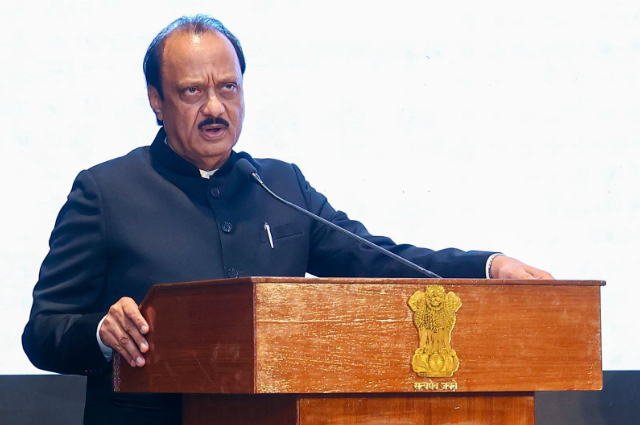
The morning of January 28, 2026, will forever be etched in the political history of Maharashtra as a day of profound loss and shock. The sudden and tragic demise of Ajit Anantrao Pawar, the Deputy Chief Minister and a towering figure in the state's administration, has left a void that is as much personal for the people of Baramati as it is political for the nation. Travelling in a Bombardier Learjet 45, Pawar was on a routine flight from Mumbai to his home turf of Baramati to participate in the upcoming Zilla Parishad election campaigns—a testament to his lifelong commitment to grassroots politics. However, what should have been a standard landing turned into a catastrophe just meters from the runway. This article provides an extensive examination of the incident, the investigation into the technical failures, the political legacy of "Ajit Dada," and the far-reaching consequences of this tragedy.
The Fatal Flight: A Detailed Timeline of the Baramati Crash
The aircraft, a chartered Bombardier Learjet 45 operated by VSR Ventures, departed from Mumbai’s Juhu Aerodrome in the early hours of Wednesday. Onboard were five individuals: Deputy Chief Minister Ajit Pawar, his Personal Security Officer (PSO) Vidip Jadhav, flight attendant Pinky Mali, and two experienced pilots, Captain Sumit Kapoor and Captain Sambhiav Pathak. The flight was expected to be a short, 30-minute hop to the Baramati airstrip. According to initial reports from the Directorate General of Civil Aviation (DGCA), the weather over Pune district was characterised by a thick morning haze, significantly reducing visibility.
As the aircraft approached the Baramati airstrip around 8:18 a.m., the pilots encountered their first major hurdle. The Air Traffic Control (ATC) at Baramati, which is largely managed by local flight training schools rather than a full-scale commercial team, informed the cockpit that visibility had dropped to approximately three kilometers. For a safe landing at this particular facility, which lacks advanced navigational aids, a minimum visibility of five kilometres is generally recommended. The pilots attempted an initial approach but, unable to sight the runway clearly, communicated their decision to execute a "go-around"—a standard safety manoeuvre where the aircraft climbs back to a safe altitude to attempt a second landing or divert to another airport. During the second attempt, something went catastrophically wrong.
Witnesses on the ground reported hearing a series of loud blasts followed by a plume of thick black smoke rising from a field just a few hundred meters from the runway perimeter. It appears the aircraft lost altitude rapidly during its final turn. The impact was severe, causing the fuselage to break apart and catch fire almost instantaneously. Emergency services from Baramati and neighbouring areas rushed to the scene, but the intensity of the blaze meant there were no survivors. The news of the crash sent shockwaves through the state, as the realisation dawned that one of Maharashtra's most resilient political figures was gone.
The Political Landscape of Maharashtra: An Era Before and After Ajit Pawar
To understand the magnitude of this loss, one must look at the central role Ajit Pawar played in the complex machinery of Maharashtra’s politics. Known for his administrative acumen and "no-nonsense" approach, he was often described as the engine of the state cabinet. Whether he was serving as the Finance Minister or the Deputy Chief Minister, his grip on the state’s pulse was unparalleled. His ability to navigate the bureaucratic hurdles of the Mantralaya (the state secretariat) made him a favourite among officials who valued efficiency over rhetoric.
Before his death, Ajit Pawar was at a critical juncture in his career. Having led a major faction of the Nationalist Congress Party (NCP) to join the Mahayuti government in 2023, he had successfully asserted his independence from his uncle and mentor, Sharad Pawar. This move, while controversial, showcased his willingness to take massive political risks to ensure his followers remained in power. His absence now creates a massive power vacuum within the ruling coalition. He was the primary bridge between the various factions of the NCP and the larger partners like the BJP and the Eknath Shinde-led Shiv Sena.
In the aftermath of the crash, the immediate concern is the stability of the state government. Ajit Pawar held the crucial Finance portfolio, and his meticulous planning for the upcoming state budget was well underway. More importantly, he was the chief strategist for the NCP’s campaign in the local body elections. Without his leadership, the party faces an identity crisis. Will the rank and file remain loyal to his sons, Parth and Jay, or will there be a massive shift back toward the senior Sharad Pawar? The political landscape of Maharashtra has shifted from a state of competitive multi-polarity to one of deep uncertainty.
The Legacy of a Strongman: From Baramati to the Mantralaya
Ajit Pawar’s journey from a young worker in the cooperative sector to the Deputy Chief Minister is a story of grit, discipline, and local loyalty. He was first elected to the Maharashtra Legislative Assembly in 1991 and went on to win the Baramati seat for eight consecutive terms. His relationship with Baramati was not just that of a representative and his constituency; it was a deep, paternalistic bond. He transformed the region into an industrial and educational hub, often using his influence in the state government to bring projects that transformed the lives of his voters.
His administrative style was legendary. He was known to start his day at 6:00 a.m., often holding meetings with officials before the sun was fully up. This discipline was infectious, and it set a standard for governance in the departments he headed. However, his career was not without its share of storms. He faced significant scrutiny over the multi-crore irrigation scam, an allegation he fought for over a decade. Despite the investigations and the media trials, his popularity among the farmers of Western Maharashtra remained largely intact, primarily because he was seen as a leader who delivered on his promises of water and infrastructure.
The "Ajit Dada" persona—rustic, straightforward, and occasionally blunt—endeared him to the masses while making him a target for the opposition. He was a man of few words but decisive action. His viral videos, whether they were of him sternly questioning a lazy official or sharing a light moment at a family wedding, showed a leader who was human yet formidable. His legacy will be defined by his contribution to the state’s infrastructure and his role in making the NCP a formidable force in the sugar belt of Maharashtra.
Investigating the Skies: The Role of AAIB and DGCA in Forensic Analysis
In the wake of the crash, the Aircraft Accident Investigation Bureau (AAIB) has launched a high-level probe into the technical failures of the Learjet 45. A team of forensic experts arrived at the Baramati crash site within hours of the incident to recover the Cockpit Voice Recorder (CVR) and the Flight Data Recorder (FDR), commonly known as the "black boxes." These devices are critical in reconstructing the final minutes of the flight. Investigators are looking at three primary factors: mechanical failure, human error, and environmental conditions.
The Learjet 45 is generally considered a reliable business jet, used extensively by corporations and governments worldwide. However, the specific aircraft involved, operated by VSR Ventures, will be scrutinised for its maintenance history. Were there any pre-existing technical snags? Did the engines perform optimally during the "go-around" manoeuvre? The AAIB will also investigate the quality of fuel used and whether there was any bird strike, a common hazard in rural airstrips.
Parallelly, the DGCA is reviewing the pilots' actions. Captain Sumit Kapoor and Captain Sambhiav Pathak were seasoned professionals with thousands of flying hours. The investigation will examine whether the decision to attempt a second landing in poor visibility was a result of perceived pressure to deliver a VIP passenger or a misjudgment of the changing weather conditions. Forensic analysis of the wreckage will also determine if there was a mid-air fire or if the blasts heard by witnesses were a result of the impact. The final report, which may take months to compile, will be crucial in determining liability and preventing future tragedies of this nature.
The Infrastructure Paradox: Assessing Navigational Aids at Regional Airstrips
The Baramati air crash has brought a glaring spotlight on the state of regional aviation infrastructure in India. Despite being a high-profile destination with frequent VIP
traffic—including visits by the Prime Minister, Union Ministers, and State leaders—the Baramati airstrip remains rudimentary in its technical capabilities. It primarily serves as a training ground for flying schools and operates under Visual Flight Rules (VFR), which rely on the pilot's ability to see the ground and the runway.
The facility lacks an Instrument Landing System (ILS), which provides precision lateral and vertical guidance to an aircraft approaching a runway. In modern aviation, ILS is the gold standard for landing in low-visibility conditions. Furthermore, the airstrip does not have a dedicated meteorological department to provide real-time, high-accuracy weather updates to incoming flights. The reliance on students or instructors from local flying schools to manage ATC functions is a significant risk factor when dealing with high-performance jet aircraft.
This "infrastructure paradox" is visible across many regional airports developed under the UDAN scheme. While the government has successfully expanded the number of operational airstrips, the quality of navigational aids has not always kept pace. The tragedy suggests that VIP movement should perhaps be restricted to airports with full-scale technical support, or that regional airstrips must be upgraded with automated weather observation systems and basic instrument approach procedures. The loss of a Deputy Chief Minister may finally provide the political impetus needed to prioritise safety over mere connectivity in regional aviation.
A Family Divided, A Fortress Shaken: The Pawar Dynasty at a Crossroads
For decades, the Pawar family was the ultimate symbol of political unity in Maharashtra.
However, the split in 2023 changed everything. Ajit Pawar’s decision to break away from Sharad Pawar’s shadow created a "fortress divided." The tragedy has now forced the family back together in a moment of grief, but the political repercussions are complicated. At the funeral in
Katewadi, the presence of Sharad Pawar and Supriya Sule alongside Ajit’s grieving wife Sunetra and sons Parth and Jay signalled a temporary truce, but the future of the "Pawar Fortress" remains uncertain.
Ajit Pawar was the primary custodian of the family’s political interests in the cooperative and banking sectors. He managed the intricate network of sugar factories and credit societies that form the backbone of the NCP’s power. With him gone, there is no clear successor who commands the same level of respect across these institutions. Parth Pawar, who has faced electoral setbacks in the past, and Jay Pawar, who is relatively new to the political limelight, face a daunting task in maintaining their father’s legacy while navigating the shadow of their grand-uncle.
Speculation is already rife about a potential reunification of the NCP. Many loyalists who followed Ajit Pawar might now see a return to the Sharad Pawar camp as the only way to ensure political survival. Conversely, the BJP and Shiv Sena (Shinde) will be keen to keep the Ajit Pawar faction intact to maintain the stability of their coalition. The personal tragedy of a mother losing her son and a wife losing her husband is thus inextricably linked to the survival of a political dynasty that has ruled Maharashtra for half a century.
The Human Toll: Remembering the Pilots and the Flight Attendant
While the headlines are dominated by the loss of a political heavyweight, the tragedy also claimed the lives of four other individuals whose stories are equally heartbreaking. Pinky Mali, the 24-year-old flight attendant from Jaunpur, Uttar Pradesh, was a young woman with dreams of supporting her family in Mumbai. Her father, Shivkumar Mali, recalled their last conversation where she promised to call him "tomorrow" after her duty—a tomorrow that never came. Her story represents the thousands of young professionals who form the backbone of India’s aviation sector, working behind the scenes to ensure the safety and comfort of passengers. The pilots, Captain Sumit Kapoor and Captain Sambhiav Pathak, were described by their peers as dedicated and skilled aviators. Their loss is a reminder of the inherent risks faced by flight crews every day, especially when operating in challenging weather conditions at underserved airports. They were responsible for the lives of their passengers and fought until the very last second to bring the aircraft down safely. The post-mortem reports confirmed that they died on impact, having stayed at their controls in an attempt to manage the failing aircraft.
Then there was Vidip Jadhav, the Personal Security Officer who had been by Ajit Pawar’s side for years. A resident of Thane, Jadhav was known in his neighbourhood as an affable and disciplined officer. He leaves behind a young family, including two children. For many PSOs, their duty is more than just a job; it is a life of constant proximity and loyalty to the person they protect. The death of these four individuals alongside Ajit Pawar highlights the indiscriminate nature of such tragedies, affecting families across different social and economic strata.
A State in Mourning: The Socio-Political Aftermath of January 28
The Maharashtra government’s announcement of a three-day state mourning is a reflection of the high regard in which Ajit Pawar was held. Across the state, flags were flown at half-mast, and all official functions were cancelled. In Baramati, the atmosphere was one of palpable grief.
Shops were shut voluntarily, and thousands of people lined the streets to catch a glimpse of the "rath" carrying his mortal remains. The sight of people showering flower petals on the ambulance was a testament to his popularity.
The funeral itself was a rare gathering of the entire Indian political spectrum. From Union Home Minister Amit Shah to Chief Minister Devendra Fadnavis and opposition leaders from various states, the attendance underscored Ajit Pawar’s cross-party relationships. Despite the fierce political battles he fought, he was respected for his work ethic and his word. The state honours, including the gun salute and the presence of the cabinet, were a fitting tribute to a man who spent nearly four decades in public service.
The social impact of his death is also being felt in the cooperative sector. Meetings of various milk cooperatives, sugar factories, and district banks were adjourned as members mourned their mentor. For the youth of Baramati, "Dada" was a symbol of hope and progress. His social media presence, which had grown significantly in recent years, had made him accessible to a younger generation that appreciated his directness. The outpouring of grief on platforms like X (formerly Twitter) and Instagram showed that he had successfully bridged the gap between traditional politics and the digital age.
The Controversy and the Conspiracy: Decoding the Political Reactions
As is often the case with the sudden death of a major political figure, the Baramati crash has not been immune to speculation and controversy. Shortly after the incident, certain political leaders, including West Bengal Chief Minister Mamata Banerjee, suggested that there might be more to the crash than meets the eye, hinting at a potential conspiracy. These comments were quickly rebuffed by both Eknath Shinde and Sharad Pawar, who urged the public and the media not to politicise a sensitive tragedy.
Sharad Pawar’s intervention was particularly significant. By describing the crash as a "clear accident" and a "big shock," he attempted to shut down rumours that could lead to social unrest. He emphasised that in moments of such profound loss, the focus should be on the investigation and the family’s grief rather than baseless allegations. However, the state government has nonetheless ordered a CID probe to work alongside the AAIB. This dual investigation is aimed at ensuring total transparency and addressing any concerns regarding sabotage or negligence by the airline company.
The investigation into VSR Ventures, the operator of the aircraft, will be a key part of this process. Questions are being asked about the safety protocols followed by private charter companies. Are these aircraft subjected to the same rigorous checks as commercial airliners? The "conspiracy" talk, while largely dismissed by the mainstream, highlights the high-stakes environment of Maharashtra politics, where every event is viewed through a lens of suspicion. The government’s task now is to provide a factual, evidence-based report that puts these rumours to rest.
The Road Ahead for the NCP: Future Leadership and Electoral Impacts
The most immediate political challenge following Ajit Pawar’s death is the leadership of his NCP faction. While he was alive, his word was law. Now, the party must decide on a new working structure. Sunetra Pawar, currently a Rajya Sabha MP, may take on a more prominent role to provide a sense of continuity, but the administrative heavy lifting will likely fall to senior leaders like Praful Patel or Sunil Tatkare. However, none of them possesses the same grassroots pull that Ajit Pawar had in Western Maharashtra.
The timing could not be worse for the party. The Zilla Parishad elections are just a week away, and the NCP was banking on Ajit Pawar’s whirlwind tours to secure a majority in the rural belts. His death has not only demoralised the cadre but has also left the campaign without its chief financier and strategist. The opposition, while currently in a state of mourning, will eventually have to navigate the vacuum left by his absence. Will they take advantage of the disarray, or will a "sympathy wave" consolidate the NCP’s vote bank?
In the long term, the death of Ajit Pawar might lead to a significant realignment of forces. If his faction struggles to stay together, the BJP might seek to directly absorb the rank and file, or a reunification with Sharad Pawar’s NCP (SP) might become inevitable. Either way, the "Pawar Fortress" of Baramati will never be the same. The loss of its most active architect means that the future of Maharashtra’s politics will be written by new hands, even as it remains haunted by the memory of the man who ruled the state’s heart and its secretariat with equal fervour.
The Baramati plane crash is a tragedy of monumental proportions that transcends politics. In the death of Ajit Pawar, Maharashtra has lost a disciplined administrator, a grassroots leader, and a man who, despite his flaws, was deeply committed to the progress of his state. The loss of the pilots and the cabin crew adds a layer of human suffering that reminds us of the fragility of life. As the investigations continue, the focus must remain on improving aviation safety and infrastructure to ensure that such a "preventable" tragedy never occurs again. Ajit Pawar’s legacy will live on in the industries of Baramati and the files of the Mantralaya, but his absence will be felt in every political debate and every administrative decision in the years to come. The era of "Ajit Dada" has ended, leaving behind a state in mourning and a political landscape forever changed.
. . .
References:
- Directorate General of Civil Aviation (DGCA) Preliminary Report on Flight LJ-45 Accident. (January 2026).
- Aircraft Accident Investigation Bureau (AAIB) Site Observation Notes. Baramati District Office.
- Nationalist Congress Party (NCP) Official Statement on the Demise of Shri Ajit Pawar.
- Maharashtra State Government Gazette: Notification of State Mourning and Funeral Protocols.
- The Hindu Bureau Reports: "Ajit Pawar: A Life in Administration and Controversy." (January 29, 2026).
- PTI News: Technical Assessment of Baramati Airstrip and Navigational Deficiencies.
- Family Statements: Recorded interviews with Shivkumar Mali and Vitawa residents.