
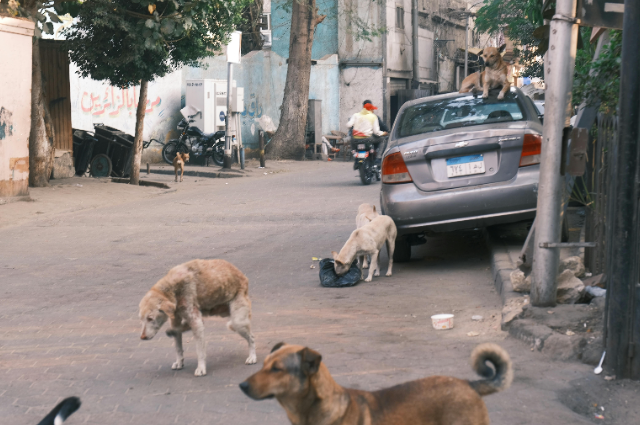
In January 2026, the villages of Telangana woke up to a silence that was not quite right. The barks of stray dogs that had echoed through the streets of Shayampet and Bhavanipet were missing. Instead, there was a heavy silence, and soon, a terrible truth. Five hundred stray dogs had been killed in just two weeks in several districts. The news didn’t remain in the villages for very long. It spread, and with it, a wave of shock and anger that swept the whole country.
It all started with a promise. In December 2025, local elections took place for village councils, also known as Gram Panchayats. Some candidates, in an attempt to gain more votes, made a particular promise to the public. They promised to make their villages “dog-free” and even “monkey-free.” This was a genuine concern. Many villagers were worried about stray animals and the fear of being bitten. Therefore, the promise was kept. When these candidates won and became the new village heads, or sarpanches, they kept their promise.
What followed was no organised animal control effort. It was a clandestine and ruthless effort. During the first two weeks of January, men termed “professional dog catchers” were brought in from other states. They roamed the villages in areas such as Hanamkonda and Kamareddy with a sinister intent. They did not resort to humane methods. They used poisoned food and injection methods. The dogs died instantly and silently. Their carcasses were then carted away and dumped in open fields or near temples, in plain sight.
The silence did not last for long. An animal welfare activist named Adulapuram Goutham and others became suspicious. They traced the paths and made the horrifying discovery of rows of dog corpses, hastily buried or left in the open. They informed the police right away. The veterinary staff arrived to excavate the bodies for analysis. The magnitude of the dog slaughter became apparent. It was not a few troublesome dogs being eliminated; it was a large-scale dog slaughter of innocent animals.
The police moved swiftly. They registered cases against fifteen to seventeen people, including at least seven of the newly elected sarpanches. The charges were severe: killing or injuring animals under the new Bharatiya Nyaya Sanhita law and the Prevention of Cruelty to Animals Act. The evidence was sent to forensic labs for analysis of the poisons used. The law was now hot on the heels of the lawmakers, and the whole community was living in suspense. The villages that wanted to be rid of the dogs were now under the bright lights of a national scandal.
This is a tragedy that occurred in Telangana at a time when the Supreme Court of the country was already debating the problem of stray dogs. The Supreme Court of India has always stated that although the safety of the people is a priority, mass murder is never a legal solution. It is brutal and illegal. The Court has always stated that the solution to this problem is the Animal Birth Control Program—a systematic and humane way of dealing with stray dogs. The village heads' actions were a slap in the face of this wisdom.
It makes you stop and think. How did we get here? The village heads wanted to solve a problem. People were afraid of dog bites, and they wanted to be safe. This is a fair and human need. But the leap from this need to the wholesale slaughter of living beings is profound and dark. It is a reflection of a mindset that prefers a quick, permanent, and violent fix to a compassionate and legal one. It illustrates how a promise in a campaign, made to win votes, can become an authorised mandate for cruelty. The tragedy is in the simplicity of the animals’ trust. A stray dog leads a tough life, and that life is full of hunger and fear. But it learns to coexist. It may bark, it may chase, but it never comprehends the politics of human beings. And then, whenever food was offered, the dog would appear, out of instinct and hope. But in the Telangana villages, this trust was broken through poison. It was the very hand that fed them which gave them the fatal blow.
And then these cases land in court. The alleged sarpanches have appeared before the law. The forensic reports would follow. But alongside the trial drama, one question has been haunting us all. What does it say about us as a society that we have nothing better to do than to hasten the extinction of five hundred souls?
The dogs in Telangana are gone. Their bark will not ring in those alleys ever again. The cost of a "dog-free zone" community has been counted in blood, and in shock, this is a blight on this earth and on the humanity of every one of them who supported this genocide. Hopefully, this disaster will teach a tough and valuable lesson: a vote, a promise, and a fear will not bear the cost of five hundred lives that are silent and innocent. Real progress isn’t measured by what we are rid of, but what we hold on to.