
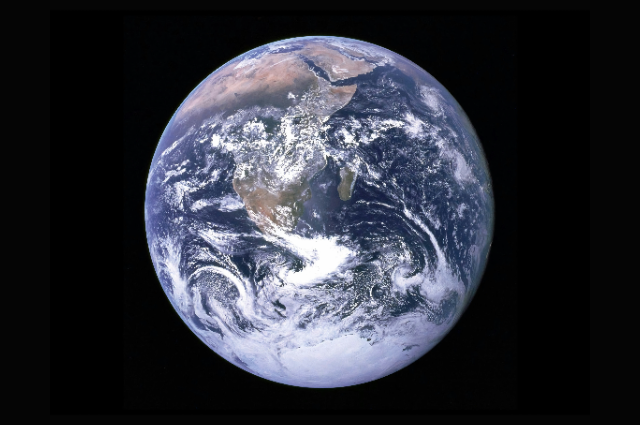
Photo by NASA on Unsplash
The Day the World Fell Silent
It began with a silence so soft that no one noticed. No alarms, no tremors, no sign of disaster — only a quietness that seemed ordinary, almost beautiful. The waves still broke, trees still swayed, cities still hummed with engines and screens. But beneath all that surface noise, the planet itself had stopped humming.
For centuries, scientists have known that the Earth sings. Beneath every storm, mountain, and ocean floor, our planet emits an endless, low-frequency vibration, a pulse too deep for the human ear. They call it the Earth’s hum, a subsonic symphony that moves through the crust and the sea, measurable but mysterious. It is not caused by earthquakes or volcanoes, but by the ceaseless rhythm of the oceans, the atmospheric pressure, and perhaps, something more, an ancient conversation between gravity and life.
But on one strange morning, that vibration vanished. No seismometer registered the usual murmur. Laboratories across the world in Japan, Italy, California, and India sent urgent messages to one another, checking and rechecking their readings. At first, they blamed the instruments. Maybe a calibration error, a software glitch, or solar interference. Yet, after hours of confusion, the data held: the background hum of the planet had disappeared. And in that moment of absence, humanity heard itself.
The Pulse Beneath Our Feet
Before that silence, few ever thought about the planet’s quiet heartbeat. The Earth’s hum is an ultra-low sound, resonating between 2 and 7 millihertz, thousands of times lower than what human ears can detect. Scientists first noticed it in 1998, when ultra-sensitive seismographs began picking up a strange, constant vibration even during total geological calm. Dr. Martha K. Obana of the National Research Institute for Earth Science in Japan once said, “It is as if the Earth itself breathes — a soft exhalation that never stops.”
For decades, this hum has been the planet’s invisible music, the rhythm of tides slamming continents, the echo of storms over the Pacific, the whisper of pressure between the sea and the mantle. It is, quite literally, the song of balance, the proof that the world is alive in its own way. Yet, the day it disappeared, something more than science was lost. For all our technology and control, we realized that we exist within a living system and when that system changes, even silently, it unsettles the human soul.
The Listeners
In a dim laboratory in Bergen, Norway, a 64-year-old seismologist named Dr. Henrik Ellingsen was among the first to notice the silence. He had been listening — not with his ears, but through the instruments he loved. Every morning, before coffee, he would check the daily seismic frequencies streaming in from sensors buried deep beneath the fjords. He said later,
“For the first time in my life, the Earth’s baseline was flat. It was like hearing a heart monitor stop beeping.”
By noon, messages from research stations in Italy, Chile, and Alaska confirmed his dread: the signal was gone everywhere. Something fundamental had shifted in the fabric of the planet. Across the world, people began to feel an unease they couldn’t explain. Artists said their sleep was filled with strange dreams. Farmers claimed their cattle grew restless. Deep-sea hydrophones, which record the constant drumming of waves, began registering an eerie uniform stillness. Even wind turbines — designed to absorb micro vibrations — stopped their subtle resonance. It was as if the Earth’s breath had paused, and all life was holding its own.
A Frequency Older Than Us
Long before satellites and sensors, ancient civilizations may have sensed what we have forgotten: that the Earth vibrates not just physically but spiritually.
In Vedic cosmology, the universe begins with the sound Om, the primal vibration of existence. In Greek philosophy, Pythagoras spoke of the music of the spheres, the harmony that binds celestial motion and earthly life. Indigenous Australians call it the songline, the Earth’s sacred melody that connects people to place and memory.
Today, our instruments confirm what our ancestors intuited: everything vibrates. Every molecule, every cell, every living thing hums at a certain frequency, a resonance that ties us to the planet we inhabit. Dr. Ellingsen once remarked in an interview, “We measure the planet’s vibration not to study Earth alone, but to understand ourselves within it. The hum is the one sound we all share.” And so, when that hum fell silent, humanity faced an existential question: If the planet stops singing, can we still call ourselves alive?
The Global Pause
News of the silence spread slowly, like a secret the planet was whispering to those who knew how to listen. By the second day, seismic observatories across the world confirmed the anomaly. Reports poured in from Kyoto, Zurich, Santiago, Cairo, and Bangalore, all showing the same flatline where the Earth’s constant background vibration should have been. Yet to the average person, life went on as usual. Markets opened, traffic roared, and planes took off. But something imperceptible had shifted in the air, a stillness that was not peace, but waiting.
At the European Space Observatory in Chile, Dr. Lucia Navarro, a geophysicist known for her calm precision, sat before her monitor in disbelief. “It’s as though the Earth has stopped breathing,” she told the press, her voice trembling slightly. When asked if there was cause for alarm, she said, “It depends on whether you think the planet is a machine or a living being. Machines can stop and restart. Living beings… cannot.” That line went viral within hours. Memes, documentaries, debates, and the silence became a mirror for human anxiety.
Was this a technical glitch in nature? Or was it, as one poet wrote, “a warning sung in reverse”?
The Science of Absence
Teams from NASA, ISRO, and the European Seismic Consortium convened virtually to find answers. They reviewed satellite data, oceanic wave patterns, atmospheric pressure charts, and gravitational readings. Nothing explained the vanishing of the hum. The Earth’s vibration, scientists knew, wasn’t a single sound; it was the sum of countless motions: waves striking coastlines, wind brushing against mountains, magma swirling deep within the mantle. To lose it all at once was mathematically impossible.
Unless - and this became the first hypothesis- the cause of the hum itself had changed.
An Indian geophysicist, Dr. Amina Rahman, proposed that global ocean patterns had synchronized into a temporary equilibrium. “If the planet’s natural noises align perfectly for a moment,” she explained, “they can cancel each other out just as two opposite sound waves can produce silence.” Her theory made sense on paper. But the silence lasted too long. Days passed, and still the seismographs showed nothing but flat calm. NASA’s deep-ocean probes reported something even stranger: marine life had begun to migrate erratically. Whales abandoned their migration paths; coral colonies released spores out of season; and underwater microphones captured the sound of… nothing. The ocean had fallen mute.
The Poets and the Priests
While scientists wrestled with equations, the spiritual world turned the silence into a metaphor.
The Dalai Lama released a short reflection: “Perhaps the Earth is not dying, but meditating. And in its meditation, it asks us to listen.” In Rome, the Pope led a prayer for “the restoration of the heartbeat of creation.” In Mecca, scholars cited the Qur’anic verse: “There is not a thing but celebrates His praise, though you understand not their glorification.” (Surah Al-Isra, 17:44)
And in Varanasi, priests along the Ganga performed aarti without drums or bells, saying, “Let us hear the silence as worship.” Artists began painting the silent canvases filled with muted colors and deep horizons. Musicians composed albums with names like Echoes of Still Earth and The Quiet Between Stars. Even the cynical world of politics softened for a brief moment. Global leaders met not to trade threats or oil contracts, but to ask what the silence meant. Was it a warning, a punishment, a renewal, or merely a coincidence? No one knew. But for the first time in memory, humanity spoke in hushed tones, as if afraid to disturb a sleeping mother.
The Children Who Heard
In a remote mountain village in Ladakh, a teacher named Sonam Chuskit asked her students if they had noticed anything strange about the world lately.
A boy of ten raised his hand and said, “The mountains are listening harder.”
Another said, “My grandmother says the Earth stopped singing because we forgot how to sing with it.” That night, Sonam wrote those words in her diary. “Perhaps,” she wrote, “children hear what we forget — that the planet listens, but we do not answer.”
Her note went viral when an environmental journalist quoted it in The Guardian.
It became the new voice of the movement that soon followed — “The Resonance Initiative.” Founded by scientists, monks, and musicians, the initiative urged people around the world to create “harmonic awareness” — to spend one minute each day in collective silence, simply listening. It wasn’t meant as ritual or superstition, but as acknowledgment: a recognition that we are part of a frequency greater than ourselves. In Paris, thousands gathered at the River Seine, closing their eyes at sunset. In Lagos, young activists held hands in public squares, humming soft tones. In Mumbai, the city’s chaotic trains fell quiet for a single minute as commuters joined the global gesture. The silence was no longer an absence. It had become participation.
The Theories Multiply
By the third week, theories became wilder, more poetic, more desperate.
One faction of astrophysicists speculated that the Earth’s core had temporarily synchronized with the magnetic field of the Sun, causing an electromagnetic null, a planetary-scale “pause.” Another proposed that the silence was psychological, a collective hallucination caused by mass anxiety and global media influence. But among the more spiritual scientists, those rare ones who saw no boundary between data and wonder, a new idea was taking shape.
Dr. Rahman and Dr. Ellingsen co-authored a quiet paper titled “The Anthropophonic Hypothesis.” They suggested that the Earth’s hum was never merely physical, that perhaps it was a resonance created by life itself. Every human movement, every footstep, every ocean current and birdcall, together formed a harmony so subtle that we mistook it for geological noise. Now, as our machines grew louder, as forests fell and species vanished, that harmony had weakened until the Earth could no longer sing it. Their conclusion was not scientific proof, but moral poetry: “Perhaps the Earth’s hum was not the planet speaking to us, but us speaking through it, and we have forgotten our lines.”
The Silence Within
In Tokyo, a neuroscientist named Dr. Kaito Mori made an unexpected discovery.
He had been studying how external vibrations affect human brain waves, particularly how long exposure to infrasound (low-frequency sound) influences mood and attention.
When he compared data from before and after the Earth’s silence, he found a strange pattern: people’s alpha brain waves — those linked with calm and creativity — had decreased globally by 12%.
The world, quite literally, had grown more anxious, more distracted, less able to dream. He wrote, “When the Earth fell silent, the human mind lost its tuning fork.” Philosophers seized upon his finding. Could it be that our consciousness is entangled with the planet’s rhythm? That our sense of time, peace, and belonging depends on vibrations older than civilization itself? It wasn’t proof. But it felt true. And truth, when it feels like music, is often more powerful than evidence.
When Silence Became Music
Then something unexpected happened. Around the 40th day of the global silence, faint readings began returning, not identical to the old Earth hum, but slower, deeper, more resonant. The signal pulsed every 17 seconds, like the steady beat of an enormous, patient heart. At first, scientists thought it was background error interference or instrument drift.
But as more observatories confirmed it, one realization emerged: the Earth was singing again, but differently.
When the data was converted into audible sound, it resembled a slow, undulating tone, part oceanic rhythm, part thunder, part something indescribably alive. People across the world gathered online to listen. For five minutes, humanity shared a sound that seemed both alien and intimate. Some cried. Some prayed. Some simply sat, unable to name what they felt. Dr. Ellingsen, the old seismologist from Bergen, summed it best in his final public message: “Maybe the Earth didn’t stop singing. Maybe it paused to listen if we would notice, and when we finally did, it changed its key.”
The Return of the Song
After forty days of silence, when the first faint frequencies began to hum again beneath the surface of the Earth, something inside humanity shifted. It wasn’t a celebration, not yet. It was recognition. Across the world, the news spread like dawn across continents. People emerged from their routines to listen not with ears, but with awareness. Cities, for once, quieted willingly. Radio stations played the recorded hum, that deep, slow vibration that scientists said pulsed from the oceans through the crust and into space. It was subtle, yet full of emotion as though the planet were sighing after holding its breath too long. In that moment, people realized what they had forgotten: The Earth had always been alive. It had always spoken. We were the ones who had stopped listening. Dr. Lucia Navarro wrote in her final report, “We do not live on Earth. We live on Earth. And every sound we make, every machine, every song, every word becomes part of its memory.” For the first time in centuries, science and spirituality stood in the same light. One spoke of frequencies and resonance; the other of prayer and harmony. But both pointed to the same truth: life itself is vibration.
A World Re-Tuned
Governments, at first, tried to explain the hum’s return in measurable terms: oceanic oscillations, magnetic realignment, tectonic pressure redistribution. But people didn’t care for explanations anymore. Something deeper had taken root, a collective humility. In classrooms, teachers spoke of “planetary consciousness.” In universities, departments of physics began collaborating with music scholars and philosophers. The new field that emerged was called Resonance Studies, not limited to science or art, but existing in the space between them. At the University of Kyoto, Dr. Kaito Mori, the neuroscientist who once linked the Earth’s hum to brain patterns, founded a global research program titled “Synchronicity: The Science of Shared Vibrations.” His first lecture began not with data, but with silence. He stood before a hall of students and said: “We are the only species capable of hearing the Earth, not because we have ears, but because we have meaning.” Then he played the sound of the returning hum.
Students wept openly. Not out of fear or joy, but something else, the profound relief of belonging.
The Philosophy of Resonance
Philosophers, of course, could not resist turning this event into a reflection. The French thinker Élodie Moreau wrote in her essay The Planet and the Pulse: “To exist is not to stand apart from the world, but to vibrate within it. We are not observers of the Earth’s rhythm, we are one of its notes.” Her words captured what science had finally touched: that everything, from an atom to a galaxy, lives by frequency. When we destroy forests, pollute oceans, and sever ecosystems, we are not harming “the environment.” We are silencing an instrument in the symphony we belong to. This became the new environmental ethic, not based on guilt or control, but on music. Activists spoke not of “saving the planet,” but of “restoring harmony.”
Children learned about biodiversity not as a list of species, but as a choir of living tones, each one necessary to the song of existence. And slowly, across nations, the language of ecology changed from fear to love.
The New Myths
Every civilization needs myths, not false stories, but poetic truths that give meaning to facts.
The Silence of the Earth became one such myth for the new generation. In schools, children learned about “The Forty Days When the World Listened.” In art, painters depicted the Earth as a mother whose voice had once faded and returned in forgiveness.
In literature, poets compared the silence to divine patience, a pause so that humanity could hear itself. Theologians saw it as the modern Flood, not of water, but of awareness.
Environmentalists treated it as a revelation. And ordinary people began to sense holiness in simple vibrations, the buzz of bees, the rustle of leaves, the rhythm of rain. It wasn’t superstition. It was rediscovered.
The Personal Silence
In the years after the event, people began keeping what they called “Resonance Minutes.”
Each day, at noon, individuals everywhere — from office towers to deserts — stopped for one minute of stillness, honoring the unseen hum beneath their feet. It became not a ritual of religion, but of gratitude. For one minute, humanity remembered that existence itself is participation that to breathe, move, and love is to be part of a sound too vast to hear. A blind poet from Morocco, Aisha Benyounes, wrote: “I do not hear the Earth’s hum, but I feel it. When people grow kind, the ground softens beneath my feet. When they grow cruel, the world becomes stone.” Her poetry spread like prayer. It wasn’t science, but it was truth.
The Last Letter
In the final year of his life, Dr. Henrik Ellingsen — the old seismologist who first noticed the silence — wrote one last letter to his students. It was short, handwritten, and found after his passing in a drawer beneath his instruments. It read: “The Earth never stopped singing. It merely waited for us to listen. You see, the hum was never out there; it was inside us all along. We are not guests upon this planet. We are its echo.” That letter was printed in newspapers across the world. It became the closing line of documentaries, the first slide of university lectures, the quote painted on climate protest banners. And somehow, it made sense of everything: the science, the faith, the fear, the hope.
The Cosmic Continuum
In time, scientists confirmed that even distant planets Mars, Venus, and Jupiter’s moons, produce faint vibrations of their own. Every world, it seems, has a song. Some are turbulent, some calm, some utterly strange.
One astrophysicist put it beautifully: “If each planet hums, then the universe is not silent. It is a cosmic orchestra, and every world plays a note that only eternity can hear.” The idea caught fire in popular imagination. People began referring to the universe not as a void, but as a symphony of frequencies where death and life, collapse and creation, all blend into the ongoing rhythm of being. The story of the Earth’s silence no longer belonged to scientists. It belonged to everyone who had ever felt small beneath the stars and yet inexplicably connected to them.
When the Judges Listen
Years later, when historians looked back on that time, they didn’t call it an age of crisis or awakening. They called it The Resonant Era, the period when humanity finally understood that technology, religion, and nature were not enemies, but languages of the same vibration. And in this new age, the act of listening became more radical than the act of speaking. The lesson was simple yet infinite: The Earth does not belong to us. We belong to its rhythm. To harm it is to wound our own frequency. To heal it is to remember who we are.
The Final Silence
No one knows if the hum will ever vanish again. But people have stopped fearing that silence. For now, they understand that silence is not emptiness; it is potential, waiting to become music again. And perhaps, someday far into the future, when humanity is gone and the stars have grown cold, the last sound the universe will hear will not be an explosion, but a hum — slow, patient, endless the echo of a planet that once sang because it was alive.
Epilogue: Listening as a Way of Living
In the end, the story of the Earth’s forgotten frequency is not about geology, but grace.
It teaches that being human is not about conquering the world, but resonating with it. Each heartbeat, each breath, each act of kindness is a tiny vibration in the grand chorus of existence. To listen — truly listen — is the beginning of wisdom. And perhaps, when the judges of any world read our story, they will know: We were not the species that conquered silence. We were the species that learned to make it sing.