
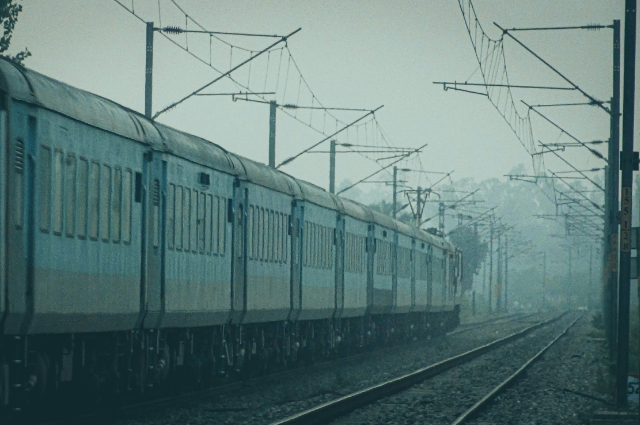
The rain in the foothills of South India does not merely fall; it arrives like an unannounced relative who intends to claim the household. At precisely 4:15 PM on a Tuesday, the small railway station at the edge of the town smelled of rusted iron, over-roasted peanuts, and old teak wood that had survived generations of monsoons. The manual announcement board had frozen three hours ago, flashing a static entry that read ‘Delayed Indefinitely’. It was a message that had long since stopped bothering the station master, though it was slowly fraying the nerves of the younger passenger stranded on Platform 2.
I sat on a concrete bench with a paper cup of lukewarm tea, watching my digital ecosystem crumble. The network bars on my smartphone had vanished somewhere between the previous junction and this remote outpost. In an era where every second is measured by notifications, tracking algorithms, and instant responses, being stranded without a signal feels like a physical inconvenience and more like a sudden exile from reality. I was an urban commuter caught in a pocket of stillness I did not know how to navigate.
Directly across from me, an elderly gentleman sat on an upturned wooden crate. He wore a faded cotton dhoti and a shirt that had been better decades ago, but his focus was entirely dedicated to a large woven bamboo basket resting between his feet. Inside the basket were hundreds of fresh, tightly wound jasmine buds, gleaming with drops of rainwater. Every few minutes, he would gently adjust a damp piece of jute cloth over the top, preserving the moisture with the precision of a curator guarding an ancient art.
For the first forty minutes, we existed as two distinct islands. I was trapped in my internal anxiety about missed deadlines, while he remained grounded in the physical weight of his cargo. The silence between us was loud, punctuated only by the periodic rumble of thunder and the steady drip of water from the corrugated tin roof above.
The ice broke not through words, but through necessity. A sudden gust of wind swept across the platform, driving a sheet of rain horizontally beneath the roof. The spray threatened to drench my notebook and completely soak the old man’s delicate jasmine buds. Instinctively, I stood up, walked over, and grabbed one handle of the heavy wooden crate, helping him drag it back against the dry brick wall of the station master’s office.
“Thank you, son”, he said in a voice that sounded like gravel shifting under water. He introduced himself simply as Raghavan.
As we settled into the dry patch of the platform, a conversation began to unfold—one that shattered my initial assumptions about generational divides and rural stagnation. Raghavan was seventy-two years old. For nearly forty-five years, he had taken this exact route three times a week to deliver jasmine to the flower markets in the city.
“The world used to move at the speed of the train”, Raghavan remarked, looking out at the iron tracks reflecting the grey afternoon sky. “Now, the world moves at the speed of light, but the train remains the same. People get angry at the tracks, but the tracks are just doing what they have always done.”
His observation caught me off guard. It was an opinion deeply rooted in personal history, yet entirely applicable to the modern dilemma. I spent my days working for a digital media agency, creating content designed to capture human attention for fractions of a second. My entire professional identity was built on speed. Yet here was a man whose livelihood depended on the natural, unhurried blooming cycle of a flower and the unpredictable schedule of a local passenger train.
As the delay stretched into its third hour, Raghavan shared stories of the station’s past. He spoke of a time when the arrival of the afternoon train was a community event – a shared moment where letters were exchanged, newspapers were passed around, and news from neighbouring districts travelled by word of mouth.
“Now,” he smiled gently, pointing toward a pair of teenagers down the platform who had finally managed to get a single bar of cellular network, “everyone is looking through a small window to see people who are far away. No one looks at the person sitting next to them.”
The irony was not lost on me. I had spent the first hour of the delay feeling completely isolated because my digital connections were severed. Yet, by losing that virtual network, I had gained an authentic human connection; I listened to him describe the delicate mechanics of farming jasmine – how the soil had to be turned at specific intervals, how the afternoon heat affected the scent, and how a delayed train could mean the difference between a fair price and a total loss if the flowers bloomed before reaching the market stalls.
There was no self-pity in his voice. Instead, there was a profound sense of acceptance and adaptation. He understood the shifting realities of the market and the changing preferences of a younger generation, but he chose to maintain his craft with dignity.
When the distant whistle of the diesel locomotive finally echoed through the hills around 7:30 PM, the platform stirred back to life. The yellow headlamps of the train cut through the evening mist, casting long shadows across the concrete. We boarded the unreserved compartment together, helping each other with the luggage and the precious basket of flowers.
The compartment was crowded, filled with office workers, students, and vendors. The air inside was heavy with the scent of wet umbrellas and damp wool, but as the train began to chug forward, the distinct, sweet fragrance of Raghavan’s jasmine began to fill the narrow space, overriding the stale odours of the commute.
I hopped off at my station an hour later, exchanging a quick nod of farewell with the old flower seller. I walked back into the bright, neon-lit rush of the city, my phone immediately buzzing with a backlog of emails, text notifications, and reminders. The digital world was waiting for me, unchanged and frantic.
However, something within my perspective had shifted during those hours on the rainy platform. The encounter was a stark reminder that quality in writing, content, and life does not come from the speed at which we process information, but from the depth of our attention. True stories are not found in trending hashtags or rapid-fire commentary; they are found in the quiet, overlooked intersections where ordinary lives share their perspectives.