
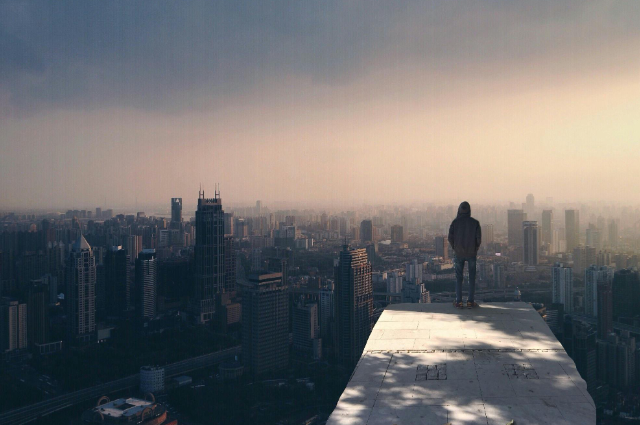
A few days ago, a 15‑year‑old Class 10 boy from Bengaluru went out with his friends to make some social media reels and never came back home.
He fell around 40 feet from the top of an abandoned resort building and died while trying to create content that was supposed to get views and likes.
A reel that turned into a tragedy
The boy, Nishanth, had just finished his Class 10 board exams and, like many teenagers, wanted to relax and have fun with friends.
They went to an old abandoned resort in the Annapoorneshwari Nagar area of Bengaluru, a place that had been shut for many years and had become unsafe.
Reports say his friends stayed below while he climbed onto a higher part of the broken structure to pose and record content for reels.
In those few dangerous moments, while walking and moving for the perfect shot, he lost balance and fell from a height of about 40 feet.
His friends rushed him to a nearby hospital, but the doctors could only declare him dead.
What began as a fun evening to shoot videos for social media ended as a heartbreaking loss for his family, his friends, and his entire community.
A smiling boy behind the headline
When we read such news, it is easy to see just a short headline and move on. But behind the words “teen dies while making reel”, there was a real boy who must have laughed with his friends that same afternoon, who had dreams, fears, and plans.
He had just completed his exams, probably thinking about which college he would join next or what he would do during his holidays.
His parents, like any parents, must have imagined him growing up, getting a job, maybe supporting them one day, maybe taking them on trips when he earned his first salary.
All of that ended in a few seconds.
For one reel.
For one video that might have got views, comments, and maybe a few “fire” emojis.
Why viral fame feels so important
We need to ask a hard question: why are teenagers ready to risk so much for one trending reel?
Why does a short video feel more precious than a long, safe life?
Part of the reason is that social media has become like a second world. In this world, people are not judged by their kindness or honesty, but by numbers on a screen — followers, likes, views, shares.
When a reel goes viral, it can feel like a medal, a certificate, or even a ticket to a better future.
Many teenagers see influencers buying cars, travelling to beautiful places, or becoming famous just because of their content.
They start to think, “If I can also make one crazy, different, shocking reel, maybe my life will change too.”
In that moment, danger feels small, and the dream of fame feels huge.
The quiet pressure of likes and comments
Social media does not shout at you directly.
It whispers.
It says, “Post again… try something new… do something bold… people must not forget you.”
Every notification is like a tiny tap on the shoulder.
A like makes you feel noticed.
A comment makes you feel important.
A share makes you feel powerful.
Slowly, a simple wish to “share my life” turns into a need to “prove my worth.” If one reel gets fewer likes than the last, some teenagers feel they are becoming “less important.”
They may think, “I must do something bigger next time. Something more risky. Something nobody else has done.”
This is not always a conscious thought.
It is a slow mental pressure, like a weight that keeps growing.
Under this weight, a 40‑foot fall can start to look like “just one shot” for a reel, not a possible end of life.
Risky reel culture: danger behind the screen
We often see people standing on the edge of buildings, hanging from trains, doing bike stunts without helmets, or entering abandoned and unsafe places. Some of these videos even become “trends,” copied again and again across cities and countries.
But what we forget is this:
The camera does not show the number of times they almost slipped. It does not show the people who tried the same act and got hurt, or those who were not lucky enough to survive.
In Bengaluru itself, there have been other cases where young people died after falling from high buildings while recording reels or videos.
These are not isolated events; they are warnings that our society is not listening to seriously enough.
A reel is only a few seconds long.
But the risk taken to create it may last much longer in the body, as broken bones,
paralysis, or, in the worst cases, death.
The pain that families feel after such incidents lasts a lifetime.
When fun crosses the line
There is nothing wrong with wanting to make fun videos.
Creativity is beautiful.
Many teenagers are talented dancers, actors, editors, and storytellers.
The problem begins when “fun” crosses a line and enters the area of “danger.” Some simple questions can help us see that line clearly:
- Am I putting my body in real physical danger for this shot?
- Am I entering a place that is clearly unsafe, like an abandoned building, railway track, or construction site?
- Am I ignoring warnings from my friends, parents, teachers, or signboards?
- If this reel goes wrong, what is the worst thing that can happen — a bad video or a broken life?
If the honest answer scares you, then the reel is not worth it.
No edit, no filter, no background music can protect you from gravity, from sharp metal, from concrete floors, or from fast traffic.
The role of parents and adults
It is easy for adults to say, “Kids these days are careless.”
But that is unfair and unhelpful.
Teenagers today are growing up in a world very different from the one their parents knew.
Every action can be recorded, judged, and shared within seconds.
The digital stage is always open, and the audience is always watching.
Parents and teachers need to talk openly — not just scold.
Instead of only saying “Don’t make reels,” they can:
- Ask what kind of content their children enjoy creating.
- Watch some of their videos with them and discuss them calmly.
- Share real stories of accidents and explain why some locations or stunts are dangerous, without shouting or shaming.
- Set clear rules about where and how content can be shot, such as “no filming on terraces without grills,” “no abandoned places,” or “no stunts on roads.”
When teenagers feel understood rather than judged, they are more likely to listen.
What can schools and platforms do?
Schools can hold special sessions on digital safety, not just on “cyberbullying” and “privacy,” but also on physical safety while creating content.
Real examples of accidents — shared sensitively, without showing disturbing images — can help students understand that these are not movie scenes, but real lives lost.
Social media companies also have a responsibility.
They already use technology to detect violence, nudity, and hate speech. They can also do more to limit or flag videos that clearly involve dangerous stunts in unsafe places, especially when minors are involved.
Warning labels, age checks, and stronger reporting tools can make a difference. Influencers who have a large following among teenagers should also speak up against risky trends and show that “cool” can also mean being safe and responsible.
Dear teenagers, you are more than your reel
If you are a teenager reading this, I want to speak to you directly.
Please remember this: you are worth much more than your latest post. You are more than your followers, more than your likes, more than your views.
Your parents did not raise you for fifteen or sixteen years so that you could risk everything for a few seconds of attention.
Your friends will miss your laughter far more than they will miss your content. Your future — your dreams, your love stories, your travels, your victories, even your failures — all of it is waiting for you.
No viral video is bigger than that.
Before you climb that wall, before you step onto that broken roof, before you pose near the edge of a terrace, before you sit on the edge of a running train or lean out of a car for a shot, stop for one moment and ask yourself:
“If this goes wrong, what will my parents feel?
What will my friends feel?
Is this reel worth their tears?”
If the answer is no, walk away.
Delete the idea, not your life.
A message we must repeat
Nishanth should have been planning his future after Class 10, maybe waiting for his results, maybe dreaming of something simple like eating his favourite food or playing with his friends the next day.
Instead, his parents are now holding his memories instead of his hand.
We cannot change what happened to him, but we can change what happens next — in our own choices, in our own circles, and in our own cities.
Each time you choose safety over a risky reel, you are quietly respecting not only your own life but also the lives already lost.
To every young person out there:
Your life is not a clip that can be re‑shot.
There is no “retake” button once a real fall happens.
Likes fade, trends die, views drop, and reels are forgotten — but the pain of a lost life never leaves the people who love you.
So choose life over likes.
Choose your future over a few seconds of fame.
Because the world does not need one more dangerous reel.
It needs you — alive, dreaming, growing, and present.
References:
- Times of India – “Teen dies after falling from building while shooting reels in Bengaluru” https://timesofindia.indiatimes.com
- Asianet Newsable – “Bengaluru Tragedy: 15-Year-Old Boy Dies After Falling From Abandoned Building During Photoshoot” https://newsable.asianetnews.com